Lhasa Apso



VKarlov/iStock / Getty Images Plus via Getty Images
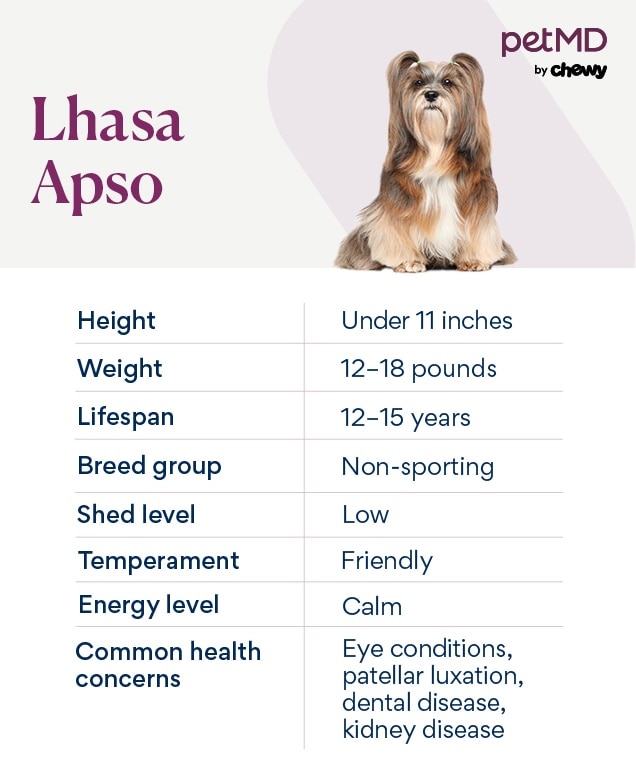
The Lhasa Apso is one of the oldest dog breeds, originating in Tibet around 800 BCE, according to the American Lhasa Apso Club (ALAC). Bred to be guardians and companions in Tibetan monasteries, Lhasa Apsos were given as gifts and highly prized.
The Lhasa Apso’s long, thick coat helped them stay warm in the freezing Himalayan temperatures, where they lived up to 13,000 feet above sea level. Loosely translated, their name means “bearded lion dog.”
Today, this small breed can make a great family dog. They stand 10–11 inches tall and weigh 12–18 pounds. With proper care, the typical Lhasa Apso lifespan is 12–15 years.
Key Takeaways
- Lhasa Apsos are affectionate, intelligent dogs who can make great family pets.
- Their long coats shed very little, but require frequent brushing and regular bathing.
- Lhasa Apsos can be wary of strangers and prone to barking due to their history as guardian dogs.
- Early socialization and positive reinforcement training are important for this independent breed.
- Common health concerns include eye conditions, dental disease, patellar luxation, and breathing problems.
Caring for a Lhasa Apso
Lhasa Apsos are small, smart, and affectionate dogs who also have a strong independent streak. Because they were historically bred as monastery guardian dogs, they may bark excessively, especially to alert their family.
Lhasa Apsos are known for their flat, floor-length coat that’s usually parted in the center. This long coat requires extensive brushing and care, leading some pet parents to keep their dog’s hair shorter (called a “puppy cut”). But a Lhasa Apso with short hair still needs regular grooming—it’s just an easier routine.
Lhasa Apso Health Issues

The Lhasa Apso is a brachycephalic breed, meaning they have a flat face, although their anatomy is not as extreme as some other breeds. Brachycephaly can lead to breathing problems and put dogs at risk for overheating and other health problems. Pet parents need to stay vigilant for signs of difficult or abnormal breathing.
Lhasa Apsos are also susceptible to eye problems and other health issues. Investing in pet insurance may be a good choice for someone looking to bring home a Lhasa Apso puppy.
Eye Conditions
The Lhasa Apso is predisposed to several eye conditions. If you see redness, squinting, eye discharge, or notice decreased vision, consult your veterinarian immediately.
- Progressive retinal atrophy (PRA) is a group of diseases that causes a breakdown of photoreceptor cells (rods and cones) in the retina. Initially, the dog may have difficulty seeing in the dark, but over time the condition will result in blindness. There are currently no effective treatments available.
- Cataracts are common in Lhasa Apsos. In most cases, the condition develops in older dogs as proteins and fibers in the eye lens break down. This leads to blurred vision, which can progress to blindness. Severe cataracts can be surgically removed by a board-certified veterinary ophthalmologist, which should improve a dog’s vision.
- Glaucoma is a painful condition that involves increased pressure within the eye. The most common signs of glaucoma are pain, squinting, discharge from the eye, lethargy, a bulging eye, or a cloudy or blue eye color. If not treated quickly, glaucoma can lead to blindness.
- Keratoconjunctivitis sicca (KCS), or dry eye, occurs when the eye doesn’t produce enough normal tear film. Tears help lubricate the eye, so the lack of adequate lubrication causes the eye surface and the inside of the eyelid to rub against each other, leading to pain, discharge, inflammation, and eye ulcers. KCS is usually treated with topical eye medications.
Patellar Luxation
The patella (kneecap) is a small bone that normally sits in a groove over the knee joint. In dogs with patellar luxation, the patella moves (luxates) outside of this groove. This can cause discomfort and may lead to arthritis.
Many pets will skip or run on three legs when the patella is out of place. In some cases, this may only last a few steps until the patella returns to its proper alignment. In more severe cases, the patella remains out of place.
In mild cases, joint supplements or anti-inflammatory medications are used to control pain and help prevent arthritis. In more severely affected dogs, surgery may be recommended.
Dental Disease
Dental disease is one of the most common conditions seen in dogs, especially in small breeds like the Lhasa Apso. Bacterial-laden plaque and tartar can cause infection and inflammation of the soft tissues and bone around the teeth. This may eventually lead to tooth loss.
The best way to prevent dental disease is with daily tooth brushing with a dog-specific toothbrush and toothpaste. Some diets, treats, and chew toys also help to prevent plaque and tartar.
Routine dental cleanings are also recommended to evaluate the mouth, remove plaque and tartar, polish teeth, and treat or extract teeth that are significantly unhealthy. As with humans, dental disease can be a painful condition that may even affect internal organs.
Renal Dysplasia
Renal dysplasia (familial nephropathy) is an uncommon but hereditary disease seen in several dog breeds, including the Lhasa Apso. In this condition, the kidney develops abnormally before the puppy is born, and kidney function deteriorates after birth.
This condition is usually diagnosed in dogs between 6 months and 2 years old, although an earlier or later onset of symptoms is also possible. Signs of renal dysplasia include:
Blood tests, urine tests, and an abdominal ultrasound exam may point toward this diagnosis. However, a biopsy (removal and evaluation of a small piece of kidney tissue) is necessary for a definitive diagnosis.
There is no cure for renal dysplasia, but supportive treatment can prolong quality and length of life. As this is an inherited condition, Lhasa Apsos with renal dysplasia should not be bred.
Brachycephalic Airway Syndrome
Brachycephalic airway syndrome affects dogs with short snouts and flat faces, including Lhasa Apsos. It affects a dog’s airway and makes breathing more difficult due to the shape of their skull.
Affected dogs may frequently breathe noisily, snore, or pant. It’s important to keep your Lhasa Apso at a healthy weight, as obesity in dogs can worsen symptoms.
High temperatures and humidity are also more dangerous for dogs with brachycephalic airway syndrome.
What To Feed a Lhasa Apso
Feeding an Association of American Feed Control Officials (AAFCO) kibble or wet food ensures your Lhasa Apso receives a complete and balanced diet.
Lhasa Apso puppies need a diet formulated specifically for puppies. In adults, your vet may recommend a diet focused on dental health to help prevent dental disease.
How To Feed a Lhasa Apso
How often you feed your dog depends on their age. Adults do well with two measured meals per day, while Lhasa Apso puppies need three or four meals per day to prevent hypoglycemia (low blood sugar).
Talk to your vet to make sure your feeding schedule is appropriate for your dog.
How Much Should You Feed a Lhasa Apso?
Just like diets for humans, the recommended caloric intake varies based on your dog’s size, health, and activity level.
The best person to determine the amount of food needed is your veterinarian, who can calculate your dog’s caloric needs. Additionally, the feeding guide labels on your dog food will provide valuable information.
Nutritional Tips for Lhasa Apsos
Healthy Lhasa Apsos eating an AAFCO-compliant dog food won’t typically need supplementation. But your vet may recommend certain dog supplements based on your pup’s health.
The Lhasa Apso may benefit from omega-3 fatty acids (DHA/EPA). They can be found in skin and joint supplements, fish oil, and even in some specially formulated dog foods. These fatty acids act as natural anti-inflammatories that help support skin, coat, kidneys, joints, and heart.
Discuss supplements with your veterinarian before adding anything to your dog’s diet.
Behavior and Training Tips for the Lhasa Apso
Lhasa Apso Personality and Temperament

Lhasa Apso Personality and Temperament
The Lhasa Apso is an energetic and intelligent dog breed. Because they were bred to be guardians, Lhasa Apso dogs are independent and typically aloof around strangers. This history also led to their frequent sharp, loud barks.
But Lhasa Apsos were also bred to be companions for those in the Tibetan monasteries where they served as guardians, making them affectionate (on their own terms) with people they know.
Lhasa Apso Behavior
Despite their history as guardians, Lhasa Apsos can be wonderful family dogs. Their origins mean they’re still alert and will bark often, but training can help reduce nuisance barking behavior.
Lhasa Apsos are playful and smart, so mental stimulation is important. Bored dogs might become destructive in an attempt to entertain themselves. Go out for walks and play with your dog every day and make sure they have interactive toys to keep them busy, too.
Lhasa Apso Training
Like all dogs, Lhasa Apso puppies need to begin obedience training and socialization early. They need to be exposed to children, strangers, and other animals in a supervised, pleasant setting so they can become accustomed to new environments and people.
Training games and positive reinforcement using treats or toys work best for this breed.
Fun Activities for Lhasa Apsos
- Playing fetch
- Hiking
- Obedience training
- Agility
- Neighborhood walks
Lhasa Apso Grooming Guide
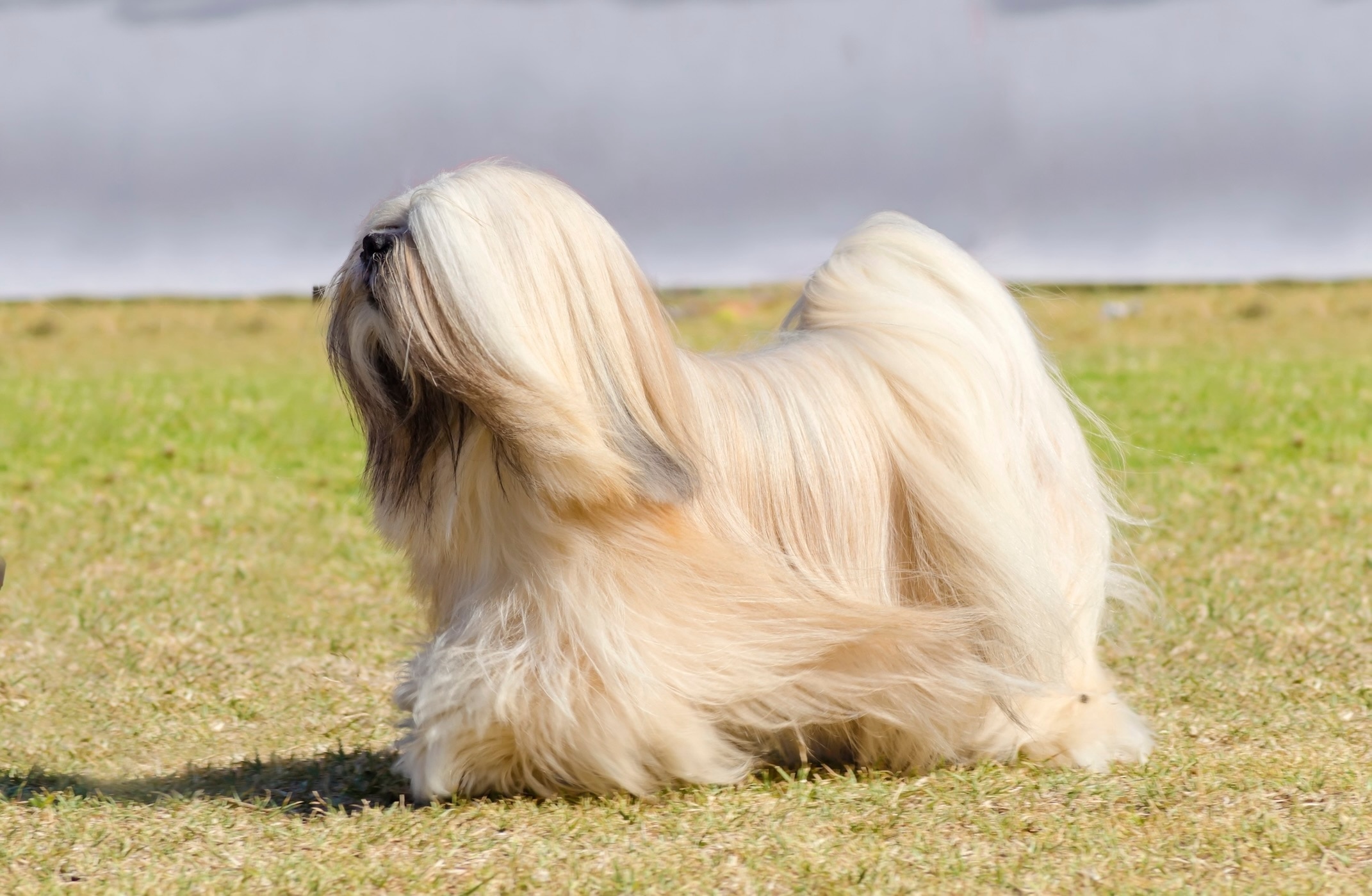
Here’s a Lhasa Apso fun fact: The breed doesn’t shed very much at all, but they require a lot of grooming, especially if you keep their hair long.
Of course, grooming helps your dog look their best. But it’s also a good way to bond with your dog and can help with early detection for some health conditions, like the eye issues Lhasa Apsos are prone to.
Skin Care
Bathe your Lhasa Apso every month or so (or when they get especially dirty) to keep their coat and skin clean and healthy. For most Lhasa Apsos, a gentle shampoo and conditioner is best.
Coat Care
If their coat is long, you’ll have to brush your dog daily to prevent tangles and mats. For dogs with a puppy cut, brushing three times a week should be enough. Detangling and dematting spray-on conditioner is helpful for tangles.
Eye Care
Check your dog’s eyes daily and wipe away any debris that you find with a soft, moist cloth.
If squinting or eye discharge is noted, contact your vet. These can be signs of serious eye conditions.
Ear Care
Ask your vet if your Lhasa Apso’s ears should be routinely cleaned. Also talk to your vet if your dog has redness, odor, or debris, as they may have an ear infection.
For dogs with ear issues (which are commonly due to underlying allergies), regularly cleaning your dog’s ears may help prevent ear infections. Your vet can recommend a schedule and an ear cleaner for your dog.
Lhasa Apso FAQs
Is the Lhasa Apso a good family dog?
Yes, the Lhasa Apso is an affectionate and loyal dog who can do well in families. They can be a little independent, though, so patience and a sense of humor are helpful.
Are Lhasa Apsos smart dogs?
Yes, Lhasa Apsos are smart dogs who can pick up training cues quickly. However, because of their independent streak, they will sometimes decide not to do what you’re asking.
How much does a Lhasa Apso cost?
The typical Lhasa Apso price for a puppy is $1,000–$2,000.
Do Lhasa Apsos like to cuddle?
It depends. Most Lhasa Apsos enjoy being close to their pet parents, although they may prefer being nearby rather than cuddling. They may also be wary of new people.
Lhasa Apso vs. Shih Tzu: What’s the difference?
Lhasa Apsos and Shih Tzu are two small Asian dog breeds first bred to work as guardian dogs and companions. The breeds look alike but they do have differences: Shih Tzu are slightly smaller and tend to warm up to strangers faster than Lhasa Apsos.


