Enlarged Liver in Cats: What Is It, and How Is It Diagnosed?


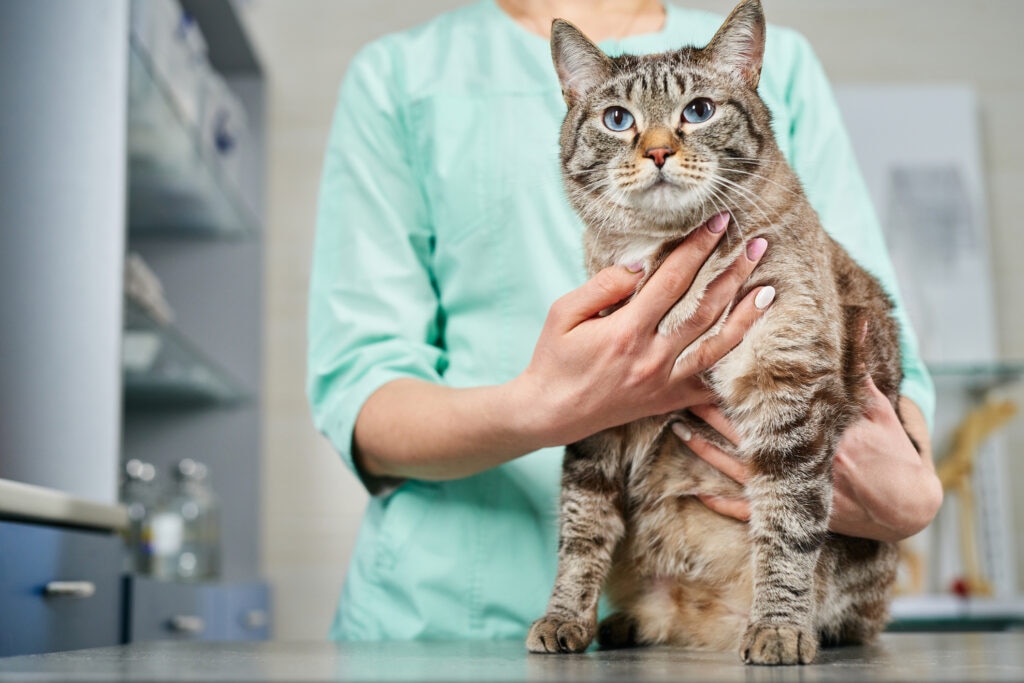
satamedia/iStock/Getty Images Plus via Getty Images
Your cat’s liver is responsible for performing many of the basic functions that keep them alive, such as filtering toxins from the blood, developing clotting factors, and aiding in metabolism.
In fact, the liver has over 500 vital functions by some counts. An enlarged liver in cats usually points to a health problem that may impair the liver’s ability to perform its many important functions.
Here we’ll cover the symptoms, causes, and management of an enlarged liver (hepatomegaly) in cats.
Key Takeaways
- An enlarged liver in cats (hepatomegaly) can be caused by fatty liver disease, inflammation, cancer, toxins, or heart failure.
- Symptoms may include a swollen belly, loss of appetite, vomiting, lethargy, and jaundice (yellowing of the eyes, gums, or skin).
- Treatment depends on the underlying cause. Many cats can recover with prompt veterinary care.
What Is Enlarged Liver in Cats?
An enlarged liver in cats is a liver that’s bigger than its normal size. This occurs due to inflammation, back-up of blood flow (congestion), fat buildup, or abnormal cell growth (such as cancer).
The scientific term for an enlarged liver is hepatomegaly.
An enlarged liver may or may not be a medical emergency. If your cat is vomiting, lethargic, jaundiced (yellow gum, eyes, or skin), and/or has a lack of appetite, seek emergency care.
Symptoms of Enlarged Liver in Cats
Symptoms of an enlarged liver in cats may vary depending on the underlying cause. In some cases, there are no symptoms.
Common signs include:
- Swollen, enlarged, or distended belly
- Jaundice of the eyes, gum, or skin
- Poor or no appetite
- Weight loss
- Lethargy
- Vomiting
- Increased thirst or urination
Causes of Enlarged Liver in Cats
The following are the most common causes of an enlarged liver in cats.
- Hepatic lipidosis (fatty liver disease): If a cat stops eating for a few days, the body will break down fat and send it to the liver, where the cells are unable to handle the sudden influx of fat. The individual liver cells swell, causing the overall organ to enlarge. The bile ducts in the liver get compressed by the swelling, causing jaundice.
- Hepatitis: Inflammation of the liver’s cells causes swelling of the organ.
- Cancers: The liver can be enlarged because of a solid tumor or a cancer that infiltrates throughout the liver, like lymphoma.
- Toxins: Certain toxins, like acetaminophen, can cause an enlarged liver.
- Heart failure: Heart failure can cause blood to back up and pool in the liver. This is called liver congestion.
Obese cats are more likely to develop fatty liver disease, especially if they go without eating for a few days.
Cancers are more common in middle-aged to older cats, and some cancers (like lymphoma) may be more common in cats with feline immunodeficiency virus (FIV) or feline leukemia virus (FeLV).
When To Call Your Vet
Call your veterinarian if you’re concerned your cat may have an enlarged liver.
An enlarged abdomen, occasional vomiting, and changes to appetite or thirst warrant contacting a veterinarian.
Emergency symptoms include recurrent vomiting, loss of appetite, jaundice, seizures, disorientation, and lethargy.
How Veterinarians Diagnose Enlarged Liver in Cats
After performing a physical exam, which may reveal jaundice and/or a palpably enlarged liver, the veterinarian will likely want to run some diagnostics.
These include:
- Routine blood work: This includes a complete blood count (CBC) and blood chemistry. These tests are important for ruling out hemolysis (red blood cell destruction), which can also cause jaundice. Chemistry may show increased liver enzyme and bilirubin levels, as well as several other changes that may suggest impaired liver function, like decreased albumin or cholesterol levels.
- Urinalysis: Bilirubin may be found in the urine of cats with liver disease. Urine may also be excessively dilute, and ammonium biurate crystals may be seen in the urine.
- Bile acids testing: This involves two blood samples, one taken before and one taken after a meal. The test measures how well the liver clears bile acids from the blood. Elevated levels suggested impaired liver function.
- Imaging: Abdominal X-ray, ultrasound, or CT scan may reveal a tumor on the liver or show changes to the liver’s structure that suggest cancer or other issues.
- Blood clotting panels: Liver disease can impair the body’s ability to make clotting factors, which can put the cat at risk for serious bleeding. A clotting panel may be performed to determine if this is a concern, especially if surgery will be performed.
- Liver biopsy: A sample of the liver may be taken, either with an ultrasound-guided needle or surgically. The veterinarian may wish to perform clotting testing before performing such a procedure.
- FIV and FeLV testing: If your cat hasn’t been previously tested and has access to the outdoors this blood test may be recommended, especially if lymphoma is suspected.
The pet’s history is very important for the veterinarian to determine what’s causing the enlarged liver.
The pet parent should make sure to let their veterinarian know if any of the following has occurred:
- The cat recently had a decreased or absent appetite, or you noticed other changes to their eating.
- The cat has gotten into the medication cabinet or has been chewing on plants.
- The cat has unsupervised access to the outdoors.
Treatment of Enlarged Liver in Cats
The following are common treatments for an enlarged liver in cats, though specifics depend on the underlying cause of hepatomegaly:
- Assisted feeding: This usually involves a feeding tube and is common with fatty liver disease.
- Intravenous fluid therapy: Fluids are used to help manage dehydration and electrolyte imbalances.
- Antinausea medications: Medications like maropitant or ondansetron may help reduce vomiting.
- Vitamin supplementation: Injections of B12 may be given. Vitamin K may also be supplemented, usually with injections, if clotting issues are a concern.
- Liver protectants: Antioxidants like SAMe may be recommended.
- Antibiotics: If hepatitis is suspected, the veterinarian may recommend antibiotics like amoxicillin clavulanate or metronidazole.
- Immunosuppressive drugs: If inflammation is severe or an autoimmune component is suspected, these medications can help reduce the damage the body inflicts on itself. Prednisolone is an example of a drug that may be used for this purpose.
For cats with hepatic lipidosis, any underlying condition that may have caused them to stop eating will also need to be managed.
For cancers, treatments usually include surgery or chemotherapy. Surgery is usually recommended for isolated tumors that affect one liver lobe. Chemotherapy is used for tumors that have spread (metastasized) or diffusely affect the liver. Radiation is not commonly used for liver tumors.
Some causes of liver enlargement are curable with appropriate treatment. For example, hepatic lipidosis is the most common cause of severe liver inflammation in cats. While it’s usually fatal if not treated, cats who are treated usually survive and go on to live normal lives.
Similarly, if a cat survives toxin ingestion, the liver will usually repair itself and the cat may live a normal lifespan.
Cats who have surgery to remove isolated tumors may live a long time, but cancers that are diffuse or severe (like lymphoma) usually do not have a positive long-term outcome. Still, treatment can provide a good quality of life and prolong lifespan.
Other causes, like hepatitis caused by an autoimmune attack, may require lifelong management.
Some cats will do well with conditions like this while others will have shortened lifespans.
Recovery and Management of Enlarged Liver in Cats
Cats who survive the first three to four days of curable liver disease will usually end up surviving long-term.
Overall recovery typically takes three to six weeks. Some cases may benefit from lifelong support, such as liver health supplements or a veterinary diet.
The veterinarian may recommend rechecks on lab work. These may be more frequent earlier on in the course of disease management.
Prevention of Enlarged Liver in Cats
While not all causes of liver enlargement are preventable, there are steps you can take to help keep your cat safe, including:
- Keep your cat at a healthy weight. Obese cats have a much greater risk of hepatic lipidosis.
- Monitor your cat's appetite and report to your veterinarian if your cat goes longer than a day without eating.
- Keep toxic medications and plants locked away or out of the home.
- Keep your cat inside the home or only allow outdoor time if it’s supervised.
- Get your cat vaccinated against FeLV.
- Visit your veterinarian for routine wellness checks that include lab work.
Enlarged Liver in Cats FAQs
Can a cat live with an enlarged liver?
Cats can often live if treatment is pursued. A lot of the causes of an enlarged liver are treatable, and the liver has an impressive ability to regenerate itself and return to a normal size.
What is the life expectancy of a cat with liver disease?
This depends on the cause of liver disease and whether treatment is pursued. For example, fatty liver disease is fatal without treatment, but cats who are treated usually survive and live a normal lifespan.
How serious is an enlarged liver?
An enlarged liver in cats is serious. There is usually an underlying cause that needs to be managed.
What could cause an enlarged liver in cats?
An enlarged liver in cats can be caused by hepatic lipidosis, inflammation of the liver (hepatitis), tumors, toxin ingestion, and heart failure.


