Average Cat Weight: What’s Healthy and How To Tell
SPONSORED BY


Istock/Viktor_Gladkov
The average cat weight is between 8–12 pounds, with most cats weighing around 10 pounds. However, that can vary widely depending on breed, age, and lifestyle.
Knowing what’s normal for your cat is key to keeping them healthy. Clinically overweight cats or obese cats are more likely to develop diabetes, urinary disease, arthritis, and have a decreased life expectancy. Such cats may need a specially formulated weight loss diet, like IAMS Proactive Health Healthy Weight Cat Food. Cats who are underweight or experiencing unexplained weight loss may be exhibiting signs of a serious health issue or disease.
It’s crucial to know what your cat should weigh and to monitor their weight gain or loss. That way, if your cat’s weight isn’t ideal, your vet can help you get them back on track with lifestyle changes or a diet change.
Key Takeaways
- The average cat weight varies between 8–12 pounds, but there isn’t one perfect weight for all cats.
- Breed, age, and other factors influence a cat’s ideal healthy weight.
- Vets use a 9-point body condition score, which accounts for your cat’s natural build, to determine if a cat is a healthy weight.
- Your cat’s perfect weight is when you can easily feel their ribs, and they have a visible tuck to their waist, from the top and from the side.
- Ask your vet to perform an examination and body condition score to determine your cat’s ideal weight.
What Is the Average Cat Weight?
Typically, the ideal weight for the average healthy cat is 8–12 pounds, with most cats weighing around 10 pounds.
That said, healthy cats come in a variety of sizes—and that includes weight. More than the weight alone, we must evaluate body frame size and lean muscle mass to determine what a healthy weight is for an individual cat.
The best way to learn if your cat is at a healthy weight is to work with your veterinarian. They can account for the variables (body frame, muscle mass, and breed) to determine your cat’s ideal healthy weight.
Through annual checkups, you can ensure that your cat is maintaining their healthy weight into their adult and senior years.
Factors That Affect a Cat’s Weight
Breed
The difference in body size between cat breeds can be significant.
Some breeds, like the Abyssinian, are long and lithe with delicate features. These more petite cats can have a healthy body weight of as little as 6–8 pounds.
Maine Coon cats are bred to have a medium to large body frame with broad chests and strong features. This big breed may have a healthy body weight exceeding 20 pounds in males and a range of 10–14 pounds in females.
| Cat Breed | Average Weight |
|---|---|
| Maine Coon | 12–20+ pounds (males), 10–14 pounds. (females) |
| Persian | 9–14 pounds (males), 7–11 pounds (females) |
| Siamese | 8–12 pounds. (males), 5–8 pounds (females) |
| Abyssinian | 7–10 pounds (males), 6–8 pounds (females) |
| Bengal | 9–15 pounds (males), 6–12 pounds (females) |
| Domestic Shorthair | 8–12 pounds with an average of 10 pounds (males and females) |
Age
Age and life stage can affect your cat’s weight.
In kittenhood, cats grow rapidly and gain weight quickly, but this is healthy and all part of the growing process. A kitten’s growth is very fast in the first few months of life, then growth slows down between 6–12 months of age.
As they finish growing and reach maturity around 1 year of age, adult cats are at risk for putting on excess pounds due to their changing metabolism and more sedentary lifestyle.
It’s important to work with your veterinarian at annual checkups to assess how your cat’s weight and body condition are changing from year to year.
Geriatric cats, however, may develop medical conditions such as kidney disease or hyperthyroidism that can cause weight loss. Unplanned weight loss is also a concern for cats, and older cats need to be monitored carefully to ensure they stick to a healthy weight.
Spay/Neuter
After your cat is spayed or neutered, their hormone levels decrease, thereby causing their appetite to increase, making it easier for them to put on excess weight.
Studies show that, after being neutered, cats have an increased food intake due to the absence of hormones that naturally control appetite, which results in unhealthy weight gain.
After spay or neuter surgery, most cats need to eat around 30% fewer calories. Speak with your veterinarian and schedule regular checkups to ensure your cat stays at a lean, healthy body weight and is eating the appropriate diet and amount of calories.
Gender
Male cats tend to be larger than female cats, like most animals, especially if a male cat reaches full maturity before being neutered. Both male and female cats weigh between 8–12 pounds on average, but this varies depending on the individual cat’s bone frame, breed, and activity level.
Cat Body Condition Score: How Vets Determine Healthy Cat Weight
To account for all the variables (body frame, lean muscle mass, breed, activity level, lifestyle, etc.) and make this evaluation less subjective and more standardized, veterinarians developed the Body Condition Score chart.
This cat weight chart categorizes the body condition of a cat on a 9-point scale—with 9 being morbidly obese and 1 being emaciated. Ideally, your cat should fall into the 4–5 range.
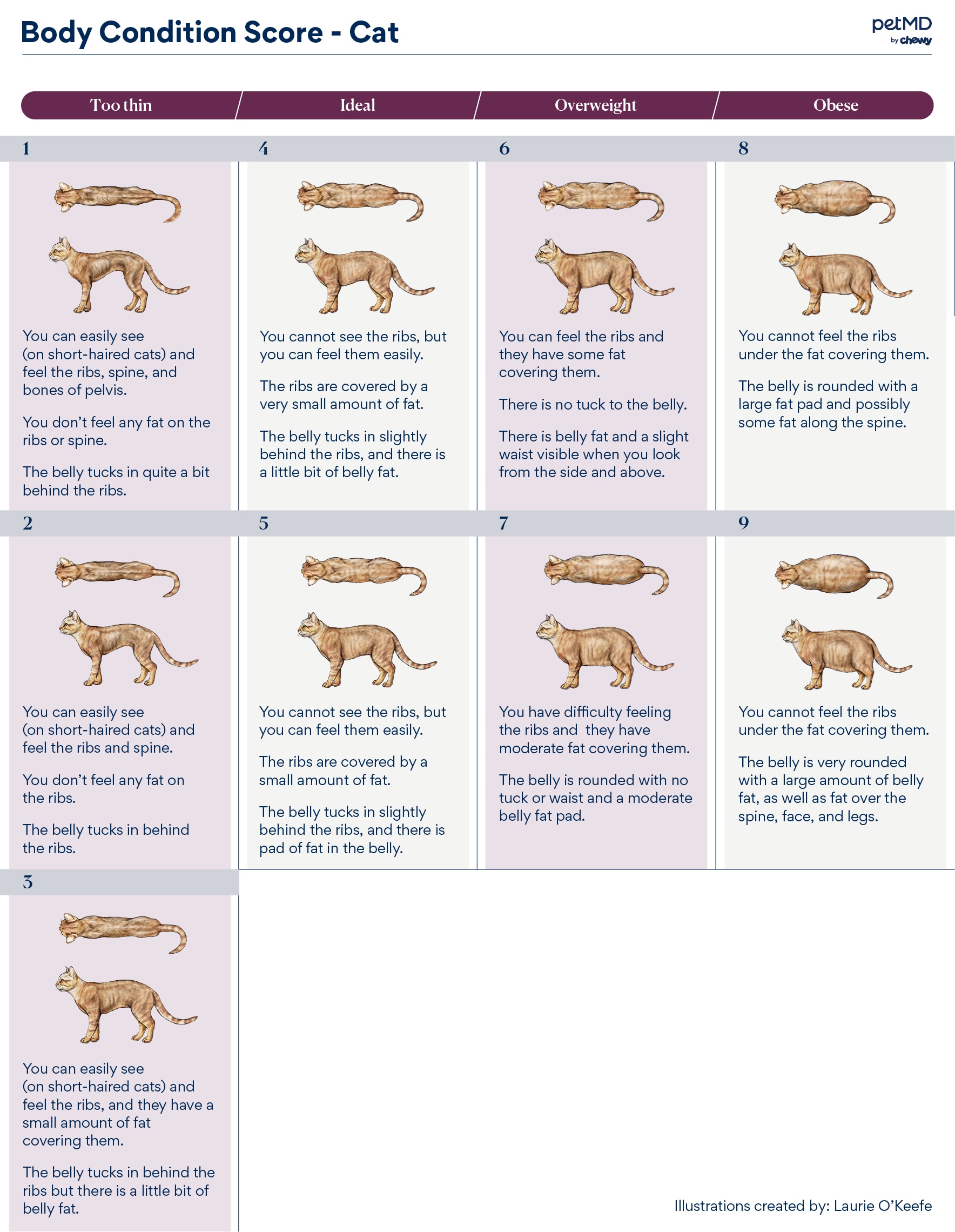
Click here to download this medical illustration.
To use the body condition score chart, you need to physically and visually evaluate your cat.
- Run your hands over the rib cage. You should be able to feel the ribs without having to search through a layer of fat.
- Stand above your cat and look down. Your cat’s body should have a slight hourglass shape as the abdomen tucks in a bit behind the rib cage.
- Look at your cat from the side. Their body should only very slightly tuck up behind the rib cage and have a very minimal abdominal fat pad.
To confirm your cat’s body condition score, ask your veterinarian for help.
How To Weigh and Monitor at Home
To weigh your cat at home, vets recommend these two methods:
- Use a baby scale or pet scale. Placing a soft, nonskid mat or towel on the scale can help your cat feel more comfortable on the slippery surface of the scale.
- Use your bathroom scale. First, weigh yourself and record your weight. Next, pick up your cat, step on the scale together, and record your combined weight. Finally, subtract your weight from the combined weight to determine your cat’s weight.
Here are four tips to help keep track of your cat’s weight:
- Start a log of your cat’s weight and body condition score.
- Weigh your cat every two to four weeks at home or at the vet’s office.
- Check your cat’s body condition score every two to four weeks.
- Take pictures of your cat standing up from the top and from the side to compare body shape over time.
Why Your Cat Might Be Gaining Weight
Your cat may be gaining weight due to these possible reasons:
- Overfeeding: Free-choice feeding (leaving food available at all times) or inaccurate food measurement can lead to your cat overeating.
- Excessive treats: All those extra calories can add up.
- Low activity: Your cat may not be getting enough exercise or playtime, which is especially problematic in indoor cats.
- Health conditions: Certain health conditions, such as joint pain, can result in decreased activity.
If your cat is gaining weight, your vet may recommend lifestyle changes (more on those below) and/or switching to a weight control diet, such as IAMS Proactive Health Healthy Weight Chicken Recipe Adult Dry Cat Food. Made with real chicken, this diet has high-quality protein to maintain lean muscle, plus L-carnitine to help turn body fat into energy.
Why Your Cat Might Be Losing Weight
If your cat is losing weight but not from a weight loss program, and especially if your cat is a senior, it may be due to one of these health reasons:
- Not getting enough calories (diet change or your cat is unable to access the food)
- Intestinal parasites
- Thyroid disease
- Kidney disease
- Diabetes
- Gastrointestinal disease
- Dental disease
- Viral disease (FIV, Feline Leukemia Virus, FIP)
- Cancer
If you notice that your cat is losing weight and this was unplanned, call your vet and schedule an appointment right away, since it may be due to something serious.
When To Call the Vet
Unintentional weight loss may be due to a serious health condition, especially if your cat is showing other signs of illness, including:
- Vomiting
- Diarrhea
- Constipation
- Loss of appetite (anorexia)
- Increased appetite
- Increased thirst or decreased thirst
- Increased urination or decreased urination
- Lethargy
Any weight loss in your cat that is unplanned, especially in senior cats, warrants a veterinary visit as soon as possible.
How To Keep Your Cat at a Healthy Weight
Regularly working with your veterinarian to monitor your cat’s weight is the best way to keep your kitty healthy. Outside of vet appointments, there are things pet parents can do at home to keep their cat trim.
1. Provide Proper Nutrition
It is important to partner with your vet to choose the right nutrition for your cat considering your cat’s weight, body condition, life stage, and any specific health needs.
For cats who need to lose or maintain their weight, consider a complete-and-balanced, high-quality diet made with lean protein and L-carnitine, like IAMS Proactive Health Indoor Weight & Hairball Care Adult Dry Cat Food. Lean protein, such as chicken, supports weight management and lean muscle mass. L-carnitine helps burn fat and maintain a healthy metabolism.
2. Don’t Free-Feed
While leaving kibble out all the time is convenient, most cats will overeat when given this free-feeding opportunity. Measuring out and feeding specific meals will help you regulate how much your cat is eating.
Feeding four to five small meals per day rather than two meals per day can also help.
To make mealtimes more fun, try puzzle feeders, interactive feeding toys, or automatic feeders.
3. Get Your Cat Moving
While cats may not seek out exercise the same way dogs do, increasing their activity can help them maintain a healthy weight. A 20-minute play session a few times per day can help get your couch-potato kitty up and moving.
The best cat toys to get your cat moving are often laser pointers and wand toys. Supervised outdoor time and walks on a leash and harness can also provide enrichment and exercise opportunities.
If you don’t have time in your schedule to play every day, interactive toys can help your cat play on their own.
4. Be Mindful of Treats
Watch those treats! Our fur babies deserve treats, obviously, but don’t overdo it. Those treats can quickly add up in extra calories.
Treats should not exceed 10% of a cat’s daily calories.
Healthy Cat Weight FAQs
Is 15 pounds overweight for a cat?
Yes, 15 pounds may be overweight for most cats, since most cats with an average frame and bone structure weigh around 8–12 pounds. The best way to tell if 15 pounds is overweight for your cat is to ask your veterinarian to check your cat’s body condition.
How can I tell if my cat is overweight?
You can tell if your cat is overweight if you cannot feel your cat’s rib bones or hip bones, and your cat does not have a visible waistline when you look from the side or down from above. You can also weigh your cat at home and track changes.
How often should I weigh my cat?
It is best to weigh your cat once a month to keep track of any changes, since weight loss or weight gain can be a sign that your cat may have an underlying health issue.


