Secrets To Keeping Your Indoor Cat Happy


Berk Ucak/E+ via Getty Images
Indoor cats need regular enrichment, including opportunities to play, explore, climb, scratch, and engage their natural instincts, to help keep them happy, healthy, and mentally stimulated.
Keeping cats indoors protects them from outdoor dangers such as traffic, predators, diseases, parasites, and other environmental hazards. Indoor cats also typically live significantly longer than cats allowed to roam outside.
However, without enough physical activity and mental stimulation, indoor cats can become bored, under stimulated, or stressed, which may contribute to behavioral issues.
Here’s how to enrich your indoor cat’s environment and provide the physical and mental stimulation they need to thrive.
Key Takeaways
- Indoor cats need daily enrichment to stay mentally stimulated, physically active, and able to express natural behaviors such as climbing, scratching, hunting, and exploring.
- A cat-friendly indoor environment should include vertical spaces, scratching posts, comfortable resting and hiding spots, window perches, interactive toys, and engaging feeding activities.
- Behavior changes can signal boredom or a health problem. Excessive vocalization, destructive scratching, overgrooming, inactivity, or weight gain may indicate your cat needs more stimulation—but sudden or significant changes warrant a call to your veterinarian.
Why Indoor Cats Need Enrichment
While outdoor cats are at higher risk than indoor cats, they are naturally stimulated by sights, sounds, smells, and challenges that help them use their instincts.
These instincts don’t disappear when a cat is kept safely inside. Cats are hunters, and well-fed domestic cats have the same predatory drive as their wild ancestors.
Cats who lounge on the bed or couch all day without mental or physical activity may become bored or pent up, which can lead to behavior problems.
Under stimulated cats often show signs such as overgrooming, aggression toward people or other pets, destructive scratching, or excessive vocalizing.
Create an Indoor Environment Cats Love
A cat-friendly home allows your feline to climb, scratch, hide, rest, watch, and explore. Resources that can help your cat be more comfortable in your home include:
- Vertical spaces: In the wild, cats find high locations to look at their territory and watch for potential threats. While no predators are hunting your indoor cat, they are more comfortable viewing their world from a higher vantage point. Provide vertical space such as cat trees and wall-mounted shelves, or clear off space on bookcases or the top of the refrigerator. Elevated resting spots are especially important in multi-pet households so cats can get away from other pets.
- Scratching posts: Scratching is instinctive for cats, allowing them to shed the outer layer of their claws, stretch their muscles, and mark their territory through scent glands in their paws. If specific scratching surfaces aren’t provided, your cat will turn their attention to areas such as your furniture, carpet, or curtains. Offer several scratching surfaces throughout your home in different orientations and textures, and ensure the structure is sturdy and won’t topple when your cat uses it.
- Resting spots: Cats sleep about 12 to 16 hours a day, so where they rest matters. Offer several options—such as blankets, cozy cat beds, and enclosed hideaways—so your cat always has a comfortable place to nap. Hiding spots are especially important, allowing your feline friend a place to go when they feel stressed or overwhelmed and helping them feel more in control of their environment.
- Window perches: Setting up a shelf or lounging hammock near a secure window provides stimulation from birds, people, animals, and other outdoor sights.
Make Time for Daily Play
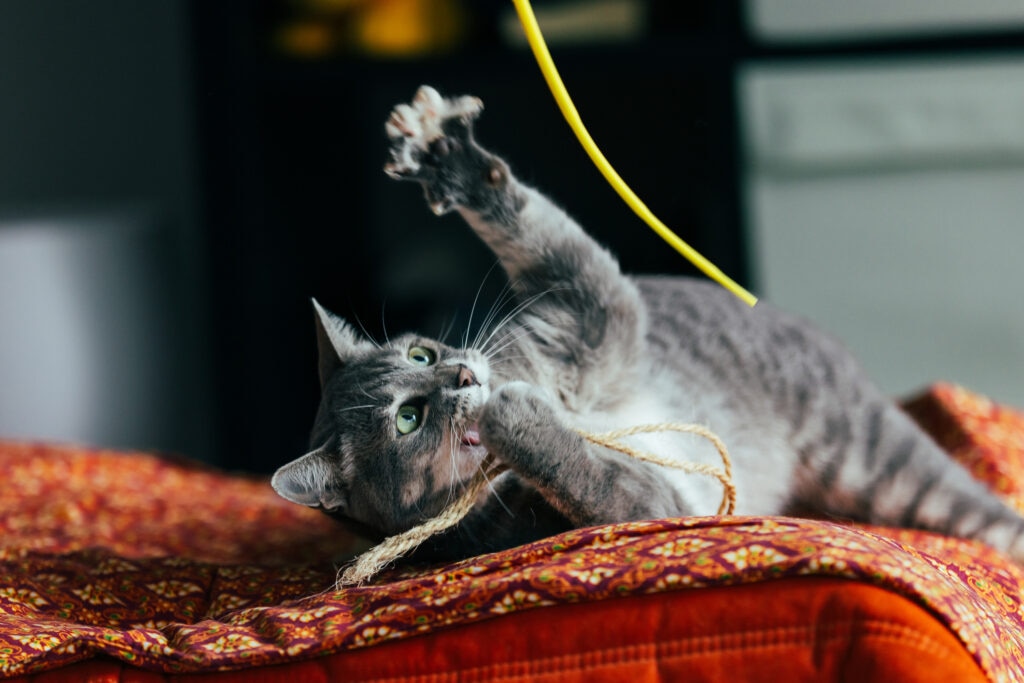
Daily playtime gives an outlet for your indoor cat’s natural hunting behaviors while stimulating them mentally and physically.
A few short play sessions each day can help keep your feline active and engaged. Suggestions include:
- Using interactive toys: Cats enjoy playtime more when you take part. Feather wands, teaser toys, and laser pointers mimic the movement of prey, encouraging your cat to stalk, chase, and pounce. Make sure the game is rewarding for your feline friend by allowing them to catch the prey occasionally.
- Making mealtimes more engaging: Make your cat work for their food by using puzzle feeders and food games. These techniques use your cat’s natural foraging instincts, turning a routine meal into an opportunity to explore and problem solve. They can also help slow down cats who eat too fast.
- Rotating toys: Your cat can become bored with toys you use regularly. The feather teaser they went wild for when you first showed it to them can be ho-hum after they’ve played with it every day. Keep multiple toy options and rotate them regularly to help keep your cat’s interest.
Support Healthy Habits
While engagement is an important part of a cat-friendly home environment, cats also need a routine that supports their physical health and gives them a sense of predictability.
The following habits can help your cat feel secure and make it easier for you to notice changes in their health or behavior.
- Keep a consistent routine: Cats are creatures of habit and prefer when they know what to expect. When possible, have predictable meals, play, rest, and other daily activities.
- Have the right litter box setup: Ensure litter boxes are clean, accessible, and large enough for your cat. In addition, provide enough boxes for your household. The typical rule of thumb is one litter box per cat plus one extra. Other factors to consider are that most cats are more likely to use unscented litter and boxes placed in quiet, low-traffic areas.
- Provide fresh water and balanced nutrition: Place several water bowls throughout your home, and clean and refill them daily to make sure the water stays fresh. In addition, feed your cat a balanced diet right for their age and nutritional needs, and measure each meal to prevent overeating and help keep a healthy weight.
- Ensure the right veterinary care: Routine wellness visits help your veterinarian watch all aspects of your cat’s health, including their weight, dental health, vaccination status, parasite prevention, and blood work. In addition, these visits allow your veterinarian to find health issues in their early stages before they become significant problems.
Signs Your Indoor Cat Needs More Stimulation
Certain changes in your cat’s behavior or activity can show they are bored or under stimulated.
- Excessive vocalization: Cats may meow, yowl, or cry if they are frustrated or seeking attention.
- Destructive scratching: Scratching is a normal feline behavior, but if you provide specific scratching surfaces and your cat still targets furniture, carpets, or curtains, this could show they need an outlet for pent-up energy.
- Overgrooming: Stress and boredom can lead to overgrooming, potentially causing bald patches, skin irritation, and hair loss.
- Weight gain or inactivity: An under stimulated cat may be lethargic and sleep more, leading to weight gain over time.
While these signs may be from boredom, they could also be caused by a medical condition. Consult your veterinarian if you notice sudden or significant changes in your cat’s behavior.
Secrets To Keeping Your Indoor Cat Happy FAQs
Are indoor cats happier than outdoor cats?
Indoor cats aren’t necessarily happier than outdoor cats, but they are at lower risk for dangers such as traffic, predators, diseases, and parasites.
How much playtime does an indoor cat need?
Most cats do well with two to three 10- to 15-minute play sessions per day.
Do indoor cats get bored?
Yes. If not properly stimulated through enrichment—such as vertical spaces, scratching opportunities, and playtime—indoor cats can easily get bored.
What are the best ways to enrich an indoor cat’s environment?
Provide safe vertical space, scratching posts, resting spots, interactive play, and food puzzle toys to enrich your indoor cat’s environment.


