Pneumothorax in Dogs: Symptoms, Diagnosis, and Treatment



A pneumothorax in dogs occurs when there’s air in the space between a pup’s lungs and chest wall. This can be life-threatening, as having air in this space can cause part of or the entire lung to collapse.
Pneumothorax can happen after any damage to the lungs or chest and make it difficult for a dog to breathe.
Let’s take a closer look at pneumothorax in dogs.
Key Takeaways
- Pneumothorax in dogs is a life-threatening condition where air collects around the lungs, causing them to collapse and making breathing difficult.
- The most common cause is trauma, but it can also result from lung disease or complications during medical procedures.
- Prompt emergency veterinary care is critical, and treatment focuses on removing trapped air and stabilizing the dog so the lungs can expand properly again.
What Is Pneumothorax in Dogs?
Inside the chest, there’s something called negative pressure. This is basically like a vacuum that keeps the lungs inflated.
If the chest wall gets a hole in it, this negative pressure is lost, forcing the lung to collapse in on itself. Until the problem is fixed and negative pressure is restored, the lung is unable to expand fully to allow for a good breath.
A pneumothorax is what happens when air enters the space between the chest wall and the lungs following trauma or damage. The air fills the space that the lungs need to be able to expand, resulting in the dog having difficulty breathing.
Without space for the lungs to expand properly, a dog with pneumothorax may struggle to breathe and look like they’re working hard to take each breath. They may get a blue tint to their gums (cyanosis) as there is less oxygen in their blood.
A pneumothorax in dogs can be either open or closed. If a pneumothorax is open, that means that there is a hole in the chest that is allowing air from the outside in.
If the pneumothorax is closed, there is air leaking from the lungs out into the space between the lungs and chest wall.
Pneumothorax in dogs is a medical emergency. If your dog is having difficulty breathing, they should be seen by the nearest emergency center immediately.
Symptoms of Pneumothorax in Dogs
Common signs of pneumothorax in dogs include:
- Difficulty breathing (taking shallow, fast breaths)
- Standing or sitting with their necks and elbows stretched out to allow more room for air to come in
- Blue, purple, or gray tint to gums
- Abdominal breathing (seeing the stomach move to try and force air in with each breath)
- Higher heart rate
- Crackles or air bubbles under the skin of their chest
- Lethargy/low energy
- Weakness
- Collapse
Causes of Pneumothorax in Dogs
A pneumothorax in dogs is caused by either trauma, airway disease (spontaneous), or injury during a medical procedure.
Traumatic Pneumothorax
Trauma is the most common cause of pneumothorax in dogs. This can be the result of the dog being hit by a car, kicked by a horse, or being bitten by a larger dog where their tooth makes a hole in the chest.
There are many other less common injuries that can result in chest wall trauma, like being shot or getting a puncture injury to the chest while jumping a fence or running through the woods.
Tears to the windpipe or esophagus can also lead to traumatic pneumothorax.
Dogs who run off leash unsupervised outdoors are at a greater risk of traumatic pneumothorax as they have a greater chance of being injured.
Spontaneous Pneumothorax
Pneumothorax in dogs can also be caused by airway disease.
Bullous emphysema is a type of spontaneous pneumothorax that can happen in larger, deep-chested dogs. During this lung disease, small air sacs break, leading to lung collapse.
Huskies are at a greater risk of developing bullous emphysema than other breeds.
Lung cancer, pneumonia, systemic fungal disease, and parasitic lung disease can all also lead to spontaneous pneumothorax.
Rarely, grass seeds (awns) can move through the chest and lead to a spontaneous pneumothorax.
Tension Pneumothorax
A tension pneumothorax in dogs is an uncommon cause of pneumothorax that usually results from complications during a medical procedure.
During anesthesia, if the lungs are overinflated while the medical team is breathing for a dog, it can lead to rupture (breaking) of the lungs.
Additionally, if an endotracheal tube (breathing tube) is too large, it can lead to tears in the windpipe and later pneumothorax.
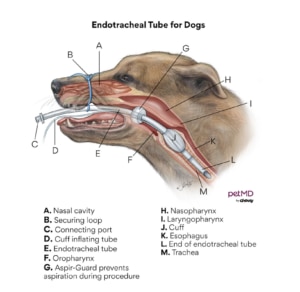
Click here to download this medical illustration.
Other medical procedures, like lung biopsies or chest taps, can rarely lead to a tension pneumothorax.
How Veterinarians Diagnose Pneumothorax in Dogs
If your veterinarian suspects a pneumothorax in dogs, they will start with a thorough physical exam.
They will listen to your dog’s heart and lungs, and palpate (feel) their chest wall. The vet will check your pet’s gum color and check their capillary refill time by blanching (pressing on) your dog’s gums.
The veterinarian will take your dog’s temperature and look over their whole body. Because pneumothorax is most caused by trauma, many affected pups are in shock.
X-rays are the easiest way to diagnose a pneumothorax. The collapsed lung can readily be seen on X-rays.
Sometimes, a quick ultrasound called a TFAST ultrasound is done. This stands for thoracic focused assessment with sonogram for trauma, triage, and tracking. This can help the veterinarian find extra air pockets between the lungs and the chest wall.
Rarely, a CT scan will be recommended after the dog is stable to look for an unusual cause of spontaneous pneumothorax.
Treatment of Pneumothorax in Dogs
As many dogs have multiple injuries from a trauma, the first step in treatment will be to get your dog stable. This means getting their vital signs (heart rate, breathing, and blood pressure) to a safe place.
Stabilization may mean stopping bleeding or treating shock. Your dog will likely be put on oxygen.
Pneumothorax is treated by removing the air from the space between the heart and lungs so that the lungs can expand again, allowing your dog to breathe better.
If the cause is trauma, the wound will need to be repaired. Some injuries need surgery to fix the problem, either to close a hole in the chest or remove a problem lung lobe.
As many of these dogs are in pain following trauma, pain medications—like carprofen and gabapentin—are often given.
Occasionally antibiotics are given if there is evidence of infection (like in the case of pneumonia) or with a contaminated deep injury to the chest (like a bite wound).
Antibiotics may be given by injection in the hospital, then oral medications—like Clavamox, marbofloxacin, or doxycycline—may be sent home at the time of discharge.
Many dogs being treated for pneumothorax will stay in the hospital several days until they are no longer having air leak into the space between their lungs and chest wall.
Depending on the underlying cause, pneumothorax can be curable in many dogs or chronically managed in others.
For example, a dog who was hit by a car may recover fully after treatment for their pneumothorax. But a dog with a spontaneous pneumothorax diagnosed with bullous emphysema may need life-long management.
Recovery and Management of Pneumothorax in Dogs
With many cases of pneumothorax in dogs, it takes weeks for affected pups to fully recover.
It’s important that you keep your dog’s activity level restricted during recovery. Two to four weeks of rest is often recommended. Avoid letting them run, jump, or play as that can put an increased workload on the lungs.
Leash walk only when taking them outside to go to the bathroom.
If your dog had surgery or a chest tube placed while they were in the hospital, make sure they are unable to lick or chew at their incisions.
Licking at a surgical cut can cause infection and delay healing. A recovery cone, such as the Supet Soft Pad, or recovery suit, such as the Kuoser Surgical Suit, can help protect an incision while it is healing.
Long term, watch your dog’s breathing at home.
Watch for an increased breathing rate as it may show the condition is back. A normal dog should take less than 30 breaths per minute while calm and comfortable.
You can count the number of breaths they take in a minute by watching their chest rise and fall when they are awake and relaxed.
If this number rises above 30, get your dog in for a follow-up with your veterinarian right away.
Prevention of Pneumothorax in Dogs
The best way to minimize your dog's risk for pneumothorax is to avoid letting them run off leash in unsafe areas.
Avoid letting your dog run near roads, livestock, or other potential hazards.
Pneumothorax in Dogs FAQs
Can a dog survive a pneumothorax?
With quick medical care, a dog can survive a pneumothorax.
What causes a spontaneous pneumothorax in dogs?
Spontaneous pneumothorax can be caused by a break of the tiny air sacs called bullae. This is seen in a lung disease called bullous emphysema. It can also happen after infection, parasites, or cancer of the lungs.


