How To Stop Your Dog From Jumping


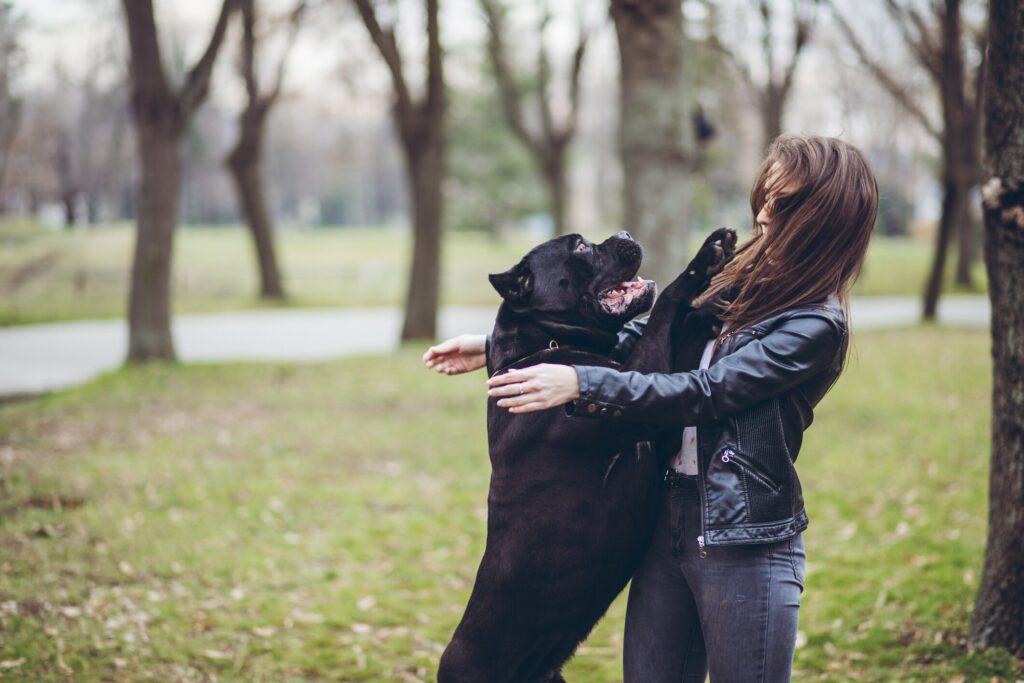
urbazon/E+ via Getty Images
Dogs usually jump on people because it gets attention—and with consistent, positive training, dogs of any age can learn to keep all four paws on the floor.
Whether you’re dealing with a bouncy puppy, a newly adopted dog, or a long-standing habit, jumping is one of the most common behaviors pet parents want to stop. While it’s often friendly in intent, jumping can lead to scratches, knocked-over guests, and unsafe situations.
The key to stopping jumping isn’t punishment—it’s understanding why dogs jump and teaching them a better way to say hello.
Key Takeaways
- Dogs jump to greet people and get attention.
- Jumping is usually friendly, not aggressive.
- Ignoring jumping and rewarding calm behavior is most effective.
- Teaching “four on the floor” and "sit" are essential skills to keep your pup from jumping.
Why Do Dogs Jump up on People?
Dogs are social animals, and jumping is a natural greeting behavior.
From your dog’s perspective:
-
Jumping brings them closer to your face
-
Jumping often results in petting, talking, or laughter
-
Any attention—even negative—can reinforce the behavior
When dogs greet each other, they’re typically face-to-face. Jumping helps dogs bridge the height gap with humans.
While jumping may seem harmless when dogs are small, it can become dangerous as dogs grow larger and stronger.
How To Stop a Dog From Jumping on People
During puppyhood, the best way to handle your dog jumping is to never allow them to get away with jumping.
If your bouncing puppy is jumping, make sure that you inform everyone around you not to pay attention to the dog unless all four of her feet are firmly planted on the ground.
It can be a natural reaction to yell “no” and use your hands or your knees to ward off a jumping dog, but often this just encourages the behavior, as it can be confused with playing.
Using a cue like “off” is also useful for dogs of any age, because relating an action with a chosen word makes training any pup a bit easier.
Lots of positive reinforcement, such as loving praise or a yummy treat, should reward a puppy who does not jump on your company or one who obeys the “off” cue.
It can be a natural reaction to yell “no” and use your hands or your knees to ward off a jumping dog, but often this just encourages the behavior, as it can be confused with playing.
For older dogs, it’s harder to teach them new tricks, but it’s possible. The same methods can be used; it will just take a longer time for them to learn the skill, since this has been a learned behavior for some time.
The goal of teaching a dog of any age to stop jumping is to keep “four on the floor” if they want anyone to pay attention to them.
-
Teach them to sit. Knowing how to sit when they are told to do so can help a dog with their excitement when company arrives. Offer praise and treats when they sit as instructed. A dog that does not know how to sit will likely not be able to learn how to not jump.
-
After your pup has mastered sitting, move on to teaching them that when they get close to someone, they sit. Do not allow jumping. Ask your family and friends to tell your dog to sit when they come inside your home.
-
With new house guests, at first you should keep your dog on a leash for 15 minutes to make sure the excitement level stays down. Once they master sitting and not jumping on a leash, you can train them to do the same off leash.
-
The best way to react to a jumping dog is usually to ignore them! Every dog is different, however, and some are more reactive to being ignored. If so, ask your pup to sit, or take that moment to instruct your guest to ask your dog to sit. If your dog continues to jump and not sit, take them out of the room to de-escalate the energy.
-
Make sure to always have the safety of yourself, your guests, and your dog in mind. Training methods that use physical or emotional punishment only cause an excited and jumpy dog to display worse behavior. It can cause harm to your dog and puts you at risk of them reacting toward you.
-
Consider using a gentle leader headcollar, which pulls the dog from their snout—not from their neck—to discourage unwanted behaviors.
With consistency and time, you should be able to teach a dog of any age to stop jumping.
What Not To Do When Training Your Dog
Let's look at a few things to avoid when training your dog not to jump up.
-
Don't pay attention to a dog that is jumping, or allow others to. Try not to touch or make eye contact with them until they are still, with all four feet on the ground.
-
Don't try to push a jumping dog off you or use your knee to avoid other contact, as this can be seen as playing back.
-
Don't offer praise after the desired cue is over. When you tell a dog to sit, offer a reward when they sit, not when they stand up afterward. This helps them connect the desired behavior with the reward they want.
-
Don't allow your house guests to have a loud and chaotic entrance to the home. Ask them to come in quietly and calmly to keep the energy right for your dog’s new behaviors.
-
Don't use negative punishment—such as kneeing the dog in the chest, stepping on their toes, hitting them, or speaking harshly—to stop jumping behaviors. This is for the safety and wellbeing of both people and your dog.
While you can train your dog at home, it’s never a bad idea to seek professional help. You can enroll your dog in training classes or have a certified trainer come to your home for some one-on-one obedience training.


