Why Are Dogs Scared of Vacuums?


Lazy_Bear/iStock/Getty Images Plus via Getty Images
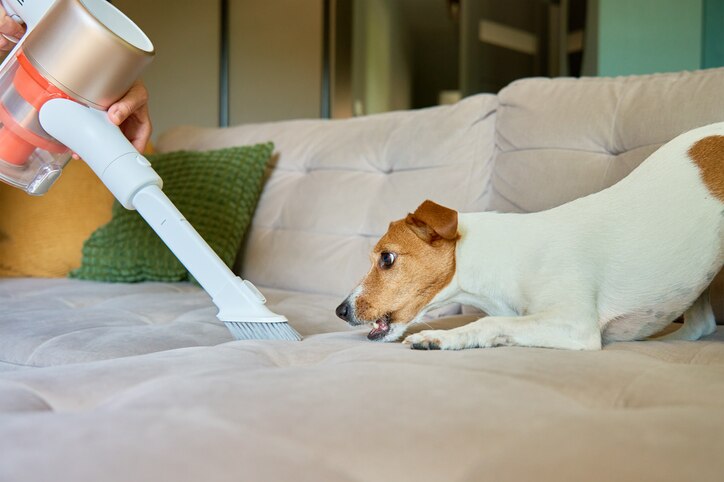
Vacuuming might not be one of your favorite chores, but for dogs it can be downright scary.
If your pup tends to get anxious on cleaning days, here’s what might be going on.
Key Takeaways
- Dogs are often scared of vacuums because the loud noise, vibrations, and unpredictable movement can feel overwhelming.
- A lack of early positive exposure or a previous scary encounter with a vacuum can cause lasting fear.
- Some dogs bark or lunge at the vacuum due to fear, protective instincts, prey drive, or overstimulation.
- Choosing a quieter vacuum can help reduce stress.
- Desensitization and counterconditioning can help dogs learn to stay calm around vacuums.
Why Are Dogs Scared of Vacuums?
There are three big reasons why dogs develop a fear of vacuums.
Sensory Overload
Dogs have a better sense of hearing than people. They’re able to pick up sounds at much lower intensities and at higher frequencies than humans. This means that while you might be annoyed by the sound of your vacuum cleaner, your dog could find it terrifying.
Vacuums also create vibrations that dogs can feel through the floor. And while you might see a vacuum as a helpful cleaning companion, your dog might see a bulky monster “invading” their home.
From a dog’s point of view, vacuums are also unpredictable. They come and go on different days, suddenly turn on and off, and move erratically around your dog’s territory.
A Bad Experience
Puppies have an important socialization window that falls between 3–12 weeks of age. Dogs who weren't introduced to vacuums in a positive manner during this time often find them alarming later. And a single scary encounter during that window often has long-lasting negative effects too.
A fearful encounter with a vacuum as an adult dog can have a similar effect. If your dog was once startled or hurt by a vacuum, that memory may linger.
Temperament
Some dogs are simply more sensitive and prone to fearful reactions than others.
For example, if your dog has noise phobia and is scared by thunderstorms, fireworks, or other loud noises, they could very well be afraid of the vacuum too.
Why Do Dogs Bark at the Vacuum?
Some dogs who are scared of vacuums try to run away, but many will bark or even lunge at the appliance.
Your dog might bark at the vacuum because of:
-
Fear: Dogs with fear aggression are trying to create space between themselves and what they see as a threat.
-
Protective instincts: Dogs who view the vacuum as a threat may feel the need to protect their people or territory.
-
Prey drive: The way vacuums move can trigger a dog’s prey drive and barking.
-
Herding instinct: Some dogs, especially herding breeds like Border Collies or Australian Shepherds, may attempt to move the vacuum to where they think it should be.
-
Overstimulation: Barking can be a way for excited dogs to release energy.
How To Choose a Vacuum That’s Less Stressful for Dogs
Here’s how to pick a vacuum that’s less stressful for your dog:
-
Check your current vacuum. Make sure it’s in good working order. A clogged filter or worn-out motor, belt, or brush roll can make a vacuum noisier.
-
Consider a stick vacuum. Stick vacuums, like the Dirt Devil Simpli-Stik Plus Pet Vacuum, are usually quieter than upright or canister models. They can do a great job on floors, but some may not thoroughly clean carpets.
-
Opt for a robot vacuum. If your dog is really terrified, a robot vacuum might be your best bet (even though they’re not always as powerful as other types). That’s because robot vacuums:
-
Are low to the ground and move more slowly and predictably
-
Let you schedule cleaning sessions while you and your dog are out of the house
-
Include many quieter models, like the Shark Matrix Self-Emptying Robot Vacuum, which operate more quietly than many traditional vacuums
-
-
Choose a low-noise upright or canister vacuum. Full-size vacuums are often louder than stick or robot models, but some are designed to reduce sound without sacrificing suction. The Miele Classic C1 Turbo Team Bagged Canister Vacuum Cleaner, for example, is both quiet and good at tackling pet hair.
How To Help a Dog Who’s Scared of Vacuums
You can teach your dog to stay calm around a vacuum cleaner by using desensitization and counterconditioning.
These training techniques help your dog relax and associate the vacuum with something positive:
1. Introduce the Vacuum as a Neutral Object
Start by leaving your vacuum out in a room while it is turned off. Let your dog approach and sniff it on their own terms.
2. Add Movement, Praise, and Rewards
Once your dog is comfortable approaching the vacuum, introduce slow, deliberate movement. Do this by moving it forward and backward while it’s still off.
As long as your dog remains calm, hand out lots of praise and training treats, like American Journey Grain-Free Soft & Chewy Training Bits.
3. Introduce the Sound at a Distance
This is often the hardest part, and it helps to involve another person.
Ask someone else to run the vacuum at a distance from you and your dog—for example, in a separate room behind a closed door.
The person with the vacuum should turn it on for around 10 seconds then turn it off, repeating the pattern for a minute or two.
As long as your dog remains calm, give them treats while the vacuum is on—not if they become upset or if the vacuum is off.
4. Gradually Decrease the Distance
Over multiple sessions, place the running vacuum closer to your dog while continuing to reward calm behavior when it’s on.
Watch your dog’s body language carefully:
-
Relaxed posture, loose muscles, and willingness to take treats mean your training is going well.
-
Tension or a refusal to eat are signs to slow down.
5. Work Toward Normal Vacuuming
Eventually, your dog should be able to remain calm near a running vacuum.
Other Ways To Help a Dog Who’s Scared of Vacuums
There are a few other things you can do to help your dog on vacuuming days.
Don’t Add to the Stress
Every time your dog reacts negatively to the vacuum, it reinforces that behavior.
If your dog is still in the process of becoming less fearful and you need to do a quick clean on your own, make sure they’re out of the house or in a quiet room away from the noise.
Mask the Sound
Running a noise machine, like the Yogasleep Dohm Classic Sound Machine, turning on the TV, or playing calming music can help buffer the sound of the vacuum when your dog is in a separate room.
Distract With an Irresistible Toy
A treat dispenser is one of the best ways to distract your dog.
For example, the Starmark Treat Dispensing Bob-a-Lot Dog Toy helps keep dogs mentally engaged and focused on food rather than what’s happening down the hall.
Use Calming Aids
Synthetic pheromones are similar to the calming pheromone that mother dogs produce when nursing, and an antianxiety vest can help your dog feel physically secure.
Finally, never tease your dog with the vacuum or punish them when they are afraid. These actions only reinforce fear and erode the trust you’ve worked so hard to build.
With some love and positive reinforcement, most dogs can learn to tolerate the vacuum.
Dogs and Vacuum Cleaners FAQs
Why do dogs not like the sound of vacuum cleaners?
Dogs have more sensitive hearing than people. While the sound of a vacuum can be irritating to humans, dogs experience it in a much more intense way.
Are dogs afraid of robot vacuums?
Sometimes. Some dogs can be afraid of robot vacuums, but many find them less frightening than traditional models because they run more quietly, have a lower profile, and move slowly and predictably.
Can dogs get used to vacuums?
Yes. Dogs can get used to vacuums through desensitization and counterconditioning, which teaches dogs to relax and associate the vacuum with something positive, like treats.
You can practice this on your own or your veterinarian or a veterinary behaviorist can design an individualized program for your dog.
Should I comfort my dog during vacuuming?
Yes. Providing calm reassurance and treats while the vacuum runs can help build a positive association over time.


