Rabies Vaccine for Dogs: What It Is and Why Your Dog Needs It


Ivan-balvan/iStock/Getty Images Plus via Getty Images
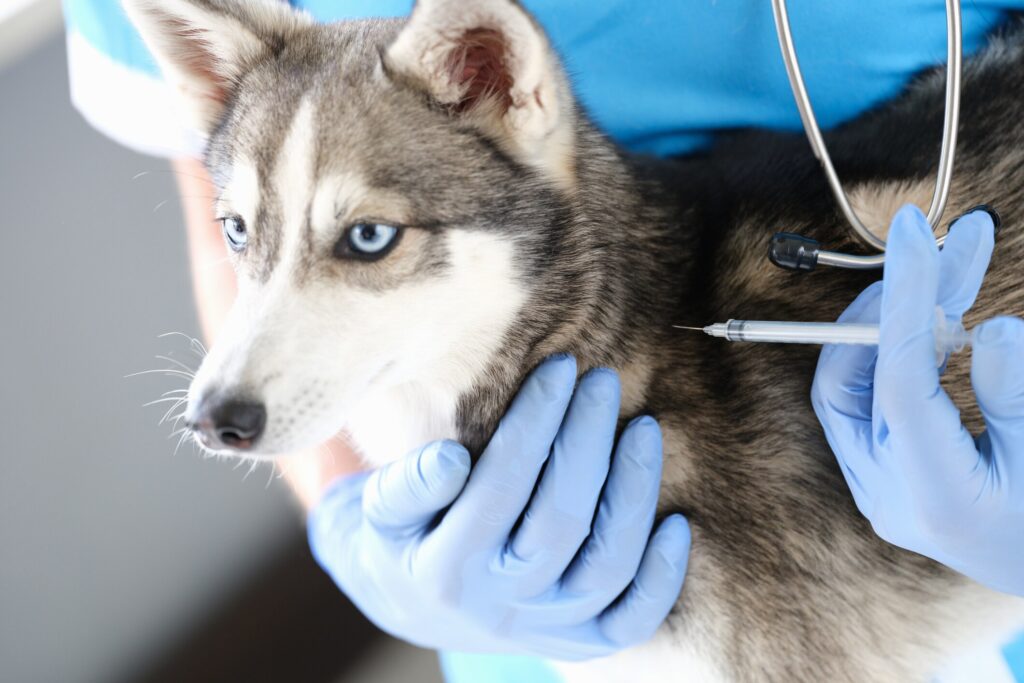
The rabies vaccine for dogs is a standard part of dog vaccine protocols and is required by law in most jurisdictions.
While rabies in dogs is rare in the United States (largely thanks to this vaccine), pet parents should always have their dogs vaccinated to protect them from this fatal disease. Rabies is more common in countries without widespread vaccination of dogs.
For PetMD’s complete guide to rabies vaccines for dogs, click here. For the Spanish version, click here.
Key Takeaways
- The rabies vaccine is a core vaccine required by law in most areas and is crucial to protect dogs and humans from a fatal and incurable disease.
- Dogs typically receive their first rabies shot around 3 to 4 months of age, with boosters given every 1 to 3 years depending on local regulations and the vaccine product used.
- Side effects are usually mild, but rare allergic reactions can occur; always consult your vet to stay up to date and safe.
What Is Rabies in Dogs?
Rabies is a viral disease that attacks a dog’s nervous system. Ultimately, infection with rabies will lead to paralysis and death.
Dogs contract the rabies virus through a bite from an infected animal.
The virus then travels from the site of infection to the brain.
Rabies can take two forms in dogs: a furious form and a paralytic form.
Furious rabies usually leads to aggression, with dogs attacking their surroundings, often without an obvious trigger for the behavior.
Dogs with the paralytic form will gradually develop paralysis and the inability to swallow, leading to excessive saliva production, or the well-known “foaming at the mouth.”
Coma and eventual death result after the dog becomes paralyzed or has repetitive seizures.
This virus is incredibly dangerous because it’s transmissible to humans and is fatal for dogs and humans alike. There is no treatment for rabies.
Luckily, rabies in dogs is easily prevented with the rabies vaccine.
What Is the Rabies Vaccine for Dogs?
The rabies vaccine for dogs is given to prevent infection with the rabies virus.
It’s considered a core vaccine, meaning it’s recommended for all dogs regardless of lifestyle or location. The vaccine is given either under the skin (most common) or into the muscle.
The rabies vaccine is a killed vaccine, which means that the vaccine contains no live rabies virus. Dogs can’t contract rabies from the vaccine.
Once a dog is vaccinated, their immune system will recognize the virus if they are exposed and prevent the dog from becoming infected.
Although no vaccine is 100% effective, the rabies vaccine is more than 95% effective.
Of all rabid dogs reported to the Centers for Disease Control and Prevention (CDC) between 2002 and 2022, only 2.56% had a documented history of rabies vaccination.
Most dogs who contract rabies have no known vaccine history. That said, no vaccine offers complete protection, so boosters are still recommended if your vaccinated dog is exposed. Even if your dog has been vaccinated, you should contact your veterinarian if you are concerned your dog may have been bitten by or encountered a potentially rabid animal.
Like all vaccines, there is a risk for side effects. For most dogs, these side effects are mild and may include mild fever, decreased appetite, lethargy, and soreness or swelling at the site of injection.
Rarely, dogs can have an allergic reaction to the vaccine, which must be treated immediately.
Hives, facial swelling, vomiting, and collapse are all potential symptoms of an allergic reaction or anaphylaxis. If anaphylaxis is suspected, it must be treated as an emergency. Your dog may be exempt from future rabies vaccination if they experience severe side effects.
Understandably, you may be reluctant to get your dog vaccinated if your dog doesn't do well at the veterinary clinic.
If your dog struggles with anxiety, speak with your veterinarian.
They may recommend pre-medicating your dog with an anti-anxiety medication, such as trazodone, to make the vaccine appointment go more smoothly.
Why Does My Dog Need the Rabies Vaccine?
Your dog needs the rabies vaccine to ensure they’re protected, your family and other pets are protected, and that you’re meeting any requirements set forth by law.
Any dog could be at risk for rabies if they’re in an area where the disease is carried among wildlife.
If your dog gets into an altercation with a wild or stray animal outside, or if a wild animal, such as a bat, gets into your home, rabies exposure should be considered.
In most areas, the rabies vaccine is required by law.
However, specific rules vary by product and state, so pet parents should rely on their veterinarian and local health officials to ensure their pet is vaccinated according to the law.
In addition to local regulations, it’s likely that kennels, groomers, and other dog-friendly spaces will require proof of rabies vaccination.
Your pet will only be allowed to visit these facilities if they meet preventive care requirements.
How Often Do Dogs Need Rabies Shots?
Your pup can get their first rabies shot once they’re 3 months of age or older. A booster is typically given one year later, followed by additional boosters every one to three years. The exact schedule depends on the rabies vaccine product your veterinarian carries and local law requirements.
In areas where three-year rabies vaccines are used, a typical schedule may look like this:
-
3 to 4 months of age
-
1 year of age
-
4 years of age
-
7 years of age
-
10 years of age
-
13 years of age
In some cases, depending on the vaccine product and local laws, dogs may instead receive the rabies vaccine annually during their wellness visits.
Rabies Vaccine for Dogs FAQs
How often should a rabies vaccine be given to a dog?
The rabies vaccine is given every one to three years depending on the product used and local regulations.
Do dogs really need a rabies shot?
Rabies disease is 100% fatal, and the vaccine is the best preventive measure available. The vaccine is also required by law in most jurisdictions.
How long is rabies vaccination valid for dogs?
A dog is considered protected 28 days after their first shot. After that, they need a vaccine every one to three years, depending on the product and local laws, to maintain protection.
What are the side effects of the rabies shot for dogs?
If dogs develop side effects, they’re usually mild, such as a low-grade fever, lethargy, decreased appetite, and soreness or swelling at the vaccine site. Rarely, more serious reactions like anaphylaxis can occur.


