Dog Hives: What They Are and How To Treat Them


xxmmxx/iStock / Getty Images Plus via Getty Images
Hives in dogs (also referred to as urticaria) are raised, red, swollen patches or welts on the skin that appear suddenly, caused by an allergic reaction. Dog hives can be itchy and uncomfortable and sometimes indicate a more serious reaction called anaphylaxis that requires veterinary care.
If you suspect your dog has suddenly developed hives, it is best to seek veterinary treatment, since hives can progress to anaphylaxis.
Key Takeaways
- Hives are raised, red skin welts typically caused by an immediate allergic reaction.
- Triggers include insect stings, vaccinations, medications, contact with toxic plants or chemicals, shampoos, or food sensitivities.
- Veterinarians typically treat hives with antihistamines or corticosteroids.
- Most cases resolve quickly, but severe swelling, difficulty breathing, or rapid progression of symptoms requires emergency veterinary care.
- If you suspect your dog has hives, call your vet immediately.
What Are Dog Hives?
Hives are usually caused by an allergic reaction and can appear very quickly—and disappear just as fast. The raised red area of the skin is called a wheal, and it can appear anywhere from a few minutes to hours after exposure to an allergen.
Wheals can be located anywhere on your dog’s body, but they’re usually found on the head, neck, back, stomach, and legs.
In mild cases, the hives will generally disappear 12–48 hours after contact with the allergen.
However, because the reaction can progress to anaphylaxis (a dangerous swelling of your dog’s airways) seek treatment if you see hives on your dog. This is especially true for hives that occur on the face or around the throat.
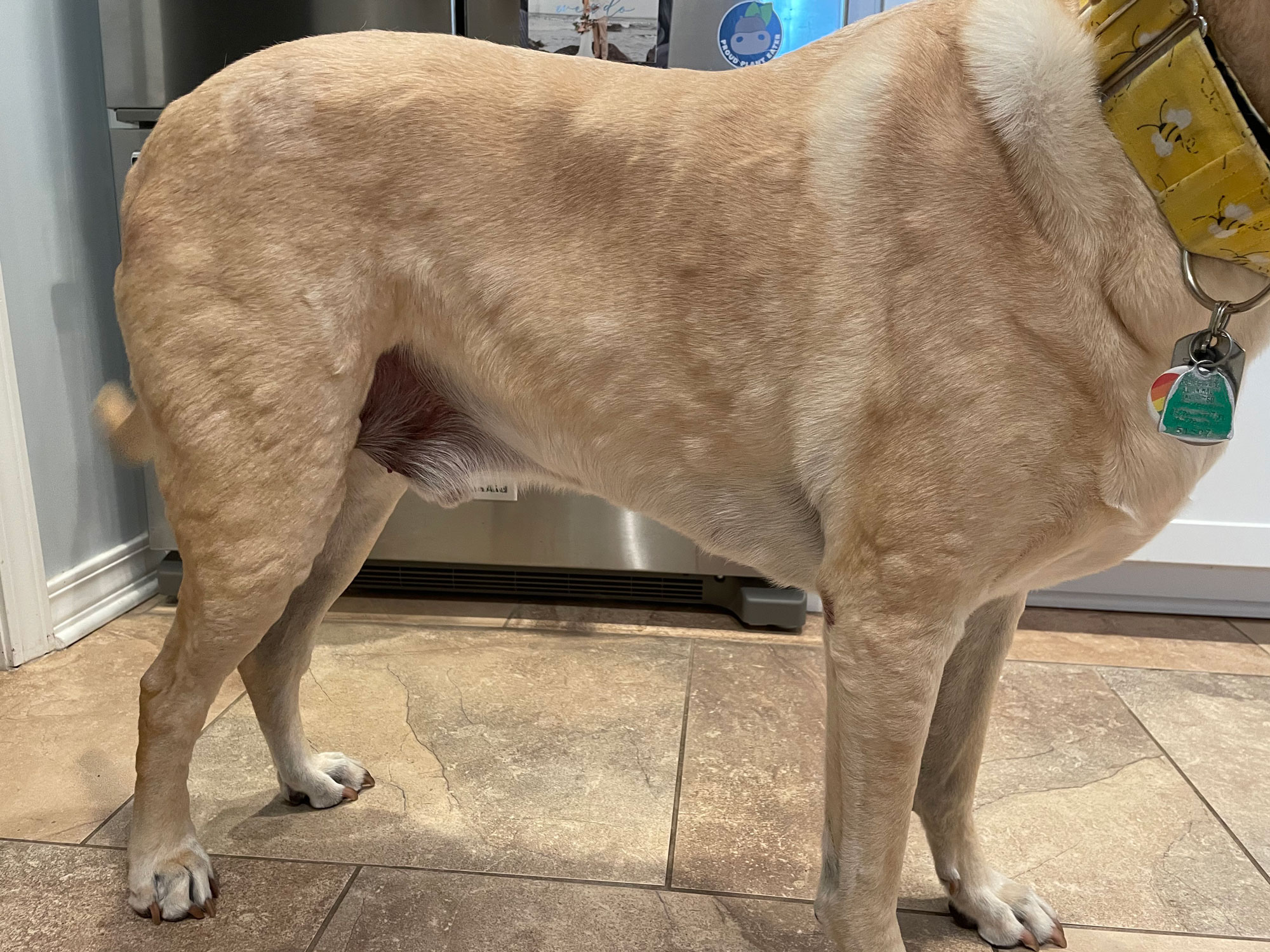
Symptoms of Dog Hives
Symptoms of dog hives include:
-
Red raised areas of skin that can occur anywhere (including mucous membranes) but are most seen on the head, neck, back, abdomen, and legs
-
Intense itchiness and scratching
-
Excessive drooling if the mouth is swollen
-
Swelling (angioedema), which is particularly concerning when it involves the face and respiratory system. This can have severe and life-threatening consequences.
Causes of Dog Hives
Any allergen your dog is sensitive to may lead to hives.
Common causes of dog hives include:
-
Insect stings or bites (typically on the head and neck of your pup)
-
Shampoos or topical agents
-
Food allergens
How Vets Diagnose Dog Hives
Your vet will closely examine your dog to locate any wheals, which typically have hair on them and may appear in clusters. This is the hallmark of an allergic reaction.
Beyond a physical examination, other ways to diagnose hives include:
-
Reviewing patient history. Any history you can provide is helpful. Be as thorough as you can in describing allergens your dog might have encountered and when and where you first saw the hives
-
Monitoring how your dog’s hives respond to treatment. Hives resolve within a few minutes to hours. If your dog’s red bumps do not resolve, they may not truly be hives but may be skin irritation caused by fleas, skin mites, ringworm fungal infection, or allergies.
When Is It Not Hives?
If your dog has red raised bumps or a skin rash that has been there for more than two to three days, these are probably not hives and may be from allergic dermatitis, which is much more common in dogs than an allergic reaction or anaphylaxis.
Allergic dermatitis causes itching and inflammation due to environmental allergies (like seasonal allergies), external parasites (fleas, mites), contact dermatitis, or an allergy to a certain food protein. To tell the difference, your vet will ask you how suddenly the rash appeared and closely examine your dog to locate any wheals.
Treatment for Dog Hives
Dogs with hives show dramatic improvement and complete resolution within a few minutes or hours of treatment, which may include:
-
Corticosteroid injection (sometimes in combination with oral steroids)
-
Antihistamine injection (sometimes in combination with oral antihistamines)
-
Intravenous fluids (in severe cases)
Treatment for When It May Not Be Hives
If your dog’s skin rash or red bumps are caused by allergic dermatitis—not hives—then your vet may recommend medication to control the itching and inflammation, such as Zenrelia.
Zenrelia is a prescription medication designed specifically to control allergic itch in dogs over 12 months of age. The tablet is given once daily, with no higher “loading” dosage to start, and works fast to reduce inflammation and improve skin allergy symptoms.
Depending on your individual pup and the cause of their skin issue, your vet may recommend other prescription medications to control itching, like Apoquel or Cytopoint.
At-home treatments may include:
-
Cold compresses over the swollen areas to give relief from itchiness
-
Flea and tick preventive
-
Medicated shampoo therapy
-
Medicated spray, mousse, or wipes
-
Omega fatty acid supplements
-
Hypoallergenic diet
Recovery and Management of Dog Hives
Work with your vet to determine the cause of the hives, using both your dog’s health history and history of exposure to allergens.
Depending on the cause and the frequency, your vet may recommend:
-
Allergy testing to confirm environmental allergens
-
Immunotherapy treatment (allergy shots) to desensitize your dog to specific allergens
-
A food trial to find ingredients that might cause a reaction, which could result in specific dietary recommendations
Dog Hives FAQs
Are dog hives an emergency?
Possibly. In many cases, hives (indicating an allergic reaction within the body) may resolve on their own. While hives are not considered an emergency initially, the underlying allergic reaction itself may progress into a more serious situation called anaphylaxis, involving rapid worsening of symptoms, swelling, lethargy, and difficulty breathing. Call your vet right away if your dog develops hives.
What can I give my dog for hives?
It’s important to speak to your veterinarian first before giving your dog any medication. Depending on what your vet feels is causing the hives and if your dog is experiencing any other concerning symptoms, your vet will determine the best next step for your dog.
How long do hives last?
Hives can disappear within a few hours or last up to 48 hours.
Can anxiety cause hives in dogs?
There’s a small chance that stress can cause dog hives, but generally, anxiety merely worsens hives that are already present.
Should I take my dog to the vet for hives?
Yes, the safest thing is to call your vet right away if you notice your dog has developed hives. Hives indicate a larger issue—an allergic reaction—and require treatment to make your dog comfortable and keep the reaction from progressing.
What do hives look like on a dog?
Hives are red, often swollen areas of skin that may be very itchy. They can be anywhere on the body, but you’ll often spot them on your dog’s head, neck, back, stomach, or legs.
What foods cause hives in dogs?
There is no one food that generally causes hives in dogs. In fact, food allergies in dogs are rare. However, if your dog is allergic to a particular food or ingredient, this may cause hives.


