What Food Can Dogs Eat on Thanksgiving?


Chewy
Want to include your dog in your Thanksgiving celebration? You can!
There are plenty of traditional Thanksgiving foods you can share with your furry companion—in moderation, of course.
Here are the Thanksgiving foods dogs can eat.
Key Takeaways
- Dogs can eat small amounts of plain, fully cooked, boneless, skinless turkey on Thanksgiving.
- Plain pumpkin, green beans, carrots, sweet potatoes, and apples are also safe Thanksgiving treats for dogs.
- You can plan a special Thanksgiving dinner for your dog by buying some tasty, ready-to-serve meals and treats.
- Avoid sharing stuffing, gravy, mashed potatoes with seasonings, and other dishes containing garlic, onions, or excess fat.
- If your dog eats something toxic, seek emergency veterinary care immediately.
Thanksgiving Foods Dogs Can Eat Safely
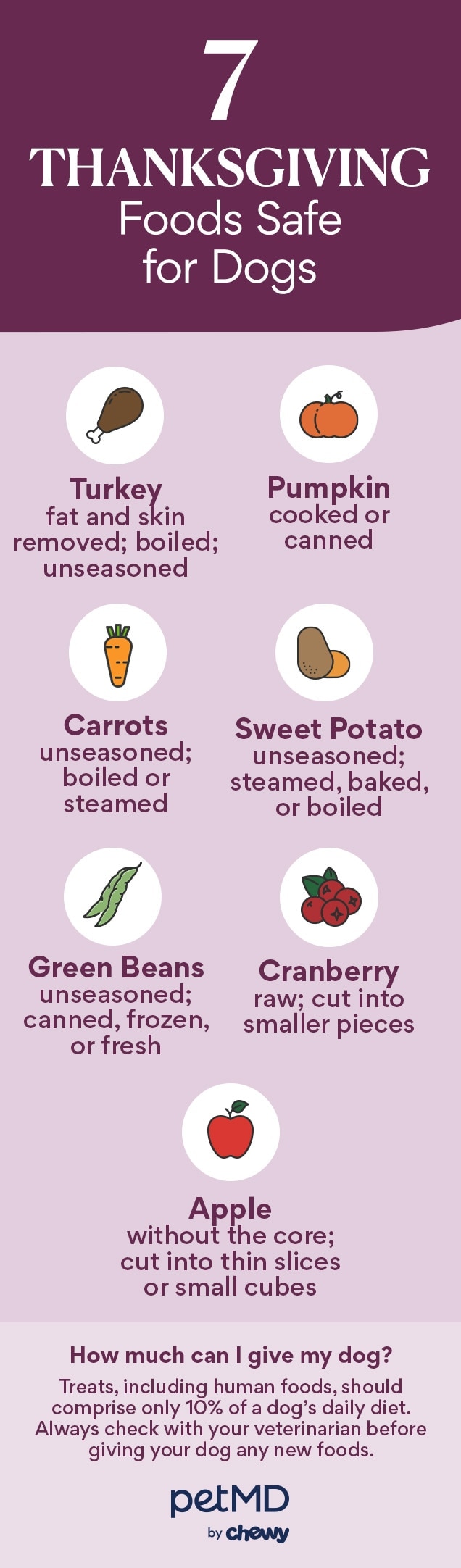
Turkey
Turkey is a great source of lean protein, and you can even serve your dog some—just make sure that you safely prepare it for your pup.
Here’s how:
- Remove the turkey skin and fat from a piece of white meat.
- Discard any bones. Ingestion of bones—which often become splintered—can seriously injure a dog’s intestines.
- Keep the turkey bland and unseasoned. Garlic, onion, and other seasonings are toxic to dogs. Salt is also best avoided.
- Boil the turkey. This will keep the fat content low.
- Let cool, then serve a small amount to your dog. For example, a 25-pound dog can have about 1.5 ounces of plain white meat turkey without the skin.
Pumpkin
Pumpkin can be fantastic for a dog’s digestive system. Veterinarians often recommend 100% pure pumpkin to either ease constipation or help firm up your pup’s stool—and you can buy readymade, dog-safe versions.
Avoid pumpkin pie and pumpkin pie filling, though. These often contain spices that are toxic to dogs, and they may also cause an upset stomach and/or pancreatitis.
Cranberry
Cranberries are safe for dogs and they:
- Help support urinary tract health
- Contain lots of healthy antioxidants
However, not all cranberries are OK. You should avoid:
- Raw cranberries, which are tough for dogs to digest or swallow
- Cranberry sauce, which has high sugar content and possible artificial sweetener
- Dried cranberries, which may have toxic raisins in the mix and are high in sugar
To avoid any choking hazard, always cut cranberries into smaller pieces.
Green Beans
While dogs can’t snack on a Thanksgiving staple like green bean casserole, they can have raw, plain green beans.
Benefits of green beans include:
- They’re a good low-calorie snack
- They also give pups a feeling of being full, which makes it easier for them to remain satisfied while staying at a healthy weight
- They’re high in iron and other vitamins and minerals that dogs need
- They bulk up stool as it moves through the large intestine, promoting normal stool formation
You can serve your pup the following types of green beans:
- Canned
- Frozen
- Fresh
However, all types must be unsalted and unseasoned.
Carrots
Carrots are a great source of vitamin A and fiber—they’re even an ingredient in many commercially available dog foods.
It’s safe to give your dog:
- Raw baby carrots (cut into small pieces)
- Cooked carrots (even better, since these are gentler on your dog’s stomach)
- Canned carrots, as long as they aren’t packaged with a lot of salt or sugar
You can also buy dog-friendly carrots ready to go.
Sweet Potatoes
Sweet potatoes are a good source of B vitamins, vitamin A, and fiber, and they’re frequently featured in limited ingredient diets.
When serving your dog raw sweet potatoes, you can:
- Cook them and serve them in cubes
- Steam and mash them
- Bake or boil this versatile veggie
You can make things even easier by buying a dog-friendly product to have for the holiday.
Apples
Many dogs love the sweet, tart crunch of apples. They’ve got plenty of fiber and antioxidants, and they’re a healthy treat in moderation.
To safely serve apples to dogs:
- Wash the apple under water.
- Always cut out the core, as apple seeds contain cyanide and are poisonous to dogs.
- Cut the apple into thin slices or small cubes.
An apple dog treat is a good substitute too.
Thanksgiving Foods Bad for Dogs
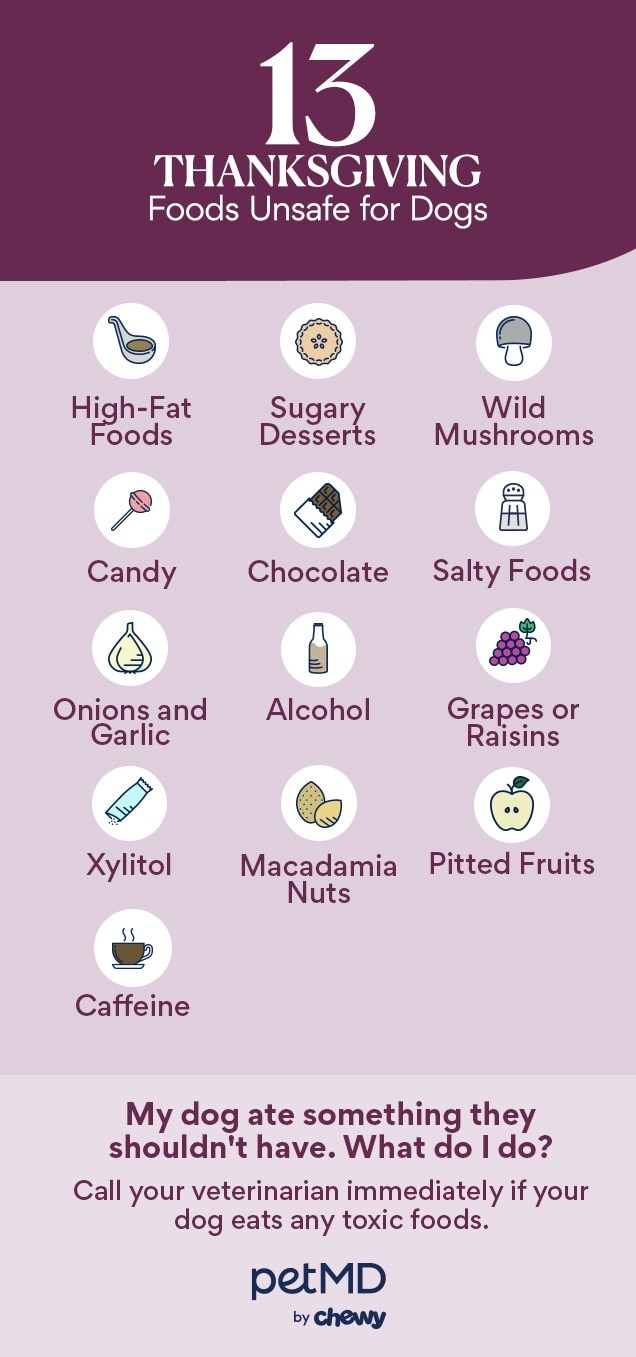
While there are many human foods that dogs can eat on Thanksgiving, there are a lot of no-no’s, including:
- Grapes or raisins: Grapes and raisins can be a choking hazard, and they’re also toxic; they may cause kidney failure and even death.
- Macadamia nuts: Macadamia nuts are toxic to dogs and can cause vomiting, muscle weakness, tremors, a high temperature, and seizures.
- Wild mushrooms: Wild mushrooms can cause mushroom poisoning; signs include vomiting, diarrhea, tremors, seizures, and liver and kidney failure.
- Onions and garlic: Onions and garlic are toxic to dogs and can be fatal.
- Mashed potatoes: While some potatoes are safe for dogs to eat, mashed potatoes are typically prepared with harmful ingredients such as garlic, onion powder, salt, butter, and cream.
- Stuffing: Stuffing usually contains toxic ingredients such as onions, garlic, raisins, or grapes.
- Gravy: Gravy contains high amounts of fat and sodium, and may even contain toxic ingredients, like garlic and onion.
- Bread dough: Raw, yeast-based bread dough is dangerous to dogs and can cause bread dough toxicosis.
- Pitted fruits: Fruit pits are a choking hazard and can fracture dogs’ teeth, and they may also contain toxic cyanide.
- Chocolate: Chocolate contains two harmful ingredients, theobromine and caffeine, that can lead to poisoning.
- Caffeine: Consumption of caffeine can lead to caffeine poisoning; symptoms include vomiting, elevated heart rate, and seizures.
- Desserts: If your dog eats sugary desserts or dishes such as sweet potato casserole with marshmallows, they can experience symptoms such as upset stomach and even toxicity if the dessert contains chocolate or xylitol.
- High-fat foods: If a dog eats too much fat, they may have digestive upset, including vomiting, diarrhea, and bloating.
- Salty foods: Consuming too much salt could lead to symptoms such as vomiting and diarrhea, lethargy, and excessive thirst or urination.
- Alcohol: Symptoms of alcohol poisoning in dogs include vomiting, lack of coordination, excessive salivation, frequent urination, diarrhea, and more.
- Any product that contains xylitol: Xylitol can be found in many products, including sugar-free foods and certain peanut butters.
If your dog ingests a toxic food, take them immediately to the emergency vet. You can call Pet Poison Helpline (855-764-7661; a fee may apply) on the way.
What To Serve Your Dog Instead of Thanksgiving Dinner
Instead of giving your dog a bite of your Thanksgiving dinner, why not create a yummy Thanksgiving dinner of their own?
That way, you can rest assured that it’s safe for your pup. Here’s how to plan a perfect holiday:
- Pick a tasty turkey treat
- Choose a special Thanksgiving meal
- Add a meal topper or broth
- Don’t forget the dog-friendly dessert
- Finish off the day with a special toy
Dog Thanksgiving Dinner FAQs
Can dogs eat Thanksgiving turkey?
Yes, in moderation, as long as it’s skinless, boneless, and unseasoned.
What is the most dog-friendly Thanksgiving food?
Plain, skinless, boneless turkey can be OK for dogs in moderation, and 100% pumpkin puree is also a good option.
Is Thanksgiving stuffing good for dogs?
No, dogs should not eat stuffing, as it may have harmful ingredients.
Can I give my dog a little bit of gravy?
No. Gravy may contain toxic ingredients, plus it’s high in fat and sodium, which are not beneficial for dogs.


