Congestive Heart Failure in Dogs: Diagnosis, Treatment, and Everything a Pet Parent Should Know About CHF in Dogs


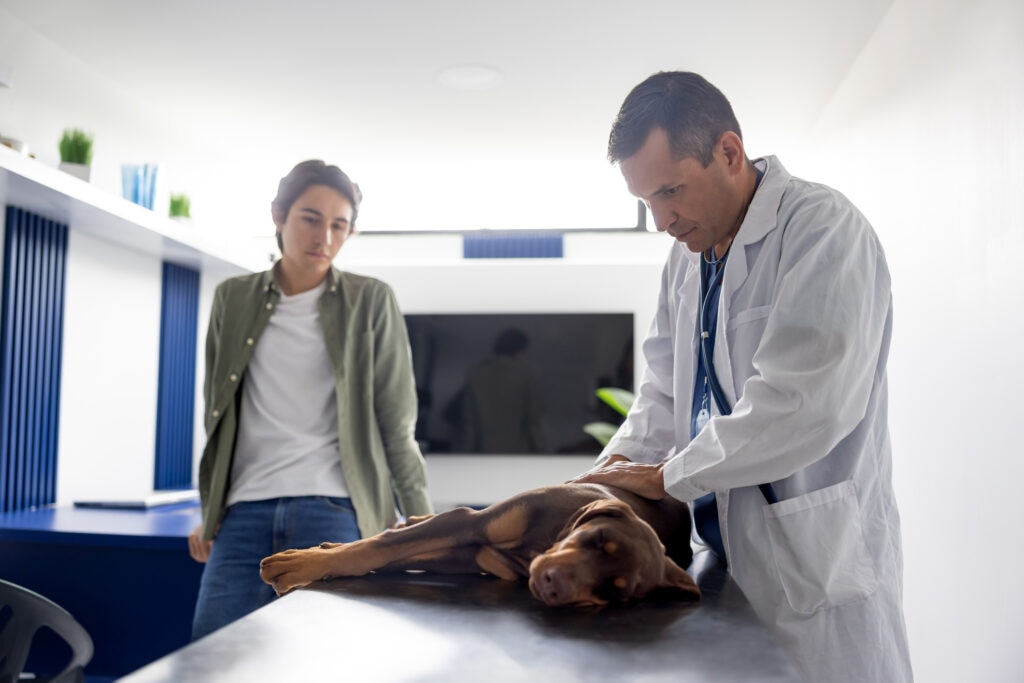
Hispanolistic/E+ via Getty Images
Congestive heart failure (CHF) in dogs occurs when the heart can no longer pump blood effectively, causing fluid to build up in the lungs, abdomen, or other parts of the body. CHF is caused by underlying heart disease and can be life-threatening.
Dogs with congestive heart failure may develop coughing, difficulty breathing, weakness, exercise intolerance, or a swollen abdomen. CHF requires veterinary treatment, and dogs having trouble breathing need emergency veterinary care.
Key Takeaways
- Congestive heart failure in dogs occurs when the heart cannot pump blood effectively, leading to fluid buildup in the body.
- Common signs of CHF in dogs include coughing, difficulty breathing, weakness, exercise intolerance, and a swollen abdomen.
- CHF requires veterinary treatment and ongoing management; difficulty breathing is a medical emergency.
What is Congestive Heart Failure in Dogs?
Congestive heart failure in dogs is a condition in which fluid builds up because the heart can't pump blood efficiently throughout the body.
A damaged heart may struggle to pump blood, causing blood to back up and fluid to accumulate in the chest, abdomen, or both, depending on the type of CHF in dogs.
A dog's heart has a right and left side. The right side receives oxygen-poor blood from the body and transports it to the lungs, where it receives oxygen. The left side pumps oxygen-rich blood back out to the body to nourish the tissues.
Types of Congestive Heart Failure in Dogs
The two types of congestive heart failure in dogs include:
- Left-sided CHF: This is the more common type in dogs. Blood backs up in the lungs, causing fluid to accumulate in the lungs (pulmonary edema). Dogs with left-sided CHF will usually have a cough and difficulty breathing.
- Right-sided CHF: Blood backs up throughout the body's circulatory system, causing fluid to accumulate in the abdomen (ascites) and/or limbs (peripheral edema).
Stages of Congestive Heart Failure in Dogs
Congestive heart failure in dogs is classified in stages based on risk, structural heart changes, symptoms, and response to treatment.
The stages progress from Stage A, when a dog is at risk but has no symptoms, to Stage D, when severe symptoms no longer respond to treatment.
The stages of congestive heart failure in dogs include:
- Stage A: Dogs are at higher risk for developing CHF but have no symptoms or structural changes to the heart. Dogs with a genetic risk include small breeds such as Miniature Poodles, Cocker Spaniels, and Terrier breeds, as well as some larger breeds such as Great Danes and Dobermans.
- Stage B: Dogs have a heart murmur—a "whooshing" or "swishing" sound a veterinarian can hear—but no symptoms. A murmur indicates turbulent blood flow within the heart.
- Stage B2: Dogs have structural changes visible on an X-ray/radiograph or echocardiogram (a specialized ultrasound used to diagnose the heart) but do not have symptoms.
- Stage C: Dogs have current or previous clinical signs of congestive heart failure but still respond positively to medications and treatments such as supplemental oxygen.
- Stage D: This is considered "end-stage" disease. Dogs typically have severe symptoms that no longer respond to medications or other treatments.
Symptoms of Congestive Heart Failure in Dogs
Symptoms of congestive heart failure in dogs include:
Signs of CHF in dogs may include:
- Coughing, sometimes even coughing up foam
- Difficulty breathing
- Increased rate of breathing, even when resting
- Inability to exercise
- Fatigue, lethargy, and weakness
- Blue gums (cyanosis)
- Distended abdomen
- Collapse or sudden death
Dogs experiencing moderate to severe signs of congestive heart failure may require hospitalization and immediate care.
Seek an emergency veterinarian immediately if your dog has any signs of respiratory distress or trouble breathing.
What Causes Congestive Heart Failure in Dogs?
There are many possible causes of congestive heart failure in dogs, including:
- Myxomatous mitral valve disease (MMVD): The cause of mitral valve disease is unknown, but there appears to be a strong genetic component. Many small-breed dogs have a genetic predisposition to mitral valve disease.
- Dilated cardiomyopathy (DCM): In large-breed dogs, the most common inherited form of heart disease is DCM. The heart muscle becomes weak and is unable to properly contract, causing the heart to dilate. Dogs predisposed to DCM include Doberman Pinschers, Boxers, and Great Danes.
Other causes of CHF in dogs include:
- Heart valve disease
- Defects or holes in the walls of the heart (ventricular septal defect)
- Congenital cardiac defects, including patent ductus arteriosus, pulmonic stenosis, and aortic stenosis
- Accumulation of fluid in the sac around the heart (pericardial effusion)
- Heartworm disease
- Arrhythmias (irregular heartbeat)
- Increased blood pressure
- Infection (endocarditis)
How Is Congestive Heart Failure in Dogs Diagnosed?
Veterinarians diagnose congestive heart failure in dogs by listening to the heart and lungs and may use chest X-rays, an electrocardiogram (ECG or EKG), and an echocardiogram to evaluate the heart and look for signs of CHF in dogs.
Diagnosis starts with listening to your dog's heart and lungs with a stethoscope.
Most dogs will have a heart murmur, which is graded in severity from 1 to 6:
- Grade 1: Very soft murmur, often difficult to hear
- Grade 2: Soft murmur but readily heard
- Grade 3: Moderately loud murmur
- Grade 4: Loud murmur
- Grade 5: Very loud murmur that can be heard with the stethoscope barely touching the chest. The veterinarian can feel a vibration through the chest wall over the heart (palpable thrill).
- Grade 6: Very loud murmur that can be heard with the stethoscope held over the chest without touching the skin. The veterinarian can feel a vibration through the chest wall over the heart (palpable thrill).
Treatment of Congestive Heart Failure in Dogs
Treatment for congestive heart failure in dogs may include medications, oxygen therapy, and nutritional management to treat the underlying heart disease and any fluid accumulation.
Medications may include:
- Diuretics, like furosemide
An underlying cause such as heartworm disease may be treatable, but in most cases the cause of congestive heart failure in dogs cannot be cured and can only be managed.
Your vet may also recommend a dietary change for your pup.
Specific supplements such as fish oil/omega fatty acids, taurine, and L-carnitine may be considered to decrease inflammation, help manage arrhythmias, and improve heart function.
Other recommendations may include weight management, maintaining muscle mass, and eating a balanced diet.
Consult your veterinarian, veterinary cardiologist, or veterinary nutritionist before making diet changes or adding supplements.
Recovery and Management of Congestive Heart Failure in Dogs
There is no cure for congestive heart failure in dogs, but diligent management and daily medications can help your dog maintain a good quality of life and may extend survival time.
However, once Stage D congestive heart failure develops, survival time ranges from a few weeks to months.
Management of congestive heart failure in dogs depends on the underlying cause and should be tailored to your dog by your veterinarian or veterinary cardiologist.
An important part of at-home care for dogs with left-sided congestive heart failure is monitoring their resting respiratory rate, or the number of breaths they take per minute.
Respiratory rate can indicate the degree of fluid accumulation in the lungs and help determine whether you need to contact your veterinarian.
As a rule of thumb, a dog at rest should have a respiratory rate of less than 30 breaths per minute.
When measuring your dog's respiratory rate:
- Count one breath as one complete breath in and out.
- Count while your dog is resting or sleeping.
- Do not count immediately after physical activity.
Your veterinarian may perform periodic chest X-rays to assess heart size and look for evidence of fluid in the lungs.
Blood work—including kidney values and electrolytes—will likely be recommended every three to six months to ensure your dog is tolerating their heart medication.
Your veterinary cardiologist will likely recheck an echocardiogram every six to 12 months to assess changes in the heart and adjust medication as needed.
Prevention of Congestive Heart Failure in Dogs
Although most cases of congestive heart failure are not fully preventable, such as those due to underlying genetic heart defects, pet parents can take a few steps to reduce their dog’s risk, which include:
- Ensure your dog receives regular veterinary care to identify health concerns promptly and to screen for heart disease in predisposed breeds.
- Keep your dog on year-round heartworm prevention to protect against heartworm disease.
- Follow your veterinarian’s instructions to effectively manage any underlying health conditions your dog has been diagnosed with.
Congestive Heart Failure in Dogs FAQs
What is the life expectancy of a dog with congestive heart failure?
Life expectancy is highly variable depending on what stage of congestive heart failure your dog is in. Dogs who are diagnosed in the early stages of heart disease can live for years with appropriate medical management; however, dogs who are diagnosed in end-stage heart disease may survive only weeks to months.
What are the last stages of congestive heart failure in dogs?
The last stages of congestive heart failure are stages C and D.
Stage C is when a dog starts having noticeable symptoms, such as coughing or a swollen belly.
Stage D is end-stage heart disease where a dog no longer responds appropriately to medications to manage the condition.
When should you put a dog down with congestive heart failure?
Deciding to euthanize a dog with congestive heart failure is a difficult and personal decision that should be made alongside your veterinarian. Your vet can advise you on any available treatment options and discuss quality of life to aid in this decision.
Is a dog with CHF in pain?
While not typically painful, congestive heart failure can cause significant discomfort as fluid begins accumulating in the lungs, abdomen, and/or legs. This can cause swelling in the body and difficulty breathing which can cause distress and interfere with a dog’s quality of life.


