American Bulldog


Istock/Yuliya Golland
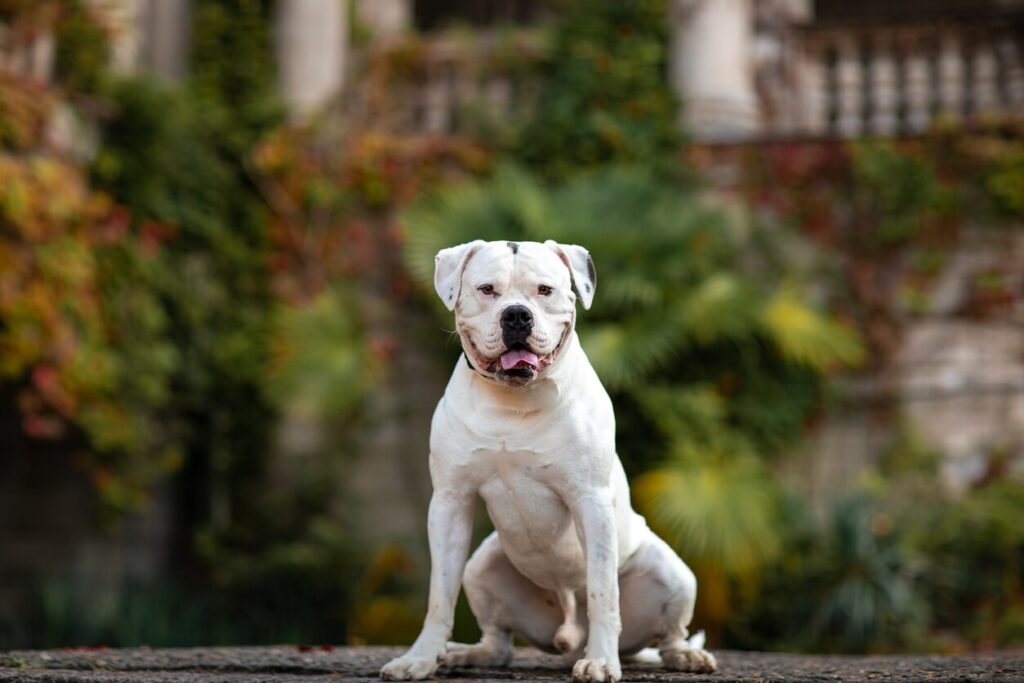
American Bulldogs have held a variety of jobs over the centuries: guardians, cattle chasers, farm dogs, and hunting partners. Though the breed has been in the United States since the 17th century, the American Bulldog started to become more popular in the late 1980s, according to the American Bulldog Association (ABA).
This medium-large and muscular breed can reach up to 25 inches tall and weigh 60–100 pounds. American Bulldogs are generally brave and loyal animals who require dedicated training and regular activity.
Key Takeaways
- American Bulldogs are loyal, intelligent, and energetic dogs who thrive with consistent training, early socialization, and one to two hours of daily exercise.
- Their short coat is low-maintenance, but their skin requires extra care.
- With proper training, exercise, and socialization, American Bulldogs can be affectionate family companions who generally get along well with children and other pets.
Caring for an American Bulldog

American Bulldogs are loyal, intelligent, and active dogs who require focused training and plenty of exercise. They love to spend their days playing tug-of-war, running agility courses, and going on long walks with their pet parents. With proper care and attention, they can be an excellent addition to your home.
These dogs have a short, mostly white coat that can have a few different-colored markings; it’s not uncommon to find a white and brindle American Bulldog, or a white and black American Bulldog. No matter their color, this breed doesn’t shed a lot. But caring for their skin requires special attention.
These dogs have a short, mostly white coat that can have a few different-colored markings—it’s not uncommon to find a white and brindle American Bulldog or a white and black American Bulldog. No matter their color, this breed doesn’t shed a lot. But their skin care requires careful attention.
American Bulldog Health Issues
The average American Bulldog lifespan is 10–12 years. Like most dogs, there are some common health issues associated with the breed—especially skin conditions.
Elbow and Hip Dysplasia
According to the ABA, American Bulldogs, like many other larger dog breeds, can be prone to elbow dysplasia and hip dysplasia. These conditions happen when those joints don’t fit together properly. This can cause joint pain and inflammation (arthritis). Responsible American Bulldog breeders will screen their dogs for this genetic condition.
Allergies
American Bulldogs can have allergies caused by an overactive immune system, according to the ABA. Signs that your dog has allergies include:
- Itchy skin and scratching
- Fur loss
- Excessive licking
- Red skin
- Recurring skin infections
- Ear infections
If you notice any of these signs in your American Bulldog, contact your veterinarian for guidance.
Scaly, Itchy Skin
Although it’s rare, American Bulldog puppies can be born with a skin condition called ichthyosis, which causes the skin to flake and become itchy, according to the ABA. The disease is a genetic mutation that prevents the outer layer of skin from developing properly and can range from moderate to severe.
American Bulldogs with mild cases of ichthyosis require more frequent bathing with medicated shampoo, while dogs with severe cases need to be bathed and oiled every day. As with hip and elbow dysplasia, responsible American Bulldog breeders will test their pups for ichthyosis.
What To Feed an American Bulldog
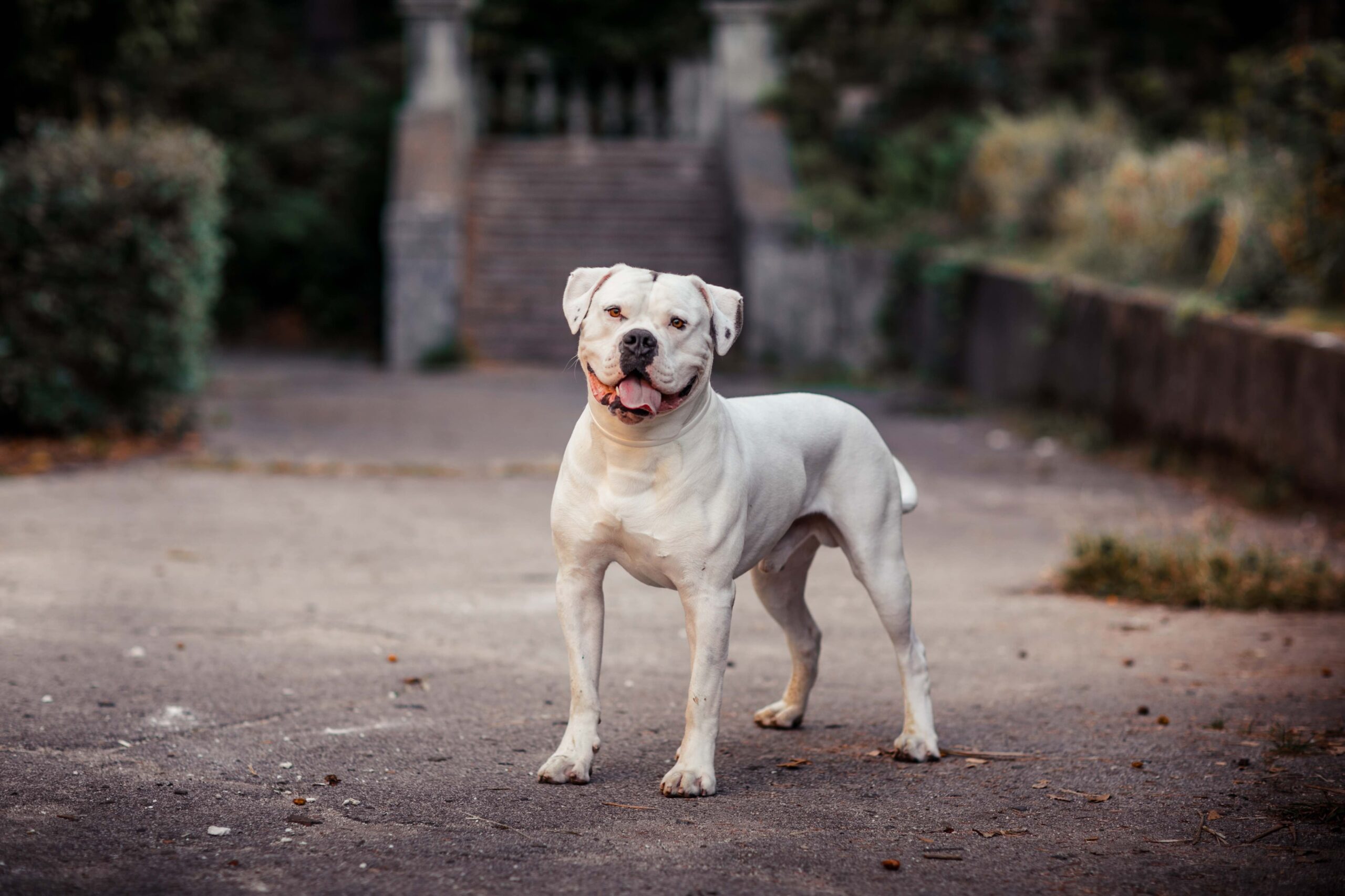
A healthy American Bulldog will be lean and well-muscled with little fat and no ribs showing—your veterinarian can show you how to assess your dog’s body condition score. To maintain a muscular build, the breed needs food that’s rich in protein, with limited carbohydrates.
Feeding your big American Bulldog a diet formulated for large-breed dogs as both a puppy and an adult is recommended for optimal growth and wellness.
How To Feed an American Bulldog
American Bulldog puppies are typically fed three times each day. It’s important to consult with your veterinarian as you create your puppy feeding schedule with the right balance of meeting their nutritional needs, and warding off digestive problems or obesity.
As American Bulldog puppies mature, feeding them two meals a day is recommended. Pet parents should look for options that meet the Association of American Feed Control Officials (AAFCO) nutrition standards when choosing food.
To give your American Bulldog a bit of mental stimulation during mealtimes, offer them food in a slow feeder, puzzle toy, or snuffle mat.
How Much Should You Feed an American Bulldog?
The amount of food pet parents provide daily depends on their individual dog’s needs and lifestyle. The bag of AAFCO-compliant dog food will give you guidance on portions based on your dog’s weight. But it’s best to ask your veterinarian how much to feed your dog.
Nutritional Tips for American Bulldogs
Avoid feeding your dog table scraps, which may be dangerous to their health. Treats should make up only 10% of your American Bulldog’s calorie intake and never replace meals.
Dogs fed a complete and balanced commercial food diet should not need any nutritional supplements unless a vet recommends them. That’s why it’s so important to pick a food that’s specific to your American Bulldog’s life stage (puppy, adult, or senior).
However, your vet might recommend certain supplements depending on your dog’s health, such as probiotics, fish oil, or joint supplements. Never give your dog a supplement without your vet’s guidance.
Behavior and Training Tips for American Bulldogs
American Bulldog Personality and Temperament
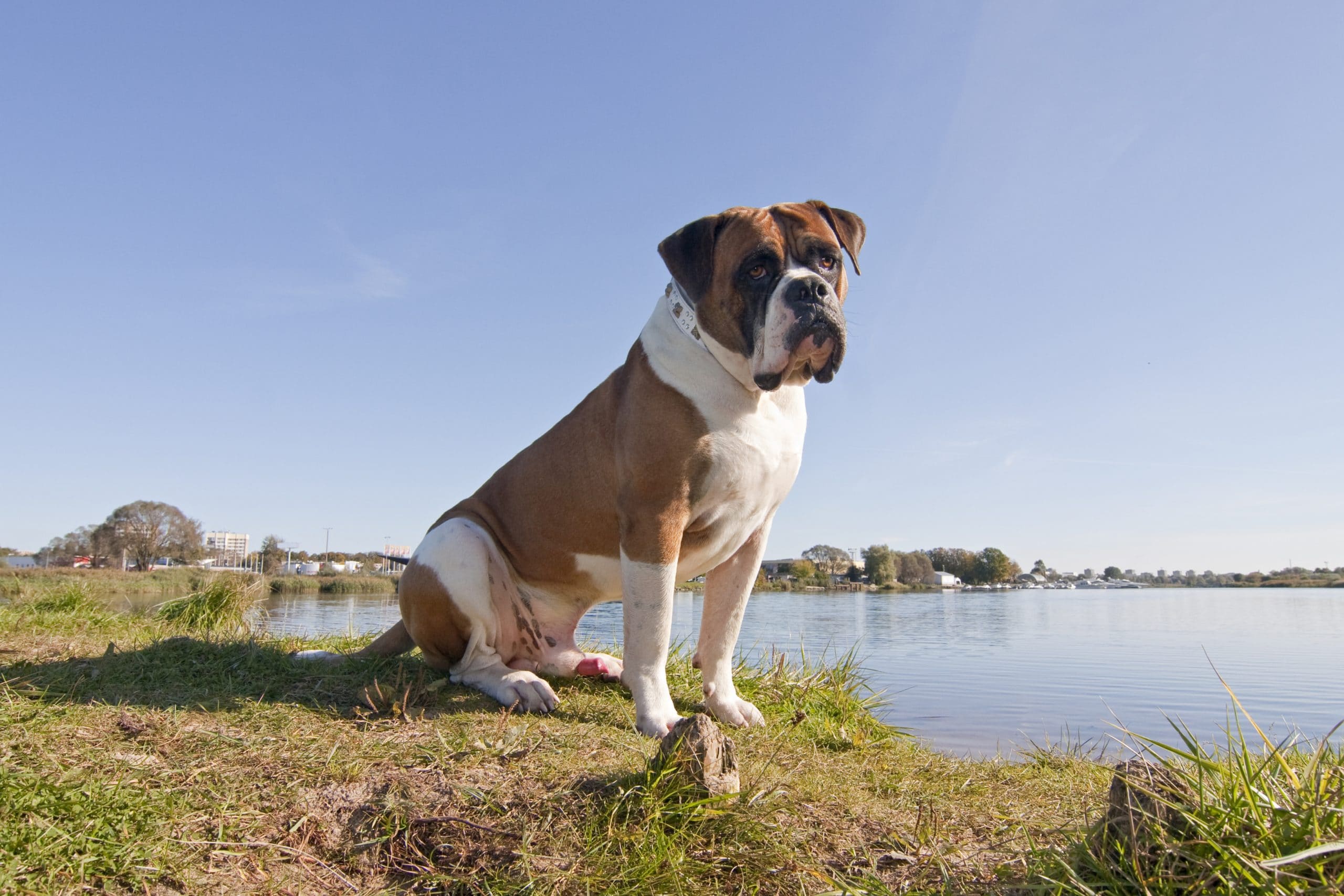
The American Bulldog’s personality makes them generally outgoing and friendly dogs, according to the ABA. Because they are so loyal to their family, they may bark to alert you when anything seems out of the ordinary. A well-trained and socialized American Bulldog can typically get along with other pets and with young children.
American Bulldog Behavior
Because of their history as working dogs and guardians, and because of how much they love their family, American Bulldogs may be reserved around new people at first. As with every other dog breed, early training and socialization is vital for American Bulldog puppies.
American Bulldogs are large, active dogs who need to be kept busy physically and mentally. The amount of exercise your pup needs depends on your dog’s age and health status, but healthy adult American Bulldogs typically need one to two hours of exercise daily. Playtime and long walks are important—though they also enjoy a good afternoon nap.
American Bulldog Training
American Bulldogs require dedicated training from their pet parents. Luckily, they are a smart dog breed that’s eager to please. They can pick up training cues quickly, especially when training sessions are done consistently, patiently, and with positive reinforcement.
Begin socializing your American Bulldog puppy as soon as you bring them home. Early exposure to new people, environments, animals, and other stimuli will help your puppy grow into a confident and well-mannered dog. Your vet can give you tips on socialization.
Fun Activities for American Bulldogs
- Nose work
- Agility
- Dock diving
- Lure coursing
- Obedience work
- Hiking
- Swimming
- Tug-of-war
American Bulldog Grooming Guide
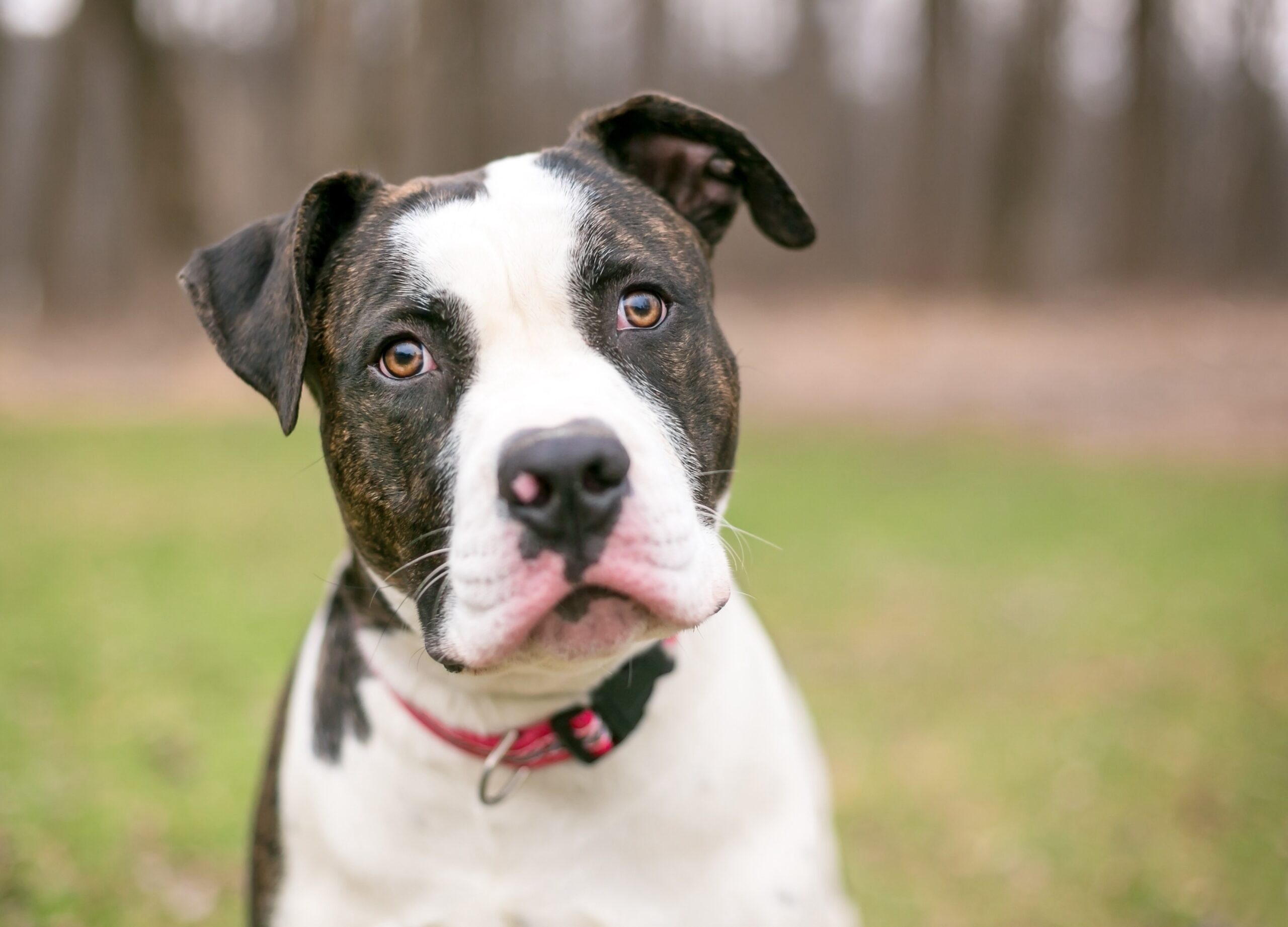
American Bulldogs have moderate grooming needs. While their short coat is easier to maintain than long-haired dogs, their wrinkles and skin need lots of attention.
Skin Care
Like most dogs, American Bulldogs need a bath when they are dirty or smelly. Use a dog-friendly shampoo—never one meant for humans.
The American Bulldog’s wrinkles require special attention. It’s important to keep them clean from dirt and any other debris that might build up, or skin infections can occur. Pet parents might also need to wipe down their facial folds throughout the day to remove lingering dog food crumbs.
Contact your vet if you notice changes in your dog’s skin.
Coat Care
American Bulldogs have a short, low-maintenance coat, and pet parents can brush them weekly to remove loose hair. This routine keeps their coat looking healthy—and they will love the attention.
Grooming time is also a great chance to check for cuts, fleas, ticks, lumps and bumps, rashes, or other problems.
Eye Care
American Bulldogs typically don’t require special eye care. Some dogs, especially white American Bulldogs, can get brown discoloration around their eyes from tearing. Gentle cleaning with an eye cleaning solution can help minimize these tear stains.
Ear Care
American Bulldogs can be susceptible to ear wax buildup, so it’s important to clean your dog’s ears once a week using a vet-recommended ear cleanser. Talk to your vet if your dog experiences recurring ear infections, as this can be a sign of a larger underlying issue, like allergies.
Considerations for Pet Parents
Before bringing home an American Bulldog puppy, it’s important to consider your lifestyle. Are you a jogger, or do you like to go on long weekend hikes? An American Bulldog can fit right in. Are you a homebody who lives in a studio apartment? Adopting an American Bulldog might not be the best fit.
These dogs won’t do well in a low-key home without outlets for their physical energy. They need a pet parent who is dedicated to exercising and training them.
American Bulldog FAQs
How long do American Bulldogs live?
The average American Bulldog lifespan is 10–12 years.
Is an American Bulldog a good family dog?
Yes. With proper training and exercise, the American Bulldog can be a great addition to your family. Breed experts recommend early and consistent socialization, and obedience training for this intelligent and energetic breed.
Is an American Bulldog the same as a Pit Bull?
Sort of! According to the Animal Humane Society, the American Pit Bull Terrier isn’t truly a dog breed—the term refers to a group of breeds, including American Bulldogs, American Staffordshire Terriers, and Staffordshire Bull Terriers, and various mixes between these breeds.
How much does an American Bulldog cost?
Purebred American Bulldogs can cost more than $1,000, though you can also find American Bulldogs (and puppies!) in shelters and rescues.
English Bulldog vs. American Bulldog: What’s the difference?
Though both are Bulldog breeds, the English Bulldog and American Bulldog are quite different. At 40–50 pounds, English Bulldogs are smaller than American Bulldogs. American Bulldogs are also much more active than English Bulldogs, who are relatively low-energy dogs.


