Why Do Certain Sounds Scare Dogs? What To Know About Noise Phobia


EllenMoran/E+ via Getty Images
Certain sounds scare dogs because their hearing is more sensitive than ours, and some loud, sudden, or unpredictable noises can trigger a panic response in the brain—especially in dogs with noise phobia.
Noise phobias in dogs are extremely common—up to 50% of dogs are affected, according to some estimates. These phobias don’t just make the dogs who suffer from them miserable. They can also lead to injuries, costly property destruction, and damage to the human-animal bond.
Key Takeaways
- Noise phobia in dogs is a serious condition that affects up to 50% of dogs.
- Noise phobia differs from noise aversion in that dogs with noise phobia panic and overreact to sounds, while aversion typically causes discomfort without extreme fear.
- Thunderstorms, fireworks, alarms, and vacuums are all common noises that scare dogs.
- Treatment involves a multi-faceted approach, including environmental modifications, behavior modification, and potentially supplements or anti-anxiety medication.
- Early intervention helps prevent worsening fear and can protect the bond between you and your dog.
What Is Noise Phobia in Dogs?
Being afraid of loud noises helps dogs stay safe in potentially dangerous situations, but sometimes their fear is out of proportion to the true level of danger.
This is what sets noise phobia apart from a simple dislike of loud noises or noise aversion in dogs.
-
Noise aversion: The dog is clearly unhappy and may seek comfort or try to move away from the sound, but they do not completely panic.
-
Noise phobia: The dog reacts intensely—often with full-blown panic—and may be unable to calm down even after the noise stops.
Unfortunately, noise phobias have a way of building on themselves. What starts out as a simple dislike of loud noises can turn into a phobia, or a dog who’s triggered by one type of loud noise eventually reacts to many. It doesn’t take many exposures for a dog’s brain to learn to associate loud noises with intense fear.
Dogs with noise phobia panic, while dogs with noise aversion are obviously unhappy with the situation but don’t overreact
Common Noises That Scare Dogs
Many of the sounds associated with noise phobias are loud, repetitive, unpredictable, and can’t easily be escaped. For a dog scared of loud sounds, triggers often include:
-
Home or car alarms
-
Loud vehicle noises
What Causes Dogs To Develop Noise Phobias?
Genetics appear to play a role in determining which dogs develop noise phobias. Selective breeding probably explains why certain breeds, such as hunting dogs, have relatively low levels of noise aversion.
However, learning and early socialization are even more important than genetics. Studies have shown that mixed-breed dogs are at highest risk for noise phobias, perhaps because they may spend their early days in less-than-ideal circumstances, while purebred puppies are often raised by breeders who understand the importance of positive early experiences.
Health problems can also be associated with noise phobias. For example, dogs who are in pain seem to be more sensitive to loud noises. Dogs with other behavioral problems, like separation anxiety, also suffer from noise aversion or noise phobia at higher rates.
Symptoms of Noise Phobia in Dogs
A dog with noise phobia will usually display some of the following symptoms:
-
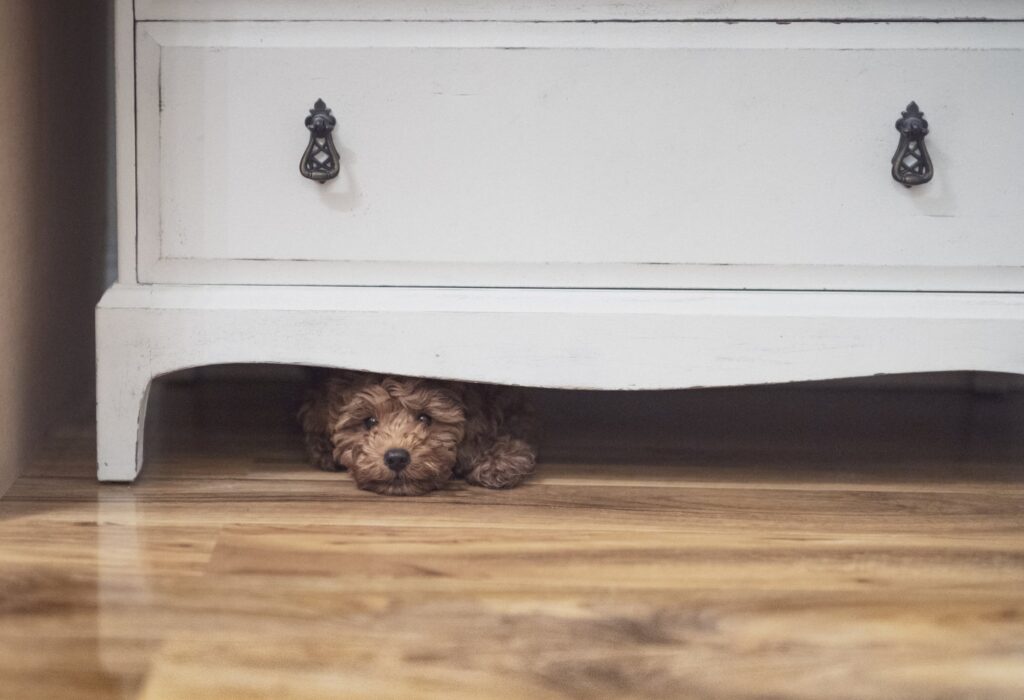
Hiding
-
Pacing
-
Whining, howling, or barking
-
Destruction of objects in the home
-
Attempting to escape
The severity of a dog’s noise phobia will determine how bad their symptoms are and how long they last after the triggering sounds have stopped.
Treating Noise Phobia in Dogs
An effective approach to dog noise phobia treatment relies on several different types of care.
1. Environmental Management
While it’s usually impossible to completely eliminate exposure to a dog’s triggering sounds, there’s a lot pet parents can do to reduce the sounds’ intensity and create a soothing environment.
-
Design a safe room: An interior room or large closet that doesn’t have windows is ideal, but if your dog already has a preferred place to hide, use that. You can partially block sounds (and light, which is often a trigger for dogs with storm phobias) by hanging thick curtains or covering windows with cardboard or sound-insulating foam.
-
Modify your dog’s crate: Crate-trained dogs should already see their crate as a safe spot, but you can make it even more comforting by adding a crate cover, soft bed, engaging toys, favorite treats, and long-lasting chews.
- Increase background noise: Play soothing music, use a noise machine, or run a fan to help block out sounds that scare dogs.
You don’t want to introduce these sorts of changes while your dog is already stressed. Get them comfortable in their safe room and crate when they’re calm.
2. Behavior Modification
There are many behavioral modification techniques that can help dogs learn to relax when faced with loud noises, but the most common approach is to teach dogs to associate scary sounds with something positive.
It’s OK to stay with your dog in their safe room and soothe them when they are afraid. Give them a favorite dog treat or dog toy each time they hear a triggering noise, or add a long-lasting treat to their crate, like a lick mat with dog-safe peanut butter.
Your veterinarian or a veterinary behaviorist can put together a comprehensive, individualized behavior modification plan for your dog.
3. Medications, Supplements, and Other Tools
Dogs with severe noise phobias often require treatment with prescription medications. They simply can’t relax enough without them to be open to learning new ways to cope.
- Sileo: a quick-acting, calming gel absorbed through the tissues of the mouth
-
Benzodiazepines: alprazolam and similar medications reduce anxiety but need to be given about an hour before a stressful situation
-
Trazodone: can be used alone or in combination with other medications to reduce fear
Dog calming supplements can help in combination with medications or on their own in less severe cases of noise phobias in dogs.
- VetriScience Max Veterinary Strength Calm & Confident Chicken Flavored Supplement Chews: made with colostrum, l-theanine, l-tryptophan, and lemon balm
- Zylkene: contains alpha-casozepine, a calming ingredient found in milk
- Purina Pro Plan Veterinary Diets Calming Care Liver Flavored Powder: contains a probiotic strain that supports calm behavior
Dog anxiety vests and other calming apparel that provides comforting pressure (like a hug) and calming pheromone sprays and diffusers can also be beneficial.
What Not To Do
The worst thing pet parents can do when a dog has noise phobia is use harsh discipline.
Even though the behaviors associated with noise phobias can be frustrating, any form of punishment—such as yelling, hitting, or using a shock collar—simply reinforces the dog’s fear and will make their noise phobia worse, not better.
Why Is My Dog Suddenly Sensitive to Noise?
Make an appointment with your veterinarian if your dog suddenly becomes sensitive to noise. Underlying health problems could be to blame. And even if this isn’t the case, the sooner treatment for noise aversion or noise phobia begins, the more effective it will be.
Why Do Certain Sounds Scare Dogs FAQs
Why do certain sounds scare dogs?
Dogs have more sensitive hearing than humans, and loud, sudden, or unpredictable sounds can trigger the brain’s fear center—especially in dogs with noise phobia or high anxiety.
What noises scare dogs the most?
Common noises that scare dogs include thunderstorms, fireworks, alarms, vacuums, garbage trucks, motorcycles, sirens, and other loud or repetitive sounds.
Why is my dog suddenly scared of noises in the house?
A sudden change in noise sensitivity can signal pain, illness, age-related changes, or increased anxiety. Always check with your veterinarian if your dog suddenly becomes fearful of everyday sounds.
Can dogs grow out of noise phobia?
Most dogs don’t simply “grow out” of true noise phobia. However, with early intervention, behavior modification, environmental changes, and sometimes medication, many dogs can greatly improve.