Cat Swollen Lymph Nodes: Causes and When To Call Your Vet


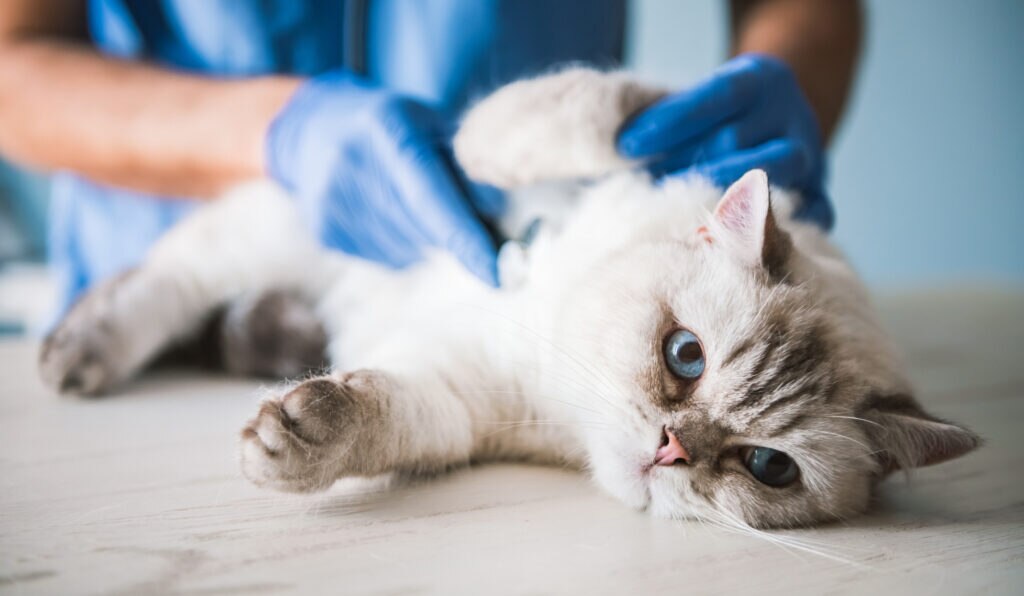
vadimguzhva/iStock/Getty Images Plus via Getty Images
No one likes finding a swelling or lump on their cat. When those swellings are lymph nodes, our minds often go to the worst-case scenario—cancer.
While it’s certainly an important cause of lymph node swelling, cancer isn’t the only reason for swollen lymph nodes in cats.
Here we’ll cover what swollen lymph nodes are, why you might notice them, and what you should do about it.
Key Takeaways
- Swollen lymph nodes in cats (lymphadenopathy) are usually a sign that the immune system is responding to infection, inflammation, or, less commonly, cancer.
- Common causes include infections (like FeLV or FIV), dental disease, and immune responses to vaccines or other conditions.
- While not typically an emergency, any unexplained lymph node swelling should be evaluated by a veterinarian—especially if your cat shows signs such as lethargy, trouble breathing, or loss of appetite.
What Are Cat Swollen Lymph Nodes?
Lymph nodes are an important part of the feline immune system. They’re found throughout the body, with clusters located in certain areas, such as the neck or armpits.
Lymph nodes are bean-shaped structures that filter a fluid called lymph. They help recognize and remove pathogens (foreign invaders like bacteria or viruses) as well as abnormal cells, including cancer cells. White blood cells within the lymph and lymph nodes play a key role in fighting infection.
When something activates the immune system, lymph nodes may swell as they work to filter out harmful invaders or abnormal cells.
The medical term for swollen lymph nodes is lymphadenopathy. This can refer to a single enlarged lymph node or multiple swollen nodes.
The swelling itself is usually not painful, but the underlying condition causing the lymphadenopathy might be uncomfortable.
Health Tools
Get quick answers with our vet-created Symptom Checker
Causes of Cat Swollen Lymph Nodes
Swollen lymph nodes in cats are typically associated with three main causes:
-
Reactive hyperplasia: When antigens (markers of foreign invaders) arrive from the tissue that a specific lymph node drains, the lymph node may enlarge as it produces more white blood cells to handle the problem. This can occur with dental disease, infections near the lymph node, recent vaccination, or autoimmune conditions.
-
Lymphadenitis: This refers to direct inflammation of the lymph node itself, often due to infection. Examples of causes include feline leukemia virus (FeLV), feline immunodeficiency virus (FIV), and fungal infections such as histoplasmosis. Affected lymph nodes may be warm to the touch, swollen, and painful.
-
Cancer: Some cancers, such as lymphoma, can cause lymph node enlargement (though this form is less common in cats than gastrointestinal lymphoma). Lymph nodes may also enlarge if a cancer spreads to them.
Rarely, other issues—such as local edema (excess fluid trapped in the tissue)—can mimic or contribute to swollen lymph nodes in cats.
Are Swollen Lymph Nodes in Cats an Emergency?
Swollen lymph nodes in cats are not usually an emergency, but you should contact your veterinarian for an evaluation if you notice an enlargement.
However, lymph node swelling can be associated with more serious conditions.
Seek emergency care if your cat:
-
Is lethargic.
-
Is having difficulty breathing.
-
Is having severe diarrhea or vomiting.
-
Has pale gums.
-
Seems weak or collapses.
-
Has seizures.
When To Call Your Vet About Cat Swollen Lymph Nodes
If you notice a swollen lymph node on your cat, it’s always a good idea to contact your veterinarian.
If your cat was recently vaccinated, is young, or has a likely explanation for the lymph node swelling (such as a recent dental procedure), your vet may recommend monitoring at home.
If there’s no clear cause, your veterinarian will want to examine your cat to determine the reason for the swelling.
Again, if you notice any of the following signs in addition to swollen glands, seek prompt veterinary care:
-
Lethargy and low energy
-
Difficulty breathing
-
Severe vomiting or diarrhea
-
Pale gums
-
Weakness or collapse
-
Neurologic signs (e.g., tremors, seizures, head tilt, circling)
How Veterinarians Diagnose Cat Swollen Lymph Nodes
Your veterinarian will start by palpating (feeling) the external lymph nodes, also called peripheral lymph nodes, to see if they’re enlarged.
These are located:
-
Under the jaw
-
In front of the shoulder blades
-
In the armpits
-
In the groin
-
Behind the knees
A common diagnostic step is collecting a sample of the lymph node’s cells using a needle (fine needle aspiration, or FNA) and examining them under a microscope (cytology).
In some cases, this is done by the veterinarian in their clinic; other times, samples are sent to a veterinary pathologist for evaluation.
Additional tests may include:
-
Blood work: To assess infection, anemia, and organ function
-
Urinalysis: To evaluate kidney function
-
FIV/FeLV testing: Both viruses can cause lymph node swelling. This is a simple blood test usually performed at the clinic.
-
Imaging: X-rays, ultrasound, or other imaging to look for infection or cancer
-
Fungal testing or culture: If an infection is suspected, the veterinarian may recommend fungal testing or culture to determine what type of infection is present and which antifungals or antibiotics will be effective for treatment.
If the cause remains unclear or if the lymph node is inside the body and can’t be safely reached with a needle, a surgical biopsy may be needed. This may involve removing part or all the lymph node and sending the sample to a pathologist for evaluation.
Treatment of Cat Swollen Lymph Nodes
Treatment depends on the underlying cause.
For example:
-
Dental disease may require a dental cleaning and possible tooth extractions.
-
Bacterial infections may be treated with antibiotics such as Clavamox.
-
Fungal infections (e.g., histoplasmosis) may require long-term antifungal medications like itraconazole.
-
Cancer may be treated with surgery, chemotherapy, or radiation.
In some cases, palliative care may be recommended, using medications such as prednisolone to improve comfort.
Recovery and Management of Cat Swollen Lymph Nodes
Recovery and management vary widely depending on the cause of the swollen lymph nodes.
-
Infections may take a couple weeks to resolve.
-
Reactive lymph nodes may remain swollen for two to four weeks after the underlying issue improves.
-
In some cancers, lymph nodes may remain enlarged unless advanced treatments like surgery or chemotherapy are pursued.
Your veterinarian will guide you based on your cat’s diagnosis.
Prevention of Cat Swollen Lymph Nodes
Not all causes of cat swollen lymph nodes are preventable, but you can reduce risk by:
-
Keeping vaccinations up to date (including FeLV if appropriate)
-
Using parasite prevention year-round
-
Scheduling regular wellness exams
-
Checking your cat regularly for lumps and having them checked by your veterinarian
-
Maintaining good dental care
-
Keeping your cat indoors to reduce exposure to infectious diseases
Cat Swollen Lymph Nodes FAQs
Are swollen lymph nodes in cats serious?
Not always. Lymph nodes can swell due to minor issues like recent vaccination or dental disease. However, unexplained lymph node swelling should be evaluated by a veterinarian.
What is the most common cause of swollen lymph nodes?
Infection is the most common cause of lymph node swelling in cats.
How do you check a cat’s lymph nodes?
You may be able to feel lymph nodes under the jaw, in front of the shoulder blade, and behind the knees. They are normally very small—often pea-sized. Your veterinarian will be the best source for determining if your cat’s lymph nodes are enlarged.


