Cat Neuter Surgery: Preparation and Recovery


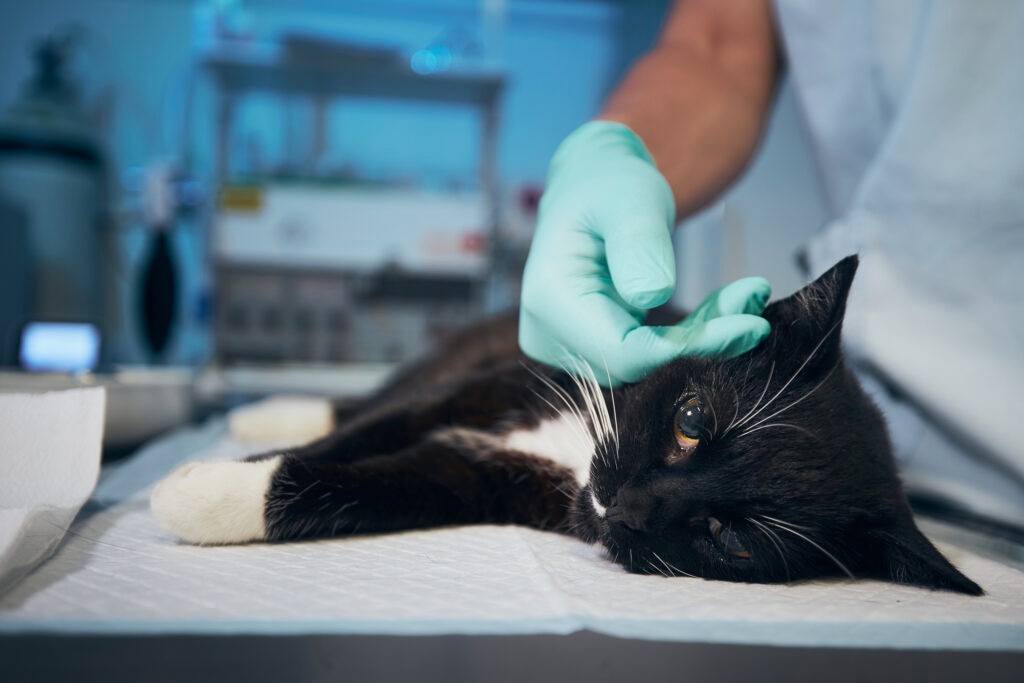
Cat neuter surgery is a safe, routine procedure that removes a male cat’s testicles to prevent reproduction and can reduce hormone-driven behaviors, such as spraying, roaming, and fighting. Most cats go home the same day and recover quickly, making neutering one of the most common and beneficial surgeries performed in veterinary medicine.
If your cat is scheduled for neuter surgery, it’s normal to have questions about what happens during the procedure, how to prepare, what recovery looks like, and whether there are any risks. While the thought of anesthesia and surgery can feel overwhelming, complications are uncommon, and the long-term health and behavioral benefits often outweigh the short-term recovery period.
This guide explains what cat neuter surgery involves, why veterinarians recommend it, how to prepare your cat, and what to expect during recovery.
Key Takeaways
- Cat neuter surgery is a routine procedure that removes the testicles to prevent reproduction and can reduce hormone-driven behaviors, such as spraying, roaming, and fighting.
- Most cats recover quickly, with many returning to normal behavior within a few days, while complete healing typically takes seven to 14 days with proper at-home care.
- Neutering offers lifelong health and behavioral benefits, but contact your veterinarian if your cat has excessive swelling, bleeding, discharge, worsening pain, or seems unusually lethargic after surgery.
What Is Cat Neutering?
When a cat gets neutered, the veterinary surgeon removes his testicles to prevent him from reproducing with female cats. The procedure also decreases hormone-driven behaviors, such as urine spraying (marking) or roaming in search of a mate.
The equivalent of cat neutering for female cats is called spaying. This article focuses on male cat neutering, or castration.

To download this medical illustration, click here.
Around 80% to 85% of pet cats in the U.S. are spayed or neutered. While the idea of your cat having surgery and undergoing anesthesia may give you anxiety, most pet parents opt for cat neuter surgery to prevent cat overpopulation and cat homelessness.
How Does Cat Neutering Work?
A cat neuter is a surgical procedure performed under general anesthesia. The anesthesia makes your cat unconscious for the procedure, so they are unaware of what’s happening and can’t feel any pain.
In most cases, the cat receives pain medications and an injection of anesthetics to help them lose consciousness.
During the procedure, they’ll receive gas anesthesia to keep them unconscious, delivered via a mask placed on the cat’s face or a tube placed in the windpipe (trachea).
Once your cat is unconscious, the fur around their scrotum will be shaved or plucked. This is to prevent hairs from getting into the incision and causing infection. A trained veterinary team member will clean the skin before surgery, which also helps prevent infection.
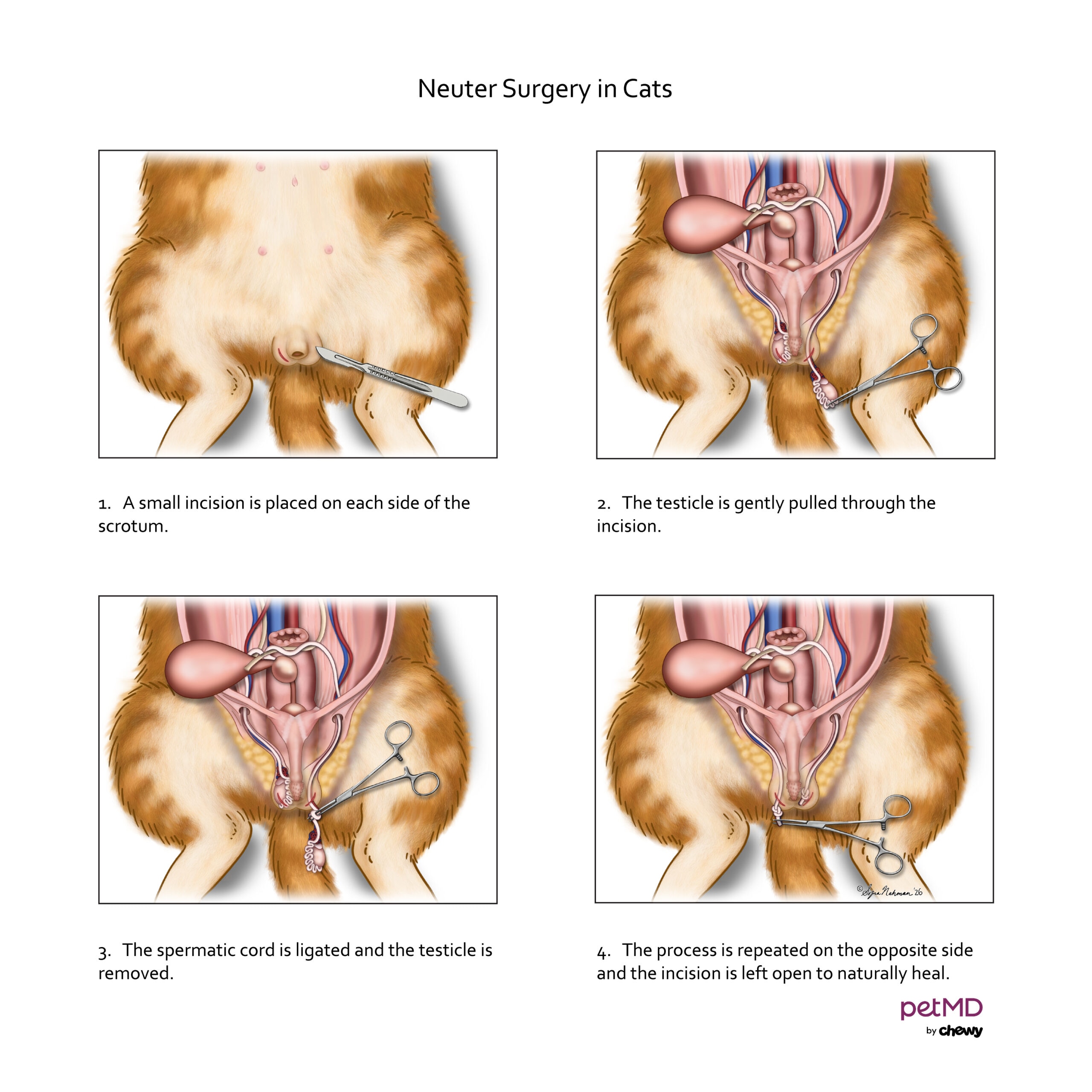
To download this medical illustration, click here.
During surgery, your cat’s veterinarian will make one or two small incisions in the scrotum. The blood supply to each testicle and the ductus deferens, the tube that carries sperm away from the testicle, is tied off. This can be done with suturing, or the veterinarian can tie these small structures onto themselves, a procedure called autoligation.
Once this step is complete, the testicle is removed. The process is repeated for the other testicle.
The incisions are so small that your veterinarian may leave them open to heal on their own, which allows fluid drainage and prevents swelling.
Some veterinarians use surgical glue to close the incisions.
Why Would a Cat Need To Be Neutered?
Most pet parents choose to neuter their cats because it has many potential benefits. Neutering your cat can:
- Prevent reproduction with female cats and combat pet overpopulation
- Decrease fighting between non-neutered males
- Reduce the risk of roaming and injuries
- Decrease urine spraying as a form of territorial marking
- Decrease the risk of contracting feline leukemia (FeLV) or feline immunodeficiency virus (FIV) if your cat spends time outdoors
- Treat or prevent testicular cancer
Risks of Cat Neutering
Most cats are back to themselves within a few days of neutering. However, surgical procedures always come with risk.
Although uncommon, some potential complications of neutering can include:
- Surgical site infection
- Abscess development
- Bleeding
- Scrotal hematoma (i.e., pooling of blood in the scrotum)
Surgical site infections and abscesses can usually be treated with antibiotics. In some cases, your veterinarian may need to drain an abscess.
All anesthetic procedures carry the potential risk of death. However, this risk is rare.
The risk of anesthetic death is around 0.11%, or 1 in 895, in seemingly healthy cats. When unexpected death does occur, it’s usually because of an undetected heart condition.
There are also a few long-term risks of cat neutering, most of the risks are associated with early neutering before a cat has reached 6 months of age. These risks include:
- Obesity: Neutering increases the risk of developing obesity, which can also contribute to orthopedic disease. Cat parents should work with their veterinarian to keep their pet at a healthy weight post-neuter.
- Orthopedic issues: Neutering a cat while they’re young can delay growth plate closure. This may increase the risk of growth plate fractures, although more research is needed to understand this risk. Obesity may also contribute to orthopedic issues.
- Feline lower urinary tract disease (FLUTD): Neutering a male cat too early can result in a narrower urethra, which carries urine from the bladder out through the penis. Neutering a cat may increase the risk of developing FLUTD, an umbrella term for conditions that affect the bladder and urethra. Like orthopedic issues, obesity may also play a role.
Benefits of Cat Neutering
Removing a cat’s testicles is 100% effective at preventing reproduction.
A male cat without testicles can’t get a female cat pregnant. By neutering your cat, you’re helping to reduce the burden placed on animal shelters by the uncontrolled breeding of cats.
Cat neutering has also been shown to decrease hyperactivity, sexual behaviors, aggression, roaming behavior, and urine spraying.
Most of these benefits occur because less testosterone is circulating in the body. Only 10% of neutered male cats develop a urine spraying problem, compared to nearly all intact males.
Neutered male cats also have a longer average lifespan than unneutered male cats.
According to the American Veterinary Medical Association (AVMA), neutered male cats live around 62% longer than male cats who haven’t been neutered.
This is likely because of the decreased risk of injury and disease transmission while roaming or fighting to find a mate.
Effectiveness of Cat Neutering
Removing a cat’s testicles is 100% effective at preventing the male cat from getting female cats pregnant.
If your cat is neutered later in life, neutering may not eliminate testosterone-driven behavior. He may continue to spray urine or display certain sexual behaviors, such as humping.
Cost of Cat Neutering
Most veterinary practices charge around $150 to $300 to neuter a cat. Factors that affect cost include your geographic location, the clinic type, and your cat’s health history.
Pet parents can also look for low-cost neuter procedures. These neuters are usually significantly less expensive and, in some cases, may be free. Low-cost options may include:
- High-volume spay and neuter clinics
- Nonprofit clinics or animal shelters
- Low-cost spay and neuter events hosted by nonprofits, shelters, or clinics
Some clinics also offer payment plans or memberships that spread the cost of the procedure over several months or a year. Ask your veterinary clinic staff about the options for payment.
Preparing for Cat Neuter Surgery
Pet parents need to do very little to prepare their cat for neuter surgery. Most of the time, the cat must fast for a few hours before surgery.
This usually means no food after midnight the night before, but you should follow your veterinarian’s specific instructions. Water is usually OK.
If your cat takes medications for a health condition, ask your veterinarian if you should give a dose before the procedure or skip it.
Post-Op Care and Recovery for Cat Neutering
Your cat will likely come home the same day as their procedure. They may be drowsy and have a reduced appetite for one to two days after surgery. You can offer your cat smaller, more frequent meals if they have an upset stomach.
Your vet may also recommend that your cat wear a recovery cone to keep them from licking their incision.
Your veterinarian will send home pain medications for a few days after surgery, which may include meloxicam, robenacoxib (Onsior), or buprenorphine.
While it can take the incision anywhere from seven to 14 days to heal, your cat will usually start acting like themselves a bit sooner. Keep the incision clean and dry until it heals.
Alternatives to Cat Neutering
If you want to prevent reproduction and sexual behaviors, there is no true alternative to a cat neuter.
Keeping your male cat indoors and isolated from females can prevent breeding, but they are likely to display undesirable urine spraying and other sexual behaviors that make living with an unneutered male cat challenging.
Cat Neuter Surgery FAQs
Do male cats change after being neutered?
Male cats usually have the same personality after surgery that they had before. The biggest changes that pet parents notice is less urine marking and wandering.
At what age is it best to neuter a male cat?
The best age to neuter a cat is between 6 and 8 months of age. This allows their urogenital tract time to develop and mature but is still early enough to prevent them from developing unappealing habits.
What is the average cost of neutering a cat?
The average cat neuter costs anywhere from $150 to $300 depending on where you live.
How long does a cat stay at the vet after being neutered?
Most cats can go home the same day, while some clinics will keep them overnight and send them home the next day.


