Hypothyroidism in Cats: Signs, Causes, and Treatment


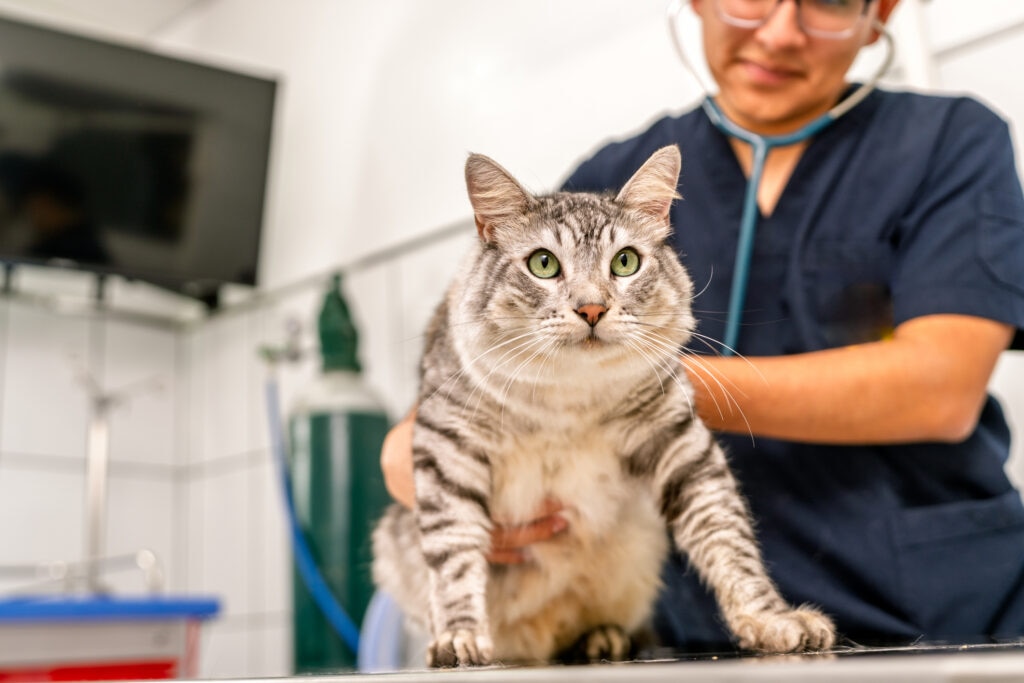
Guillermo Spelucin Runciman/iStock/Getty Images Plus via Getty Images
Hypothyroidism in cats is a rare condition in which the body doesn’t produce enough thyroid hormone, most often after treatment for hyperthyroidism. It can cause symptoms such as weight gain, lethargy, and poor coat quality and is typically managed with medication.
If your cat develops possible symptoms of hypothyroidism, talk to your veterinarian for proper diagnosis and treatment.
Key Takeaways
- Hypothyroidism in cats is uncommon and often occurs after treatment for hyperthyroidism.
- Symptoms can include lethargy, weight gain, poor coat quality, and developmental issues in kittens.
- Treatment typically involves thyroid hormone supplementation, which is lifelong for many cats.
What Is Hypothyroidism in Cats?
Hypothyroidism in cats is a rare condition caused by a deficiency of thyroid hormone.
Thyroid hormones are essential for regulating metabolism and supporting normal development throughout the body.
Most cases of hypothyroidism in cats are acquired later in life, typically when treatment for hyperthyroidism (an overactive thyroid) reduces thyroid hormone levels too much, resulting in an underactive thyroid.
Types of Hypothyroidism in Cats
Hypothyroidism in cats can be divided into two categories: congenital (present at birth) and acquired.
- Congenital hypothyroidism: Congenital hypothyroidism is a rare form present in kittens at birth. Thyroid hormone is critical for proper nervous system and skeletal development.
Kittens who lack sufficient thyroid hormone may show signs such as mental dullness and smaller-than-normal body proportions.
- Acquired hypothyroidism: Acquired hypothyroidism occurs in adult cats and is also uncommon. It can be divided into three categories:
- Primary hypothyroidism: Believed to result from immune-mediated destruction of thyroid tissue, such as lymphocytic thyroiditis, or from thyroid gland atrophy, where the gland shrinks and loses function.
- Secondary hypothyroidism: Extremely rare; reported in one case involving head trauma that reduced production of thyroid-stimulating hormone (TSH) by the pituitary gland.
- Iatrogenic hypothyroidism: Most often seen in cats treated for hyperthyroidism. Surgery or radioactive iodine therapy may permanently reduce thyroid hormone levels below normal. This form is irreversible but manageable.
Iatrogenic hypothyroidism may also occur temporarily during methimazole treatment (oral or under-the-skin/transdermal) while veterinarians adjust the dose. This form is typically reversible once the appropriate dose is established.
What Are the Symptoms of Hypothyroidism in Cats?
Symptoms of hypothyroidism in cats depend on whether the condition is congenital or acquired.
Congenital Hypothyroidism Symptoms
Signs of congenital hypothyroidism may include:
- Mental dullness
- Smaller kitten size compared to littermates
- Abnormal body proportions, such as a large, wide head, enlarged tongue, and short limbs
- Lethargy
- Wobbly gait (ataxia)
- Dry skin
- Thin or poor-quality fur
Acquired Hypothyroidism Symptoms
Symptoms of acquired hypothyroidism may include:
- Lethargy
- Excessive weight gain
- Lack of appetite
- Dry, dull coat
- Hair loss
- Scaly skin
What Causes Hypothyroidism in Cats?
The causes of hypothyroidism in cats depend on whether the condition is congenital or acquired.
Congenital Hypothyroidism
Causes of congenital hypothyroidism can be divided into goitrous and nongoitrous forms. Goitrous refers to enlargement of the thyroid gland.
- Goitrous congenital hypothyroidism: Thought to be caused by an inherited defect or dietary issues with iodine in the pregnant mother cat or newborn kitten.
- Nongoitrous congenital hypothyroidism: Usually caused by incomplete thyroid gland development.
Congenital feline hypothyroidism has been seen in domestic shorthair cats and Abyssinian cats.
Acquired Hypothyroidism
Acquired hypothyroidism in cats is commonly iatrogenic, meaning it develops because of medical treatment.
This can occur when treatment for hyperthyroidism—such as surgery, radioactive iodine treatment, or medication—reduces thyroid hormone levels too much.
How Is Hypothyroidism in Cats Diagnosed?
Veterinarians diagnose hypothyroidism in cats using specialized blood work to measure thyroid hormone levels.
In kittens with congenital hypothyroidism, X-rays may reveal skeletal abnormalities because thyroid hormone is essential for normal bone and nervous system development.
A complete blood count (CBC) and chemistry panel may also show high cholesterol levels and anemia. These findings are not unique to hypothyroidism, but they may lead your veterinarian to order more specific tests, including thyroid hormone measurements.
How Is Hypothyroidism in Cats Treated?
Hypothyroidism in cats is typically treated with levothyroxine, an oral thyroid hormone supplement available in liquid or tablet form.
Treatment focuses on restoring and maintaining normal thyroid hormone levels in the bloodstream.
Cats with congenital hypothyroidism and most forms of acquired hypothyroidism—including primary, secondary, and iatrogenic hypothyroidism caused by surgery or radioactive iodine—must take medication for the rest of their lives.
However, cats that develop iatrogenic hypothyroidism due to excessive methimazole dosing (oral or transdermal) may not need permanent therapy. In these cases, adjusting the methimazole dose can restore appropriate thyroid hormone levels over time.
Recovery and Management of Hypothyroidism in Cats
Cats typically see improvement in symptoms such as lethargy and weight gain after about two weeks of treatment. Skin and coat issues may take a couple of months to improve.
Finding the correct dose of thyroid hormone for your cat can take time.
Generally, your cat will start on a dose and have their blood work rechecked six weeks later. If thyroid hormone levels are within the normal range, your cat can continue their current dose.
If thyroid hormone levels are too low or too high, the dose will need to be adjusted, followed by another recheck six weeks later.
Cats being treated for hypothyroidism generally need blood work every six to 12 months to ensure their condition remains stable.
How To Prevent Hypothyroidism in Cats
Congenital hypothyroidism in cats is not preventable because it is present at birth and the exact underlying cause is unknown.
However, ensuring a pregnant mother cat is fed a high-quality commercial diet, such as Purina Pro Plan Kitten Food, can reduce the risk.
For cats being treated for hyperthyroidism, give their medication exactly as prescribed by your veterinarian to help avoid iatrogenic hypothyroidism. Bring your cat in for rechecks as recommended by your veterinarian to ensure the dose remains appropriate.
Hypothyroidism in Cats FAQs
What shouldn’t you feed cats who have thyroid problems?
Cats with thyroid problems generally should not have foods high in iodine, such as fish, or soy-based foods. Consult your veterinarian for the appropriate diet to meet your cat’s individual needs.
Is there a cure for hypothyroidism in cats?
Many forms of hypothyroidism in cats require lifelong management with thyroid hormone supplementation called levothyroxine.
However, iatrogenic hypothyroidism caused by excessive methimazole dosing may be reversible once the methimazole dose is adjusted.
How can you tell if a cat has a thyroid problem?
Cats with low thyroid hormone levels may have symptoms such as weight gain, a dull coat, and lethargy. Your veterinarian can use blood testing to check thyroid hormone levels.


