Feline Lower Urinary Tract Disease (FLUTD)


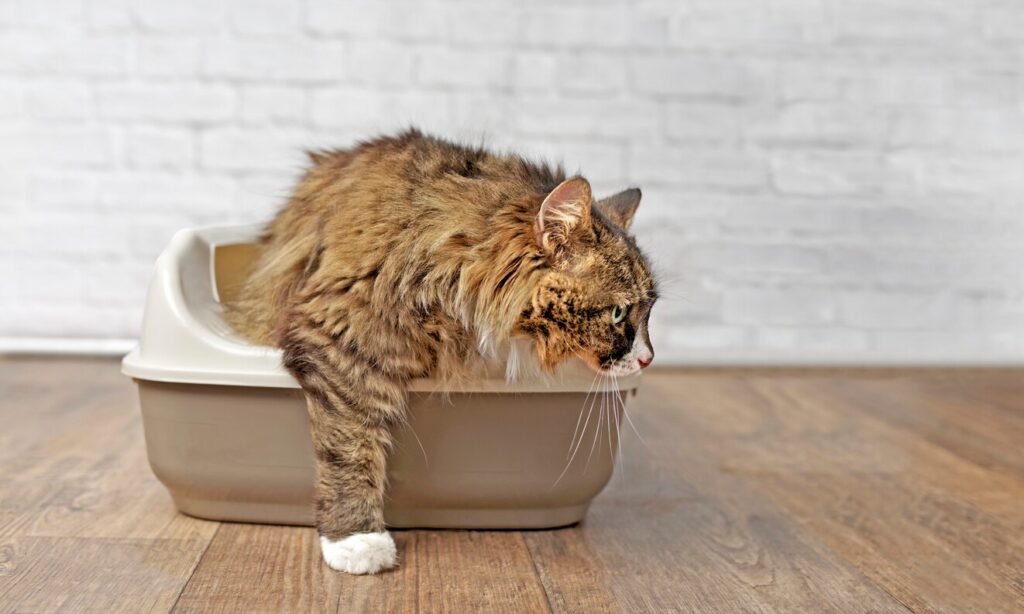
Feline lower urinary tract disease (FLUTD) refers to several conditions affecting a cat’s bladder and urethra. FLUTD can cause significant pain and urinary problems, and a urethral obstruction can become life-threatening.
Treatment depends on the underlying cause and may include medications, diet changes, increased water consumption, stress management, or surgery.
Key Takeaways
- Feline lower urinary tract disease (FLUTD) refers to several conditions affecting a cat's bladder and urethra.
- Symptoms can include urinating outside the litter box, frequent attempts to urinate, vocalizing while urinating, and blood in the urine.
- A cat that repeatedly tries to urinate but produces no urine or only a few drops needs immediate veterinary care.
- Treatment depends on the underlying cause and may include medications, veterinary diets, increased water intake, stress management, or surgery.
What Is Feline Lower Urinary Tract Disease?
Feline lower urinary tract disease (FLUTD) is a term that refers to several conditions affecting a cat's lower urinary tract, including the bladder and urethra (a thin tube that carries urine from the body to the external genitals).
FLUTD can range in severity, and the underlying cause can be difficult to identify. Most cases can be managed with a combination of medications, diet, and environmental changes.
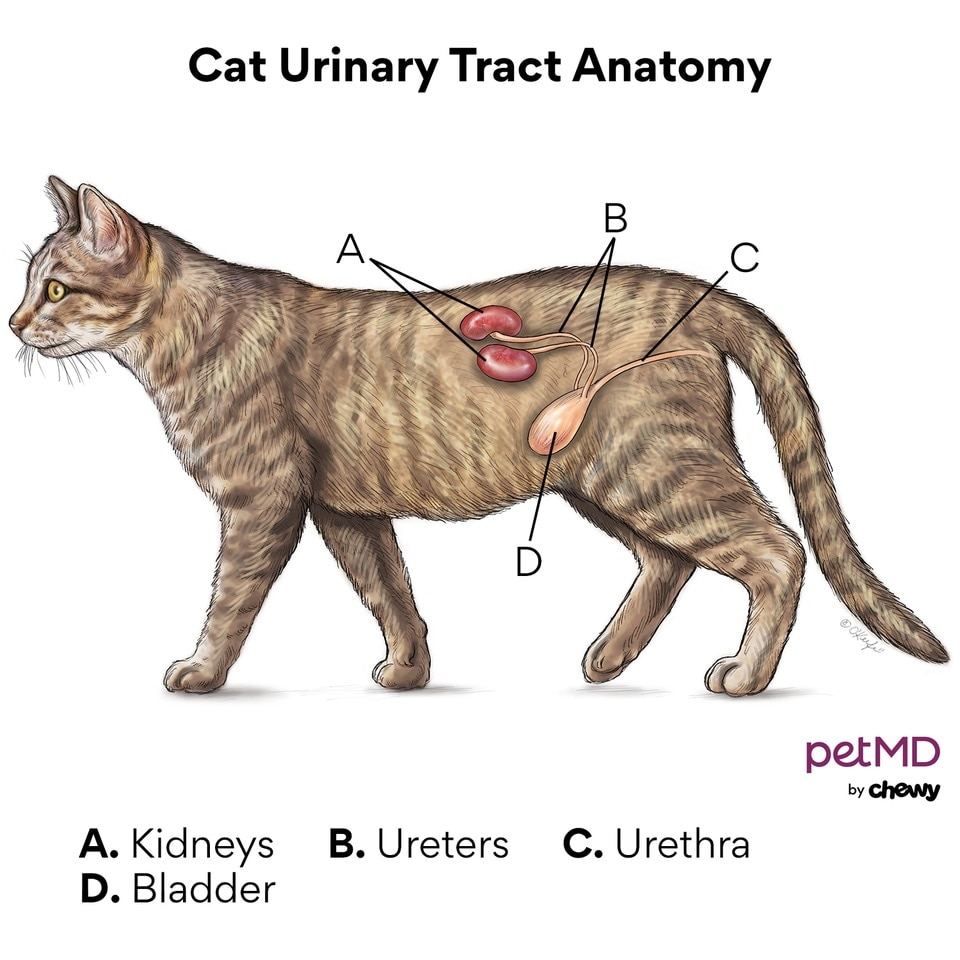
Download the medical illustration of cat urinary tract anatomy.
Feline lower urinary tract disease can occur at any age, depending on the underlying cause. It's most often seen in young to middle-aged adult cats, but it has also been diagnosed in kittens and senior cats who have never shown urinary symptoms.
What Are the Symptoms of Feline Lower Urinary Tract Disease?
The most common symptom of feline lower urinary tract disease (FLUTD) is urinating outside the litter box.
Symptoms of FLUTD may include:
- Urinating outside the litter box
- Frequent trips to the litter box
- Passing only small amounts of urine
- Vocalizing while urinating
- Blood in the urine
Inappropriate urination may occur on clothes, bedding, or rugs. Some cats may repeatedly use one location, while others may urinate throughout the home.
If your cat tries to use the litter box but produces no urine at all or only a few small drops, bring them to a veterinarian immediately.
This may be a sign of urethral obstruction, the most severe FLUTD syndrome. Urethral obstruction occurs more commonly in male cats but can also occur in females.
Health Tools
Get quick answers with our vet-created Symptom Checker
What Causes Feline Lower Urinary Tract Disease?
Because feline lower urinary tract disease (FLUTD) is an umbrella term for several lower urinary tract conditions, the cause depends on the specific condition affecting the cat.
Common conditions that can cause FLUTD include:
- Urinary tract infection (UTI)
- Bladder stones
- Feline idiopathic cystitis (FIC), which does not have a definitively known underlying cause, although chronic anxiety is thought to play a major role
- Urethral obstruction from urethral plugs, stones, or tumors
Less commonly, FLUTD can occur due to:
- Cancer of the bladder or urethra
- Structural abnormalities in the urinary tract
- Injuries or trauma
- Spinal cord injuries that cause neurologic conditions
How Is FLUTD Diagnosed?
Veterinarians diagnose FLUTD using a combination of a physical exam, diagnostic tests, patient history, and information about a cat's behavior and home environment.
Diagnostic Tests for FLUTD
Your veterinarian will perform a urinalysis to rule out a UTI. Some cases may require a urine culture if the infection is hard to find or does not respond to initial antibiotics.
Your veterinarian may also perform blood work to look for systemic (whole-body) infection, diabetes, and kidney disease. These conditions may have symptoms similar to FLUTD.
Stones in the bladder or urethra can usually be found on X-rays, though ultrasound may be preferred when looking for kidney changes or bladder abnormalities that wouldn't show up on X-rays.
Environmental and Behavioral History
Successful diagnosis and treatment of FLUTD often requires information about how your cat interacts with their home environment.
Recent behavior changes are an important part of the diagnosis. You may be asked to complete a detailed questionnaire about how and where your cat eats, sleeps, plays, and interacts with family members, as well as any recent changes to their environment.
These questionnaires can be just as helpful as regular lab tests because they can help identify stressors in your cat's environment.
How Is FLUTD Treated?
Treatment for FLUTD depends on the specific underlying syndrome and may include increasing water consumption, diet changes, medications, stress management, or surgery.
Common management strategies include feeding wet food or offering a water fountain to increase water consumption, providing more litter box options, and weight loss for overweight cats.
Some cats require a combination of therapies, or a “multimodal” approach.
Treatment Based on the Cause of FLUTD
Specific treatments your veterinarian may use based on the underlying cause include:
- Urinary tract infections (UTIs): Antibiotics, with amoxicillin as the most common first choice.
- Bladder stones: Surgery or veterinary diets.
- Feline idiopathic cystitis (FIC): Pain medications, veterinary diets, antispasmodic medications, and stress management.
- Short-term medications such as buprenorphine (opioid) and prazosin (antispasmodic) may be used during the initial episode.
Stress Management for FLUTD
Stress management may include pheromone diffusers, food puzzles, cat trees, and water fountains to reduce stress and promote your cat's happiness.
Extreme cases may require anti-anxiety medications, but these are often a last resort.
Recovery and Management of FLUTD
FLUTD symptoms can improve within days, but it's common for the condition to come back, so active management may be a lifelong commitment for pet parents.
Long-Term Medications and Diet
Anti-anxiety medications such as fluoxetine or sertraline may be used long-term in severe cases. These medications can take over a month to take effect.
In the interim, your cat may take short-acting anti-anxiety medications such as gabapentin.
Cats that respond well to veterinary diets should stay on them indefinitely. You will work with your veterinarian to adjust treatment accordingly.
Managing Environmental Stress
Sudden changes in your cat's environment can make symptoms more likely to return. Try to anticipate stressful situations for your cat, such as moving or adding new pets or family members to the household.
Managing Recurrent FLUTD
Many cats with FLUTD can live a long and happy life, but treatment can sometimes fail.
For male cats with recurrent obstruction, surgery to create a new urethral opening in the perineum (perineal urethrostomy) may be recommended.
Humane euthanasia may be considered for cats with pain that can't be controlled.
FLUTD (Feline Lower Urinary Tract Disease) FAQs
Is there a cure for FLUTD in cats?
Whether FLUTD can be cured depends on the underlying cause.
For most cats with FLUTD who experience idiopathic cystitis or urethral obstruction, the exact cause is unknown, and supportive care is needed to help prevent recurrence.
However, if a cat has bladder stones or a urinary tract infection, the individual incident may be curable.
How long can a cat live with FLUTD?
Cats with FLUTD can have a normal lifespan if the disease is managed well.
For cats with recurrent episodes of FLUTD, especially urethral obstruction, quality-of-life decisions may be necessary.
How do I know if my cat has FLUTD?
Signs of FLUTD can include urinating outside the litter box, visiting the litter box frequently, straining to urinate, and blood in the urine.
Male cats with severe complications may have vomiting, decreased appetite, or hiding behavior, sometimes with no known urinary symptoms.
How long does it take for FLUTD to go away?
How long FLUTD lasts depends on the specific type. Urinary infections may clear up in a few days, while feline idiopathic cystitis (FIC) may take weeks to months to manage appropriately.
What do you feed a cat with FLUTD?
There are multiple prescription diets available to help manage FLUTD in cats.
These diets are designed to increase water intake, change urine pH, reduce the risk of bladder stones, and help with behavioral management.
When a prescription diet is not practical, cats with FLUTD may benefit from a canned-food-based diet to help increase water intake.


