Heart Block (Mobitz Type II) in Cats: What Is It, and Can It Be Prevented?


Vasyl Dolmatov/iStock/Getty Images Plus via Getty Images
The heart has four chambers: the right atrium, right ventricle, left atrium, and left ventricle. During a normal heartbeat, an electrical signal begins in the sinoatrial (SA) node in the right atrium.
The signal then travels through the atria to the atrioventricular (AV) node before continuing to the ventricles, causing the heart to contract in a coordinated rhythm.
Heart block occurs when this electrical signal is delayed or interrupted as it travels from the atria to the ventricles.
In cats with Mobitz type II heart block, some electrical impulses fail to reach the ventricles, causing missed heartbeats and a slower-than-normal heart rate.
Key Takeaways
- Mobitz type II heart block is an abnormal heart rhythm that causes skipped heartbeats and can slow a cat's heart rate.
- Some cats have no symptoms, while others develop weakness, exercise intolerance, collapse, or fainting that requires immediate veterinary care.
- A pacemaker is the most effective treatment for severe Mobitz type II heart block and can significantly improve a cat's prognosis.
What Is Heart Block (Mobitz Type II) in Cats?
When veterinarians say heart block in cats, they’re referring to atrioventricular block or AV block. This is a type of arrhythmia, which is an abnormal or irregular heartbeat that happens because of changes in how the electrical signal travels through the heart.
With an AV block, the signal gets disrupted on its way to or past the AV node, affecting when and how regularly the ventricles contract (squeeze).
There are three degrees of AV block in cats:
- First-degree AV block: Movement of the electrical signal from the SA node down to the ventricles still reliably occurs but is delayed.
- Second-degree AV block: The signal occasionally does not travel completely from the SA node down through the ventricles.
- Third-degree AV block: The signal persistently does not travel from the SA node down through the ventricles.
Mobitz type II heart block is a form of second-degree AV block.
With Mobitz type II blocks, the signal travels from the SA node toward the ventricles at a reliable rate, but the ventricles occasionally do not contract.
This is important because the ventricles pump blood to the body—the right ventricle to the lungs to oxygenate blood and the left ventricle to the rest of the body.
A cat with Mobitz type II heart block will have “skipped” beats. The heart will sound relatively normal and then seemingly miss a beat. This results in a decreased overall heart rate.
Second-degree AV block can be serious, but pet parents are unlikely to recognize the heart arrhythmia on their own. If you notice weakness, collapse, or fainting, take your cat to an emergency veterinarian.
Symptoms of Heart Block (Mobitz Type II) in Cats
Some cats with Mobitz type II AV blocks will have no noticeable symptoms. Cats who have a slow heart rate due to the block may have the following symptoms:
- Weakness or lethargy
- Collapse
- Fainting (syncope)
- Exercise intolerance
Occasionally, pets with Mobitz type II AV blocks also have signs of heart failure. These include:
- Coughing
- Exercise intolerance
- Labored breathing
- Bluish or pale gums
- Open-mouth breathing
- Abdominal distention (enlargement or bloating)
Some medications can cause second-degree AV block. If this is the case, the cat may also have signs of gastrointestinal upset.
These include vomiting, decreased or absent appetite, and diarrhea.
Causes of Heart Block (Mobitz Type II) in Cats
Mobitz type II heart block in cats is usually caused by structural heart disease (abnormalities in the shape of the heart or its muscle thickness) or damage to the heart’s electrical conduction system.
While second-degree block is more common in dogs than cats, it does still occur in our feline family members. Mobitz type II blocks are more common in older cats than younger cats.
Potential causes of Mobitz type II heart block in cats include:
- Hypertrophic cardiomyopathy (HCM)
- Infection or inflammation (swelling) of the heart muscle (myocarditis) or inner lining of the heart (endocarditis)
- Fibrosis/scarring of the heart (often no known underlying cause)
- Tumors of the heart
- Electrolyte abnormalities
Certain medications that slow the transmission of the signal can cause second-degree AV block.
Examples include:
- Digoxin
- Diltiazem
- Atenolol
- Xylazine
- Opioids
Second-degree AV block can be caused by high vagal tone, which is more common in athletic pets. This is a less common cause of Mobitz type II blocks, especially in cats.
How Veterinarians Diagnose Heart Block (Mobitz Type II) in Cats
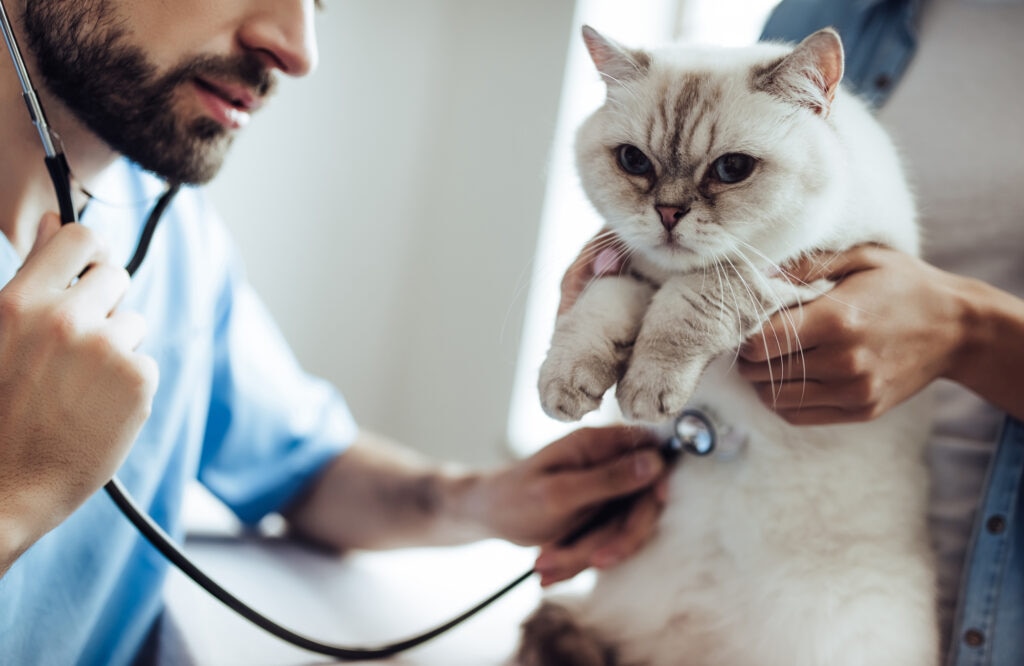
The veterinarian will first do a physical exam, which will include listening to the heart. During their examination, they may notice occasional dropped or skipped beats.
Other diagnostics that will be recommended include:
- Electrocardiogram (ECG): ECGs show a graphical display of the heart’s electrical signal. In a cat with Mobitz type II heart block, the wave that shows ventricular contraction will occasionally be missing.
- Echocardiogram: This is an ultrasound of the heart. This will be done to see if there are abnormalities in the structure of the heart.
- Chest X-rays: X-rays will be done to rule out congestive heart failure.
- Blood work and urinalysis: The veterinarian may also run routine blood work and urine testing to make sure the pet is systemically healthy. Some contributing factors, like electrolyte abnormalities or hyperthyroidism, may be found on labs.
- Atropine response test: If atropine is given and the heart rhythm improves, vagal tone is contributing to the abnormal heart rhythm. Again, this is less common in cats.
If your veterinarian is concerned that your cat has a Mobitz type II heart block, they may refer your pet to a veterinary cardiologist for further workup and treatment.
Treatment of Heart Block (Mobitz Type II) in Cats
Mobitz type II AV block can progress to third-degree AV block, which puts the cat at risk for sudden death.
For cats who are fainting or have frequently dropped beats, a pacemaker may be recommended. Pacemakers are placed by specialists, and surgery often costs more than $3,000.
If a pacemaker is not implanted, periodic checks with electrocardiograms will likely be recommended to check if the abnormal heart rhythm is worsening.
In cats who don’t get a pacemaker or who are awaiting pacemaker implantation, medications that positively affect heart rate—like terbutaline or theophylline—may be recommended.
However, they’re often not enough on their own.
If congestive heart failure (CHF) is present, this will need to be treated. The cat may need to be hospitalized until CHF is controlled. Treatments for CHF may include:
- Furosemide to remove extra fluid from the lungs
- Mild sedatives to relieve the anxiety of respiratory distress
- Drainage of extra fluid in the chest or abdomen
- Supplemental oxygen if needed
- Pimobendan
- ACE inhibitors like benazepril or enalapril
Digoxin is commonly used in pets with heart failure but may not be recommended in a cat with heart block.
If there is an underlying condition that’s contributing to the heart block, it will also need to be managed if possible.
Mobitz type II heart block is not usually curable in cats. Rather, it’s managed with treatment of the underlying condition, oral medications, monitoring, and/or a pacemaker.
Recovery and Management of Heart Block (Mobitz Type II) in Cats
Cats who have no clinical signs of their heart block may do fine without intervention. However, cats who have frequently dropped beats or who are fainting have a poor prognosis (outlook for recovery) without getting a pacemaker put in.
The greatest risks here are progression to third-degree AV block, sudden death, and CHF.
If a pacemaker is implanted and underlying conditions are manageable, the prognosis is good to excellent. Medications that were started for CHF can usually be tapered or stopped after the pacemaker is put in.
Prevention of Heart Block (Mobitz Type II) in Cats
Most cases of Mobitz type II heart block are not preventable in cats. Pet parents can keep their pet safe by keeping up on regular veterinary appointments that allow for early finding of abnormal heart rhythms or conditions that could lead to heart block.
Heart Block (Mobitz Type II) in Cats FAQs
What is the prognosis for Mobitz type II heart block?
Cases that are mild (rare, dropped beats) have a fair prognosis, but Mobitz type II heart block can get worse. Cats with severe Mobitz type II heart block (frequent dropped beats) have a poor prognosis without pacemaker implantation.
What is the treatment for Mobitz type II heart block?
The ideal treatment for Mobitz type II heart block is a pacemaker. There are oral medications like terbutaline or theophylline that may be recommended for cats who don’t get a pacemaker, but they’re often not enough on their own. Underlying conditions also need to be managed.
What causes Mobitz type 2 heart block?
In cats, Mobitz type II heart block is usually caused by structural disease of the heart. Potential causes include hypertrophic cardiomyopathy, myocarditis, endocarditis, scarring of the heart, and heart tumors. Some medications can also cause Mobitz type II heart blocks.


