Bulging Eyes in Cats: Causes and How To Prevent It


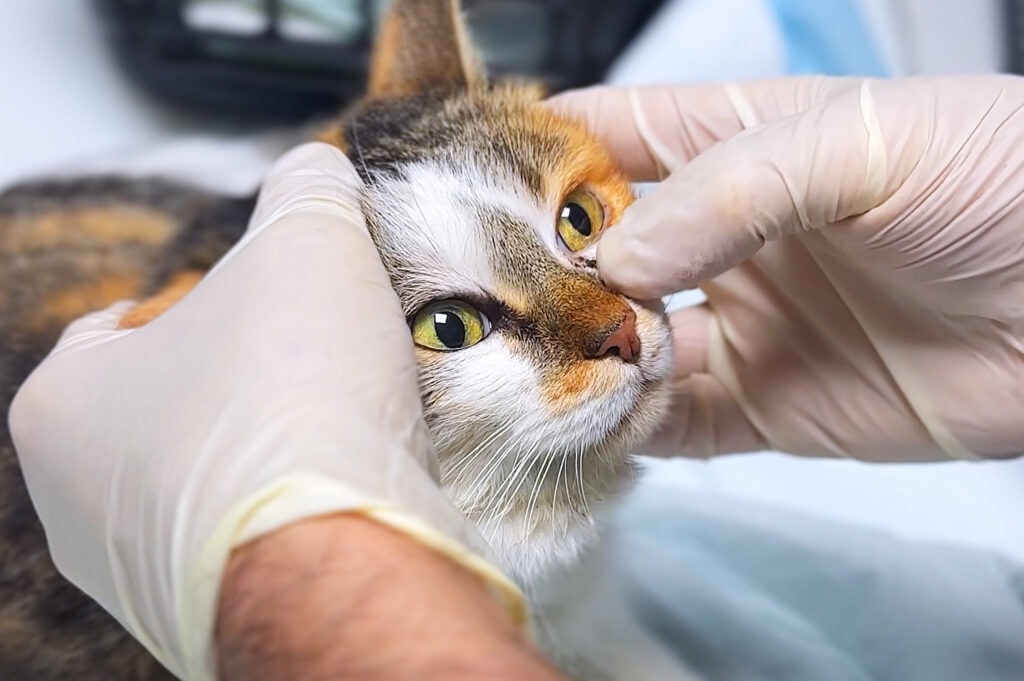
Andyborodaty/iStock/Getty Images Plus via Getty Images
A bulging eye in a cat is a medical emergency that requires immediate veterinary care. A cat’s eye may bulge because of trauma, infection, inflammation, glaucoma, dental disease, cancer, or another condition affecting the eye or surrounding tissues.
Depending on the cause, the eye itself may be enlarged or pushed forward from its normal position. Prompt diagnosis and treatment are important to relieve pain, protect your cat’s vision when possible, and address the underlying cause.
Key Takeaways
- Bulging eyes in cats are a medical emergency and require immediate veterinary care to help preserve vision and treat the underlying cause.
- A bulging eye is a symptom, not a diagnosis. Causes include trauma, glaucoma, infection, dental disease, inflammation, and cancer.
- Treatment depends on the cause and may include medication, surgery, or, in severe cases, removal of the affected eye.
- Early diagnosis improves the outlook and can reduce pain, prevent complications, and increase the chances of preserving vision.
What Are Bulging Eyes in Cats?
Bulging eyes in cats occur when an eye becomes enlarged or is pushed forward from its normal position in the eye socket.
A bulging eye is a medical emergency, and your cat should be examined by a veterinarian immediately.
The eye socket, called the orbit, is the space that holds the eyeball (globe) and surrounding glands, nerves, blood vessels, and muscles.
Because the orbit is a fixed space, swelling or other changes within it can push the eye forward. The eyeball itself can also become enlarged.
Veterinarians may describe a cat’s bulging eye as:
- Buphthalmos: The eyeball is in its normal position but is enlarged, often due to glaucoma. One or both eyes may be affected.
- Exophthalmos: The eyeball is normal-sized but is pushed forward from its normal position. Usually, only one eye is affected.
- Proptosis: The eyeball is suddenly displaced outward from the eye socket, often due to trauma. The eyelids can become trapped behind the eyeball.
Orbital disease is an umbrella term for conditions that affect the eye socket and its surrounding tissues. Orbital disease is less common in cats than in dogs because cats have more bone surrounding the orbit. Some conditions affecting this area may require surgical treatment.
If you notice that one or both of your cat’s eyes are bulging, protruding, or suddenly look larger than normal, seek immediate veterinary care.
Treatment depends on what is causing the change.
Symptoms of Bulging Eyes in Cats
The main symptom of cats with bulging eyes is that the eye itself bulges or protrudes outward from the globe.
Cats can also exhibit other symptoms associated with this condition or as a result, including:
- Third eyelid protrusion
- Blindness
- Dull appearance to the cornea, often associated with dry eye
- Conjunctiva
- Chemosis, or swelling, of the conjunctiva
- Difficulty closing the eyelids
- Periorbital swelling (i.e., swelling of the associated tissues)
- Discharge from the eye or surrounding skin might be commonly mistaken for a draining wound
- Sneezing and/or drainage from the nose
- Pupils not constricting normally or lack of blinking when normal.
- Asymmetry to the face and sinuses
- Pain upon opening the mouth, often associated with inflamed gums and tissues in the back of the mouth
- Local lymph node enlargement
- Neurologic disorders
- Fever
- Decreased or absent appetite
- Lethargy
Severe symptoms may include:
- Hyphema, commonly seen as a “red eye” where the eye is filled with blood
- Pain especially when touched
- Normal to dilated pupil
- Surrounding abrasions and/or fractures with or without hemorrhage
- Other signs associated with head trauma such as coma, seizures
- Epistaxis (nosebleed)
Causes of Bulging Eyes in Cats
Bulging eyes in cats can be due to various underlying conditions including:
- Abscess formation, caused by bacterial infection, fungal infection, or foreign bodies
- Inflammation or autoimmune disease
- Vehicular trauma or trauma experienced from falling, fighting, dog attacks, or abuse (it’s important to note that given a cat’s anatomy, severe trauma is often required to cause proptosis)
- Disease
- Dental disease; tooth root abscess
- Cancer
- Swelling of salivary glands
Bulging eyes can occur in any cats of any breed, however, younger, unneutered male cats may have a higher incidence of trauma-related proptosis due to territorial and mating behavior.
How Veterinarians Diagnose Bulging Eyes in Cats
Veterinarians diagnose bulging eyes in cats with a physical and eye exam, followed by tests that help determine whether the problem is within the eye, behind the eye, or caused by another health condition.
Depending on the findings, blood work and imaging such as ultrasound, CT, or MRI may also be recommended.
Your veterinarian will first perform a complete physical exam and a more detailed ophthalmic (eye) exam.
They may also gently palpate the area around the eye to determine whether the eyeball can be pushed back into its normal position.
Common eye tests may include:
- Schirmer tear test to measure tear production
- Fluorescein eye stain to check the cornea for ulcers or abrasions
- Intraocular pressure (IOP) test to measure pressure inside the eye
Because bulging eyes can have several causes and symptoms may resemble those of other conditions, your veterinarian may recommend additional testing.
This can include a complete blood cell count (CBC), internal organ function screening, blood pressure measurement, FeLV/FIV/HWT testing, thyroid evaluation, and urinalysis. These tests can help establish your cat’s overall health, rule out other conditions, and assist with surgical or anesthetic planning if needed.
Your veterinarian may also examine your cat’s mouth for signs of dental disease, such as infected teeth, swollen gums or tissues, or discharge.
Dental problems can sometimes affect tissues around the eye.
Does a Cat With a Bulging Eye Need Imaging?
Your veterinarian may refer your cat to a veterinary ophthalmologist for specialized testing. An ocular ultrasound, CT scan, or MRI can help evaluate structures behind the eye, identify the underlying cause, and assist with surgical planning.
If cancer is suspected, your veterinarian may also recommend X-rays of the chest and X-rays or an ultrasound of the abdomen to look for evidence that a tumor has spread (metastasized).
Treatment of Bulging Eyes in Cats
Treatment for bulging eyes in cats may be surgical (proptosis, cancer, dental disease, trauma, foreign body) or medical (infectious, inflammatory) depending on the diagnosis.
For any displaced eye, the sooner it can be put back in place, the better.
However, given a cat’s orbital bony structure, if proptosis is the underlying cause, it usually carries a less favorable outcome due to the severity of trauma encountered, and enucleation is often performed.
Enucleation is the surgical removal of the eyeball and its associated tissues. Enucleation is often performed in cases where:
- The eye has ruptured
- Three or more eye muscles are ruptured or torn
- The eye has filled with blood
- A tumor is diagnosed
- The pet parent is unable or can’t commit to potential long-term care
- The eye is painful and eye medications aren’t working to control the pressure inside the eye anymore.
In some cases, the eye can be salvaged but the prognosis for vision is poor. In these cases, once the cat is stabilized, they are anesthetized and surgical replacement of the globe back into the orbit is performed.
A temporary tarsorrhaphy (surgical closure of the eyelids) is performed, and frequent ocular (and oral) medications are then administered to aid swelling, inflammation, pain, and infection.
Consultation and treatment of cancer with a veterinary oncologist for chemotherapy and radiation therapeutic recommendations may be necessary, depending on the diagnosis.
Recovery and Management of Bulging Eyes in Cats
After surgery for bulging eyes in cats, your pet should be kept in a calm and stress-free environment with time given for a chance to acclimate, especially for those cats who underwent an enucleation.
Partially blind cats can still have a good quality of life.
Sutures will most likely be present, which will need to be removed in a few weeks.
It’s also normal for there to be some swelling and bruising, which should dissipate after a few days.
Your cat will be sent home with medications and an recovery cone to prevent their scratching or rubbing at the incision.
Follow your veterinarian's advice and reach out if there are any concerns or further symptoms.
There may be residual bleeding or draining from the surgical site, which will need to be addressed. Your veterinarian may recommend compresses to help with the swelling, along with recommendations for exercise restriction or crate rest.
For cats that underwent a tarsorrhaphy or other procedure, recovery will be dependent on their case.
Weekly follow-up visits will ensure proper tension of the temporary sutures, along with monitoring for any signs of recurrence of vision.
A complete recovery may take several months, and some conditions can take longer to see improvement.
Medications will vary and may be given frequently during recovery. If your cat was diagnosed with glaucoma, they may be prescribed dorzolamide or timolol eye drops.
If your cat has inflammation in their eye, they may be prescribed an ophthalmic NSAID, like diclofenac.
If there was trauma to the eye, topical eye antibiotics may be prescribed, like terramycin.
Pain medications, like gabapentin, may also be prescribed.
Your cat may require soft food for the first few weeks without any access to chew toys, especially if they underwent a dental procedure.
Occasionally, recovery diets (like Royal Canin Veterinary Diet Recovery Ultra Soft Mousse in Sauce Dog and Cat Food) that are soft and highly palatable are prescribed after surgery.
Long-term complications can occur, such as dry eye or corneal ulceration.
Follow-up appointments and tests may also be required.
Bulging Eyes in Cats FAQs
How can I treat my cat's bulging eye?
A bulging eye is considered a medical emergency and should be treated by a veterinarian as soon as possible to save your cat’s vision and alleviate pain.
Will a cat's swollen eye heal on its own?
Whether or not a swollen eye will heal on its own depends on the cause. If your cat bumped their eye and the eyelid is swollen, it may heal on its own over the next week.
If the eye itself is swollen or there is inflammation behind the eye, this needs to be treated by a vet right away to minimize the risk of blindness and severe illness.


