Entropion in Cats: What It Is and How to Treat


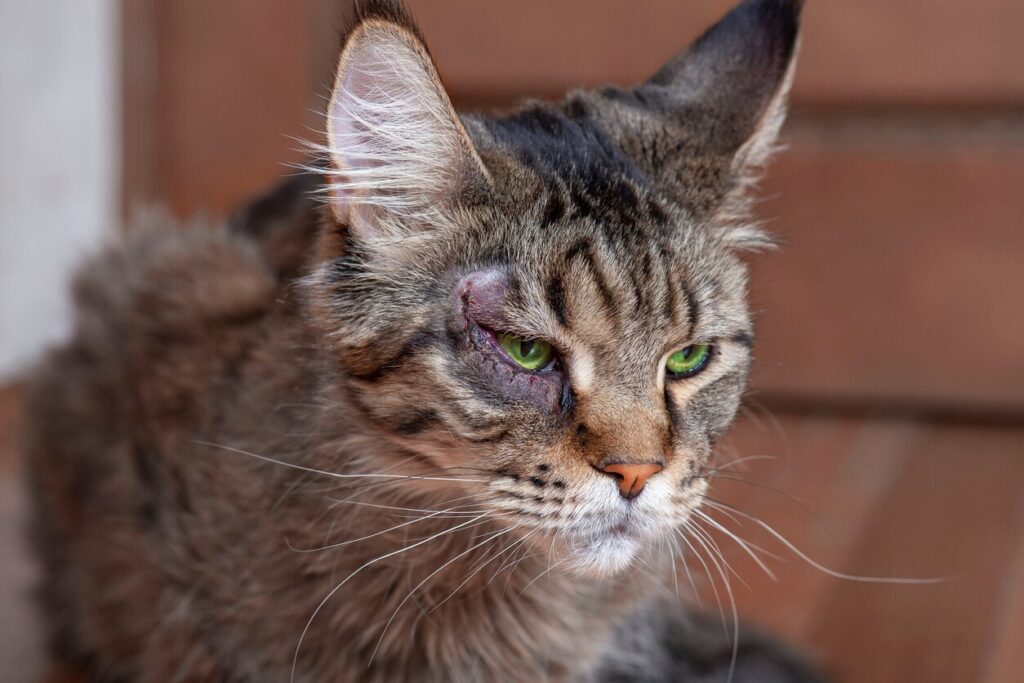
Entropion is a painful eye condition where the eyelids “flip” or roll inward.
As a result, hairs rub on the clear surface of the eye (the cornea), which is very painful and can lead to wounds on the eye, severe scarring, and if left untreated, loss of vision.
Eye issues in cats are considered urgent. If your cat has excessive tearing, squinting, discomfort, or eye irritation, seek veterinary care for your cat as soon as possible.
Key Takeaways
- Entropion in cats is extremely painful. If you notice any signs of discomfort in your cat due to entropion, contact your vet immediately.
- Short-nosed cat breeds, like Persian cats, are more prone to entropion, although any cat can get it.
- Treatment will depend on the individual cat, but typically involves some type of topical eye medication and possible surgery.
What Is Entropion in Cats?
Entropion is an abnormal inward rolling of the upper or lower eyelids, causing abnormal, painful friction with the surface of the eye.
Entropion is especially irritating to the cornea, the clear outer covering of the eye.
The abnormal rolling of the eyelid introduces hair directly onto the cornea and the conjunctiva (pink inner lining of the eye), causing scratches, ulcers, inflammation, discharge, and pain.
Any cat can have entropion; however short-nosed breeds with bulging eyes, such as Himalayan and Persian cats, have an increased risk due to crowded facial features.
Symptoms of Entropion in Cats
Entropion signs vary depending on severity. Most commonly, cats display:
-
Squinting
-
Rubbing of the eye
-
Swollen eyelids
-
Eyelid spasms
-
Raised third eyelid
Causes of Entropion in Cats
There are three main causes of entropion in cats:
Birth Defect: Congenital Entropion
Congenital means “present at birth,” and is usually noticed around two weeks of age, when the eyes open for the first time. This is an uncommon form of entropion in cats.
Eye Crowding: Anatomical/Developmental Entropion
Anatomical, or developmental, entropion occurs in brachycephalic (short-nosed) breeds and purebred Himalayan or Persians.
In these breeds, the eyes bulge due to a shallow eye socket, causing crowding in the face and subsequent inversion of the eyelid.
Secondary or Acquired Entropion
There are three types of acquired, or secondary entropion in cats.
-
Pain-related: Spastic entropion is the most common type of entropion in cats. This type develops secondary to chronic squinting from painful eye diseases, such as viral or bacterial eye infections, corneal ulcers, or dry eye, that cause involuntary ocular muscle spasms and subsequent inward rolling of the eyelid.
The eye’s anatomy is initially normal, but chronic irritation, especially from feline herpesvirus-1, causes damage that is sometimes permanent. Spastic entropion often involves only one eye, but can involve both.
-
Injury-related: Cicatricial entropion is uncommon in cats and happens when the eyelid is damaged or scarred because of a previous injury.
-
Age-related: Involutional entropion occurs most often in senior cats and involves the age-related loss of the fat pad behind the eye, causing the eye to “sink in” slightly and allowing the eyelids to abnormally roll.
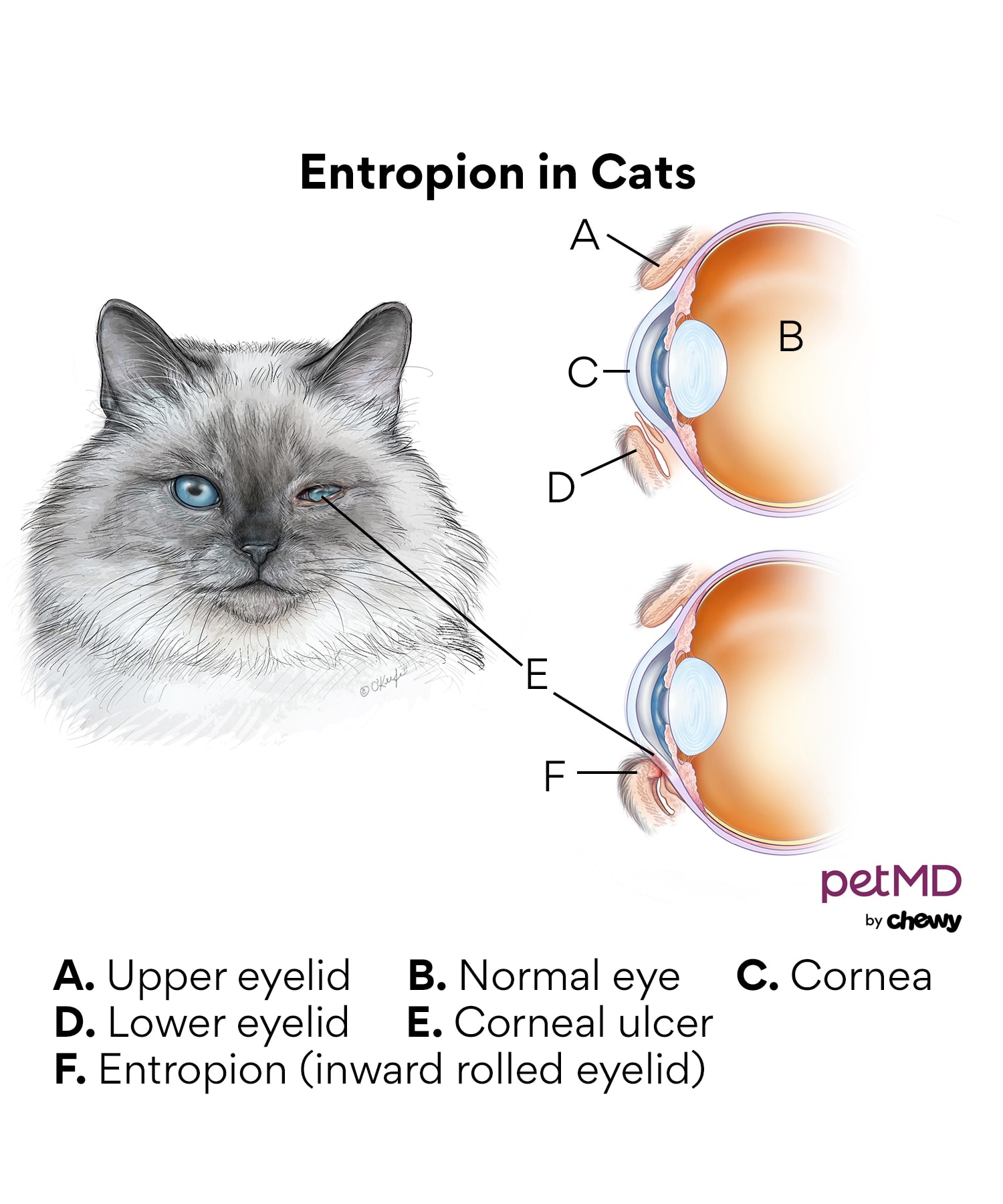
Click here to download this medical illustration.
How Veterinarians Diagnose Entropion in Cats
Diagnosing entropion in cats is typically straightforward when eyelid hairs are rubbing the surface of the eye. However, some cases can be more challenging.
Many cats, especially those who are in pain, may close or squint their eyes. This leads to intermittent or difficult-to-see entropion. Veterinarians may use a variety of tests to identify entropion and secondary eye issues, including:
-
Numbing drops (topical anesthetic): If your cat has spastic entropion, numbing the surface of the eye often provides enough relief to allow the eyelid to relax and roll back to a normal position.
-
Numbing eye drops are only used for diagnosis and cannot be used as an ongoing pain-relieving medication. The underlying condition must be identified to resolve the issue.
-
-
Fluorescein stain test: Veterinarians may place a drop of sterile eye called a fluorescein stain test to screen for a scratch (ulcer) on the cornea. A corneal ulcer glows bright green under a blacklight with this test.
-
Intraocular pressure test: The vet may also use an intraocular pressure test to look for inflammation or glaucoma, either as a reason for the entropion or as a secondary complication.
-
Schirmer tear test: Veterinarians may perform a Schirmer tear test to quantify your cat’s normal tear production. Low tear production could be the reason for pain, inflammation, and irritation, leading to entropion.
Treatment of Entropion in Cats
Treating entropion in cats depends on the cause for the condition.
Treatment for entropion in cats generally involves eyelid surgery and medications.
Medications
Treatment for entropion in cats is highly individual, depending on the underlying cause of the entropion and the severity of your cat’s eye condition.
Your vet may prescribe one or more medications:
-
Antibiotic eye drops or ointment (erythromycin or ofloxacin)
-
Pain-relieving medication (Onsior)
-
Antiviral medication (cidofovir eye drops or famciclovir oral suspension)
Eyelid Surgery
Cats with entropion often require surgical correction under general anesthesia and typically have an excellent success rate.
Entropion correction surgery is a delicate procedure, requiring special equipment and the experience of a veterinary ophthalmologist.
The ophthalmologist removes a small elliptical wedge of eyelid skin for correction. By removing the ideal required amount of eyelid skin, tailored to each individual cat, this creates an eyelid that fits well into the eyeball and no longer rolls onto the eye.
Occasionally, cats with entropion may benefit from a temporary procedure called tacking of the eyelids, which uses sutures to keep the eyelid from rolling onto the eye during the healing process. This procedure may allow a kitten to “outgrow” the entropion as the anatomy of their head matures.
Cost of Entropion Surgery for Cats
Entropion surgery may cost anywhere between $1,000 to $3,000.
Cost may vary depending on the veterinarian’s location and experience level, and if the entropion involves one or both eyes.
Hyaluronic Acid Injection
Some veterinary ophthalmologists may use hyaluronic acid (HA) injections as an alternative to surgery, especially in a senior cat who is a poor candidate for anesthesia.
HA is a filler-type material that can “puff out” the eyelids, allowing the eyelid to be successfully turned outward. This is typically a safe and lower-cost method in mild cases of entropion.
However, the success rate is less predictable than surgical correction and may require additional follow-ups and procedures.
Recovery and Management of Entropion in Cats
Cats generally recover well from entropion.
Following surgery, recheck appointments are necessary, usually within 10–14 days after surgery.
Extremely fine suture material is used, dissolving on its own, although sometimes sutures need to be removed.
During the healing process, the incision area may be red and inflamed with minimal discharge. Cats need to wear a recovery cone or collar to prevent them from injuring the eye or incision.
Cats may recover with topical eye medications, as well as oral medications to treat pain and inflammation and to prevent infection.
Contact a veterinarian if your cat shows the following signs after surgery:
-
Pus-like discharge from the incision or eye
-
New or worsening redness or swelling around the incision and eye
-
New or worsening squinting
-
New or worsening cloudiness to the surface of the eye
-
Decreased or no appetite
Some cats will have permanent corneal scarring and conjunctivitis even after correction of the entropion, and they may require lifelong medications to maintain eye comfort and health. Optixcare (eye lube plus) is a great general eye-lubricating gel that helps soothe and keep the eye moist.
Brachycephalic breeds may benefit from continued lubrication that may help decrease occurrences of entropion in the future.
Because most cases of entropion are spastic, it is important to monitor your cat’s eyes closely and seek veterinary treatment quickly.
Early intervention offers the best chance of success and can return the eye to normal function.
Entropion in Cats FAQs
How much does Entropion surgery cost for cats?
Surgery costs can range from approximately $1,000 to $3,000. More involved cases are in the $5,000 range.
Does entropion in cats go away?
Entropion in cats can be managed with medications, and surgery can result in a cure.
How painful is entropion in cats?
Entropion in cats is a very painful and irritating condition.
Is entropion in cats an emergency?
Yes. Entropion is an emergency for your cat, due to the pain and damage caused by the hairs and eyelashes rubbing on the cornea, resulting in corneal ulcers, wounds, and scarring. If your cat has excessive tearing or squinting, seek veterinary care as soon as possible.


