How To Tell If a Cat Has a Fever: Everything Pet Parents Should Know About Fever in Cats


Anton Ostapenko/iStock/Getty Images Plus via Getty Images
Cats have a fever when their body temperature rises above 102.5 F, which is usually a sign that something in their body needs medical attention.
A fever in cats isn’t a disease itself. Instead, it’s a symptom of an underlying issue, such as an infection, inflammation, toxin exposure, or another health condition. While mild fevers can help the immune system fight illness, higher or persistent fevers can become dangerous without veterinary care.
Because cats are experts at hiding illness, a fever may be one of the only early warning signs that something is wrong. Knowing what to look for—and when to call your veterinarian—can help protect your cat’s health and prevent complications.
Key Takeaways
- A fever in cats is typically defined as a body temperature above 102.5 F, and the most accurate way to confirm it is by taking your cat’s temperature with a thermometer.
- Common signs of fever in cats include lethargy, loss of appetite, warm ears, and reduced grooming, though symptoms can be subtle.
- If your cat has a high or persistent fever, or shows additional symptoms like vomiting or difficulty breathing, contact your veterinarian for proper diagnosis and treatment.
What Is Fever in Cats?
A cat’s normal body temperature is between 100 F and 102.5 F. But just like humans, cats can run a higher-than-normal body temperature (called a fever) when they’re sick—or for other reasons.
A typical fever in a cat is considered a symptom until further diagnosis can confirm what’s causing it. However, when a veterinarian can’t find an underlying cause, the cat may be diagnosed with what is often termed a fever of unknown origin.
How To Tell If a Cat Has a Fever
As a vigilant pet parent, you may be wondering—how can you tell if a cat has a fever?
In addition to seeing symptoms like reduced activity and appetite, you may suspect a fever if your cat feels warmer to the touch than usual.
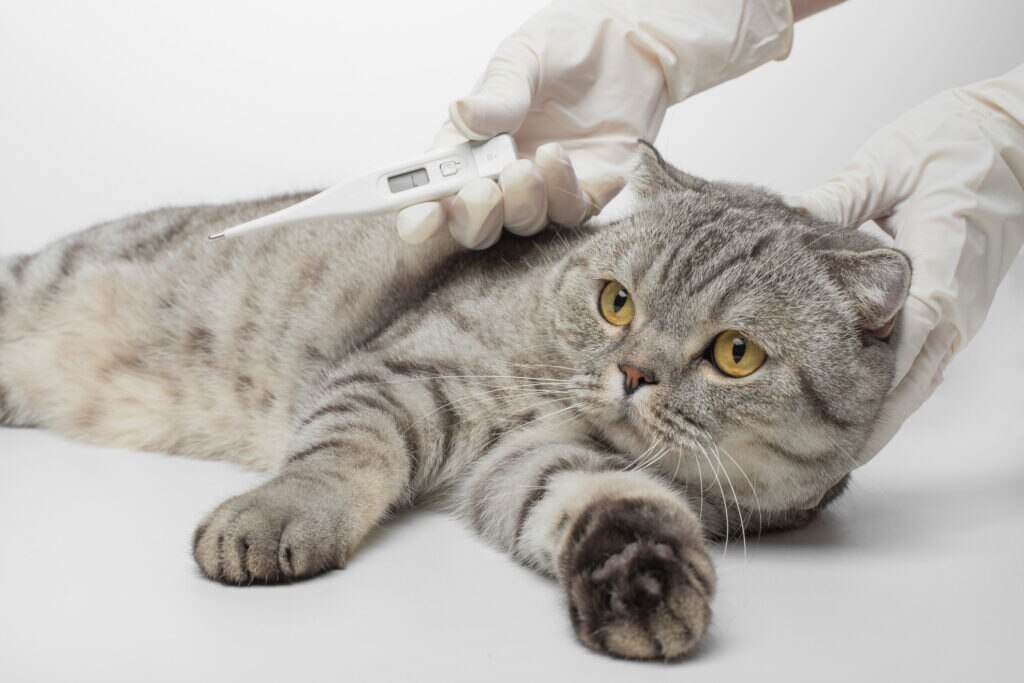
The only accurate way to confirm a fever in cats is to visit your veterinarian. They will take your cat’s temperature rectally with a thermometer.
Rectal temperatures are more accurate than ear temperatures and are easy to perform if your cat is relatively laid-back.
Symptoms of Fever in Cats
Common signs of fever in cats include:
-
Avoidance of activities they normally enjoy
If your cat has any of these worrisome symptoms, call your veterinarian for an appointment or take them to the closest veterinary emergency room.
Health Tools
Get quick answers with our vet-created Symptom Checker
Causes of Fever in Cats
Common causes of fever in cats include:
-
Bacterial, viral, or fungal infections
-
Parasites
-
Trauma, such as burns
-
Inflammatory disorders such as immune mediated hemolytic anemia (IMHA), pancreatitis, or liver and gallbladder disease
How Veterinarians Diagnose Fever in Cats
To diagnose fever in cats, a veterinarian will first look at your pet’s medical history. They will then ask you to list your cat’s symptoms and details about their recent behavior.
Next, your veterinarian will physically examine your cat. This will include a temperature reading using a rectal thermometer.
Sometimes a physical exam may not show a reason for your cat’s fever. Other tests may be recommended, including:
-
Ultrasound
Treatment of Fever in Cats
Treatment of fever in cats involves addressing the underlying cause if it’s known.
A cat with a fever may also receive:
-
Fluids to treat or prevent dehydration
If your cat is running a very high fever or is not eating and drinking, they may have to be hospitalized for treatment and close monitoring.
This may include intravenous (IV) fluids and injectable medications.
Recovery and Management of Fever in Cats
Many cats respond well to treatment and will recover from a fever within one to five days, unless the underlying cause can’t be cured or managed well.
Depending on the underlying cause, the fever may or may not return. Because of this, it’s important to watch your cat closely.
Another important step to recovery from fever is ensuring your cat is given and finishes all medications as prescribed by your vet—even if you think their condition is improving.
Stopping medications early or altering the dosage can cause the fever to return and your cat to become sick.
While cats recover from a fever, having a comfy bed to sleep in and a calming pheromone diffuser nearby can help them relax.
Using a cat water fountain is also a good option to add to the home to encourage them to drink, which helps them recover.
Prevention of Fever in Cats
While you can’t prevent every cause of fever in cats, you can take measures at home to help prevent other causes.
Making sure your cat sees their vet at least once a year for a wellness exam is important to ensure they are as healthy as possible.
Reducing exposure to other cats of unknown health status, and to the elements by keeping them indoors, are two more ways to help prevent a fever.
Maintaining good hygiene, always providing fresh water, and supporting the immune system with a complete and balanced diet can also help avoid conditions in which a fever can develop.
How To Tell If a Cat Has a Fever FAQs
How do you bring down a fever in a cat?
Antibiotics, anti-inflammatory medication, and fluids are all common remedies to help bring a fever down in cats.
It’s important to treat the underlying cause of the fever to ensure it stays down.
How could you tell if a cat has a fever?
You can tell you cat has a fever by taking their temperature.
The most accurate way to take a cat’s temperature is with a rectal thermometer—but this must be done with caution. If your cat is skittish, bring them to the vet for a safe, accurate temperature reading.
Can a cat recover from a fever on its own?
Knowing if a fever will resolve on its own depends on the underlying cause.
In some cases of fever, such as with a minor virus or an immune response after vaccination, the fever may ease without treatment.


