9 Ways Your Dog May Ask for Space


Tassii/E+ via Getty Images
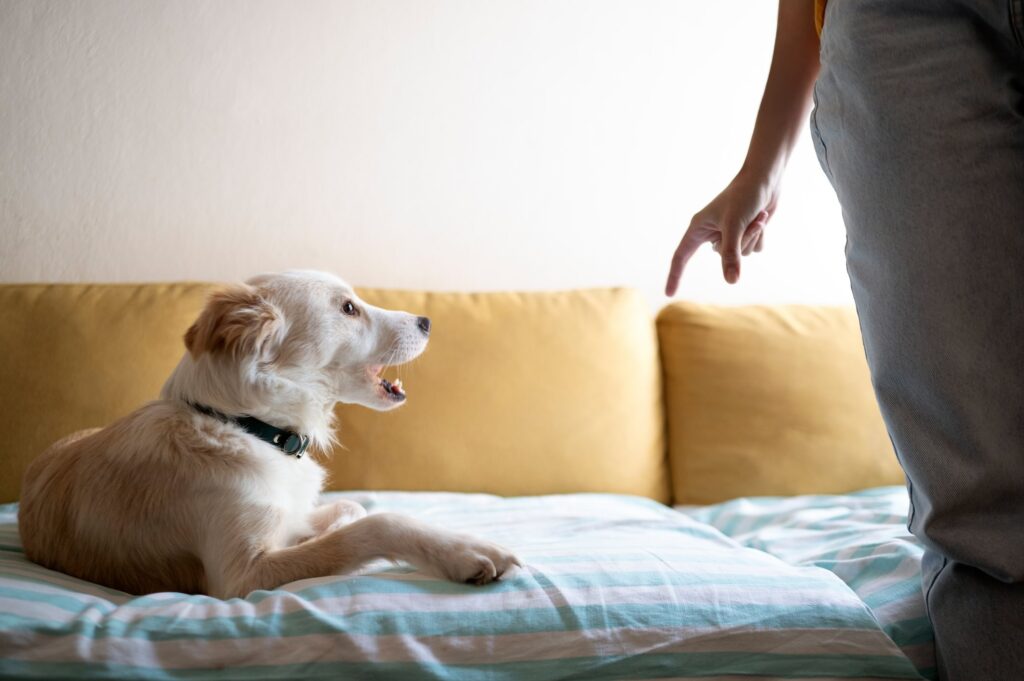
Have you ever been interacting with your dog when he suddenly turns away or crouches down to the ground, and you aren’t sure what to do? Dogs often use body language to express their feelings, including a need for space.
It’s important to know your dog’s body language to prevent escalation to aggressive behaviors, such as growling or biting.
Key Takeaways
- Dogs ask for space using subtle body language signals before escalating to potentially aggressive behaviors.
- Common stress signals include showing the whites of the eyes, yawning, excessive panting, and turning away.
- These behaviors are often signs of discomfort—not disobedience.
- Recognizing early stress signals builds trust with your dog.
What Does It Mean When a Dog Asks for Space?
Dogs use subtle body language signals to communicate that they need space. It’s important to pay attention to avoid stressing your dog further, which could result in an accidental bite.
When you see a dog asking for space, it’s best to avoid approaching or interacting with them. If you’re already close to them, back away to give them more room to decompress. They might retreat to a safe space, like their favorite dog bed or blanket, to feel better.
9 Ways Your Dog May Ask for Space
It’s important to note that each of the following signs should be interpreted within the context of the experience. For example, a dog who is panting heavily could be overheating, so it’s important to look at the whole picture.
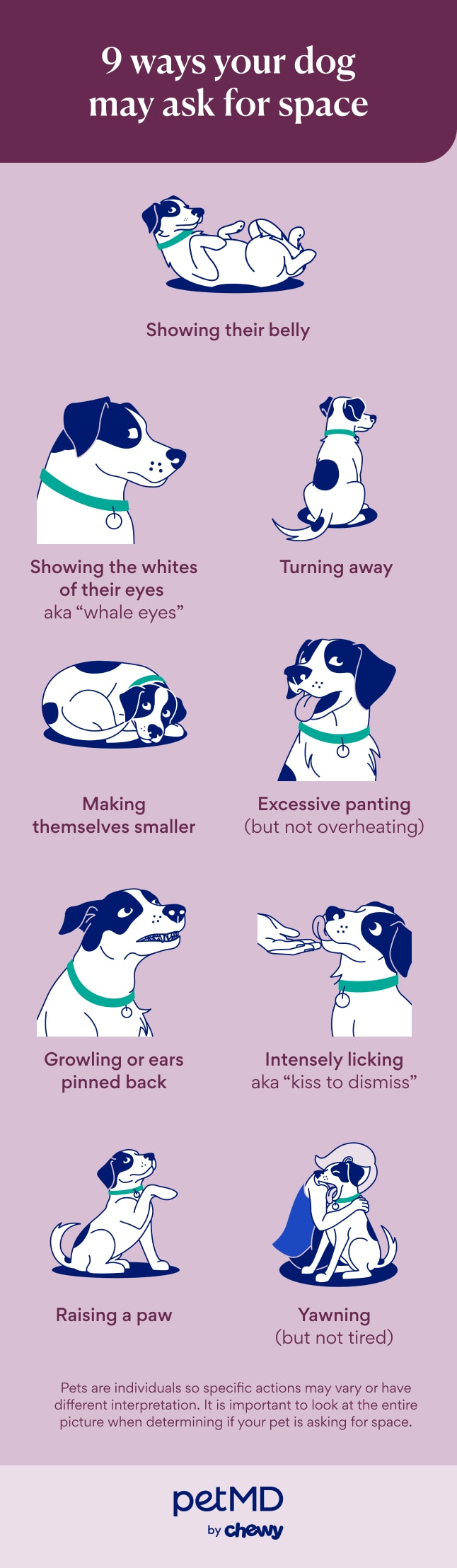
1. Showing Their Belly (Context Matters)
Dogs may show their bellies when they need some breathing room. This is essentially a sign of appeasement—a dog is trying to communicate that he’s uncomfortable, stressed, or fearful in a non-threatening way.
Of course, context here matters. Many dogs like to roll over and show their bellies hoping for a good belly rub or when they are being playful. The key is looking at other body language cues: If your dog is tense with his tail tucked and avoiding eye contact with you, he’s most likely communicating he needs space.
2. Showing the Whites of Their Eyes (“Whale Eye”)
When a dog’s eyes are wide and much of the white parts are showing, it is a sign your dog is feeling fearful or anxious. Also referred to as “whale eye,” dogs typically show this sign when they are overwhelmed and prior to escalating to potentially aggressive behaviors.
3. Turning Away
If a dog is playing with you or you have his attention and he suddenly turns away, he is signaling that he needs a break. When dogs physically turn away or create distance between themselves and a pet parent, it’s best to give them space and not create pressure, as this can increase stress levels.
4. Making Themselves Smaller
When dogs don’t want to be noticed or want to “disappear” from view, they will make themselves smaller. They may crouch down, tuck their tail between their legs, pull their ears back, and keep their head close to the ground. Some dogs may curl into a ball.
This behavior is common when dogs are feeling overstimulated from loud environments or when they are experiencing uncertainty or fear.
5. Excessive Panting (When They’re Not Hot)
Frequent panting can indicate stress or anxiety in dogs, particularly when they are not hot and have no reason to be panting. If your dog is panting and displaying other social cues, such as whale eye, it’s best to give them some space to calm down.
Dogs who pant because of stress or fear often drool and tremble as well.
6. Growling or Ears Pinned Back
Generally, dogs will show earlier warning signs of stress or overwhelm prior to escalating to growling. For example, a dog with his ears pinned back is likely fearful and needs space to de-escalate.
When a dog is growling, it is best to immediately back up and give him space to prevent an accidental bite.
7. Intense Licking (“Kiss to Dismiss”)
While dogs often lick their pet parents out of playfulness and to express affection, excessive licking can actually be a way to communicate they need distance from you.
If a dog is repeatedly licking you while also stiff with his ears pinned back or showing the white parts of his eyes, this is a warning sign, not an invitation for affection. It is best to immediately stop the interaction and give the dog space.
8. Raising a Paw
When a dog raises a paw slightly off the ground while sitting or standing, they may be communicating, “Please back away.” While it may look like a cute gesture, it’s actually a distance cue and indicates they are feeling some discomfort.
9. Yawning (When Not Tired)
If a dog yawns, it may be a stress response. He’s attempting to reduce his anxiety and calm himself down in doing so.
Frequent and repeated yawns are often seen in addition to other signs, such as turning away and avoiding eye contact, when a dog is requesting space.
What To Do When Your Dog Asks for Space
If your dog is showing any of these signs, it is important to give him space immediately. Do not try to continue interacting with him as this can create more stress and potential aggression.
Steps you can follow include:
-
Immediately stop interacting with your dog.
-
Back up and increase the amount of physical distance between you and your dog.
-
Allow your dog to walk away or retreat to his safe space (a crate or quiet room).
-
Do not follow your dog, and let him come back when he chooses to.
Ways Your Dog May Ask for Space FAQs
Is showing the belly always a sign of trust?
Showing the belly is not always a sign of trust or playful behavior. If a dog rolls over and shows his belly, it may indicate he is uncomfortable or trying to appear non-threatening in an attempt to appease the situation.
Is growling a sign my dog is aggressive?
Growling may not indicate a dog is inherently aggressive; however, it is an aggressive behavior that often results if early body language cues aren’t recognized. Dogs usually start with subtle body language to communicate their need for space and if they continue to be pressured, they may escalate to growling.
Why does my dog yawn when I hug them?
If your dog is frequently and repeatedly yawning when you hug him, he is likely asking for space. It is best to stop the hug and create distance between the two of you to help him relax.
How can I teach kids to respect a dog’s space?
You can teach kids about a dog’s body language so they are aware of what to look for. It is also important to supervise kids around pets to ensure safety for all.
How do I know if my dog wants space?
Your dog will show subtle shifts in body language when he starts feeling uncomfortable or overwhelmed. Common signs are turning away, wide eyes, excessive panting, or yawning, just to name a few.


