Cat Intestinal Blockage Surgery: What It Is and How To Help Your Cat


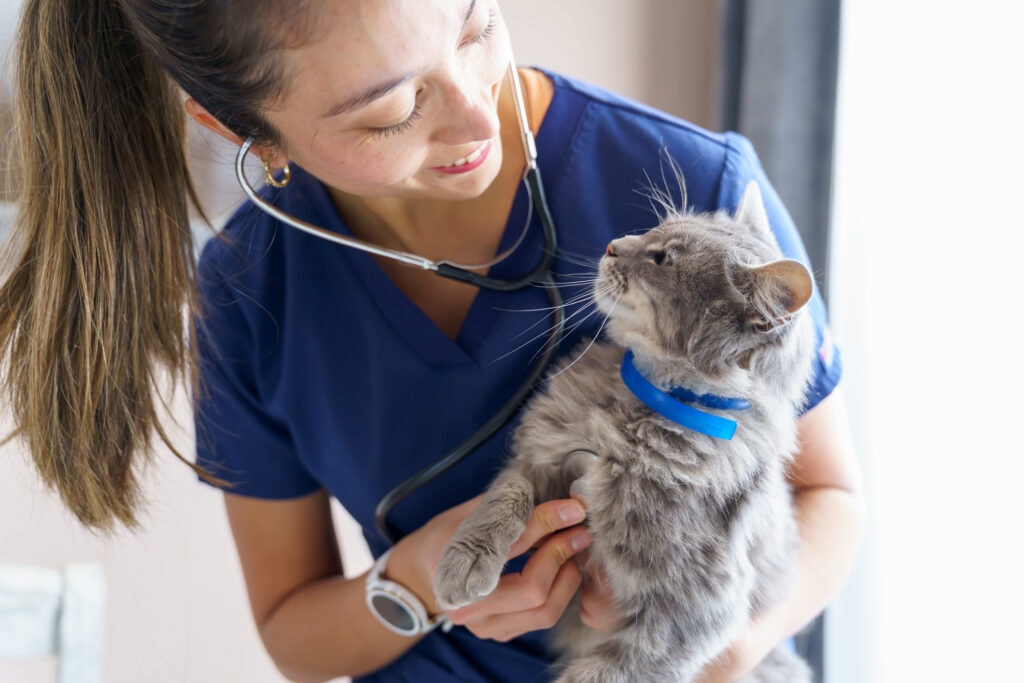
Luis D. Barrera Gamboa/E+ via Getty Images
Cat intestinal blockages are medical emergencies that require prompt veterinary care for the best outcome.
In many cases, surgery is needed to remove a foreign body or mass causing the blockage.
Cat intestinal blockage surgery may be performed by a primary care vet or a veterinary surgeon, and the cost can range from a few hundred to a few thousand dollars.
Key Takeaways
- Cat intestinal blockages are medical emergencies that often require surgery to remove a foreign object, mass, or other obstruction preventing food from passing through the intestines.
- Symptoms can include vomiting, abdominal pain, and decreased appetite, and prompt veterinary treatment is critical because untreated blockages can be life-threatening.
- Surgery is typically effective and many cats recover well with proper post-operative care, though the outcome depends on the cause of the blockage and the cat’s overall health.
What Is Cat Intestinal Blockage Surgery?
When cats eat something they shouldn’t, such as a string or a piece of their favorite toy, it can become stuck inside their intestines and prevent food from passing.
Similarly, a mass growing inside the intestine can cause an obstruction. This leads to symptoms such as vomiting, abdominal pain, and decreased appetite.
Surgery is necessary to relieve the obstruction. Without prompt treatment, intestinal blockages in cats are life-threatening.
Cat intestinal blockage surgery is a common procedure performed by primary care veterinarians and veterinary surgeons.
The long-term outcome depends on the underlying reason for the blockage and the cat’s overall health.
What Happens During Cat Intestinal Blockage Surgery?
Prior to surgery, the vet will perform a physical exam and blood work to assess the cat’s overall health.
Next, a sedative is often given to reduce anxiety, and an intravenous (IV) catheter is put in place for the administration of fluids and medications.
Anesthesia medications are then given to cause unconsciousness—your cat is given a breathing tube and oxygen and gas anesthesia are administered.
Monitoring equipment, such as a blood pressure cuff and electrocardiogram (ECG) leads, is also placed on the cat.
Once the cat is unconscious, their abdomen is shaved and scrubbed to reduce bacteria on the skin.
An incision is made through the skin, fat, and muscle, and the blockage is located.
An incision is made in the intestinal wall and the object causing the blockage is removed. After the intestinal incision is closed, the abdomen is flushed thoroughly with saline to remove any bacteria. The abdominal incision is then closed.
Lastly, anesthesia is discontinued and the cat slowly reawakens.
Why Do Cats Need Intestinal Blockage Surgery?
Cats may require intestinal blockage surgery for several reasons, which can include:
-
Ingestion of a foreign object, such as a toy or string
-
Ingestion of hair, leading to a hairball
-
Cancerous mass, such as lymphoma
-
Fungal infection, such as pythiosis
-
Intussusception (telescoping of intestines)
-
Internal parasites, such as roundworms
Risks of a Cat Intestinal Blockage Surgery
As with any other surgery, removal of an intestinal blockage carries potential risks that pet parents should be aware of. These risks can include:
-
Anesthesia complications, such as low blood pressure or body temperature
-
Incision dehiscence (opening) after surgery
-
Infection, such as sepsis
Because cats with intestinal blockages often arrive at the veterinary hospital very sick and sometimes with an intestinal perforation (tear), complications are common.
One study found that life-threatening complications occurred in 21% of cats undergoing intestinal blockage surgery.
Before this surgical procedure, you should discuss any concerns you have with your veterinarian, who can provide a thorough explanation of your cat’s individual risk.
Benefits of Cat Intestinal Blockage Surgery
The main benefit of intestinal blockage surgery is removal of the obstruction, which allows the cat’s intestines to resume their normal function.
This reduces a cat’s pain, improves their appetite, and restores their quality of life. Without surgery, intestinal obstructions are often fatal.
Effectiveness of Cat Intestinal Blockage Surgery
Cat intestinal blockage surgery has a high success rate, with one study citing 100% survival after foreign body removal.
However, linear foreign bodies, such as a string or yarn, are more likely to perforate the intestinal wall, leading to a pre-operative infection. Therefore, the surgical success rate in cats with linear foreign bodies is lower, at about 63%.
Cost of Cat Intestinal Blockage Surgery
The cost of cat surgery for intestinal blockage can vary depending on geographic location and whether the procedure is done by a primary care vet or a veterinary surgeon.
According to CareCredit, the average cost for this surgery is $2,367.
However, costs can range from $500 to $4,000. To assist with these costs, pet parents can explore payment options, such as pet insurance or CareCredit.
Preparation for Cat Intestinal Blockage Surgery
Often, intestinal blockage surgeries for cats, particularly those involving foreign objects, are performed on an emergency basis. A pet parent typically doesn’t know their cat needs surgery until they notice something is wrong and they take their cat to the veterinarian. Therefore, in many cases, at-home preparation is simply not possible.
However, in cases where only a partial intestinal blockage is present and surgery is planned, preparation can be done at home. This would involve withholding food and water for 12 hours prior to surgery to ensure your cat’s digestive tract is empty. If your cat is on any long-term medications, ask your vet whether to give them the morning of surgery. Arrive at the veterinary hospital at your scheduled drop-off time to ensure any pre-operative blood work or surgery preparation can begin promptly.
Post-op Care and Recovery for Cat Intestinal Blockage Surgery
During recovery from intestinal blockage surgery, provide your cat with a private, quiet space to rest, with access to fresh, clean water.
Restrict your cat’s activity, meaning no running, jumping, or climbing for seven to 10 days to prevent the incision from opening.
Your cat will likely need to wear a cone to prevent them from licking their incision.
Ensure you give any medications as prescribed by your veterinarian.
It’s normal to see a small amount of clear, thin discharge from the incision for the first day or two following surgery.
Cats typically recover within 10 to 14 days, at which time your veterinarian will want to check the incision to ensure it has healed properly.
However, if you notice thick, yellow discharge, bleeding, or excessive redness or swelling, contact your veterinarian immediately for a recheck.
Alternatives to Cat Intestinal Blockage Surgery
For a complete intestinal blockage, surgery is required to remove the obstruction.
If a small object is only partially blocking the intestine, your veterinarian may recommend fluid therapy and a laxative, such as lactulose, to help it pass.
An endoscope may also be used to retrieve a foreign object. The cause of the blockage and your cat’s condition will determine whether an alternative treatment is appropriate or if surgery is necessary.
Cat Intestinal Blockage Surgery FAQs
What is the survival rate for cats with intestinal blockage surgery?
Survival rates have been reported to range from 63% to 100%, depending on the type of obstruction and the cat’s overall health.
How much does bowel obstruction surgery for cats cost?
Costs vary widely, but the average cost of intestinal blockage surgery is around $2,700.
How do vets remove intestinal blockage in cats?
Veterinarians typically perform surgery to remove an intestinal blockage. However, an alternative treatment, such as endoscopy or fluid therapy, may be used to remove a partial blockage, depending on the underlying cause and the cat’s condition.
Is intestinal blockage surgery serious?
Intestinal blockage surgery is considered a major abdominal surgery. However, the procedure has a good survival rate when the intestinal blockage is caught early.


