Worms in Cats




kelvinjay/E+ via Getty Images
Worms in cats are incredibly common, and pet parents should be aware of where they come from and how to get rid of them since they can be dangerous if left untreated.
So, how do cats get worms?
The most common way is through their mother’s milk shortly after birth, but they can contract worms from the environment and other animals.
Affected cats often don’t feel well and experience many concerning symptoms, such as vomiting and diarrhea.
If you suspect your cat may have worms, schedule a veterinary appointment to get an accurate diagnosis and begin necessary treatment to help your cat feel better.
Key Takeaways
- Worms in cats are common and potentially serious if untreated, especially in kittens, with roundworms, hookworms, whipworms, and tapeworms being the most prevalent types.
- Cats can contract worms through their environment, other animals, or even their mother's milk, and symptoms vary depending on the type of worm, often including vomiting, diarrhea, weight loss, and a distended abdomen.
- Veterinary diagnosis and treatment are essential, with most worms treatable through medications; ongoing prevention includes routine deworming, flea control, and regular vet check-ups.
Types of Worms in Cats
The most common types of worms in cats are gastrointestinal worms. They include:
-
Roundworms. Roundworms are the most common type of intestinal worm in cats, with at least 25% of all cats being infected and even higher rates in kittens.
-
Roundworms are 3 to 6 inches long, cream-colored, and resemble spaghetti when found in the stool.
-
-
Hookworms. Hookworms are tiny, thin, whitish worms. They are so small (about 1/8 inch long) that most people do not notice them in the cat’s stool. If you do see them, they look like tiny, thin strings.
-
Hookworms get their name from their hook-like mouthparts and aggressive bloodsucking behavior; they attach themselves to the lining of the intestines and suck blood.
-
-
Whipworms: Whipworms are 2 to 3 inches in length with one thicker end and one thinner end, resembling a whip, hence their name.
-
Whipworms are not easily seen in the stool and are diagnosed by your vet, who can identify the eggs under a microscope.
-
-
Tapeworms: Tapeworms occur when a kitten or cat eats a flea while grooming or eats a rodent infected with tapeworm eggs. Tapeworms look like grains of rice and are found around the anus or in a cat’s stool.
Other worms in cats include:
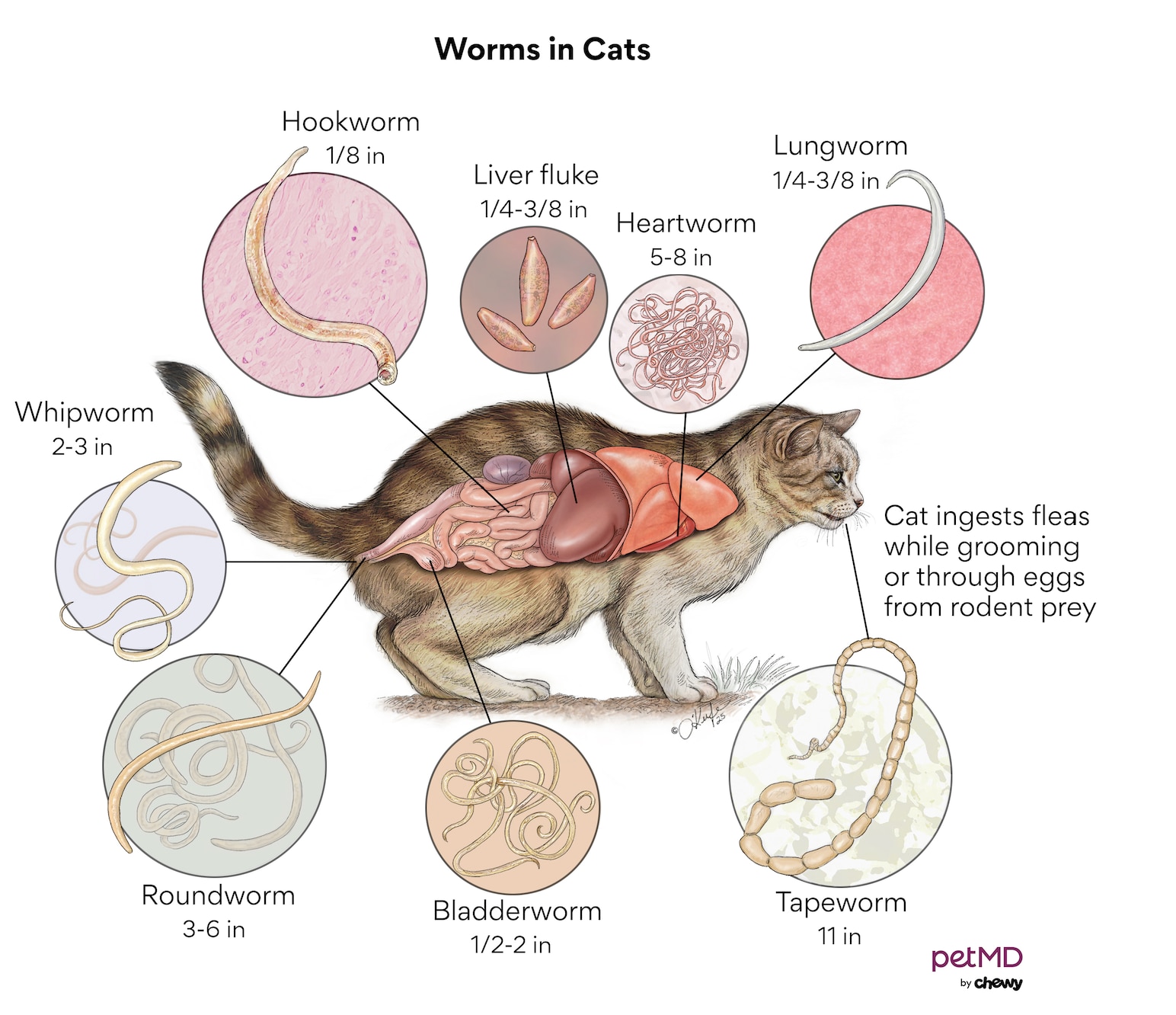
Click here to download this medical illustration.
How Do Cats Get Worms?
As a health-conscious pet parent, you may be wondering—how do cats get worms?
Most kittens are infected with GI worms while nursing their mother, when they ingest tiny worm larvae directly from their mother’s milk.
If you are caring for a nursing mama or pregnant cat, ask your vet about deworming her to treat her existing worms and stay ahead of transmission to the kittens.
Worms in adult cats typically occur when worm eggs are ingested.
This can happen when a cat licks their fur after exposure to a contaminated environment or when they eat an animal infected with the worm or its eggs.
Hookworm larvae can penetrate directly into the skin between the toes, causing skin infections.
Always keep your cat indoors to prevent exposure to GI worms and promote good health.
How To Tell If Your Cat Has Worms
Symptoms of worms in cats may vary. You can usually determine the type of worm based on your cat’s symptoms.
Signs of worms in cats may include:
-
Diarrhea or soft stool (you may see worms in the stool)
-
Vomiting (worms may be seen in the vomit)
-
General unhealthy appearance including dull hair coat
-
Pale gums (hookworms only)
-
Coughing or trouble breathing can be seen if worms migrate to the lungs (hookworms, roundworms)
How Veterinarians Diagnose Worms in Cats
To diagnose worms in cats, a veterinarian will need a stool sample.
You can bring a stool sample from home, or your vet can get a sample during a physical examination of your pet.
A fecal examination—also known as a fecal floatation test—may be performed in the clinic or sent out to a laboratory.
Even if you can see the worms in the stool and have a good idea of what worm you are dealing with, your veterinarian will want to run the fecal examination to ensure the worm is correctly identified.
Your vet will also check for eggs of any other worms.
Unfortunately, a cat may have several different types of worms at one time.
Worm Treatment for Cats
Roundworms, hookworms, whipworms, and tapeworms are treatable with oral and topical medications, and sometimes injectable formulations, prescribed by your veterinarian.
Common medications used include pyrantel pamoate and praziquantel. Some worms in cats are killed with a single treatment. Other worms require multiple dosages of a medication given on a strict schedule over a certain period.
It’s important to carefully follow the directions provided by your vet and to schedule follow-up visits and tests to ensure the treatment is working for your cat.
The cost for deworming cats can vary depending on:
-
The type of worm being treated
-
The severity of your cat’s infection
-
The medication dosage and frequency
-
Your cat’s health status
If your cat has symptoms such as vomiting, diarrhea, or a lack of appetite, your vet may prescribe a gastrointestinal probiotic such as FortiFlora or Proviable to aid digestion and provide immune system support.
Cats that are severely affected with hookworm and/or roundworm infections may require:
-
Hospitalization
-
Supportive care, such as fluid therapy and blood transfusions (in cases of anemia)
If an intestinal blockage is found from a large burden of worms, emergency surgery may be needed to remove the worms in your cat.
Recovery and Management of Worms in Cats
Cats infected with worms typically start feeling better within the first week after treatment.
It can take several weeks for the worms to be fully eliminated from the cat.
Because of the worm’s longer life cycles, it is not uncommon for cats to need multiple courses of deworming medication to fully resolve the infection.
This is why follow up appointments are important to ensure treatment is working.
Sometimes cats who are heavily infested will vomit worms after being treated as the worms start to die. Pet parents should be aware this may occur and that it should resolve within a day or two.
If a cat is excessively vomiting after treatment or showing signs of dehydration, such as tacky gums or sunken eyes, notify your veterinarian who can provide guidance and determine whether your cat should be seen for an appointment again.
Prevention of Worms in Cats
The best prevention for worms in cats includes:
-
Regular deworming
-
Stool testing, needed twice a year for indoor cats and four times a year for kittens and newly adopted cats
-
Monthly parasite prevention (such as Revolution Plus) year-round for life
-
No exposure to the outdoors
-
Regular wellness visits with your veterinarian
Flea control is essential to prevent your cat from eating a flea while grooming themselves and thereby becoming reinfected with tapeworms.
Ask your vet about starting your cat on one of these parasite preventatives:
Worms in Cats FAQs
How do you get rid of worms in cats naturally?
Worms in cats require treatment by a veterinarian for resolution. There are no effective natural alternatives to treat worms in cats.
What do cats worms look like?
Cat worms look different depending on what type is present. For example, roundworms look like spaghetti noodles, while tapeworms look like flat, white segments.
Can humans get worms from cats?
Humans can get worms from cats through accidental ingestion of a parasite egg. This is why it is important to wash hands thoroughly after cleaning a cat’s litterbox and after petting your cat prior to eating.
How much does it cost to deworm a cat?
Cat dewormer is relatively inexpensive. A typical deworming treatment can cost between $5 and $15 generally.
What happens if worms in cats goes untreated?
If worms in cats are left untreated, it can be dangerous. Cats may lose significant weight and become extremely lethargic or dehydrated.


