Tapeworms in Cats: Causes, Signs, and Treatment



Christopher Freeman/iStock / Getty Images Plus via Getty Images
Tapeworms in cats are a common intestinal parasite that affect cats of all ages, especially those who live outdoors, have fleas, or hunt rodents. Tapeworm infections can be uncomfortable, and if left untreated can lead to malnutrition and weight loss.
Knowing the signs, causes, and treatment options can help you protect your cat and prevent reinfection.
Key Takeaways
- Tapeworms, a type of intestinal parasite, are common in cats who hunt, live outdoors, or have fleas.
- The most common way cats get tapeworms is by ingesting fleas while grooming.
- Praziquantel is a safe and effective treatment for tapeworms in cats.
- Year-round flea prevention for all cats is important for prevention of tapeworms.
What Are Tapeworms in Cats?
Tapeworms are long, flat intestinal parasites that live in a cat's small intestines. While generally not life-threatening, they can impact your cat’s health and often signal an underlying flea problem, so prompt veterinary treatment is important.
Tapeworms can get large—common varieties can grow to be over a foot long—and when they reproduce, they shed white, rice-like portions of their body (called proglottids or tapeworm segments), which you might see in your cat’s feces, the fur around their hind end, or their favorite resting spots.
Tapeworms are one of several common types of worms that cats can get. Other common worms in cats include hookworms, liver flukes, heartworms, lungworms, bladder worms, roundworms, and whipworms.
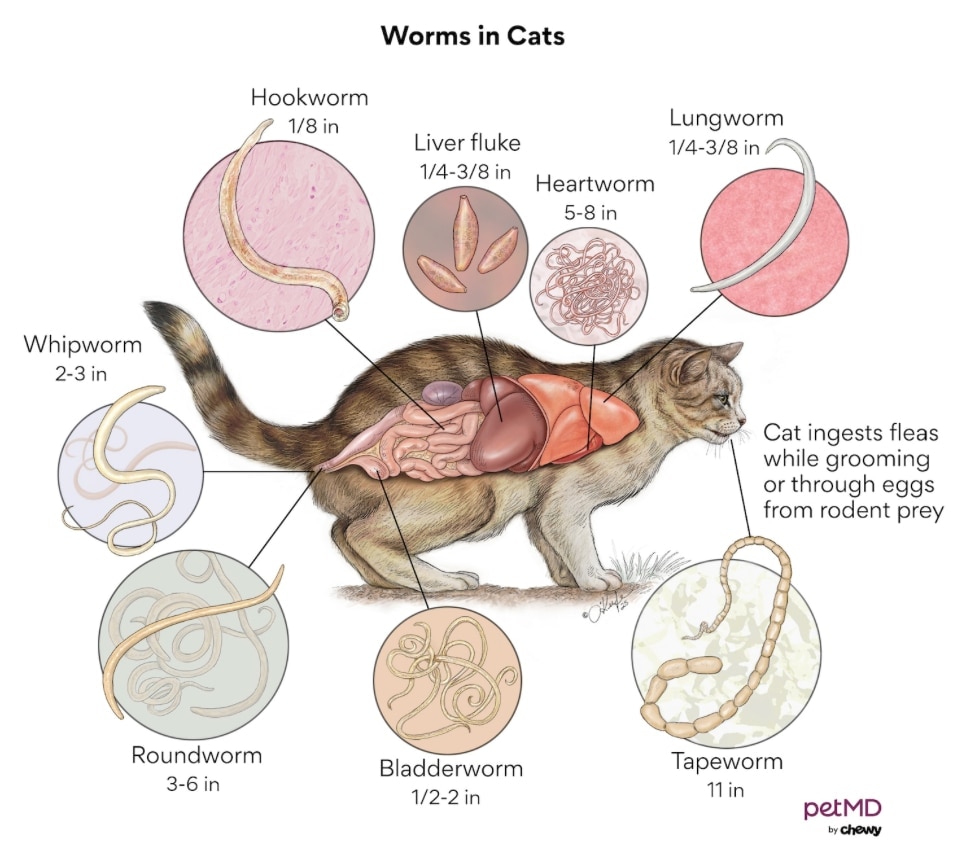
Click here to download this medical illustration.
How Do Cats Get Tapeworms?
Cats can get tapeworms in the following ways:
-
Ingesting fleas while grooming (most common)
-
Eating an infected rodent, such as mice
-
Ingesting contaminated raw meat
Types of Tapeworms in Cats
There are three main types of tapeworms in cats, each of which infect cats differently.
-
Dipylidium caninum tapeworms: These are the most common type of cat tapeworm. Cats get these tapeworms when they eat fleas containing immature forms of the parasite, usually when they are self-grooming in an attempt to rid themselves of fleas.
-
Taenia (also called Hydatigera) tapeworms: Cats get these tapeworms when they hunt and eat infected prey, usually rodents.
-
Echinococcus tapeworms: These aren’t very common, but they can be transmitted to cats when they eat infected mice and voles.
Symptoms of Tapeworms in Cats
The most common sign of tapeworms in cats is the presence of small, rice-like worm segments (called proglottids) around your cat's anus.
These small tapeworm segments can also be seen in your cat's fur, on their stool, on their bedding, and sometimes, in their vomit. Sometimes several tapeworm segments will be stuck together end-to-end. As they dry out, they become harder and more yellow than white.
Other than the presence of proglottids, most cats with tapeworms don’t have many other symptoms.
However, some possible symptoms of tapeworms in cats include:
-
Licking at the hind end
-
Decreased appetite
-
Weight loss
-
Lethargy
In rare cases, intestinal blockage can occur if there are a large amount of tapeworms present.
Health Tools
Get quick answers with our vet-created Symptom Checker
How Veterinarians Diagnose Tapeworms in Cats
Veterinarians typically diagnose cats with tapeworms when they see proglottids around a cat’s hind end or in cat feces, or when a pet parent describes the proglottids they have seen at home.
Fecal flotation tests may reveal tapeworm eggs, but this is not as reliable as it is with other types of intestinal parasites like roundworms or hookworms.
Specialized testing that involves sending a fecal sample to a lab is often necessary if a veterinarian suspects that a cat may have Echinococcus tapeworms.
Treatment of Tapeworms in Cats
Treating tapeworms in cats is fairly straightforward. Most veterinarians will recommend a medication called praziquantel. It's available in several forms.
By prescription:
- Topical medications applied to the skin. For example, NexGard COMBO is a monthly topical that treats tapeworms in cats while also protecting against fleas, ticks, heartworm disease, roundworms, and hookworms.
-
Compounded oral liquids that are made in flavors cats love
-
Droncit tablets for cats
-
Drontal tablets for cats
-
Injectable medications given by a veterinarian
Over-the-counter (without a prescription):
-
Elanco tapeworm dewormer tablets for cats
Other medications, such as epsiprantel, fenbendazole, or nitroscanate, may be appropriate under certain circumstances. These are generic medications that may be recommended in cats if they need broad-spectrum coverage (such as if they have multiple types of worms) or if they have resistant infections to praziquantel.
Recovery and Management of Tapeworms in Cats
Most cats recover quickly after being treated for tapeworms.
Usually, the tapeworms will be broken down within a cat’s digestive tract, but if your cat has a lot of tapeworms, you may see some being expelled in their feces or vomit.
Side effects from tapeworm medications are rare. Call your veterinarian for advice if your cat acts sick in any way after being treated for tapeworms.
Keep in mind that while tapeworm medications are very good at getting rid of the tapeworms that a cat has at that time, most do nothing to prevent future infections.
Cats can get new tapeworms immediately after treatment, so prevention is vital.
Prevention of Tapeworms in Cats
Two forms of prevention are needed to stop cats from getting tapeworms:
Effective Flea Control
Dipylidium caninum tapeworms are spread through fleas. Therefore, flea prevention is necessary to prevent these tapeworms.
A good option for many cats is NexGard COMBO, because it protects against fleas and contains praziquantel as a backup measure for tapeworm prevention. The monthly topical is formulated for cats at least 8 weeks old and weighing at least 1.8 pounds.
Stop Your Cat From Hunting
Cats get Taenia and Echinococcus tapeworms through hunting. Keeping cats indoors is the best way to prevent them from getting these types of tapeworms.
If your cat has recurring problems with tapeworms, your veterinarian may recommend regularly giving your cat praziquantel or another deworming medication as a preventive measure.
Tapeworms in Cats FAQs
Are cat tapeworms contagious to humans?
Some cat tapeworms are contagious to humans. People can get Dipylidium caninum tapeworms if they accidentally eat infected fleas from their cats. People can also get Taenia tapeworms, but eating undercooked pork is usually the culprit, not cats.
A rare type of tapeworm called Echinococcus is contagious to humans and can cause serious disease or even be fatal. Thankfully, echinococcosis, as the disease is called, is rare and not commonly associated with cats.
How do indoor cats get tapeworms?
Indoor cats can get tapeworms if they have fleas or hunt rodents within the house. Fleas can enter a home on other animals or even by temporarily hopping aboard people. They then have easy access to an indoor cat who isn’t being given a good flea preventive.
How do you get rid of tapeworms in cats?
The most common treatment for tapeworms in cats is praziquantel, which can be given topically, orally, or through injection. Generally, a single course of treatment is effective at getting rid of the tapeworms. You may notice a few proglottids in your cat’s feces or vomit during treatment. Flea prevention is important to prevent reinfection.
How do you treat tapeworms in cats at home?
If you think your cat has tapeworms, it’s important to see a veterinarian for an accurate diagnosis. A veterinarian can prescribe appropriate treatment as well as check your cat for other common intestinal parasites that may be present. It is recommended to always speak with your veterinarian first before giving any over-the-counter medications to your cat.