Uveitis in Cats: Common Symptoms and How To Treat It


AnnaStills/iStock/Getty Images Plus via Getty Images
Uveitis in cats is a painful inflammation inside the eye that can lead to vision loss if not treated promptly.
It’s often caused by infections, immune conditions, trauma, or underlying diseases, and early veterinary care is critical to protect your cat’s eyesight.
If your cat has red eyes, squinting, discharge, or sensitivity to light, contact your veterinarian as soon as possible—quick diagnosis and treatment can make a significant difference in outcomes.
Key Takeaways
- Anterior uveitis in cats is an inflammation of the eye’s front layer that can cause pain, redness, cloudiness, and sensitivity to light.
- This condition is often linked to underlying health issues such as infections, trauma, or systemic disease, making veterinary evaluation essential.
- Early diagnosis and treatment are critical to relieve discomfort, protect vision, and address any serious underlying causes.
What Is Uveitis in Cats?
Uveitis in cats is an inflammation of the uvea (also known as the uveal tract), which is a part of the eye that includes the iris, the ciliary body, and the choroid.
The uveal tract is the eye’s support system for vision.
The iris is the colored part of the eye; the ciliary body is responsible for producing fluid inside the eye, and the choroid supplies blood vessels to the retina.
When any part of the uvea is damaged, light entry, eye pressure, nutrition, and the eye’s blood supply can be affected.
Squinting, excess tears, and a red eye are common signs.
Uveitis is a medical emergency; it can permanently affect a cat’s vision if left untreated.
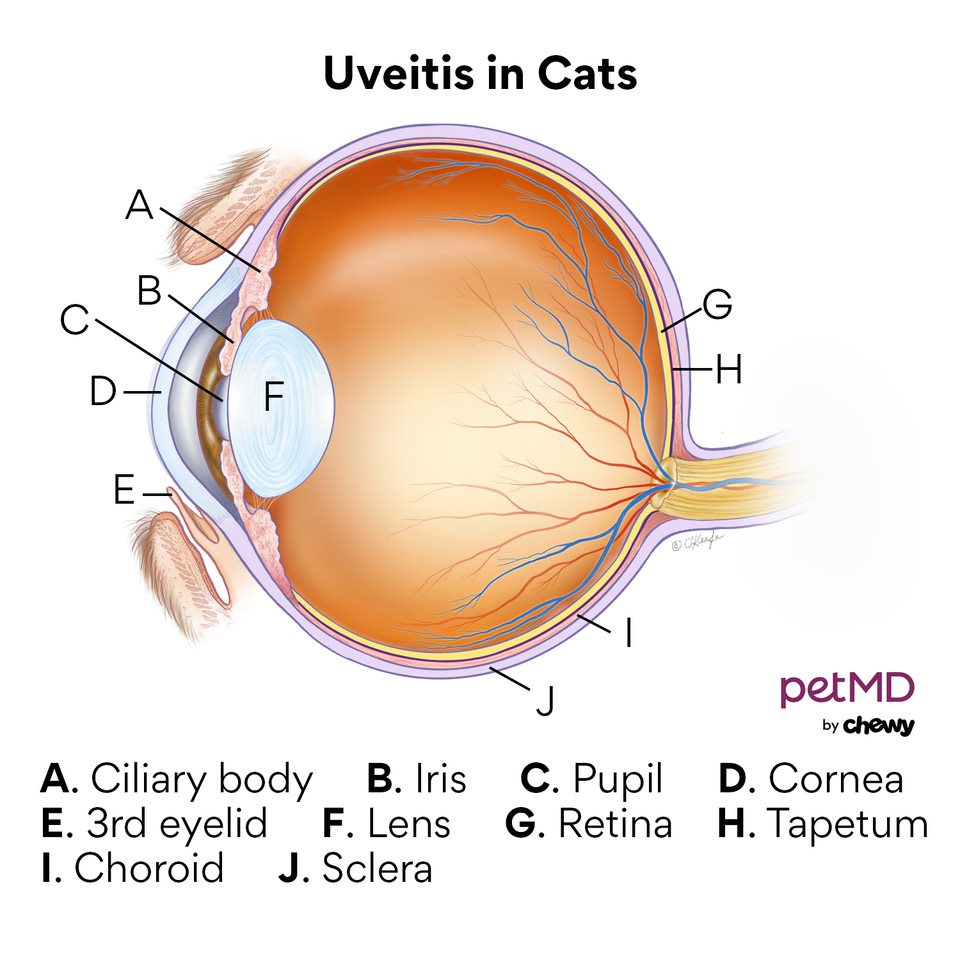
Click here to download this medical illustration.
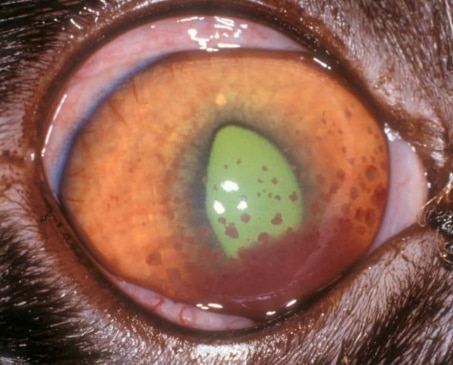
Types of Uveitis in Cats
There are a few different types of uveitis in cats.
Each type depends on where in the eye the abnormality is. This is determined by your vet after a special eye exam.
Types of uveitis in cats include:
-
Anterior uveitis, which affects the iris and the ciliary body
-
Posterior uveitis, which affects the choroid
-
Panuveitis, which affects the entire uveal tract (anterior and posterior)
-
Intermediate uveitis (pars planitis), which affects the posterior ciliary body and the anterior choroid
Symptoms of Uveitis in Cats
Common symptoms of uveitis in cats include:
-
Blepharospasm (squinting or eyelid twitching)
-
Holding the eye closed
-
Sensitivity to light
-
Elevated third eyelid(s)
-
Excessive tearing or mild eye discharge
-
Red eye
-
Small or constricted pupil
-
Anisocoria (unequal pupil size)
-
Color change of the iris
-
Visible debris or “floaters” in the eye
-
Blood or pus visible inside the eye (anterior uveitis)
-
Gray discoloration over surface of the eye, with gray or white specks deeper in the fluid of the eye; retinal detachment (posterior uveitis)
-
Behavioral changes
-
Decreased activity
-
Pawing or rubbing the eyes
-
Vision changes (bumping into things, hesitation to jump or do stairs, reduced tracking of movement in surroundings)
-
Systemic signs
-
Change in appetite
Causes of Uveitis in Cats
There are two general categories for causes of uveitis in cats:
-
Ocular (associated with the eye)
-
Systemic (whole body) causes that are not specific to the eye and often cause other symptoms of general illness
Ocular causes of uveitis in cats include:
-
Tears on the surface of the eye or within the cornea (corneal ulcers)
-
Trauma to the eye (common in fights with other animals or being hit by a car)
Systemic causes of uveitis in cats include:
-
Eating fatty foods
If a systemic cause (such as infection) is not determined to be affecting the immune system, then often a cause for the uveitis is never diagnosed.
This is called idiopathic uveitis.
How Veterinarians Diagnose Uveitis in Cats
To diagnose uveitis in cats, your veterinarian will want to know if your pet has experienced any other physical symptoms at home, as well as details about your cat’s home environment and exposure to other animals.
In addition to a complete physical examination, your veterinarian will perform an ophthalmic (eye) exam.
Your vet will likely also recommend specific eye tests to evaluate the surface of the cornea for any abrasions, measure eye pressure, and measure tear production.
Basic blood work may also be necessary, as well as tests to rule out any infections that may have caused the uveitis.
In complex cases, your veterinarian will refer you to a veterinary ophthalmologist for more advanced diagnostics, such as a slit lamp exam, and appropriate treatment.
Treatment of Uveitis in Cats
Treatment of uveitis in cats includes therapy targeted at the specific causes, if they can be identified, as well as generalized therapy.
Specific therapy may include medications for high blood pressure, for instance. For non-curable infectious causes, such as FIV, treatment is aimed at reducing your cat’s symptoms and supporting them through their flare-ups.
Your vet may prescribe topical eye medications and systemic medications to alleviate pain and decrease inflammation. Examples of these include:
-
Atropine eye drops, which help with pain by dilating the pupil
-
Prednisolone, which helps decrease inflammation and immune suppression
-
Topical NSAIDs such as flurbiprofen or diclofenac
-
Oral pain management such as Onsior or buprenorphine
In the case of an eye tumor, surgery will likely be necessary.
Recovery and Management of Uveitis in Cats
Many cases of uveitis in cats are resolved via a veterinary visit for a thorough examination, diagnostic testing, and medication therapy. Your cat will have a follow-up visit for the vet to assess healing and resolution of the condition.
Other cats will require months of treatment. Cats with fungal infections typically require lengthy treatment because the underlying fungal cause can be difficult to eliminate.
As with all other eye conditions, recheck visits for uveitis in cats are essential to gauge the effectiveness of treatment and monitor the progression of your cat’s healing.
You will also need to monitor your cat at home to make sure their symptoms don’t come back, as uveitis can result in blindness or the loss of the eye when left untreated.
Prevention of Uveitis in Cats
While you can’t prevent uveitis in cats, you can reduce the risk by preventing injury, illness, infections, and other diseases in your pet.
Making sure your cat sees their vet at least once a year for a wellness exam is important to ensure they are as healthy as possible.
This visit should include a physical exam, appropriate vaccines, flea/tick prevention, and diagnostics such as blood, urine, and stool tests.
This vet visit helps prevent infectious disease and can catch other medical issues early.
Keeping your cat indoors and ensuring all pets in the house get along is important to prevent unwanted eye injury that can cause uveitis in cats.
Routine parasite prevention and deworming is especially important in outdoor cats.
Access to plenty of fresh water (like through a cat water fountain) and a complete and balanced diet supports your cat’s immune system and can help reduce the risk of inflammatory disease.
Uveitis in Cats FAQs
Can you cure uveitis in cats?
Depending on the underlying cause of uveitis in cats, it might be curable.
Unfortunately, cancer and some causes of trauma might affect a cat’s prognosis.
Can uveitis cause blindness in cats?
Yes, uveitis can cause blindness in cats.
Uveitis causes a disruption to the parts of the eye that control vision. If it is severe, left untreated, or recurrent it can cause blindness in cats.
Will uveitis in cats go away on its own?
No, uveitis in cats will not go away on its own. The underlying cause of uveitis must be identified and treated to ensure the disease process resolves.




