Cataracts in Cats: Signs, Treatment Options, & Surgery Cost



Alexandr Lebedko/iStock/Getty Images Plus via Getty Images
A cat’s majestic eyes have the power to tell you many things about them including how they might be feeling.
When monitoring your cats eye health, you might notice changes to the clear surface of the eye can and wonder “can cats get cataracts?”
The answer is yes, they can, and cataract surgery for cats is the only way to help maintain their vision.
Key Takeaways
- Cataracts in cats are changes to the eye’s lens that cause cloudiness and can lead to vision loss or blindness, most commonly occurring in older cats or those with underlying health conditions.
- Diagnosis is made through an ophthalmic exam, and treatment may include surgery or medications to manage inflammation and slow progression, depending on the cat’s overall health and cataract severity.
- Even without surgery, many cats with cataracts can live comfortable lives with proper home adjustments, routine monitoring, and support from their veterinarian.
What Are Cataracts in Cats?
Cataracts in cats are changes to the clear lens inside a feline’s eye, causing it to take on a cloudy appearance.
The lens is a translucent disc-like structure inside the eye. The lens helps to focus incoming light in the back of the eye on the retina.
This picture is then sent to the brain to allow a cat to see the world around them.
When a cataract develops, the lens cannot focus the light down, leading to vision changes.
Sometimes these changes are subtle, as is the case with small cataracts. Large, advanced cataracts will lead to total blindness.
Cataracts are more common in senior cats as they age and their lens degenerates over time. They can occur in one or both eyes.
Symptoms of Cataracts in Cats
Early signs of cataracts in cats include:
-
Pearl-like sheen to the surface of the eye (that does not wipe away)
-
Increased vocalization or disorientation, especially at night or in dimly lit areas
-
Hesitation to jump or seems confused
-
Difficulty locating food bowls
Other common symptoms of cataracts in cats can include:
-
Cloudy, blue, hazy appearance in one or both eyes
-
Bumping into furniture
-
Difficulty finding food or litter box
-
Reluctance to move around in unfamiliar settings
Causes of Cataracts in Cats
Common causes of cataracts in cats include:
-
Feline leukemia
-
Feline immunodeficiency virus (FIV)
-
Feline infectious peritonitis (FIP)
-
Toxoplasma gondii
-
Trauma (eye ulcer/penetration of the eye)
-
Malnutrition (in kittens)
-
An underlying inherited condition
-
Aging in cats over 10
-
Side effects of radiation therapy of the face or head
-
Underlying disease, like high blood pressure and diabetes (rare)
Certain breeds are more predisposed to cataract formation, including:
How Veterinarians Diagnose Cataracts in Cats
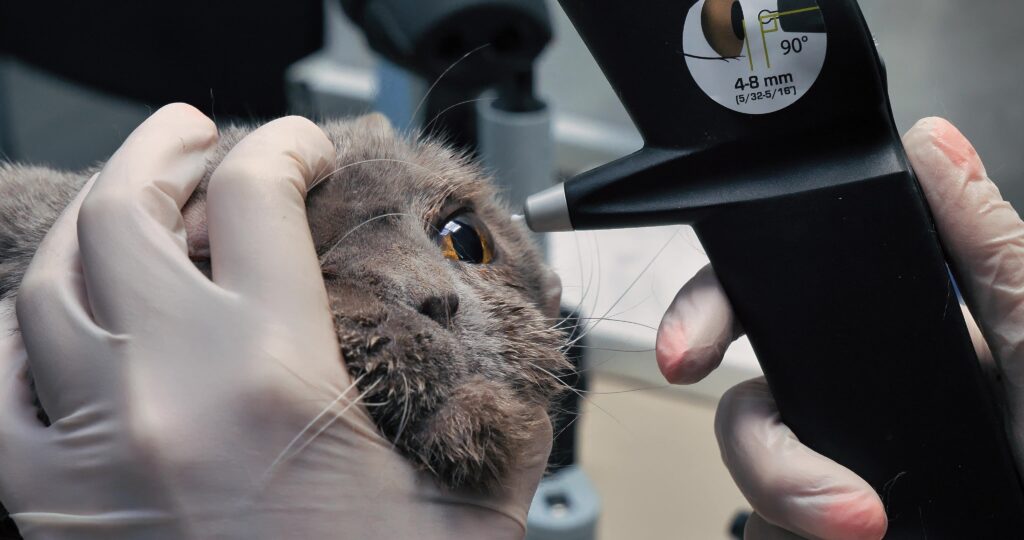
Cataracts in cats are diagnosed by an ophthalmic exam of the eyes.
Your veterinarian will use an instrument called an ophthalmoscope to look at the lens inside the eye.
Cataracts are not the only thing that can cause cloudiness inside the eye. Nuclear sclerosis is a common aging change that can also lead to an opaque color in the eye, but it does not affect vision.
Your vet will be able to distinguish between the two conditions and determine with the ophthalmoscope if cataracts are present. This is most easily done in a dark room with the pupil fully dilated.
If your cat is diagnosed with cataracts, your veterinarian will run several tests to rule out any underlying causes.
Blood work, a blood pressure measurement, and a urinalysis will likely be recommended to screen for concurrent conditions.
Treatment of Cataracts in Cats
To treat cataracts in cats, veterinarians may recommend cataract removal surgery (phacoemulsification), performed by a veterinary ophthalmologist. During surgery, special equipment is used to break down and remove the old lens and replace it with a new artificial lens.
While there are no medications that will remove the cataracts, sometimes medications may be prescribed to delay progression of cataracts.
Anti-inflammatory or steroid eye drops may be prescribed by your vet along with antioxidant supplements to support lens health (ex: Ocu-GLO).
How Much Does Cat Cataract Surgery Cost?
The cost of cat cataract surgery varies greatly depending on where you live and what animal hospital you go to.
Cataract surgery is almost exclusively done by a specialist veterinarian, an ophthalmologist, so the cost reflects that level of advanced knowledge and care.
The cost for cataract surgery can be from $3,000 to $8,000, depending on the severity of the disease and if it's one or both eyes are affected.
Recovery and Management of Cataracts in Cats
In cats who are good surgical candidates, cataracts can be cured with surgical removal. For non-surgical candidates, cataracts can be managed by reducing inflammation in the eye.
For many cats, cataracts themselves are not painful and may not require any additional management aside from regular monitoring. If an underlying condition is present, your veterinarian may recommend regular follow-up visits to track cataract progression.
Progression of cataracts can vary depending on the cause, how quickly intervention is sought, and the age of the affected cat. Sometimes cataracts remain small and do not change much over long periods of time, while other cats may experience sudden blindness.
Your veterinarian will be able to give you a better idea of what to expect regarding the timeline, depending on the severity and type of cataract that is diagnosed.
If your cat is diagnosed with cataracts and has lost some vision, make sure they have easy access to all their resources.
Some tips to help cats with cataracts include:
-
Avoid putting necessary resources—like food and water—on high or unstable surfaces.
-
Keep the food and water bowls and litter box in the same place, so your cat is not struggling to find them.
-
Prevent access to potentially dangerous areas of the household like staircases or swimming pools.
-
Avoid moving your furniture around and increasing disorientation in your vision-impaired cat.
Cats can live wonderful, full lives even if they do lose the ability to see.
Cat Cataract FAQs
How quickly do cataracts progress in cats?
The progression of cataracts in cats is highly variable. It can be slow, over months to years but it can also be rapid, within hours to days depending on the underlying cause.
At what age do cats typically get cataracts?
Cataracts in cats typically occurs in seniors over the age of 10 years old. However, cataracts can still occur in much younger cats especially if it is a congenital or the result of an infectious disease or injury.
What are the early signs of cataracts in cats?
Early clinical signs of cataracts in cats are changes to the clear surface of the eye and those related to vision changes. A cloudy, blue haze to one or both eyes can be present in a small spot or can quickly take up the entire surface.
Hesitancy to jump, vocalizing or becoming disorientated at night or in dim light, and bumping into things are common as well.


