Why Do Horses Wear Masks? Fly Protection, UV Safety, and When To Use One


deepblue4you/iStock/Getty Images Plus via Getty Images
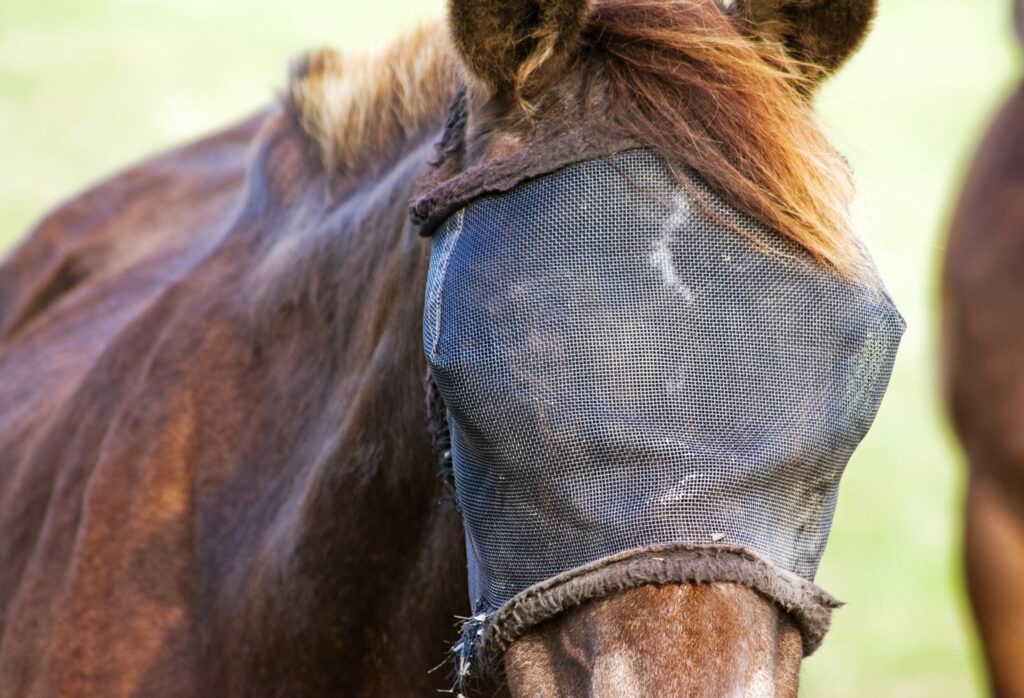
If your horse comes in from turnout wearing a mask, it can look odd, but a mask is an essential piece of your horse’s fly season gear.
Most horse masks are fly masks designed to cover the eyes, and sometimes the ears and nose. Horses wear masks to defend against bugs or shield their eyes from powerful UV light. You may also put fly masks on while trailering to prevent dirt and debris from getting into your horse’s eyes.
Key Takeaways
- Most horse masks are fly masks that help protect the eyes and face from biting insects and irritation.
- Fly masks can be especially helpful for horses who react strongly to flies or get frequent fly bites.
- Some fly masks provide UV protection, which may be useful for certain eye conditions like uveitis, also known as moon blindness.
- Fit and daily checks matter because poorly fitted masks can rub, trap debris, or irritate the eyes.
What Is a Horse Mask (Fly Mask)?
A fly mask is a lightweight mesh covering that fits over your horse’s face. A horse fly mask’s purpose is to keep insects out of your horse’s eyes. Masks come in a variety of styles that offer varying levels of coverage.
Common Fly Mask Styles Horse Owners Use
When you start looking for horse fly masks, you’ll see several options to choose from. Here’s a look at each style:
-
Eye-only mesh masks slip over the horse’s ears and cover the eyes down to the bridge of the nose.
-
Masks with ear covers help keep pesky gnats out of your horse’s ears. Ear coverings are especially important for clipped horses.
-
Masks with nose/UV nose extension are good for horses who are extra sensitive to bug bites, or those with pink skin that is prone to sunburn. A mesh extension or fringe provides extra coverage.
Can Horses See Through Fly Masks?
Yes, horses can see through masks made from high-quality mesh that’s designed to allow vision while acting as a physical barrier. However, a poorly fitting mask, such as one that sags into the eyes or one that is too tight, can interfere with your horse’s vision. Always make sure your horse’s fly mask fits properly before turning them out.
Why Do Horses Wear Masks for Fly Protection?
The most common reason horses wear masks is to reduce insect contact with sensitive areas on the face. House flies, face flies, gnats, and biting insects are naturally attracted to moisture around the horse’s eyes, nostrils, and mouth.
Biting Flies and Irritation
Flies bite and swarm around the face, which can make horses miserable. Horses bothered by insects may spend less time grazing or become difficult to handle because they are constantly reacting to flies. Fly masks, sheets, and boots are often part of a broader fly-control plan.
Helping Prevent Fly Bites (and the Itch–Rub Cycle)
Think back to the last mosquito bite you received and how uncomfortable it was until it healed. Masks help reduce fly bites on horses’ faces that can trigger itching and rubbing, which can lead to hair loss, sores, and skin irritation.
Reducing Fly-Related Eye Trouble
Flies can cause and aggravate eye irritation and infection in some situations. For example, flies can transmit bacteria that trigger or worsen infections like conjunctivitis in horses. A mask can act like a shield to keep insects out of the eyes and reduce rubbing that could lead to more problems.
Why Some Horses Wear Masks for UV and Eye Health
Just like humans, some horses need protection from the sun. This is especially true for horses that have pink skin, like on the nose or anywhere not covered by their hair coat.
Horses prone to sunburn can benefit from covering sensitive skin on their faces with a fly mask. In addition to a fly mask, some horses also wear sunscreen in places the fly mask does not reach.
Additionally, horses with eye sensitivity or specific veterinary diagnoses may also need extra eye protection. That’s when fly masks can help once again.
UV Light and Uveitis (Moon Blindness)
UV light can worsen uveitis (moon blindness) in horses, and fly masks can help with long-term management, especially in recurrent cases.
A mask can’t reverse or cure moon blindness, but your veterinarian may recommend using one as a tool to keep your horse more comfortable during flare-ups and to lessen the frequency of inflammation caused by sunlight.
Extra Protection During Eye Healing (Vet-Guided)
Some eye problems in horses, like corneal ulcers, are painful and prone to complications, so minimizing irritation and trauma matters, especially since insects can carry bacteria that can cause infections.
Anytime you notice swelling, squinting, excessive tearing, or other signs of an eye issue, contact your veterinarian immediately. Eye issues need prompt veterinary care, so don’t rely on a mask alone to help your horse.
When Should Horses Wear Fly Masks?
For horses who spend long hours outdoors, masks provide a layer of bug protection alongside shade and good property management. The best time to use masks is during peak insect season: spring, summer, and fall.
Good Times To Use a Fly Mask
If you’re wondering when horses should wear fly masks, this list can help guide your decision:
-
Peak fly season or high-insect turnout times
-
Horses that are “fly magnets,” or get frequent fly bites
-
Horses with veterinarian-recommended UV/eye protection needs
-
Riding or turnout situations where flies reduce focus or safety
-
Trailering long distances, especially in trailers without window screens, when dirt and debris can get into the eyes
Times To Skip the Mask (or Use with Extra Caution)
Properly fitted masks can be worn without worry anytime your horse needs one. You may want to take the mask off or use it with extra caution when:
-
A mask is rubbing the skin, trapping debris, or causing eye irritation
-
Your horse is prone to getting tangled on trees, sheds, or other pasture features
-
A companion horse is prone to ripping the mask off
-
You can’t check the mask regularly (ideally daily) for proper fit and cleanliness
Are Fly Masks Safe for Horses? Common Risks To Know
Fly masks are common and generally safe bug protection for horses when they are fitted and monitored. Poorly fitting or dirty masks can cause problems.
Fit Issues and Rubbing
Fly masks that are too tight cause rubs and create pressure points. Keep the following in mind when fitting a mask:
-
The edge of a mask where the Velcro attaches should be about 1.5 inches beneath the jawbone.
-
Fasten so that two fingers fit under the closure.
A mask that is too loose has a greater tendency to shift and come off, and the mesh can collapse into the eyes and block your horse’s vision.
Debris, Moisture, and Eye Irritation
Like all other horse fly gear, masks need regular checking and maintenance. Masks can trap dust and plant material that can get into the eyes, and wet masks can irritate skin or attract grime. Have an extra fly mask on hand to rotate when one needs cleaning or gets wet.
Cleaning dirty fly gear is simple:
-
Fill a bucket with horse-safe soap
-
Soak the mask and gently scrub any mud-caked or fleece areas
-
Hang to dry
Inspect the mask for any signs of damage before putting it back on your horse.
If Your Horse Has Eye Symptoms, Don’t Wait
A fly mask can help protect your horse’s eyes, but it should never replace veterinary care. If you notice squinting, excessive tearing, swelling, cloudiness, discharge, or a closed eye, contact your veterinarian right away. Eye issues can worsen quickly and may become serious without treatment.
Conditions such as conjunctivitis, corneal ulcers, and eye injuries can progress rapidly and threaten a horse’s vision if left untreated. Horses may also become shy, sensitive to light, or reluctant to eat or move when experiencing eye pain.
How To Choose a Fly Mask for Your Horse
The best fly mask is one your horse can comfortably wear for long periods without irritation. It should stay in place without rubbing, allow clear visibility, and provide the level of coverage your horse needs.
Features That Matter Most
Not all fly masks fit every horse well. Paying attention to design and size ensures your horse can comfortably wear a mask.
Key features to look for in a fly mask:
-
Soft, non-rubbing trim
-
Structure/shape that stays off the eyes
-
Secure but not overly tight closures
-
Ear and/or nose coverage, based on your horse’s needs
-
UV protection if your veterinarian recommends it
Fly Mask Tips and Tricks
Fly masks are generally a low-risk, safe way to keep insects out of your horse’s eyes when used properly. Keep these points in mind when fitting and caring for a fly mask:
-
Be sure you can fit two fingers between the Velcro closure and the horse’s jawbone.
-
Ensure the mask is not too loose or too tight.
-
Check the mask for damage and dirt regularly, at least daily.
-
Clean with horse-safe soap to remove mud and dirt.
Pairing Masks With Other Fly-Control Tools
Fly masks work best as one part of a larger fly management strategy. While masks protect sensitive areas of the face, reducing insect populations around the barn and pasture is just as important.
Simple management practices, such as removing manure regularly, improving drainage around standing water, and using fans in barns can help reduce fly pressure. Many horse owners also incorporate fly sprays, fly sheets, or feed-through fly supplements as part of their seasonal routine.
Horse Fly Masks FAQs
Why do horses wear masks in the summer?
Horses wear fly masks for protection from insects and, in some cases, UV sunlight.
Why do horses wear fly masks over their eyes?
Flies are especially drawn to a horse’s eyes, so fly masks keep bugs out. Masks might also be used to filter sunlight or as part of a veterinary-guided care plan for diagnosed eye conditions.
Do fly masks protect horses from UV light?
Yes, some fly masks filter harsh summer sun.
Can horses see through fly masks?
Yes, fly masks are made of high-quality mesh that allows for visibility.
Should a horse wear a fly mask all day?
It depends on their living situation. Horses who are stalled don’t need to. Horses turned out can wear a mask all day or night, so long as it is properly fitted and checked regularly.
When should I call the vet about my horse’s eyes even if they wear a mask?
Call your veterinarian anytime you observe a change in your horse’s eyes.


