Dog Anal Glands: Common Problems, Treatment, and Prevention
SPONSORED BY



dageldog/iStock via Getty Images
If your dog has ever scooted across the floor or seemed uncomfortable after a bathroom break, their anal glands may be the reason. Located on either side of the anus, dog anal glands are fluid-filled sacs that normally get expressed when dogs have a bowel movement.
Most dogs go their whole life without anal gland issues, but sometimes these sacs can become full, impacted, or infected. Long-term dog anal gland health depends in part on consistent stool quality, which is why fiber supplements for dogs like Filaquin can play an important role.
Understanding how dog anal glands function and knowing the warning signs of a problem can help reduce discomfort and ensure timely care.
Key Takeaways
- Dog anal glands usually are expressed naturally during bowel movements but may become impacted or infected.
- Soft or inconsistent stool is a major contributor to dog anal gland problems.
- Common signs of anal gland issues in dogs include odor, licking, discomfort, and scooting.
- Treatment of dog anal gland issues may include expression, antibiotics, pain relief, or surgery.
- Adequate dietary fiber and supplements can support healthy anal glands and prevent recurring issues.
What Are Dog Anal Glands?
Both male and female dogs—as well as cats and other animals—have anal glands. Dog anal glands are two small pockets—each about the size of a pea—located on the right and left side of a dog’s anus. Each gland connects to a small tube that secretes a distinctive, foul-smelling fluid.
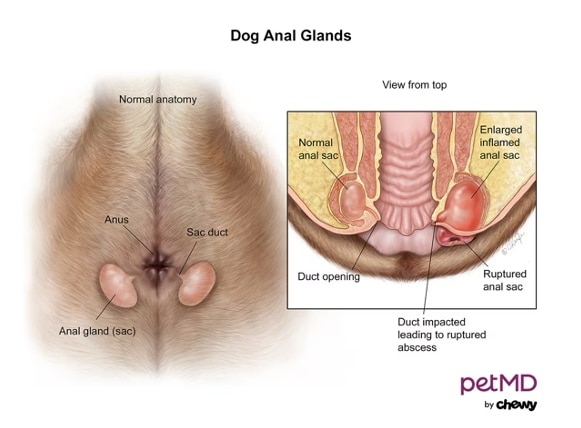
Click here to download this medical illustration.
Under normal circumstances, when stool passes through the anus, it applies pressure to the anal glands and helps naturally release their contents. Dogs may also involuntarily express their anal glands when they are frightened or stressed.
Anal gland secretions play a role in scent marking and communication. They allow dogs to leave behind identifying information during bowel movements near their home or in their yard. When dogs meet, sniffing the anal area helps them gather important biological and social information about one another.
If a dog’s stool becomes soft or inconsistent, their anal glands may not be expressed effectively. Over time, the fluid within the glands can thicken, making expression more difficult. This can lead to anal gland irritation, inflammation, impaction, or infection.
Types of Dog Anal Gland Problems
Anal sac disease in dogs is a broad term that includes several related conditions affecting the anal glands. Anal gland issues in dogs include:
Anal Gland Impaction
Impacted anal glands in dogs occur when gland secretions fail to empty normally and become thickened and pasty. This material can accumulate within the gland, forming a firm mass that may cause mild to moderate discomfort.
In many cases, impacted glands can be manually expressed, although pressure should be applied carefully to avoid injury.
Anal Gland Infection or Abscess
Bacterial infection leads to the accumulation of pus within the gland. As inflammation increases, the gland may swell and, in some cases, progress to an abscess. A dog anal gland infection or abscess can cause moderate to severe pain. Signs may include redness, heat, swelling, or discoloration near or within the anal opening.
Ruptured Anal Gland Abscess
If left untreated, an anal gland abscess may rupture through the skin, causing severe pain. Rupture results in a draining tract (fistula), and greenish-yellow or bloody discharge may be visible near the anus.
Anal Gland Cancer
The anal glands may also be the site of cancerous tumors. The most common type of anal gland cancer is known as apocrine gland anal sac adenocarcinoma (AGASACA). AGASACA often causes hypercalcemia.
This condition may not cause your dog any pain in its early stages but can become painful as it progresses. It’s more common in older, female dogs. Certain breeds, such as German Shepherds and Dachshunds, are at higher risk.
Signs of Dog Anal Gland Problems
The most common signs of dog anal gland issues include:
- Scooting
- Frequently turning to lick or bite their hind end
- Straining to poop
- Showing discomfort when pooping
- Not wanting to sit
- Discharge from around the anus
- A strong, fishy odor
Dogs with more severe or advanced anal gland problems might also have the following signs:
- Crying or whimpering
- Becoming withdrawn or lethargic
- Not wanting to eat or drink
- Swelling or redness in the anal area
If these symptoms persist or affect your dog’s behavior, you should contact your veterinarian.
If left untreated, anal gland impactions, infections, and abscesses can become major issues.
Are Certain Dogs More Prone to Anal Gland Infections?
Anal gland problems are more common in small dog breeds, though they can occur in dogs of any size. Breeds that may be at increased risk include:
Other factors that may increase the risk of developing anal gland problems include:
- Chronic skin conditions (seborrhea, skin infections, or itchy skin)
- Obesity
- Inadequate dietary fiber
- Change in stool consistency (soft stool, diarrhea, or constipation)
- Parasites (both internal and external)
- Food and/or environmental allergies
- Genetics (more common in small breeds)
Diagnosing Dog Anal Gland Problems
Anal gland problems should be diagnosed by your veterinarian after a complete physical examination, including a digital rectal exam.
Additional testing may be needed to create a specific treatment plan for your dog. Tests may include:
- Ultrasound
- Fine needle aspirate (FNA)
- Tissue biopsy
- Bacterial culture and sensitivity
Treatment for Dog Anal Gland Problems
Most cases of anal sac disease in dogs can be treated with manual anal gland expression and local treatment with antibiotics and/or steroid ointments.
Manual Anal Gland Expression
Dog anal gland expression involves inserting the index finger into the dog’s rectum and gently milking the gland’s contents outward. Your dog’s anal glands can be expressed by your veterinarian, a veterinary technician, or even some dog groomers.
If your vet has agreed that your dog requires their anal glands to be expressed routinely, they might instruct you on how to express dog anal glands at home if you’re comfortable. Never attempt to express your pet’s anal glands unless you have been directed to by your vet and feel comfortable with the steps.
Antibiotics
Some dogs require antibiotics, particularly if infection or abscess formation is present. Oral antibiotics, such as amoxicillin-clavulanate (Clavamox), are commonly prescribed based on clinical findings and, when appropriate, culture results.
Pain Medication
To manage discomfort and inflammation, your veterinarian may recommend anti-inflammatory pain medications, such as carprofen or other NSAIDs, depending on your dog’s overall health and medical history.
Steroid Ointments
Topical steroid ointments are sometimes used to reduce inflammation and swelling of the anal glands and surrounding tissues. These medications help relieve discomfort and may improve gland drainage, especially in cases of mild to moderate inflammation. Steroid ointments are often combined with topical antibiotics.
Surgery
In severe or chronic cases, surgical intervention may be necessary. Anal glands are not essential to a dog’s health, and dogs can live normal lives without them if removal is required due to repeated infections, abscesses, or other medical concerns.
Cancer Treatment
For anal gland cancer, your vet will need to determine if it has spread to the lymph nodes or other areas, such as the lungs, liver, or spleen. You will need to consult a veterinary oncologist, and the treatment might include removal of the anal gland and sac, chemotherapy, radiation therapy, or a combination of these approaches.
How To Maintain Healthy Anal Glands in Dogs
High-Fiber Diet
Feeding a diet with adequate fiber may help support anal gland health in some dogs. Fiber promotes healthy digestion and helps form firmer, bulkier stools. When stool consistency is appropriate, pressure from the stool and normal muscle contractions during bowel movements can help naturally express the dog’s anal glands.
Supplements
Your vet may recommend giving your dog fiber supplements, which can help maintain healthy anal glands by bulking up stools, allowing for natural gland expression during bowel movements.
One option is Filaquin Anal Gland Supplements by Nutramax Laboratories Veterinary Sciences, Inc. Filaquin soft chews contain insoluble and soluble fibers to help with normal stool consistency, plus prebiotics and postbiotics to support digestive health. They also contain beta-glucan to help support your dog's immune health.
Your vet may also recommend omega-3 fatty acids and fish oil supplements to help support a healthy inflammatory response, promoting overall comfort and well-being in dogs.
Because dogs are individuals with unique health needs, always consult your veterinarian before adding any new supplement to your dog's routine.
Healthy Weight
Keeping your dog at a healthy body weight may also reduce the risk of anal gland problems. Overweight dogs are more prone to anal gland issues due to altered anatomy, decreased muscle tone, and chronic inflammation, which can interfere with normal gland emptying.
If your dog is overweight, talk with your veterinarian about a safe weight-loss plan. A combination of appropriate diet and regular exercise can help your dog reach and maintain a healthy weight.
Always consult your veterinarian before making dietary changes or starting supplements for your dog.
Dog Anal Glands FAQs
What happens if a dog’s anal glands aren’t expressed?
Most dogs express their anal sacs naturally when they defecate. If the glands do not empty properly over time, they may become impacted and infected. This may lead to discomfort and, in some cases, painful abscesses.
Can I empty my dog’s anal glands myself?
Your veterinarian can express your dog’s anal glands and may teach you how to do so safely if routine expression is needed. Always consult your veterinarian before attempting anal gland expression at home, as improper technique can cause pain or injury. Your veterinarian may also recommend anal gland supplements such as Filaquin to support your dog’s anal gland health.
Can food cause anal gland issues in dogs?
Food can contribute to anal gland issues in dogs, particularly those with food allergies that cause chronic skin or gastrointestinal inflammation. In these cases, often high-fiber diets are beneficial for anal sac health.


