Do Dogs Understand Kisses and Hugs?


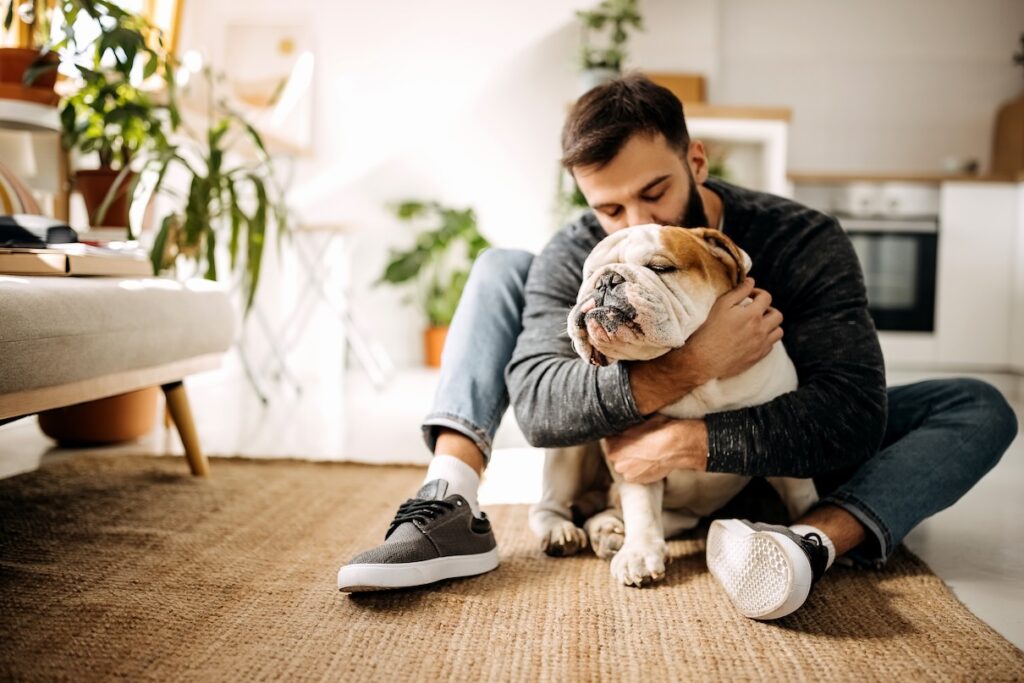
Petkic/E+ via Getty Images
Because dog body language is very different from ours, what we consider to be the ultimate sign of love might be processed as pushy and unwanted.
Do dogs like kisses? And how about hugs? Let’s dive in.
Key Takeaways
- Dogs don’t naturally understand kisses or hugs the way humans do.
- These behaviors can sometimes feel uncomfortable or stressful to dogs.
- Lip licking, turning away, and stiff body language are all signs your dog isn’t enjoying these forms of affection.
- Many dogs learn to tolerate kisses and hugs from their human family members, but tolerance doesn’t mean they enjoy the interaction.
- Show your dog you love them in other ways, such as through play, toys, exercise, petting, and massages.
Do Dogs Like Kisses?
Probably not. The act of giving a kiss might be joyful for us, but the cheek-grabbing and super close-up aspects of the process aren’t exactly fun for dogs.
In dog-speak, direct eye contact paired with close proximity can mean that tensions are escalating. For dogs, the correct response to that sort of potential threat is either a quick look away to deescalate or, in a worst-case scenario, responding aggressively.
Of course, our family dogs likely don’t view our direct eye contact as a threat. But understanding how dogs perceive our behavior can help us learn to be better communicators and allies for them.
Dogs do an amazing job of adapting to our strange communication rituals, and kissing is yet another one that many pups learn to tolerate.
If you’re wondering if your dog understands your kisses, check out their body language for clues. If your dog backs away, ducks his head, or licks his lips quickly when you try to plant one on him, consider it a gentle “no thanks,” and honor what your pup is telling you by opting for a different sort of affection.
It’s a good idea to skip kisses altogether when meeting an unfamiliar dog. There’s no social currency built up between you and the pup, so a new-to-you dog might misinterpret your attempt at connection. A dog who doesn’t know you might not be as forgiving about this breach of etiquette.
Dogs do an amazing job of adapting to our strange communication rituals, and kissing is yet another one that many pups learn to accept. The key is remembering that your dog may just be tolerating your kisses. So, make it quick and struggle-free, and pair it with something your dog truly appreciates, like a shoulder massage.
Do Dogs Kiss Each Other?
You’ve probably seen dogs doing what looks like smooching, where they lick in and around one another’s mouths like the world’s sloppiest French kiss. And while it may seem like kissing to us, it’s actually part of a choreographed canine ritual that’s different from what we might assume.
Maintaining the peace is critical in dog-land, so the behaviors that telegraph social status, age, and intent help all parties understand the situation at hand. Those licks around the muzzle that look like kissing to us can be an attempt to deescalate stress or show appeasement to prevent the interaction from spiraling out of control.
When it comes to dogs, a kiss is not just a kiss—it’s a layered conversation.
Do Dogs Understand Hugs?
Much like kissing, there’s no behavior in the dog world that mimics a hug. The aspects that we appreciate about hugging—the prolonged tight grip and the grounding feeling of close proximity—don’t translate into dog body language.
In fact, the sensation of being pinned against you and squeezed can trigger stress in dogs, which might convey as:
- A tense body language
- Wide eyes
- Panting
- Wide yawns
- Lip licking
- Pinned ears
- Frozen posture
- Kicking and pushing to get away
In some scenarios, the sensation of a heavy limb across the back or around the neck can be misinterpreted as a threat, not the loving gesture you’re intending.
Because it’s such a foreign sensation, most dogs don’t appreciate hugs. That said, many dogs can learn to tolerate quick squeezes, and a few might even come to enjoy them. A dog who’s OK with a quick hug or kiss will likely stay close to you once it’s over, and might even paw you for pats, which are much more appreciated.
Look at how your individual dog reacts when you attempt that hug or kiss. If you’re running after your dog to try to give them some physical affection, or if your dog responds with any of the deescalation techniques above, it’s likely that your approach isn’t appreciated. Always be alert for signs your dog is asking for space.
How To Show Your Dog You Love Them
There are so many ways to let your dog know how much you adore them, including:
- Massage: If you want to get physical with your pup, skip the hugs and kisses and go for the sort of touch they’ll really appreciate. A deep tissue massage on the shoulders and chest is a great way to show your best friend some love. in a way they’ll appreciate.
- Play: Games are a dog’s love language. Find fun news ways to connect with your dog with games like hide the toy. Offering interactive toys and food puzzles are another good way to show your dog you care.
- Sniffing: Most pet parents view walks as a means to an end and hurry through the stroll, but fast walks don’t give pups enough time to read the pee-mail around the neighborhood. Taking time to let your pup sniff as much as they want during walks is a great way to honor an activity they truly love.
- Decision-making: We tend to dictate every aspect of our dogs’ lives, so let your pup have a say now and then. Let them choose which direction you’ll walk, what toys you’ll play with, where they relax, and who they interact with. This sort of decision making gives them autonomy and a say in how they live their life.
- Language: The greatest gift you can give your dog is learning to speak their language. When you understand what your dog is communicating to you through their body language, you can be a better friend and advocate for them. And what’s not to love about that?


