Do Cats Understand Kisses and Hugs?


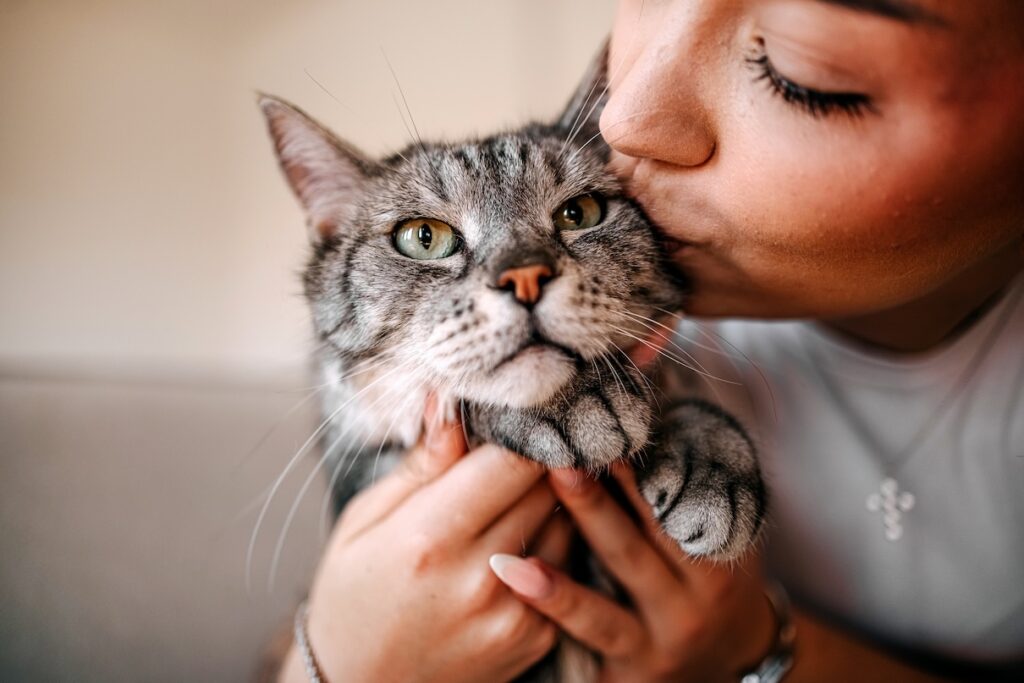
Our pets show physical affection a little bit differently than humans, so cats and dogs may not understand what it means when we hug and kiss them.
This doesn’t mean that they won’t become accepting of hugs and kisses over time—it’s simply important to respect your pet’s boundaries and individuality and to learn how to express affection toward them in ways they’ll enjoy and understand more easily.
Key Takeaways
- Cats do not naturally understand kisses or hugs but may come to learn what they mean.
- Many cats can tolerate kisses from trusted humans, but others might find them stressful.
- Hugs might be more stressful to cats because being held tightly can feel like restraint or a threat, triggering anxiety.
- Understanding your cat’s body language helps you know when they’re uncomfortable with physical affection.
- Other ways to show love to your cat include head bunting, slow blinking, grooming, and petting.
Do Cats Know What Kisses Are?
While cats do not kiss like humans do, there are similar cat behaviors kissing may mimic that a cat could interpret in a couple of different ways.
For example, cats may press their cheeks and forehead into other cats, humans, or objects as a way of scent-sharing and marking that cat, person, or object as theirs. This behavior is called bunting.
When you kiss your cat, they may think you are trying to scent-share with them. Cats who are familiar with you may tolerate this behavior or even bunt you back.
Human hugs may scare cats because they may perceive a hug as being captured and restrained rather than as a sweet gesture.
Cats may also interpret kisses from humans as a form of allogrooming, a behavior where cats lick each other to clean each other’s fur. This typically happens between individual cats who are close to each other. As such, your cat may accept kisses from you if you are particularly bonded to each other.
However, cats who are less familiar with you, feeling stressed, or sick may not like to be kissed because they may view it as an intrusion on their personal space.
It’s important to monitor a cat’s body language to know when to leave them be for the moment, such as:
- Angling their body away from you
- Hissing
- Swatting
- Wide eyes
- Flattened ears
Do Cats Understand Hugs?
Hugging your cat is a bit more complex than kissing because cats don’t have a behavior in social groups that is similar to a human hug.
Cats may sleep on or near each other when they are close, but they do not embrace each other the way humans do. In some instances, a cat may wrap their tail around a person’s leg after rubbing up against them, which is probably the closest behavior cats have to a hug.
In fact, human hugs may scare cats because they may perceive a hug as being captured and restrained rather than as a sweet gesture.
In the wild, cats are prey-predators who hunt smaller animals but are also hunted themselves by larger animals. So, a human grabbing them and holding them tightly may cause a cat to become anxious and afraid.
As such, the vast majority of cats do not like to be hugged, and it’s best not to try unless you are very close with the cat. And if hugging a cat, watch carefully for the signs of stress or fear: the body angled away, hissing or growling, swatting, wide eyes, and flattened ears.
Does My Cat Know I Love Him?
When cats show physical affection, it’s often in the form of bunting, rubbing, allogrooming, kneading, and staying close to their favorite people and animals. Because of this, it’s important to understand what your particular cat prefers and then match their energy to keep them happy.
Here are some ways you can let your cat know you love them:
- If your cat enjoys forehead bunts or rubbing their cheeks on you to mark you, present your hand for them to do so.
- If your cat likes rubbing on your legs, licking your skin, resting on your chest or lap, or kneading your legs or stomach when you’re sitting down, allow them time to do that.
- Cats also communicate affection through slow blinks. If you are sitting near your cat and have their attention, you can try blinking slowly at them a few times to let them know how you feel.
- Because cats understand grooming, you can also brush your cat when they are feeling relaxed to send them a message that you love them.
You can also show love to your cat in other ways, such as playing with them, petting them politely (choosing areas that cats tend to prefer like the chin, cheeks, and lower back), speaking in a nice and quiet tone to them, and giving them treats to positively reinforce your bond.
Keeping a consistent routine can also help your cat thrive because knowing exactly when they will get meals, playtime, and attention from their favorite people can help soothe a cat’s emotions and mental state.
Ensuring you are meeting your cat’s needs for complete and balanced nutrition, and providing them with vertical spaces to explore, safe and accessible hiding spots, scratching posts, and windows to view wildlife outdoors can also go a long way to improving your cat’s well-being and showing them that you care.
In summary, cats may not hug and kiss the way that humans do or understand it the same way. But they still form close relationships with their people that we can foster through time, respect, and attention to detail.


