Urinary Blockage in Cats: Symptoms, Causes, and Treatment


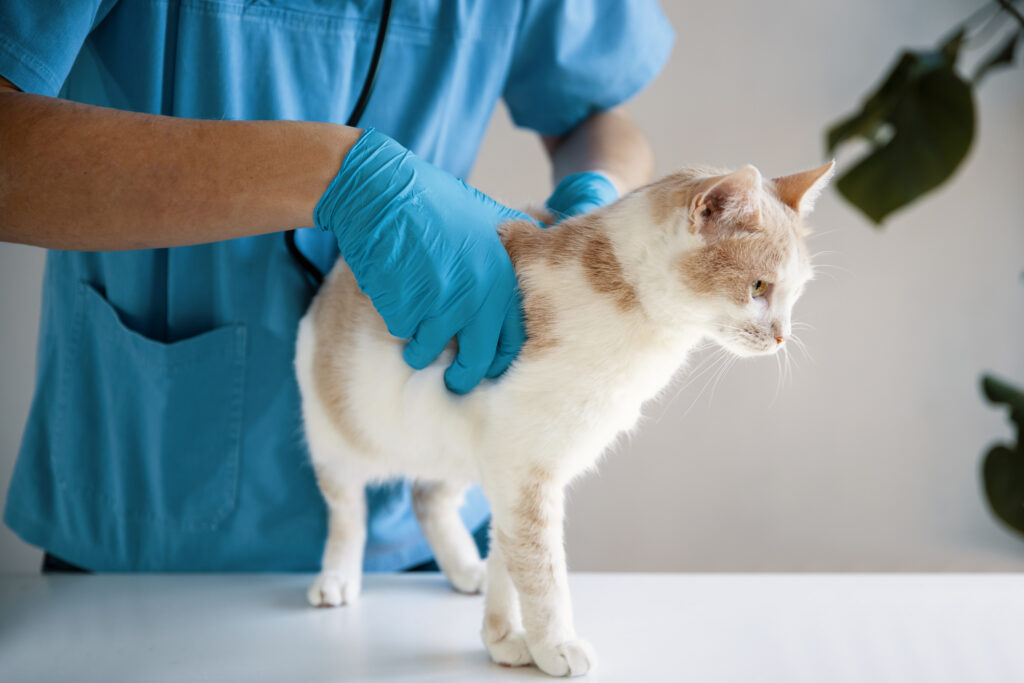
PhotoLife94/E+ via Getty Images
A urinary blockage in cats is a life-threatening emergency that prevents a cat from passing urine. It most commonly affects male cats and can lead to kidney failure, heart abnormalities, or death within 24–48 hours if not treated immediately.
Signs include straining in the litter box with little or no urine, crying in pain, lethargy, vomiting, or hiding. If you suspect your cat is blocked, seek emergency veterinary care right away. Here’s what pet parents need to know about symptoms, causes, treatment, and prevention.
Key Takeaways
- Urinary blockage in cats is a life-threatening emergency that stops urine flow.
- Signs include straining with little or no urine, pain, lethargy, and vomiting.
- Immediate veterinary treatment is critical to prevent kidney failure or death.
What Is a Urinary Tract Blockage in Cats?
A cat urinary blockage is urethral obstruction, since the urethra is the portion of the urinary tract where the blockage usually occurs. You may also hear this condition referred to as a “blocked cat.”
Regardless of the term used, a urinary tract blockage means your pet can’t empty their bladder.
In normal cat anatomy, urine is produced in the two kidneys and travels down their respective tubes (ureters) to the bladder. When a pet is ready to urinate, the urine travels from the bladder down a single tube (urethra), through the penis in males and vulva in females, to the outside.
Urinary blockage occurs most commonly in male cats because the male urethra is skinnier than the female one and more prone to blockage.
Unless quickly corrected, this blockage can result in life-threatening consequences such as kidney failure, bladder rupture (tear), and dangerous electrolyte abnormalities that can affect a cat’s heart.
A urinary tract blockage in cats is a medical emergency, and any cat suspected to be blocked should be evaluated by a veterinarian immediately.
Symptoms of a Cat Urinary Blockage
Urinary tract blockages can have symptoms like other urinary conditions. Common signs may include:
-
Urgency to urinate (more frequent trips to the litter box)
-
Urinating smaller amounts more often
-
Straining to urinate (which can sometimes be confused with straining to defecate)
-
Licking the genital area
-
Vocalization as if in pain or distress
The defining sign of your cat having a urethral obstruction is straining to urinate with no urine production or only a few drops of urine produced.
If you are unsure your cat is producing urine, consider this an emergency, and have them evaluated by a veterinarian immediately.
Life-threatening consequences can occur in as little as 24 hours of being unable to urinate. Death from untreated obstruction may occur in as little as 24–48 hours.
Health Tools
Get quick answers with our vet-created Symptom Checker
Causes of Urinary Tract Blockage in Cats
Common causes of urethral tract blockage in cats include:
-
Urethral plugs: These are the most common cause of obstruction in male cats. Urethral plugs are a combination of crystals and mucous formed by the body; they lodge in the urethra and prevent urine from exiting.
-
Bladder stones: These can move from the bladder and lodge in the urethra, causing urethral obstruction.
-
Stricture (narrowing of the urethra) and cancer: These are rare but possible causes.
-
Swelling: In up to 50% of cases, no definitive cause was found, but inflammation likely plays a role.
Any breed of cat is at risk for urethral obstruction.
Males are more susceptible than females because they have a much narrower urethra. Cats that don’t drink enough water may also be at higher risk.
How Veterinarians Diagnose a Feline Urinary Blockage
To diagnose a feline urinary blockage, your vet will start with a complete medical history of your cat. Immediately share any information regarding straining, trouble urinating, or bloody urine.
Your veterinarian will perform a thorough physical examination of your cat, including palpating (touching) the abdomen to locate the bladder:
-
In a normal cat, the bladder should be small and soft, like a water balloon.
-
In a cat with FLUTD or FIC, the bladder is often extremely small and unable to be palpated since the cat has been urinating so frequently.
-
In a blocked cat, the bladder will be firm and hard like a baseball and will likely be painful on palpation.
The veterinarian may also attempt to gently squeeze the bladder with a small amount of pressure, but in most urethral obstructions, the bladder can’t be emptied this way.
Palpation of the bladder is a key part of diagnosing a urinary tract blockage, but it should only be performed by your veterinarian.
If a cat is extremely obese or irritable, even a veterinarian may have trouble palpating the bladder and additional testing may be recommended, including:
-
Abdominal ultrasound
Treatment of Urinary Tract Blockage in Cats
Treatment of urinary tract blockage in cats involves relieving the obstruction and treating a potentially fatal buildup of electrolytes and urinary toxins.
This is achieved by placing a urinary catheter while your cat is under sedation or anesthesia. Placing a urinary catheter in a blocked cat can be challenging, and possible complications include tearing the urethra and bladder rupture, which may result in the need for emergency surgery.
Thankfully, most cats are successfully unblocked, and a urinary catheter is sewn in place for the next three to five days. During this time, cats with significantly elevated potassium are often treated with calcium gluconate and/or insulin and glucose to decrease potassium levels and protect the heart.
The cat will be hospitalized on pain medication and IV fluids.
Antibiotics, such as Clavamox, and a veterinary diet, such as Hill’s Prescription Diet c/d, may also be prescribed.
Once the obstruction is removed and pressure is relieved off the kidneys, kidney values usually return to normal. However, acute kidney failure is possible.
In most cases, medical management is considered the standard of care. However, if the cat has bladder stones or a previous history of urethral obstruction, your vet may recommend surgery. Cystotomy is performed to remove bladder stones.
Perineal urethrostomy (PU) is a specialized reconstructive surgical procedure to create a wider urethral opening in a male cat, like a female, and prevent future urethral blockages.
PU comes with risks and will not prevent future episodes or clinical signs of FLUTD or FIC. Your veterinarian can help advise you if PU is the correct treatment for your cat.
Recovery and Management of Urinary Tract Blockage in Cats
Early diagnosis and treatment of urinary tract blockages in cats are important for successful outcomes.
Most cats will need to remain hospitalized for three to five days for IV fluids, pain medications, and other supportive care.
Once the urine becomes clear and recheck blood work has normalized, the urinary catheter can be removed, and your pet should be monitored for an additional 12–24 hours to ensure they do not get another blockage. They can typically be discharged once they are urinating on their own.
Once discharged from the hospital, your cat may be prescribed medications to help the urethra relax for up to two weeks, and they may be prescribed oral pain medications and antibiotics as needed.
A veterinary diet will likely be recommended for the rest of their life to prevent and dissolve future crystal formation and promote bladder health by altering the pH of the urine. Increasing water consumption with cat water fountains and a wet/canned diet may also be recommended.
Prognosis for Urinary Blockage in Cats
With timely and appropriate care, most blocked cats go on to live normal lives with small dietary changes, but pet parents should remain vigilant of their cat’s urination.
More obstructions are possible, and if your pet has more than two episodes of urethral obstruction, it may be time to discuss PU surgery with your veterinarian.
How To Prevent Urinary Blockage in Cats
Pet parents can prevent urinary blockages in their cats by doing the following:
-
Ensure your cat receives regular well care to identify any health concerns early.
-
Provide your cat with fresh, clean water always to support hydration.
-
Feed a high-quality commercial or prescription diet as recommended by your vet.
-
Ensure your cat maintains a healthy weight.
-
Reduce stress in the home environment. Consider adding Feliway diffusers to encourage relaxation.
Urinary Blockage in Cats FAQs
How much does it cost to treat a urinary blockage in a cat?
Costs to treat urinary blockages vary based on geographic location and whether treatment is performed by a primary vet or at an emergency clinic.
In general, pet parents can expect to pay between $500 to $5000.
How long can a cat live with a urinary blockage?
Urinary blockages are life-threatening medical conditions. They can become fatal in just 24 hours if left untreated.
Can a cat urinary blockage resolve itself?
A cat urinary blockage will not resolve itself. If you think your cat has a urinary blockage, bring him to a veterinarian immediately.
How do you unblock a cat’s bladder at home?
Do not attempt to unblock your cat’s bladder at home. This procedure must be done by a veterinarian to reduce the risk for bladder rupture, urethral tears, and additional complications.


