Lens Luxation in Cats: What It Is and How It’s Diagnosed


SbytovaMN/iStock/Getty Images Plus via Getty Images
If one of your cat’s eyes looks cloudy or you notice them squinting or bumping into objects around your home, they may have a lens luxation.
Because this condition can lead to sudden blindness, it’s important to see a veterinarian quickly.
Here you can learn everything you need to know about lens luxation in cats, including signs to watch for, how it’s diagnosed and treated, and ways you can reduce your cat’s risk.
Key Takeaways
- Lens luxation in cats refers to the complete movement of the lens from its normal position within the eye.
- Lens luxation is a medical emergency that, if left untreated, causes significant pain and can lead to vision loss.
- The most common cause of lens luxation in cats is chronic anterior uveitis, which causes chronic eye inflammation (swelling).
- Surgery and post-operative medications to control inflammation and eye pressure are the most common treatment for lens luxation.
What Is Lens Luxation in Cats?
Lens luxation in cats occurs when the front part of a cat’s eye (the lens) moves forward or backward from its normal location within the eye.
This occurs when the attachments that hold the lens in place become weaker because of an underlying medical condition. Because the purpose of the lens is to focus light on the retina to help your cat see, these changes can cause vision loss if left untreated.
Lens luxation can be painful, and affected cats may have symptoms such as squinting, eye redness, and eye discharge.
Lens luxation in cats is considered a medical emergency. It’s important to seek immediate veterinary care if you think your cat has this condition.
Symptoms of Lens Luxation in Cats
Common symptoms that cats with lens luxation may have include:
- Squinting
- Pawing at the eye
- Thin, clear eye discharge
- Eye redness
- Bumping into objects
- Cloudy appearance to eye
- Changes in pupil appearance, such as size or shape
- Sudden vision loss
Causes of Lens Luxation in Cats
Common causes of lens luxation in cats include:
- Chronic anterior uveitis: This is the most common cause of lens luxation in cats due to chronic inflammation (swelling) that weakens the attachment of the lens to the eye.
- Eye tumors: A tumor within the eye can cause chronic inflammation or may physically displace (move) the lens from its normal location.
- Glaucoma: Increased pressure within the eye can damage the lens attachments, resulting in luxation.
- Cataracts: If cataracts form in a cat’s eye, they may contribute to weakening of the lens attachments.
- Genetics: Less commonly, cats may be predisposed to weakening of the lens fibers that normally hold it in place, which results in displacement.
Cats of any age can get lens luxation, but those who are immunocompromised or who have other underlying eye conditions are at increased risk.
For example, Siamese and Burmese breeds have an increased risk for chronic anterior uveitis, which can make lens luxation more likely.
How Veterinarians Diagnose Lens Luxation in Cats
Lens luxation in cats can be diagnosed with a physical exam and diagnostic testing.
Let your veterinarian know when your cat’s symptoms began, so they can correctly judge the disease progression.
Vets will perform the following tests:
- Physical exam: A veterinarian will start with a thorough physical exam to check your cat’s overall health and well-being.
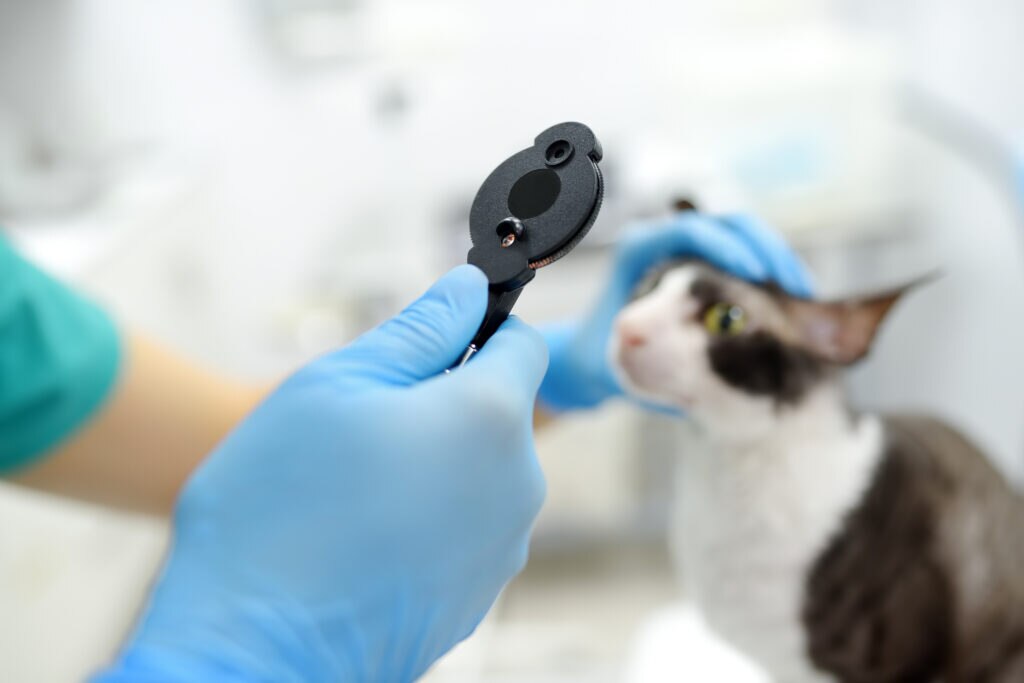
- Ophthalmic exam: Your cat’s eye will be physically checked using a special tool called an ophthalmoscope to find any abnormalities. Reflexes to check pupil and blink responses can be done to check vision.
- Tonometry: As part of the eye exam, a special tool called a tonometer can be used to check your cat’s eye pressures to find issues such as glaucoma or uveitis.
- Eye ultrasound: An ultrasound can be used to check the internal structures of the eye, such as the retina. This test often requires a referral to a specialist.
Treatment of Lens Luxation in Cats
Anterior (forward) lens luxation in cats is most often treated with surgery, which can be done in two ways and cures the condition. However, secondary complications such as glaucoma may still later develop in the eye.
- Removal of the lens: If vision is still intact, the lens can be removed.
- Removal of the eye: If vision has been lost, the whole eye may be removed to reduce risk for long-term eye pain.
Posterior (backward) lens luxation can be treated with medical management to keep the lens from moving forward and to normalize eye pressures.
Medications that may be prescribed in cats with lens luxation include:
- Carbonic anhydrase inhibitors, such as dorzolamide, to reduce eye pressure
- Anticholinergics, such as atropine, to dilate pupils and reduce eye pain
- Antibiotics, such as Terramycin, to prevent eye infections
- Anti-inflammatories, such as dexamethasone or flurbiprofen, to reduce eye inflammation
Recovery and Management of Lens Luxation in Cats
Recovery from surgery can take 10–14 days.
However, the underlying cause for the lens luxation in cats must be managed correctly to reduce discomfort. This often requires lifelong management.
If your cat is recovering from surgery, you should ensure they wear a recovery cone, such as the PawsPik Soft Cone, to prevent them from rubbing their eye.
Provide a private resting area with a comfy bed, such as the Bedsure Round Bed, or a blanket, like the Pet Parents Pawtect Blanket, to encourage recovery.
Bring your cat to their veterinary checkup after surgery to ensure recovery is going well.
If surgery is not an option, medical management can be done to reduce eye pressure and inflammation to control symptoms.
Frequent veterinary checks that your veterinarian may recommend must be done; however, this option carries a less certain prognosis as eye pain and discomfort typically increase with time.
Prevention of Lens Luxation in Cats
Some cases of lens luxation cannot be prevented if they were due to a genetic abnormality or tumor. However, pet parents can reduce their cat’s risk of lens luxation by doing the following:
- Ensure your cat gets regular veterinary checkups to find health concerns early.
- Follow your vet’s instructions to manage eye conditions to reduce the risk for progression to lens luxation.
- Feed a high-quality diet, such as Purina Pro Plan Complete Essentials, to support overall health and well-being.
Lens Luxation in Cats FAQs
Can a cat live with lens luxation?
A cat can technically live with lens luxation; however, it will cause lots of pain and discomfort and lead to blindness if left untreated. If you notice any symptoms of lens luxation in your cat, it is important to schedule a veterinary appointment immediately.
Is lens luxation painful?
Yes, lens luxation is a painful condition. It can lead to symptoms that should be treated by a veterinarian, such as eye redness, squinting, and eye discharge.
Can lens luxation be fixed?
Yes, lens luxation can be fixed through surgery in most cases to either remove the lens or the entire eye. If surgery is not an option, medical management can be used to control symptoms and reduce discomfort, but the condition will continue to worsen.
What is the difference between lens luxation and subluxation?
Lens luxation refers to the complete displacement (movement) of the lens of the eye from its normal place. Subluxation refers to only partial displacement of the lens. Both conditions should be treated quickly.


