Conjunctivitis in Cats (Cat Pink Eye)


Remains/iStock/Getty Images Plus via Getty Images
If your cat has swollen pink eyes with lots of drainage, they could be suffering from conjunctivitis.
Conjunctivitis in cats is common, especially in young cats that were recently adopted. While cat eye infections can look nasty, with good care and time, they often respond well to treatment.
Key Takeaways
- Conjunctivitis in cats is a common, often painful eye condition caused by viruses (like FHV-1), bacteria, allergies, irritants, or underlying diseases.
- Symptoms include red, swollen eyes, discharge, squinting, and often signs of upper respiratory infection—diagnosis involves a thorough eye exam and sometimes lab testing.
- Treatment depends on the cause but often includes topical medications, supportive care, and stress management; most cases resolve with proper vet care.
What Is Conjunctivitis in Cats?
Conjunctivitis in cats is inflammation of a feline’s conjunctiva.
The conjunctiva is the mucous membrane that lines the upper and lower eyelids (a cat’s third eyelid), and their eyeball.
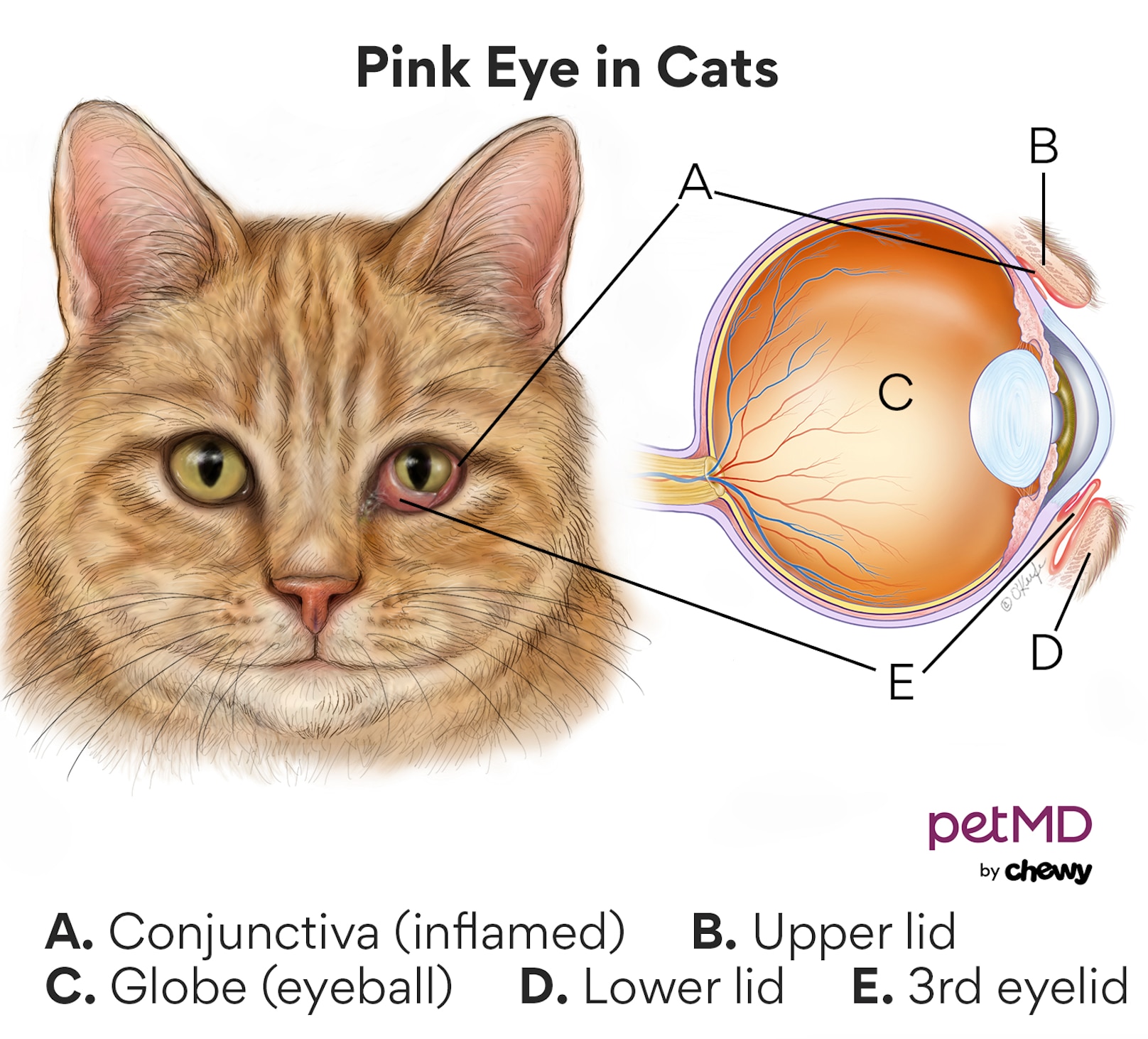
Click here to download this medical illustration.
Conjunctivitis in cats often occurs acutely (as a short-term condition) and is painful. It’s one of the most common cat eye diseases.
Cat Conjunctivitis Symptoms
Symptoms of conjunctivitis in cats can range from mild redness around the eyes to much more severe signs.
You may notice the following in your cat:
-
The conjunctival tissues are inflamed and swollen, causing excessive blinking, squinting, and the inability to fully open and close the eye.
-
There may be clear discharge, mucous, or bloody material coming from the eye.
-
The eyes and the skin around them may be itchy or losing hair.
In addition to seeing symptoms in your cat’s eyes, it’s also common to see signs of an upper respiratory infection (URI).
These include:
-
Nasal discharge (clear or thick mucus)
-
Lack of energy or lethargy
What Causes Conjunctivitis in Cats?
There are several potential causes for conjunctivitis in cats.
Let’s look at some of the most common reasons why a cat may develop conjunctivitis.
Viruses
Most cases of conjunctivitis in cats are viral. Viral conjunctivitis may be caused by:
-
Feline herpesvirus-1 (FHV-1). This is the most common cause of conjunctivitis, especially chronic or recurrent cases. The virus hides in the nervous system and activates at times of stress or illness.
-
FHV-1 is like human herpesvirus-1, but this family of viruses is species-specific, so FHV-1 cannot infect humans.
-
However, it’s highly contagious to other cats in close contact.
-
-
Calicivirus. This is another common virus. It’s primarily shed in nose, eye, and mouth secretions, though it can be found in other body fluids. It’s also spread via close contact. While many cats recover, others will become lifelong carriers.
Bacteria
Cats with viral conjunctivitis may experience a secondary bacterial infection.
However, bacteria can be the primary pathogen as well (bacterial conjunctivitis), although bacterial conjunctivitis is less common than viral.
The most common pathogens are:
-
Chlamydophila felis (C. felis)
-
Bartonella
-
Pseudomonas species
C. felis can cross species, although this is not common, humans (particularly those with compromised immune systems) can catch it from infected cats.
Parasites
Outdoor cats are more prone to parasitic infections, which usually cause more systemic disease but can also cause conjunctivitis (parasitic conjunctivitis).
These include:
-
Thelaziasis
-
Onchocerciasis
Humans may be susceptible to all three of these, but direct transmission is rare.
It’s important to be aware of any possible cross-species potential and talk to human-health professionals about any concerns.
Immune-Mediated Conditions
This uncommon cause of conjunctivitis involves a cat’s immune system attacking itself.
-
Eosinophilic conjunctivitis is idiopathic in origin, meaning veterinarians don’t know why it occurs. However, it may have a link to FHV-1. It causes an infiltration of a certain type of white blood cell to the conjunctiva, causing the inflammation.
-
Lipogranulomatous conjunctivitis occurs when lipids (fats) are deposited along the eyelid margin, glands, and ducts. Veterinarians are uncertain of the cause of this disease.
Allergies
Allergies are a cause of conjunctivitis for many cats. They can come from food or environmental factors, such as:
-
Weeds
-
Mites
Physical Irritants
Physical irritants can range from foreign bodies like grass, sticks, or eyelashes, to harder-to-diagnose irritants like dust, chemicals, smoke, and eye ointments.
Tumors and Other Eye Diseases
-
Ocular diseases such as ulcers, glaucoma, eye tumors, or eyelid malformations—can cause secondary conjunctivitis.
-
Eyelid diseases such as abnormal eyelid anatomy or cancer—involve frictional irritation or exposure and may cause conjunctivitis.
How Veterinarians Diagnose Cat Pink Eye
To diagnose conjunctivitis in cats, a vet will conduct a complete ophthalmic examination, including:
-
A careful eye exam using special instruments and stains to look for other diseases in the eye.
-
A Schirmer tear test is used to assess your cat’s natural tear production by determining the number of tears produced.
-
A fluorescein stain test, which is critical to diagnose corneal ulcers.
-
A test of intraocular pressures to look for inflammation or glaucoma.
-
Blood tests specifically looking for two viruses: feline leukemia virus (FeLV) and feline immunodeficiency virus. Cats with either virus are immunocompromised and therefore more susceptible to infections.
-
Blood tests to look for signs of infection and overall organ function.
-
Radiographs (X-rays) to assess lung pathology, as cats with conjunctivitis frequently have respiratory infections.
-
Additional tests may include PCR, virus isolation, immunofluorescence antibody testing, and serology to test for other specific bacterial and viral infections.
Cat Conjunctivitis Treatment
The goal of treatment for conjunctivitis in cats is eliminating the pain and the infection, as well as treating the underlying cause, if there is one.
Topical eye drops or ointment may be prescribed, along with topical medications for inflammation and pain.
If your cat has infectious conjunctivitis, they may be prescribed an eye medication that has an antibiotic in it, like terramycin or tobramycin.
Sometimes, combination antibiotic and anti-inflammatory eye drops are prescribed, like NeoPolyDex drops.
When needed, immune-suppressive drugs are prescribed for immune-mediated cases.
Medications like prednisone acetate or tacrolimus may be recommended in cats affected by eosinophilic keratoconjunctivitis.
Your veterinarian will go over the proper application of all eye medications, as great care is necessary to avoid further damage to your cat’s eye.
If your cat is suffering from viral conjunctivitis and severe herpes, they may be prescribed an oral anti-viral medication, like famciclovir.
Any other infections will be addressed on a case-by-case basis.
Recovery and Management of Cat Pink Eye
Most cases of simple conjunctivitis in cats resolve relatively smoothly with seven to 10 days of topical therapy.
Longer treatment is warranted for certain infectious agents, and for immune-mediated cases. When complications arise, such as corneal ulceration or sequestration, outpatient surgery may be necessary.
A common cause of conjunctivitis in cats from both rescue and breeder backgrounds is herpesvirus. Herpes infections are sporadic and often first show up during kittenhood.
Many cats are infected with FHV-1 and do not show any signs of clinical illness. In most cases, herpesvirus conjunctivitis is self-limiting and will resolve within two weeks, though the conjunctivitis should still be treated.
With cases of herpesvirus conjunctivitis, the signs often appear suddenly and are especially common after stressful situations such as travel, boarding, surgery, or illness.
When cats do have a flare-up, they are more susceptible to secondary bacterial infections, which can be concerning for young kittens.
Prevention of Conjunctivitis in Cats
Introducing probiotics and maintaining a stress-free environment for your cat can help to prevent viral conjunctivitis flare-ups in cats.
Some products your vet may recommend include:
-
Fortiflora is a probiotic product made by Purina, which can decrease the severity of herpes conjunctivitis by utilizing “good” bacteria in the body.
-
VetriScience Lysine Plus Lysine is an amino acid that supports the immune and respiratory system in cats.
-
Hyaluronate-containing tear ointments or supplements , like OphtHAvet Ophthalmic Solution Eye Lubrican, can provide lubrication and support overall proper health of the eye’s tear and glands. Healthy tear films will better clear and manage infections—and the inflammatory issues associated with them.
Good environmental hygiene, a low number of cats in the home, decreased stress, and early veterinary intervention are also helpful in preventing conjunctivitis in cats.
-
For multi-cat households, Feliway is an effective tool that utilizes pheromones to decrease stress, and therefore decrease the chances of the reappearance of viral conjunctivitis.
-
A Thundershirt can help cats with anxiety by using calming, gentle pressure, similar to swaddling a baby.
-
Prozac and similar prescription medications may be helpful for cats who suffer from more severe anxiety.
While there is no cure for most causes of conjunctivitis in cats, there are many treatments and solutions to effectively manage the condition and allow cats to live a happy, healthy life.


