Anisocoria in Cats: Why Your Cat’s Eyes Are Different Pupil Sizes


miniseries/E+ via Getty Images
If your cat’s pupils are suddenly different sizes, they may have a condition called anisocoria.
Because anisocoria can develop from serious underlying health issues and may put your cat’s vision at risk, seek veterinary care immediately.
Key Takeaways
- Anisocoria in cats means that one pupil is a different size than the other.
- Possible causes include trauma, eye disease, infections, toxins, medication overdose, and neurological conditions.
- Anisocoria is considered a medical emergency and requires prompt veterinary attention.
- Treatment and prognosis depend on the underlying cause and timeliness of care.
- Treatment and prognosis depend on the underlying cause and how quickly treatment begins.
What Is Anisocoria in Cats?
Anisocoria in cats is an eye condition in which the pupils are different sizes.
A cat's pupil size is controlled by the nervous system. When these nerve pathways are disrupted, the pupils don't react to light as they should—one pupil may dilate while the other constricts.
Anisocoria should be treated as a medical emergency because it can develop from serious underlying health issues. If you notice one pupil suddenly becoming larger than the other, call your veterinarian immediately. Prompt diagnosis and treatment are crucial for a positive outcome.
What Causes Anisocoria in Cats?
Anisocoria in cats can be caused by trauma, eye conditions, infections, toxins, medication overdose, tumors, and other health issues.
Causes of anisocoria in cats may include:
- Trauma or injury
- Horner’s syndrome
- Glaucoma
- Uveitis
- Corneal ulcers
- Aging
- Bacterial or viral infections, such as FeLV
- Toxin ingestion, such as permethrins
- Medication overdose, such as ivermectin
- Brain or eye tumors
- Optic neuritis
What Are the Symptoms of Anisocoria in Cats?
The main sign of anisocoria in cats is pupils that are different sizes. Other symptoms may include eye redness or discharge, squinting, pawing at the eye, changes to the eyelids or cornea, lethargy, and decreased appetite.
Symptoms of anisocoria in cats may include:
- Different pupil sizes
- Eye redness
- Eye discharge
- Pawing at the eye
- Squinting
- Cloudy cornea (outer part of the eye)
- Droopy eyelids
- Prominent third eyelid
- Lethargy
- Decreased appetite
How Is Anisocoria in Cats Diagnosed?
Veterinarians diagnose anisocoria in cats with a complete physical exam and may use eye and neurological exams, blood work, urinalysis, blood pressure testing, and imaging to determine the underlying cause.
Your veterinarian will also ask when the signs began, whether your cat may have ingested anything unusual, and whether there was any recent trauma.
Additional diagnostic tests may include:
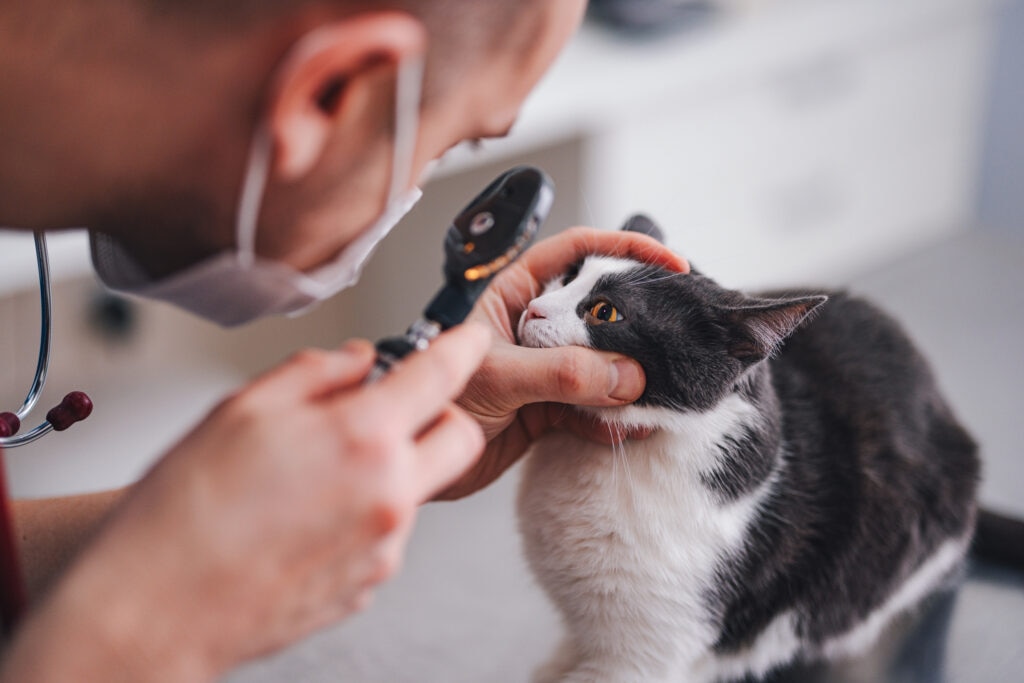
- Complete ophthalmic exam: Uses special tools such as an ophthalmoscope and tonometer to check eye pressure, internal eye structures, and nerve function.
- Neurological evaluation: Checks eye nerve reflexes and function.
- Blood work: Assesses overall health and organ function.
- Urinalysis: Helps rule out systemic (whole-body) illnesses that may be contributing to anisocoria.
- Blood pressure test: High blood pressure can affect the retina and nerves within the eye.
- Imaging: X-rays, ultrasound, or CT scans may be used to identify trauma or tumors.
How Is Anisocoria in Cats Treated?
Treatment for anisocoria in cats depends on the underlying cause and may last from a couple of days to a few weeks.
Your veterinarian may prescribe:
- Eye ointment, such as Terramycin
- Eye drops, such as dorzolamide
- Antibiotics, such as doxycycline
- Pain medications, such as Onsior
- Anti-inflammatories, such as prednisolone
- Activated charcoal for toxin ingestion
- Surgery to correct physical trauma or remove tumors
Additional medications may be recommended based on your cat's specific condition. Some cats may need hospitalization and supportive care to treat the underlying health issue before continuing recovery at home.
Recovery and Management of Anisocoria in Cats
In many cases, anisocoria in cats can resolve when the underlying cause is successfully treated. The prognosis is better when treatment begins promptly.
If left untreated, anisocoria can lead to serious complications such as blindness.
In some cases, anisocoria may become permanent, especially when trauma damages the nerves that control pupil function.
Anisocoria in Cats FAQs
Is anisocoria in cats serious?
Yes. Anisocoria can signal a serious underlying health issue and should be addressed by a veterinarian right away.
Can anisocoria indicate feline leukemia?
Yes. Anisocoria can result from an underlying infectious disease, including feline leukemia virus (FeLV).
Is it normal for one pupil to be slightly bigger than the other in cats?
No. In cats, both pupils are normally the same size at the same time. If one is larger or smaller, schedule a veterinary exam as soon as possible.
Is anisocoria in cats an emergency?
Yes. Anisocoria in cats should be treated as a medical emergency because it can develop from serious underlying health issues. If one of your cat's pupils suddenly becomes larger than the other, call your veterinarian immediately.
Can anisocoria in cats cause blindness?
If left untreated, anisocoria can lead to serious complications such as blindness. Prompt diagnosis and treatment are important for a better prognosis.


