Why Do Horses Like Peppermint?


castenoid/iStock/Getty Images Plus via Getty Images
Many horses get excited for peppermint treats; they can hear the crinkle of the candy wrapper from 15 feet away. Historically, horsemen would flavor horses’ water with peppermint in order to get them to drink it in an unfamiliar setting.
In this article we’ll cover why horses like peppermint, whether it’s safe, and how to offer it responsibly, especially for horses with health concerns. Each horse is unique, so discuss all treat choices with your veterinarian.
Key Takeaways
- In most cases, you can feed your horse one or two small peppermint candies as a treat.
- Some horses should not have peppermint candy, so consult with your veterinarian on what treats are appropriate for your horse.
- Peppermint-flavored horse treats are a great substitute for candy.
Why Horses Like Peppermint
Horses like peppermint because it tastes delightful and has a pleasing aroma, and most horses know it’s a special treat.
Horses Tend To Prefer Sweet Flavors
Horses prefer a sweeter taste. They seek out freshly cut grass, which is naturally high in sugars, or rich grasses like perennial ryegrass or Kentucky bluegrass. Peppermint candy is a sweet, sugar-based treat.
Peppermint’s Strong Smell Gets Their Attention
Horses have a highly developed sense of smell. They have about 300 million smell receptors, which is about 60 times those of humans. They rely on their sense of smell to learn about their environment, communicate with each other, and find food.
Horses only breathe through their nose, so they constantly take in smells. The bold aroma of peppermint can make it more interesting than other treats.
Peppermint Becomes a Reward Cue
A peppermint treat can be used as positive reinforcement in training. Horses are very intelligent and learn to associate an experience, such as a training session or husbandry routine, with a reward cue. Being consistent with the smell and taste of the reward helps strengthen the cue that they’ve done a good job and it’s reward time.
Is Peppermint Safe for Horses?
Just because horses like peppermint doesn’t mean it’s the best thing for them.
Peppermint Leaves vs. Peppermint Candy vs. Peppermint-Flavored Treats
Peppermint flavor comes in many forms, including:
-
Peppermint leaves (plant material): A highly aromatic herb that’s a hybrid of spearmint and water mint, with dark green leaves
-
Peppermint oil/flavoring: The essential oil taken from the peppermint plant’s flowers and leaves; when mixed with alcohol, it’s less concentrated and is called an extract
-
Hard and soft candies (often mostly sugar): They originated in the late 1600s as unflavored sugar sticks; peppermint oil and extract were added for flavoring in the 1800s
-
Horse treats labeled for equine use: Oat, corn, or molasses-based treats with peppermint flavoring
The Sugar Problem (Especially for Metabolic Horses)
Some horses cannot tolerate excessive levels of sugar in their bloodstream, including horses who have insulin resistance, polysaccharide storage myopathy (PSSM), or equine metabolic syndrome.
For these horses, extra sugar in their bloodstream causes the pancreas to release more insulin than the body needs. The pure sugars are rapidly adsorbed in the blood and create a spike in blood sugar. The increased insulin in the bloodstream leads to laminitis.
Diets high in sugar can also cause increased production of volatile fatty acids in the stomach, and can lead to gastric ulcers.
If your horse is overweight (especially if they have a “cresty” neck), skip the sugary treats.
If you have any questions as to which treats are appropriate for your horse, consult your veterinarian.
Choking and Dental Concerns
Hard candies may pose a choking risk. If your horse gulps them down or tries to eat too many at once, they may get caught in their windpipe.
Horses with dental concerns like chipped teeth or older horses with worn-down molars may have a hard time eating peppermint candies. The small, hard bits of candy may get caught between teeth and cause pain.
Feeding one peppermint candy at a time, breaking a peppermint candy cane into pieces, or opting for a peppermint flavored treat in lieu of a hard candy would be safer for these types of horses.
Watch for Hidden Ingredients (Xylitol, Chocolate, “Sugar-Free”)
When choosing a peppermint treat for your horse, pay attention to product labels and ingredients. Avoid anything with chocolate. Chocolate contains theobromine and caffeine, which are stimulants that horses metabolize very slowly, and they can cause colic, increased heart rate, muscle tremors, and seizures.
Also, be wary of xylitol. This is an artificial sweetener most commonly seen in sugar-free gum and sugar-free candies. Xylitol is extremely toxic to dogs and can cause life-threatening low blood sugar and liver failure. Horses and cows have demonstrated a sensitivity to xylitol, but to a much lesser extent. Regardless, it is unwise to keep xylitol-containing products around animals.
How To Feed Peppermint Treats More Safely
If your veterinarian says peppermint is OK for your horse, here are some tips on how to make it safer.
Choose Horse-Specific Peppermint Treats When Possible
First, look for horse-specific treats with complete ingredient lists. Then make sure you know what each ingredient is.
If your horse is prone to insulin resistance or equine metabolic syndrome, find low-sugar treats and feed them in moderation.
Keep Portions Small and Occasional
Treats should be given in small portions; they shouldn’t be viewed as part of your horse’s daily nutrition. It is hard to resist feeding your horse more than one or two treats because they’re going to want more, but it’s in their best interest to resist.
Treats should not be given at the same time every day or after the same routine. That’s because your horse may start to expect them, and this might instigate aggressive behaviors.
Feed Treats the Right Way
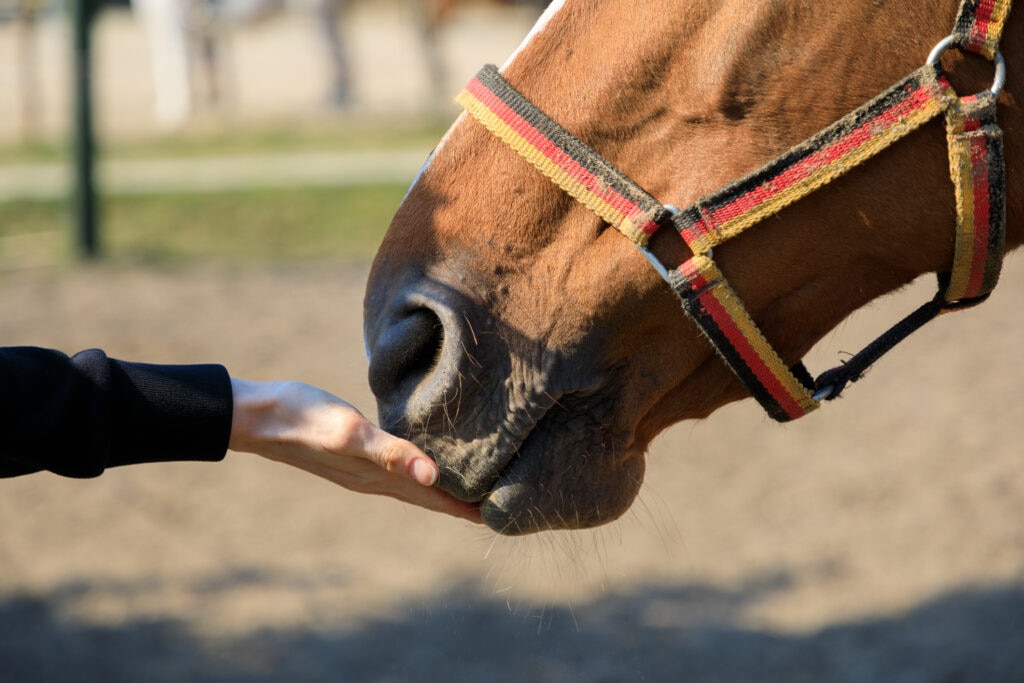
To offer a treat to your horse, place the treat in a flat palm and extend your arm toward your horse. Hold still and allow them to gently nibble it from your palm. Be cautious, as some horses will snatch it quickly and could get a nibble of your finger if you do not offer that flat palm.
Some horses can be very nosy and will even reach into your shirt pocket to help themselves to a treat. Be cautious about this, because some horses can become a little aggressive.
Never toss anything toward a horse, as you could scare or injure them. If you don’t want to feed them from your palm, place their treats in a feed bucket or on a pile of hay.
When To Skip Peppermint Entirely
Sometimes it’s best to avoid giving horses peppermint altogether. Horses with dental disease, trouble chewing, or a history of choke should not be given hard candies.
Get approval from your veterinarian before giving any treats to a horse with medical conditions like laminitis or metabolic disease. Some horses eat therapeutic prescription diets and should not receive anything else to eat.
Healthier Treat Alternatives for Horses Who Love Peppermint
We still want to be able to foster the human-animal bond and “treat” horses who cannot have peppermint, so here are some alternative ideas:
Lower-Sugar Treat Ideas
For horses who can have food treats but need a lower-sugar alternative, consider commercial low-sugar horse treats like MANNA PRO NutriGood Low-Sugar Snax Apple Flavor Horse Treats.
There are also no-sugar-added peppermint bits from BUCKEYE NUTRITION.
Non-Peppermint Treat Options Many Horses Enjoy
Healthy produce like carrots and apples are favorite horse treats. Though these are natural, they still contain sugar and should be given in moderation and under the approval of your veterinarian. Celery is also a good option that is low in sugar.
Non-Food Rewards
For horses who cannot have edible treats for medical reasons, there are other ways to reward them. Some horses love their tail and mane brushed or a good scratch over their rump.
Other horses prefer a big hug and words of affirmation whispered in their ear. Your horse may even have a favorite song you can play for them.
When To Call the Vet
Here are some things to be on the watch for and signs you need to call your veterinarian:
-
Any signs of choke: Coughing, nasal discharge that contains feed and saliva, distress
-
Any signs of laminitis: Lameness or unwillingness to walk
A preventative call is better than a reactive call! If you are unsure if your horse is at risk for metabolic syndrome, ask your veterinarian to help you develop a list of acceptable treats and the proper amounts to feed.
FAQs
Can horses eat peppermint candy?
Horses can have peppermint candy if given in moderation.
Is peppermint safe for horses with laminitis?
Horses with laminitis need special diets and should not be given treats.
Do horses like peppermint because it helps their stomach?
Peppermint has no proven medicinal properties. Too much peppermint candy may cause colic.
How much peppermint can a horse have?
Horses can have a small amount (one or two pieces) of peppermint candy daily.
Are peppermint treats better than peppermint candies for horses?
Peppermint-flavored horse treats are better for horses than peppermint candy, due to the high sugar content and hardness of the candy.
Can peppermint make a horse hyper?
Peppermint does not cause excitability, but the sugar in a peppermint candy may cause some excitement.
What ingredients should horse owners avoid in mints or treats?
When looking for treats, avoid ingredients like chocolate and xylitol.


