Horse Teeth: Anatomy, Dental Care, and Signs Something’s Wrong


Mypurgatoryyears/iStock/Getty Images Plus via Getty Images
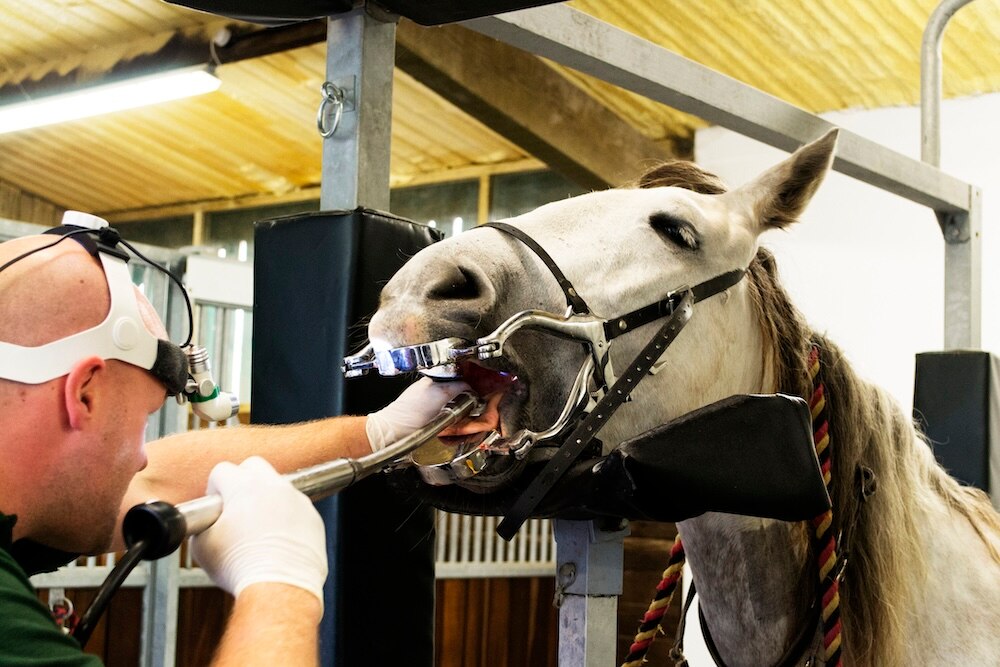
Horse teeth (thankfully) don’t need to be brushed and flossed, but that doesn’t mean they’ll maintain themselves. Regular horse teeth floating by an equine dentist or veterinarian is a mandatory part of horse ownership.
Untreated dental issues can cause colic or your horse could lose weight or snub their food. Horses experiencing dental pain may also display unwanted behaviors when ridden.
The good news is it’s easy to learn about horse teeth basics and dental care so you can keep your horse’s chompers healthy.
Key Takeaways
- Horses have hypsodont teeth, which gradually erupt throughout their lives to replace enamel ground down by chewing.
- Over time, the combination of grinding and eruption creates uneven or sharp tooth surfaces, which can be corrected with routine horse teeth floating.
- Signs of horse dental problems include dropping feed, slow or picky eating, resistance to the bit, head tossing, drooling, quidding, and weight loss.
- Call your equine veterinarian about any sudden mouth pain in horses.
Horse Teeth Basics: What Makes Them Different?
The word hypsodont means “high tooth,” and that’s exactly what horses have—but you’ll only be able to see just how high their teeth are on an X-ray!
Young horses’ upper molars and premolars extend all the way up into their maxillary sinuses, just below the nasal bone, while their lower molars and premolars reach down to the very bottom of the lower jaw. Throughout a horse’s life, those long teeth are pushed through a continuous eruption process, then worn down by chewing.
That wear-and-tear process sometimes makes it possible to age a horse by teeth. This is most reliable with young horses. An adult horse’s exact age can’t be determined by looking at their teeth, but your equine veterinarian should be able to give you an age range.
How Many Teeth Do Horses Have?
Foals have 24 baby teeth, also called deciduous teeth. In adulthood, male horses grow 40–44 teeth, while females have 36–40 teeth. This large range is due to the canine teeth, which mares tend not to have, and wolf teeth, which horses of any sex may or may not have.
There’s no need to run out to the barn and count. Wear patterns and proper dental care have a much greater effect on horse dental health than the number of teeth.
A Quick Tour of Horse Teeth
Horses have four types of teeth:
-
Incisors: Adult horses should have 12 incisors. These are the front teeth used to grasp and cut grass.
-
Premolars and molars (“cheek teeth”): The 12 premolars and 12 molars are used to chew food and begin the digestion process. These are the teeth that keep erupting throughout the horse’s entire life. Without them, horses cannot chew food.
-
Canine teeth: These four teeth are generally found in male horses, and are used in stallion fights between free-roaming horses.
-
Wolf teeth: The wolf teeth in horses are really another smaller set of premolars. They’re evolutionary leftovers that no longer play a role in eating and digestion.
Why Horses Need Dental Exams and Teeth Floating
There’s no way for a horse’s teeth to wear perfectly evenly—that would be like expecting all four of your car’s tires to wear their tread out at the exact same rate with no rotation or maintenance.
So for free-roaming horses, uneven dental wear is part of the aging process, and often leads to death since they eventually cannot eat properly.
Fortunately, our domestic horses have another option: regularly scheduled teeth floating.
How Often Do Horses Need Dental Care?
Most horses need to have their teeth floated once or twice a year. If your equine veterinarian stops by to administer spring and fall horse vaccines, they’ll check your horse’s teeth at that time and tell you if a float is needed.
If any signs of mouth pain show up in between regular exams, call your vet right away.
Who Should Float a Horse’s Teeth?
In many places, only veterinarians are allowed to float a horse’s teeth. In some other states and countries, the law allows equine dentists who are not veterinarians to provide teeth floating services.
Only a veterinarian can legally administer sedation, which is necessary for teeth floating. So an equine veterinarian will need to be involved in your horse’s dental care, whether or not they perform the actual procedure.
You’ll also need the help of an equine veterinarian if a serious dental issue is discovered during a float. Non-veterinarians can’t legally prescribe medication or perform dental surgery.
Signs Your Horse May Have a Dental Problem
Most people wouldn’t think “tooth pain” when faced with a horse who suddenly begins refusing jumps or a pony who drools at dinnertime, but dental problems cause a surprisingly wide range of symptoms.
Eating and Barn-Clue Symptoms
Keep a watchful eye on your horse around the barn or paddock and look out for signs of horse dental problems, including:
-
Dropping or wasting a lot of food
-
Quids, which are moist, partially chewed chunks of hay often found in the stalls of horses with worn-out teeth
-
Excessive salivation when eating, especially if this is new or getting worse
-
Foul-smelling breath
-
Reluctance to take treats, especially hard, crunchy ones
-
Drinking less water or refusing to drink cold water
-
Weight loss without a change in diet or exercise
Any of these clues could point to dental problems, but they could also point to other medical issues. Report what you’re noticing to your veterinarian and schedule an exam ASAP.
Riding and Bit-Related Clues
Many people notice the first signs of horse dental problems while riding because that’s when people have the most direct contact with their horses’ mouths. Watch for these hints that it’s time for a dental exam:
-
Head tossing, raising the head high, or rooting to avoid contact
-
Gaping mouth during ridden work
-
Going “behind the bit” (bringing the nose behind the vertical when not asked to do so)
-
Evading bridling or refusing to take the bit
-
Reacting to rein pressure by bucking, balking, or bolting
-
Any new or worsening behavior problem not explained by other pain or bad experiences
All of these signs could point to dental problems or other issues. For instance, many of the above symptoms are also seen in horses with ulcers or kissing spine. Only your veterinarian can make a diagnosis.
Common Horse Teeth Problems Horse Owners Should Know
You can help your veterinarian or equine dentist by knowing the basics of common horse dental problems. The more educated and informed you are, the more likely you’ll be to call the vet at the right time.
Sharp Enamel Points and Mouth Sores
In horses, sharp points on the edges of the cheek teeth are a normal part of tooth wear, and a primary reason horses need regular teeth floating. Left untreated, sharp enamel points can cause mouth ulcers and lead to serious infections.
Wolf Teeth
Wolf teeth in horses aren’t a problem unless they’ve gotten stuck below the gumline and can’t erupt, like impacted wisdom teeth in humans.
However, horses with wolf teeth may be uncomfortable when ridden with a bit. If you’re raising a foal, your veterinarian may recommend extracting the wolf teeth around age 2 because the procedure is much easier in a younger horse. Most veterinarians suggest extracting adult horses’ wolf teeth only if they are causing problems with bit placement.
Retained Dental Caps in Young Horses
Horses lose their baby teeth between the ages of 2 and 5. If a baby tooth doesn’t get pushed out completely, it may form a retained dental cap and interfere with chewing. These retained caps can be removed with hands or forceps during a sedated dental exam.
Horse Teeth Emergencies and When To Call the Vet
All equine dental issues are urgent, but only a few are true emergencies.
Choke Warning Signs
Choking can be lethal, often due to aspiration pneumonia as a complication of choke. Any one of these signs of choke in horses warrants a call to the emergency vet:
-
Feed or saliva coming from the nose or mouth
-
Coughing, gagging, and/or repeated, abnormal stretching of the jaw
-
Difficulty swallowing
-
A lump in the throat under or just behind the jaw
-
Depression/lethargy
-
Colic-like symptoms
Heavy Drooling Isn’t Always “Just Drooling”
Horses don’t salivate when anticipating a meal. Salivation in horses is stimulated by chewing.
A horse who salivates excessively without chewing needs to see the veterinarian immediately. Causes can include a foreign object stuck in the mouth, viral or bacterial illness, or toxicity from poisonous plants or chemically treated wood. But hypersalivation is generally always abnormal.
How Horse Owners Can Support Healthy Teeth at Home
To keep your horse’s teeth in optimal shape, take the time to establish a dental routine at home.
A Simple Monthly Mouth Check
You may not be able to float your horse’s teeth, but you can help them by catching dental issues as early as possible. Put this easy monthly routine on your calendar.
-
Watch your horse eat their normal dinner and look for any dropping, dribbling, or changes in chewing
-
Check for heavy drool
-
Sniff for foul smells
-
Feel for facial swelling, including under the jaw
-
Take a peek at the teeth, looking for broken incisors or ulcers on the cheeks or gums
-
Use a weight tape to detect any unexplained weight loss
Note the results of your monthly dental check in an equine care log, which should also include dental exam dates, feed changes, and any riding changes, such as switching to a new bit.
Feeding Considerations for Horses With Dental Wear
Older horses may wear their molars and premolars down so much that they can’t chew and digest hay. Talk to your vet about softer dietary options, like chopped hay, soaked cubes, soaked pellets, and equine senior feeds.
There’s no one-size-fits-all diet for senior horses, but there are lots of options that can keep a horse healthy into their 30s and beyond.
Equine dental health affects every part of your horse’s body. Prioritize regular dental checkups, teeth floating when needed, and appropriate care for any dental problems. Your effort will be rewarded with a longer, healthier life for your horse and happier rides for you!
FAQs About Horse Teeth
Do horse teeth keep growing?
Horse teeth keep erupting, not growing. Horse teeth are fully grown by about age 5, but most of the length of those teeth starts out below the gumline and erupts over time.
What is horse teeth floating?
Horse teeth floating is a procedure that uses special tools to grind down and file away horse tooth problems like hooks and points so horses can chew evenly.
How often should horses get their teeth floated?
Most horses need their teeth floated once or twice a year, depending on their veterinarian’s recommendation.
What are signs a horse needs dental work?
The only way to be sure is to schedule a dental exam with your equine veterinarian, but you may notice dropping of food, weight loss, or resistance to the bit in horses who need dental work.
What are wolf teeth in horses?
Wolf teeth are small premolars left over from an earlier stage of equine evolution. About 70% of horses have them, but they’re often extracted.
Can dental problems cause choke in horses?
Dental problems can contribute to choke by stopping a horse from chewing properly. However, horses with healthy teeth can also experience choke.


