How To Manage Mud as a Horse Owner: Practical Tips for Healthier Horses and Cleaner Paddocks


corrigan201/iStock/Getty Images Plus via Getty Images
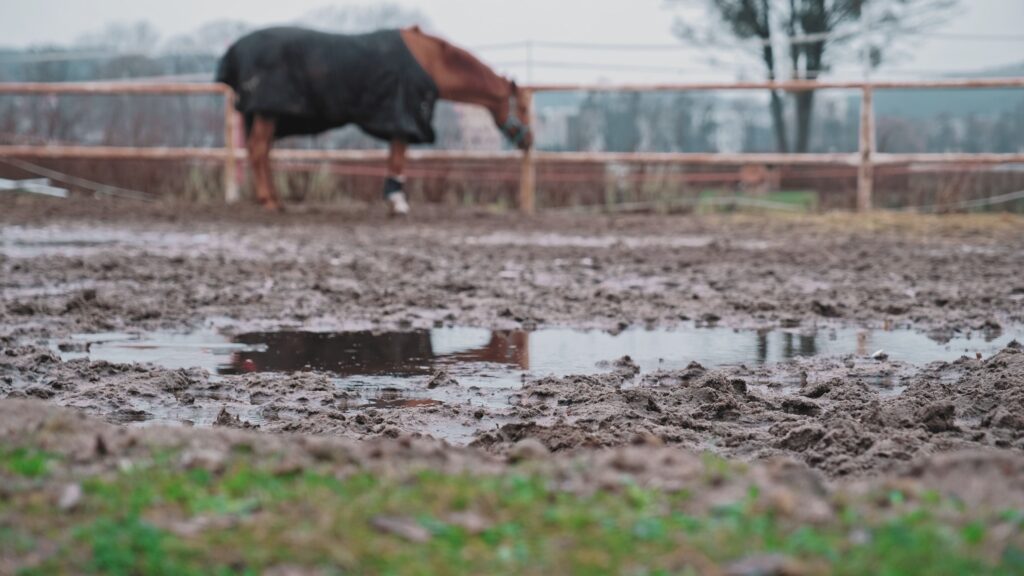
Mud can be a huge problem for horse owners, especially during wet seasons. Horses who stand in mud are more prone to hoof problems like thrush and white line disease. Mud makes riding areas slippery and gets in the way of manure cleanup. Muddy, churned-up pastures don’t grow as much grass, leading to added costs for supplemental feed.
In most climates, there’s no way to completely eliminate mud, but a few smart and cost-effective strategies can keep it to a minimum.
Key Takeaways
- Prolonged exposure to muddy conditions increases the risk of thrush, white line disease, mud fever (scratches), and slip-related injuries.
- Improving drainage, adding suitable footing materials, and reinforcing high-traffic areas can dramatically reduce mud buildup and property damage.
- Rotating turnout areas, creating a dry lot or sacrifice area, and maintaining healthy pasture grass all help protect both your horses and your land.
- Regular hoof picking, routine farrier visits, and daily leg inspections help prevent mud-related infections before they become serious.
Why Mud Is a Problem for Horses
Horses evolved to live outdoors in all kinds of weather, but in their natural environment they would move many miles per day. Standing in mud in a small, confined area can lead to several health issues for horses. Mud also creates additional risks for horse owners trying to navigate slippery conditions.
Health Risks
-
“Mud fever” or “scratches,” a painful type of dermatitis affecting the pasterns
-
Thrush, white line disease, abscesses, and other hoof problems
-
Soft tissue or joint injuries from slips and strains
-
Rain rot from an excessively damp coat
Property Damage
-
Pasture damage from horses walking through mud
-
Erosion and poor drainage
Increased maintenance costs from continually digging new drainage channels, replacing footing that washes away, and other upkeep
The good news is there are plenty of ways to help improve or even prevent muddy conditions with a little elbow grease.
Improve Drainage Around High-Traffic Areas
Improved drainage is the first step in mud prevention for horse owners.
-
Install French drains where appropriate and clean them regularly.
-
Grade land to direct water away from areas where horses live, and toward drainage channels like streams or storm drains.
-
Use gutters and downspouts to reduce runoff from homes and buildings.
-
Clear drainage ditches regularly in between storms to reduce the chance of flooding.
-
Don’t kill or relocate beavers. Instead, reach out to a professional for help redirecting them so they create natural retention ponds, which help maintain a healthy water table.
Add the Right Footing Materials
Whether you’re building a riding arena or “pasture paradise,” footing is crucial to your horse’s long-term health and soundness. A few materials to consider when designing your footing include:
-
A firmly compacted subsurface subgrade, graded and sloped for drainage (for paddocks that will not be planted with grass)
-
Geotextile fabric for stability, on top of the subgrade, buried deeply enough under other footing material so horses can’t shred or eat it
-
Crushed stone and/or gravel as a base layer to improve drainage and reduce erosion
-
Sand to soften sleeping areas and enhance drainage—but watch out for horses eating sand, which can cause colic, and don’t make your footing too deep
-
Rubber shreds for a cushioned, inorganic surface in arenas or all-weather paddocks—however, they’re expensive and can wash away in floodwaters
-
Areas of pea gravel, which stay dry and provide a natural abrasive surface for hooves
-
Rubber mats around gates and feeding stations
Work with a local professional to choose footing materials based on your individual property and needs. The best footing for your neighbor’s paddocks might not be right for yours.
Rotate Pastures and Turnout Areas
Pasture/turnout rotation is crucial to maintaining a horse property during the muddy season and giving mud-damaged pastures time to recover. Divide and rotate your pastures, and/or install a track system, which allows for a protected grassy area in the center of the fenced track.
If your horses live on pasture full-time, consider creating a “dry lot” or “sacrifice area” for wet weather. Give the dry lot the best all-weather footing you can so confinement doesn’t lead to thrush and abscesses.
Even in the dry season, rotational grazing can help your pastures stay healthy. When you rotate horses out of a pasture or paddock, that’s your chance to overseed and do other maintenance.
Plus, rotating gives you time to compost manure so it functions as an effective fertilizer, then distribute it accordingly. Don’t spread manure back onto pastures if you have more than a 1:2 ratio of horses to acres; instead, use it on hay fields or the garden, or have it hauled away.
Protect Your Horse from Mud-Related Health Issues
Even the best footing won’t prevent horses from ever touching mud, but proper care reduces harm.
Daily Hoof Care
-
Pick hooves regularly—daily if possible—to reduce the risk of infections such as thrush.
-
Watch out for signs of thrush, such as a foul smell and black crumbly bits in the hooves. Apply a thrush treatment at the first whiff, or even as a preventive during mud season.
-
Inspect the hooves for white line disease, which commonly pops up when conditions change from dry to wet or vice-versa.
-
Schedule routine farrier visits every six to eight weeks for most horses.
Skin Care
-
Check each horse’s legs daily for any cuts, abrasions, heat, swelling, or rashes.
-
If it’s so humid that your horse’s legs won’t dry on their own, consider a quick towel-dry to reduce the risk of fungal infections.
-
Clip away excess hair that can trap moisture.
-
Recognize early signs of mud fever, such as red skin.
-
Call your veterinarian if you notice mud fever or any other skin disease.
Long-Term Mud Prevention Strategies
Hardy grasses with deep root systems store moisture in their roots, which prevents your pasture from becoming a swamp. The best grass varieties for mud management vary by regional climate, so contact your nearest agricultural university’s extension service for help.
Healthy pastures stay dryer than compromised ones. Improve pasture health as much as you can in the dry season for a happier wet season. Again, agricultural universities come in handy here, as most offer services like soil testing that can help you figure out if your soil needs amendment.
Add gravel around areas where horses spend significant time, like gates, waterers, and feeders, and consider a track system to keep horses moving.
Mud is a fact of life with horses unless you live in the desert, but not all horse properties struggle equally with mud. Minor changes can make a huge difference. With correct grading, drainage, and maintenance, you can minimize mud, reduce property damage from rain, and keep your horses safe from mud-related diseases.
Frequently Asked Questions
How do I stop my horse paddock from becoming muddy?
Design your property with proper drainage, footing, and grading for horses. Consider installing a track system to encourage continuous movement.
What is the best footing for muddy horse paddocks?
Create an all-weather horse paddock by beginning with a compacted subsurface subgrade, then adding geotextile fabric, a base layer of gravel/stone, and topping it with pea gravel, sand, rubber chips, or limestone dust. Add rubber mats or extra pea gravel near gates, feeders, and waterers.
Can mud cause hoof problems in horses?
Very dry or very wet hooves are more prone to disease. Mud can lead to thrush, white line disease, abscesses, and tender soles.
How can I prevent mud fever in horses?
Don’t let your horse’s legs stay wet or muddy for long periods. Check legs daily, groom and dry them, and shave excess hair that can trap moisture.
Is it OK for horses to stand in mud?
Most horses will be happier and healthier in a muddy pasture than in the world’s nicest box stall. However, prolonged exposure to mud can cause hoof and skin diseases and increase the risk of injuries. So put your horses outside, but maintain your property to minimize mud.




