Alfalfa Pellets for Horses: Pros, Cons, and When To Feed

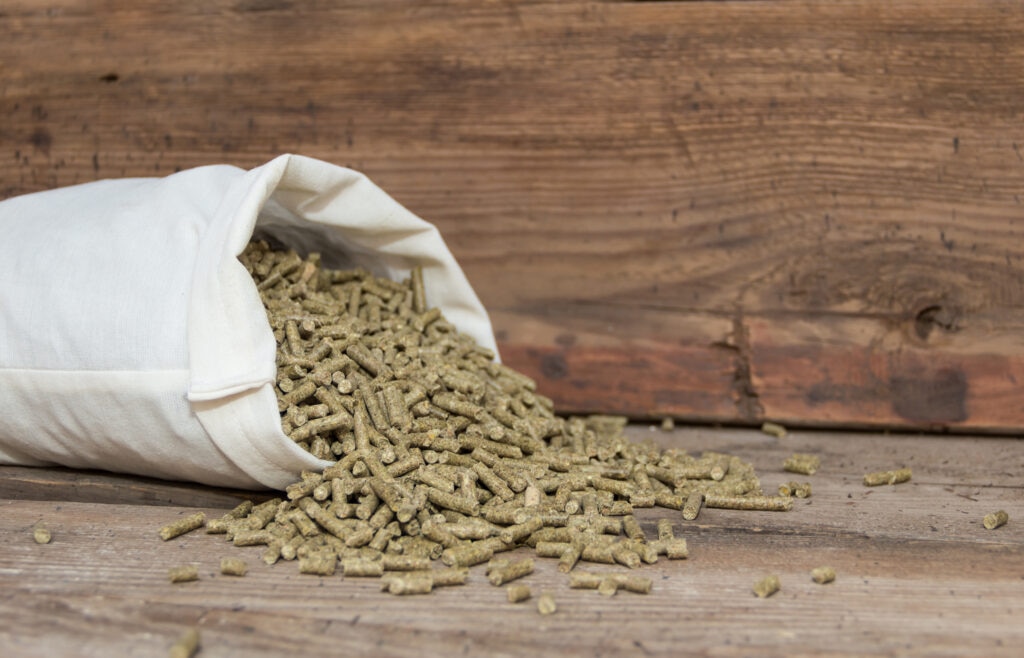
gabrielabertolini/iStock/Getty Images Plus via Getty Images
Alfalfa pellets are a convenient way to add protein, calories, calcium, and fiber to your horse’s diet. Made from dried, ground alfalfa—a legume forage plant—and compressed into pellets, alfalfa can supplement a horse’s forage intake or partially replace hay, depending on the product.
Alfalfa pellets can be particularly useful for hard-keeping horses, seniors with dental problems, and horses with increased nutritional demands. But because alfalfa is more nutrient-dense than many grass hays, it isn’t necessarily the right choice for every horse. Here’s what to know about the benefits and potential drawbacks of alfalfa pellets, and how to feed them safely.
Key Takeaways
- Alfalfa pellets provide concentrated protein, calories, calcium, and digestible fiber in a convenient form.
- They can benefit hard-keeping horses, seniors with dental problems, growing horses, broodmares, and horses in demanding work.
- Because alfalfa is nutrient-dense, too much can provide excess calories, protein, or calcium, especially for easy keepers or metabolically compromised horses.
- Introduce pellets gradually, soak them when appropriate, weigh portions carefully, and continue offering long-stem hay whenever possible.
What Are Alfalfa Pellets?
Alfalfa pellets are a processed forage made by drying and grinding alfalfa hay, then compressing it into small, dense pellets.
It's important to distinguish plain alfalfa pellets from complete feeds. A plain alfalfa pellet is a processed forage source, while a complete feed is formulated to provide a broader range of nutrients.
Plain alfalfa pellets can supplement a horse’s forage intake by providing additional calories and nutrients. In contrast, forage-replacement products are specifically formulated to replace part or all of a horse’s hay when fed at the recommended rate.
Check the product label carefully, as a plain alfalfa pellet should not automatically be considered a complete forage replacement. Additionally, alfalfa pellets do not provide the same long-stem fiber or chewing time as long-stem hay.
Benefits of Alfalfa Pellets
When determining whether alfalfa pellets may be right for your horse, consider these benefits:
Nutrient-Dense Forage
Alfalfa is generally higher in protein, essential amino acids, and calcium than many grass hays. That makes alfalfa pellets useful when a horse needs more nutrients than their current forage provides.
Growing horses, pregnant or nursing mares, horses in heavy work, and hard-keeping horses may benefit from alfalfa's additional protein and energy, depending on the rest of their diet.
Weight Gain
Alfalfa pellets can be a convenient way to add calories to a horse's ration. Because they're concentrated and easy to measure, they can be useful for horses who can’t maintain weight on hay alone.
That doesn't mean alfalfa pellets are automatically appropriate for every underweight horse. Weight loss can have many causes, including dental problems, gastric ulcers, internal parasites, or other health conditions, so investigate any unexplained weight loss with your veterinarian.
Senior Horse Support
When soaked, alfalfa pellets break down into a soft mash that is easier to chew. For senior horses with dental disease, soaked alfalfa pellets can help provide forage-derived nutrients when consuming enough hay becomes difficult.
Convenience
Pellets also offer a practical advantage. They're compact and easy to store, weigh, transport, and measure. They offer more consistent portioning than hay, whose bale size and nutritional quality can vary.
Potential Drawbacks
All horses are unique, and alfalfa pellets may not be the best choice for your horse due to the following:
Excess Calories or Nutrients
Because alfalfa is nutrient-dense, adding it to an already balanced ration can provide more protein, calcium, or calories than a horse needs. Easy keepers may gain unwanted weight. Consider the diet’s entire nutrient profile when deciding to add alfalfa pellets.
Metabolic Concerns
Horses with obesity, insulin dysregulation, equine metabolic syndrome, or laminitis (founder) require carefully controlled diets. If your horse is overweight or metabolically compromised, consult your veterinarian or an equine nutritionist before incorporating alfalfa pellets or making a significant diet change.
Choke Risk
Dry pellets can be eaten quickly, particularly by horses who tend to bolt their meals. For these horses, as well as those with dental problems or a history of choke, soaking can make the feed safer and easier to consume. Soaking needs vary by product, so follow the manufacturer's directions.
Less Chewing Time
Even though alfalfa pellets are made from forage, they don't provide the same chewing activity as long-stem hay. Processing the forage into pellets reduces the particle length that encourages prolonged chewing.
Always consult with your veterinarian or equine nutritionist to discuss any changes to your horse’s diet.
How To Feed Alfalfa Pellets Safely
When determining how to feed alfalfa pellets, start with the manufacturer's recommendations. Other good practices include:
- Weigh pellets rather than relying on a feeding scoop to ensure consistent portions.
- Introduce them gradually over several days, and split large amounts into multiple meals throughout the day.
- Soak pellets when recommended or when feeding horses with dental problems or choke risk.
- Follow the product's soaking directions, and prepare only what the horse will consume promptly.
- Always provide fresh, clean water.
- Whenever possible and appropriate, continue providing long-stem hay or pasture.
- Do not use plain alfalfa pellets as a complete feed unless the product is formulated and labeled for that purpose.
- For major changes to a horse's ration, particularly in horses with medical or nutritional concerns, consult a veterinarian or equine nutritionist.
Alfalfa Pellets vs. Alfalfa Hay
What’s the difference between alfalfa pellets and alfalfa hay? The biggest difference is physical form, but the base ingredient is the same. Both forms can provide protein, calories, calcium, and fiber, but hay offers the long-stem forage and chewing time that pellets cannot replicate.
Pellets are easier to store, transport, and measure, and can be particularly useful for senior horses who struggle to chew hay. Therefore, alfalfa pellets can work well as a forage supplement or, when the product is appropriate and the feeding rate is calculated correctly, as a partial forage replacement. They shouldn't automatically be considered a complete substitute for long-stem hay.
Alfalfa pellets can be a convenient way to add protein, calories, and digestible fiber to a horse's diet. They're particularly useful for hard-keeping horses, senior horses with dental limitations, and horses with increased nutritional requirements.
The key is to consider the pellets as part of the horse's complete diet. Introduce them gradually, follow the product's feeding directions, soak them when appropriate, and continue offering long-stem forage whenever possible.
FAQs About Alfalfa Pellets
Can horses eat alfalfa pellets every day?
Yes, many horses can eat alfalfa pellets as part of their daily diet.
Do alfalfa pellets help horses gain weight?
They can. Alfalfa pellets provide calories and protein in a compact, easy-to-measure form and they may help hard-keeping horses gain or maintain weight.
Should alfalfa pellets be soaked?
It depends, so follow the manufacturer's directions. Soaking can be beneficial for horses with dental problems, those who eat quickly, and those prone to choke.
Can alfalfa pellets replace hay?
Alfalfa pellets can partially replace forage when fed at the appropriate rate, but they don't provide the same long-stem fiber and chewing time as hay.


