When Do Horses Stop Growing? A Guide to Height, Weight, and Skeletal Maturity


purple_queue/iStock/Getty Images Plus via Getty Images
Have you ever wondered how long it takes for a newborn foal to grow into a mature horse? Most horses close in on their adult height by 2 years of age but can continue to mature through the age of 6. Factors such as breed, genetics, nutrition, and general management can affect the age and rate of maturity. If you have any concerns about your horse’s growth, it’s best to consult your veterinary or equine nutritionist.
Key Takeaways
- Most horses reach most of their adult height by about age 2, but they may keep filling out in muscle and body mass for years.
- Height, weight, and bone maturity don’t finish on the same schedule.
- Many horses reach mature weight between 3–6 years of age (varies by breed and management).
- Training decisions shouldn’t rely on age alone—fitness, footing, nutrition, and workload matter for soundness.
Ways Horses Grow: Height, Weight, and Skeletal Maturity
Most people think about a horse’s growth based on their height alone, but horses actually grow in weight, body condition, and skeletal maturity.
1. Height
A horse’s height is measured from the ground to the top of the withers, and is measured in hands. One hand equals 4 inches. Most horses will be close to their adult height by the age of 2.
2. Weight/Body Condition
Horses also “fill out” and increase their body condition and weight. While foals and yearlings usually look spindly and thin, their bodies eventually fill out with muscle, fat, and body mass for another one to three years after they reach their adult height.
3. Skeletal Maturity
The last step in a horse’s growth is skeletal maturity. This includes growth plate closure and bone development.
When Do Horses Stop Growing in Height?
By about 2 years of age, many horses have reached roughly 95% of mature wither height. Draft horses and warmbloods may continue to grow until they reach 4–6 years of age.
Signs a Horse Is Still Growing Taller
You may wonder if your horse is done growing. There are a few signs you can watch for, but measuring your horse is the only way to monitor their growth.
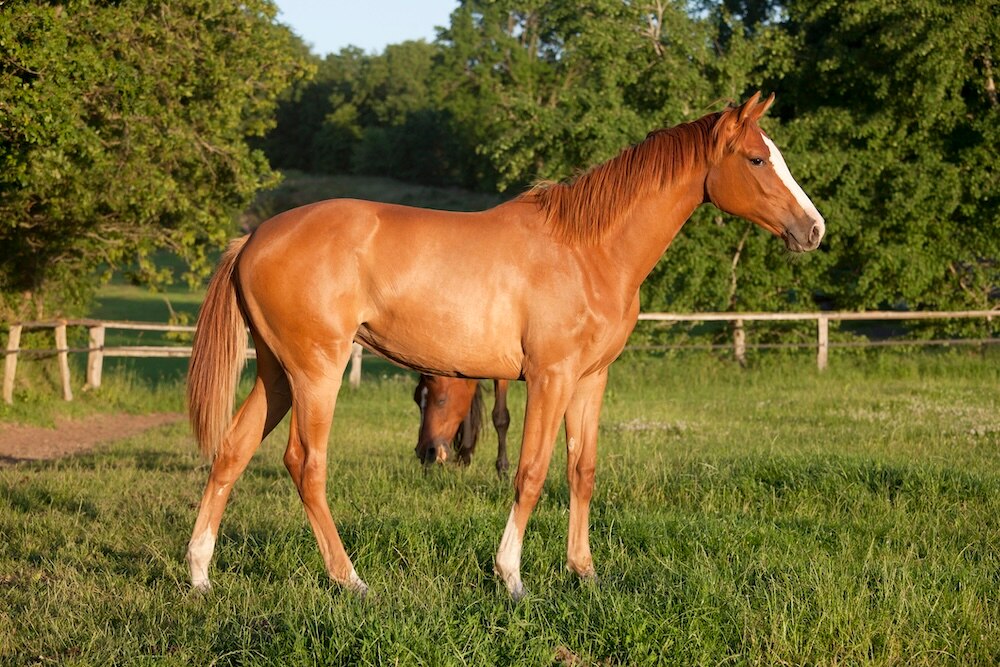
Most horses will grow either butt or withers first, so they may look uneven during times of growth. This can be a sign of continued growth, as most horses will be close to level when they are finished growing.
When Do Horses Stop Growing in Weight and Filling Out?
Filling out typically only occurs once a horse’s height growth has slowed or completed. Generally, mature weight is reached between 36–60 months, but this can vary based on breed, genetics, and nutrition.
When Are Horses Skeletally Mature?
Skeletal development in horses generally continues through the age of 6. Since different bones develop and mature at different times, this can affect a horse’s readiness for intense work. It’s important to develop individualized training programs for young horses in order to decrease the risk of developmental issues and prevent injuries.
Growth Plates in Horses
Growth plate closure means the areas of developing cartilage at the ends of bones have fully hardened into solid bone. This is an important developmental milestone in horses.
Growth plate injuries in horses carry a high risk of permanent limb deformities, arthritis, and chronic lameness. The cartilage in growth plates is flexible rather than hard bone, which make theses areas more vulnerable to trauma, excessive compression, and repetitive sheer forces before they have fused or closed.
Different bones close at different ages. A horse’s growth plates close from the bottom of the leg and move up to the vertebrae (spine and neck). Growth plates generally close by 5 years of age.
What Affects How Long Horses Grow?
Several factors can affect horse growth.
-
Genetics and breed/type: Different breeds mature at different ages. For example, Quarter Horses will mature much faster than Warmbloods, who may grow until age 4. Genetics can also play a role in the development of one horse compared to another.
-
Nutrition quality and balance: Nutrition is extremely important in young horse development. A horse who isn’t getting their nutritional needs met may not grow appropriately. Conversely, they might develop too quickly if they’re over-supplemented. These issues can lead to musculoskeletal abnormalities.
-
Illnesses/parasites and overall health: Parasite overload or illness in young, growing horses can lead to abnormalities and delays in growth. These can also lead to permanent musculoskeletal changes. Always keep horses up to date on their dewormer regimen.
-
Exercise and management: Exercise and appropriate management of a young, growing horse is extremely important for adequate growth. While a young horse needs exercise, too much can lead to injuries, arthritis, and limb deformities while too little can impede growth.
Studies on exercise in horses have been limited, but allowing young horses free pasture turnout as their primary exercise has been shown to be a healthier option than forced exercise.
If you have any concerns about these factors and your horse’s growth, it’s best to consult with your veterinarian.
Should You Wait Until a Horse Stops Growing to Ride or Train Them?
This is a great question, and there is no one answer that fits every horse and rider. Generally, riding a horse while they’re growing can be safe.
Whether you’re riding a horse who’s still growing or is completely mature, it’s important to make sure they have appropriate footing and have been conditioned properly.
Always work with your veterinarian and trainer to make sure a young horse’s workload is appropriate for their age and development.
A Safer Way To Think About Training Readiness
When you wonder if your horse is ready for training, things to consider include:
-
Mental focus: Is your horse willing and able to keep their attention on you or a task that you give them?
-
Body condition: Does your horse have enough muscle to withstand training?
-
Sound movement: Is your horse free of any lameness or discomfort that would impede them from moving freely during training?
-
Buildup of gradual workload: Is your horse in a program that can slowly build up their workload, not overloading them mentally and physically?
How To Track Your Horse’s Growth at Home
There are a few ways you can track your horse’s growth.
-
Measuring height: Measure your horse’s height to the top of their withers monthly to monitor how tall they are. Make sure they are on a solid, flat surface to get the most accurate measurements.
-
Weight estimation: The best way is to get a weight is with a horse scale, but these are most often at veterinarian offices and not easily accessible. The second method involves using a weight tape. Each weight tape may vary slightly, but to estimate a horse’s weight, take one or two measurements on the heart girth (chest circumference behind withers) and body length. This is not as accurate as a scale, but can help you track trends if used consistently.
-
Maintaining a monthly growth log can be a fun way to track your horse’s growth. Keeping your measurements alongside pictures can help you watch your horse develop.
When To Call the Vet About Growth or Development
Adequate growth is extremely important to a horse’s health and soundness later in life. If you have any concerns about your horse’s growth, it’s best to consult your equine veterinarian.
Signs that may warrant a veterinary consult include:
-
Swelling
-
Poor body condition
-
Sudden change in growth
-
Lack of growth
-
Limb abnormalities/deformities
-
Lethargy
Equine veterinarians and nutritionists can evaluate your horse’s current diet and other health factors that may contribute to growth abnormalities.
Horse Growth FAQs
When do horses stop growing in height?
The average horse will be close to adult height at the age of 2, but this can vary based on breed.
Do horses grow after age 4?
At the age of 4, most horses will have reached their adult height but they could still be filling out. This can vary based on breed.
When do horses reach mature weight?
Horses generally finish filling out by 5 or 6 years old.
When are horses skeletally mature?
Most horses are skeletally mature by age 6, with their vertebrae being the last growth plates to close.
Do different breeds stop growing at different ages?
Yes. Growth rate differs among breeds. For example, Quarter Horses mature much faster than Warmbloods.
How can I tell if my horse is still growing?
You can monitor your horse’s growth by measuring height and estimating weight on a monthly basis, and taking photos. If you’re concerned about your horse’s growth, consult your veterinarian.
Is it OK to ride a horse before they stop growing?
In general, it’s safe to ride a horse while they are still growing, as long as you are consulting with your veterinarian or trainer and following an individualized program. Most young horses do well with a progressive training program to slowly build up their workload as they develop.




