Henneke Horse Body Condition Scoring



grandriver/E+ via Getty Images
Due to the importance of weight for their overall health, it’s important that we maintain horses at their optimum body condition. The Henneke Horse Body Condition Scoring System helps us do just that.
Key Takeaways
- Horse body condition scoring is also called the Henneke system.
- A BCS of 1 means a horse is emaciated. A BCS of 9 means a horse is extremely fat.
- Ideally, a horse should be maintained between a BCS of 4–6.
What Is the Henneke Horse Body Condition Score?
The Henneke system measures a horse's body fat in six specific areas based on a numbering system of 1 (poor/emaciated) through 9 (extremely fat).
Your horse’s body condition score can help you and your veterinarian decide how to feed your horse appropriately so they can maintain optimal health. For example, some horses may do better on a forage-only diet, while others may need more grain and supplements.
Your horse’s BCS can also influence how much exercise they need to stay fit.
Horse Body Condition Chart
|
Score |
Condition |
|
1 |
Poor/Extremely emaciated
|
|
2 |
Very Thin/Emaciated
|
|
3 |
Thin
|
|
4 |
Moderately Thin
|
|
5 |
Moderate
|
|
6 |
Moderately Fleshy
|
|
7 |
Fleshy
|
|
8 |
Fat
|
|
9 |
Extremely Fat
|
How To Evaluate a Horse Body Condition Score
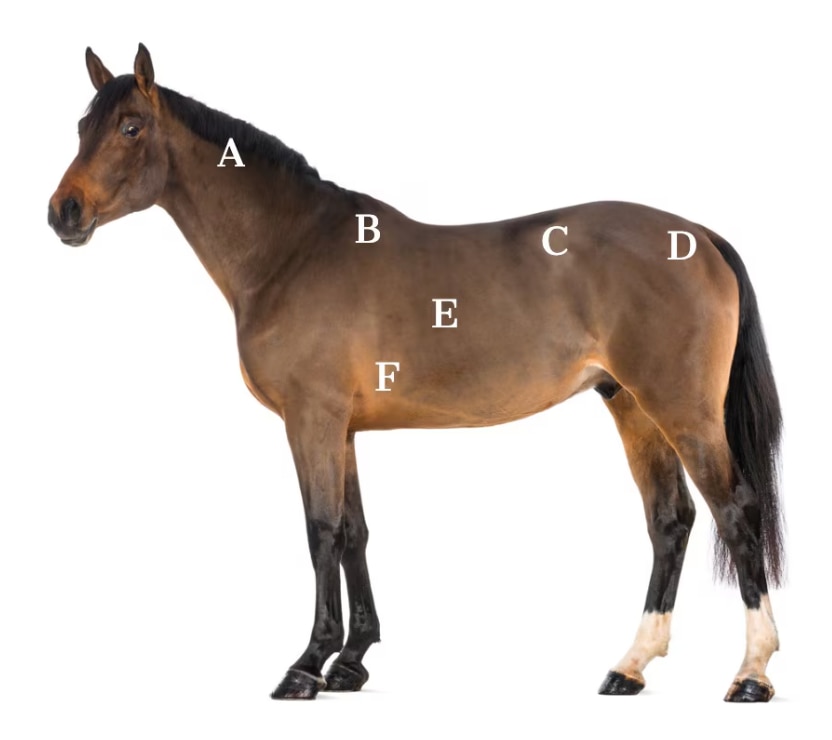
The specific areas of the horse that are assessed for fat are:
A: Neck
-
In a thin a horse, the boney structures of the neck may be visible.
-
At a BCS of 5, the neck will blend in smoothly with the body.
-
A heavier horse (BCS of 8 or 9) will have a thickened neck, and a crest will be evident where the mane attaches along the top of the neck.
B: Withers
-
In a thin horse, no fat will be deposited making the withers stick up easily.
-
As the BCS increases, fat will be deposited and the withers will appear rounded with a BCS of 5.
-
As a horse becomes a BCS of 8–9, the withers will continue to deposit fat and may appear to be bulging.
C: Spine
-
At a BCS of 5, this area will appear relatively flat.
-
When a BCS drops below 5, the spine will begin to stick up.
-
As the BCS increases above 5, a crease may form down the back and buttocks of the horse.
D: Tailhead
-
In a very thin horse, this area is prominent and easily visible.
-
As the BCS increases, fat fills in around the tailhead and will become soft.
-
As the BCS increase to above 7, the tailhead will begin to bulge.
E: Ribs
-
If ribs are easily seen, then the BCS score will be below a 5.
-
If you cannot see the ribs, then the BCS score is 5 or above.
-
During winter, the horse's winter coat may make it difficult to access the ribs, and you may need to feel the rib area to assess.
-
As the BCS score increases, fat will begin to fill in around and on top of the ribs.
-
Once the BCS score is above 7, the ribs are much more difficult or even impossible to feel.
F: Behind Shoulders
-
At a BCS of 5, the shoulders will blend smoothly with the horse's body.
-
As the BCS drops below 5, the shoulders will become more prominent and bonier.
-
As the BCS increases, fat is deposited behind the shoulders and will appear to bulge.
The Ideal Body Condition Score for a Horse
Ideally, a horse should be maintained between a 4–6 BCS.
-
Mares that are being used for breeding purposes should be maintained between 6–7 BCS.
-
Stallions should be maintained between 5–6 BCS.
-
Performance horses should be maintained between 4–5 BCS.
How To Use Horse Weight Tapes
As an alternative to body condition scoring, you may utilize a weight tape for horses.
Generally, horse weight tapes use two different measurements to take an estimate of your horse's weight:
-
Girth width (around the withers and girth)
-
Horse body length (from point of shoulders to tail)
Using a weight tape like the Horze Weight Horse Measuring Tape is a great way to estimate your horse's weight and gauge if they are losing, gaining, or maintaining weight over time.
It's important to use the same weight tape each time, read the directions for your specific weight tape, and be consistent each time you measure your horse.
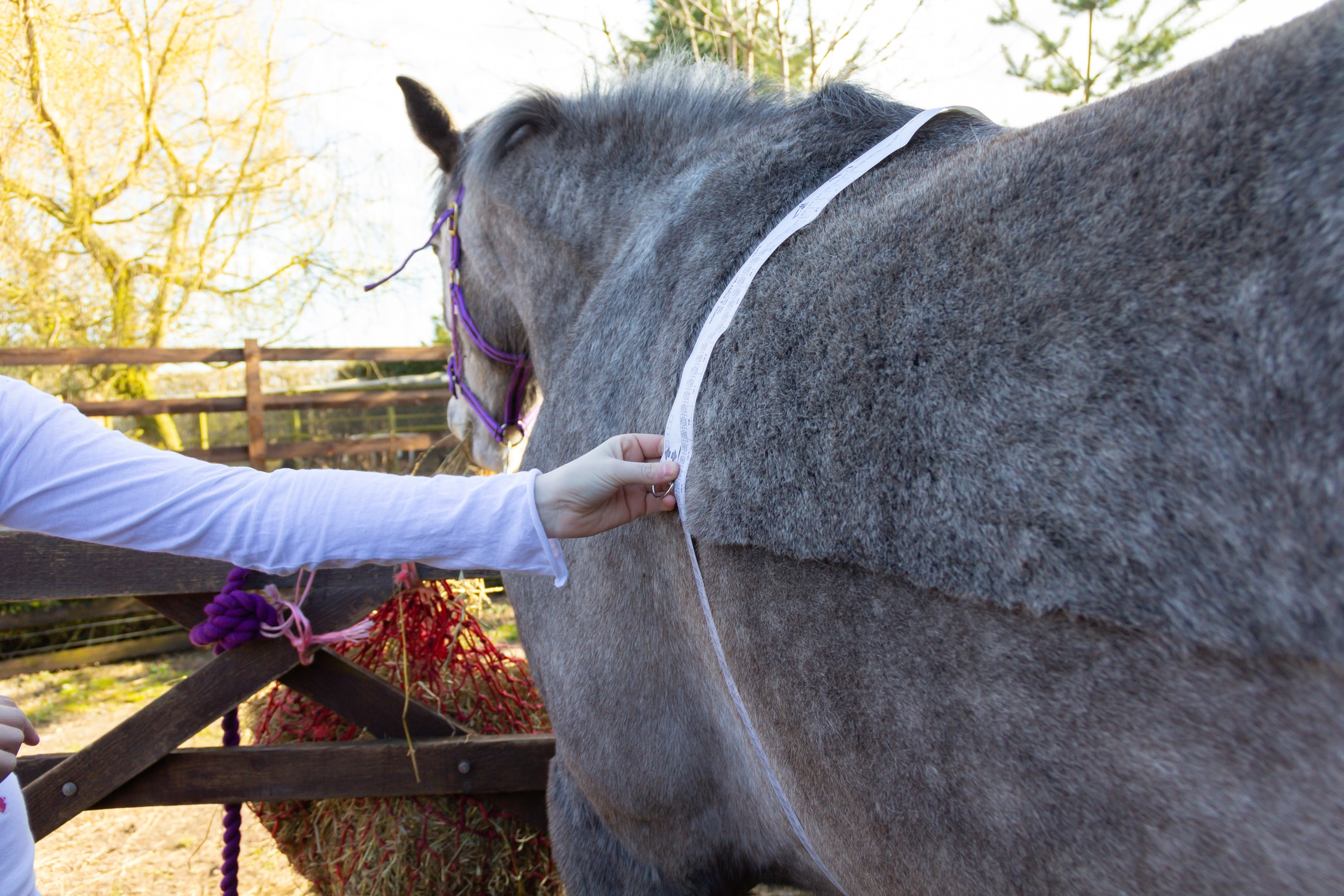
Weight tape isn’t perfectly accurate for every horse but can be a great tool for determining trends of weight loss or gain.
Whether you use the Henneke Horse Body Condition Score System or a weight tape, always discuss your horse’s weight with a veterinarian to determine the diet and lifestyle that work best for them.


