Tetra Fish Care: Complete Care Sheet for Beginners


Mirko_Rosenau/iStock / Getty Images Plus via Getty Images
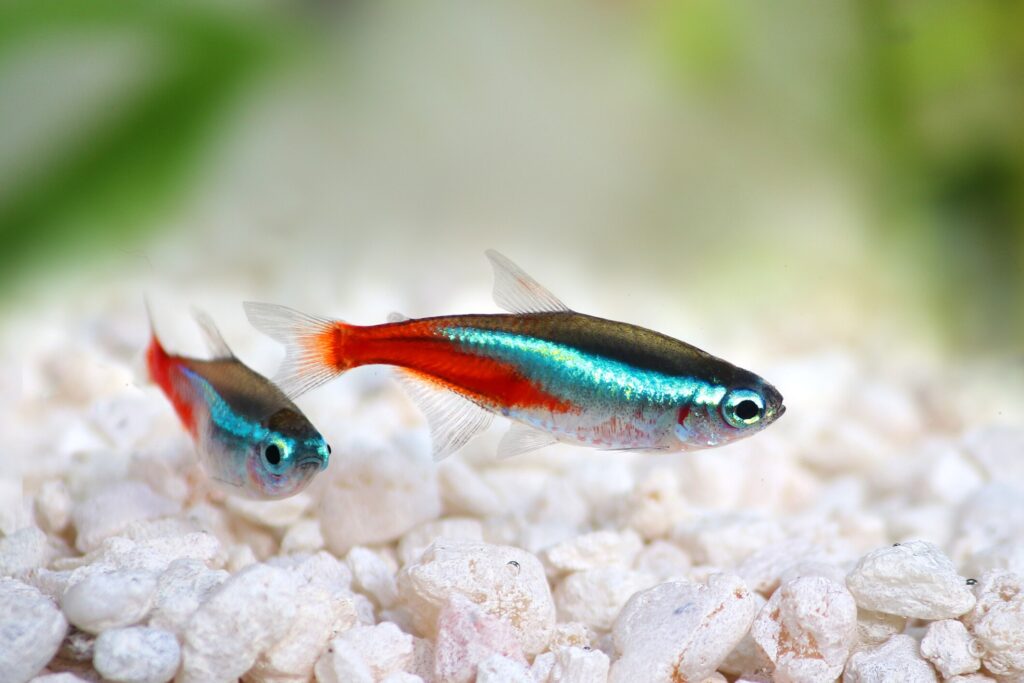
Tetras are small, colorful freshwater fish known for their peaceful temperament and active swimming behavior. They are a popular choice for aquarium hobbyists due to their bright colors, schooling behavior, and relatively easy care needs.
This care sheet outlines how to properly care for a variety of tetra species, including neon, cardinal, rummy nose, Congo, and more.
Key Takeaways
- Tetras are peaceful, schooling fish that thrive in groups and well-maintained aquariums.
- They require stable water conditions, proper tank size, and a varied diet.
- Providing a natural, low-stress environment helps tetras live longer and stay active.
Tetra Fish Species Overview
Tetras are schooling fish that prefer to live in groups and spend most of their time swimming in the middle levels of the tank. They are generally calm and do well in community aquariums.
Tetra Fish Characteristics
|
Difficulty of Care |
Beginner to intermediate, depending on species |
|
Average Life Span |
Up to 10 years, with proper care. Depends on species |
|
Average Adult Size |
1½” to 5” long, depending on the species |
|
Diet |
Omnivore |
|
Minimum Habitat Size |
10+ gallons, depending on the species |
|
Water Temperature |
72–82 F |
|
pH |
6.8–7.8, depending on species |
What You Need for Tetra Fish Care
Setting up the right environment is key to keeping tetras healthy.
Essential supplies include:
- An appropriately sized aquarium
- Quality food (both dry and frozen options)
- Water filter
- Heater and thermometer
- Water conditioner
- Water test kit
- Substrate (gravel, sand, or planted substrate)
- Aquarium lighting (full-spectrum recommended)
- Tank cover
- Decorations or plants
Tetra Fish Habitat
Choosing the Right Tank
Small species like neon tetras need at least 10 gallons, while larger species (like the Congo tetra) or groups require more space.
A good rule of thumb is 1 gallon of water per inch of fish. For example, five 2-inch-long tetras will need a 20-gallon tank or larger.
Larger tanks are more stable and help maintain better water quality.
Compatible Tank Mates
Tetras are schooling fish that thrive when kept in groups of their own species.
They should be housed in groups of at least five, ideally in odd numbers. This helps reduce stress and prevents pairing behavior.
Tetras can also live peacefully with other community fish, provided the tank is large enough and species are compatible. Suitable tank mates may include:
- Danios
- Rasboras
- Cory catfish
- Gouramis
- Guppies and mollies
- Platies
- Swordtails
- Hatchets
- Rainbowfish
- GloFish
It’s also important to avoid overcrowding. Too many fish in one tank can lead to stress, poor water quality, and increased risk of disease.
When adding new fish to your aquarium, introduce them gradually and test the water once a week for at least two months to ensure it’s within an ideal range.
Water Filtration
A filtration system is essential for maintaining clean, healthy water in a tetra aquarium.
Power filters (also called “hang-on-back” filters) and external canister filters are commonly recommended because they provide mechanical, biological, and chemical filtration without taking up space inside the tank.
When choosing a filter, make sure it is powerful enough to circulate the tank’s water effectively.
A good rule of thumb is selecting a filter that can process the entire tank volume at least four times per hour. For example, a 20-gallon tank should have a filter rated for at least 80 gallons per hour (GPH).
When in doubt, it’s better to size up rather than choose a weaker filter.
Keep in mind that tetras generally prefer slow to moderate water flow, so avoid overly strong currents.
Water Quality
Achieving and maintaining optimal water quality includes conditioning new tank water and testing the water often, making adjustments as needed.
When adding tap water to your aquarium, it must be treated with a water conditioner to remove toxic chemicals like chlorine, chloramines, and heavy metals.
Test your aquarium’s water regularly with an aquarium test kit to ensure the pH, ammonia, nitrate, and nitrite levels are stable.
Established aquariums can be tested monthly. However, perform weekly tests when adding new tank mates or equipment to the aquarium.
Keep in mind that water test kits have an expiration date and should be replaced yearly.
Some tetra species may benefit from the controlled use of freshwater aquarium salt, but it should be used with caution. Sudden changes in salinity can stress fish and disrupt their environment.
If freshwater salt is added, the tank’s specific gravity should remain around 1.004 and should not fluctuate more than ±0.001 within a 24-hour period.
Because not all tetra species tolerate salt the same way, it’s important to research your specific species or consult a veterinarian before adding salt to your aquarium.
To ensure proper levels, use a hydrometer or refractometer to measure the water’s salt concentration and maintain stability.
Temperature and Lighting
Tetras thrive in warm, stable water temperatures between 72–82 F.
Maintaining a consistent temperature is important, as fluctuations greater than ±2 F within 24 hours can stress fish and lead to health issues.
To keep the water within the ideal range, use an aquarium heater with a thermostat and monitor conditions daily with a thermometer.
When choosing a heater, consider the size of your tank.
Most aquariums require 2.5–5 watts of heating power per gallon. For example, a 10-gallon tank typically needs a 25–50-watt heater.
Larger tanks—especially those over 50 gallons—may benefit from using two smaller heaters placed on opposite sides to maintain even heat distribution and prevent cold spots.
Substrate
The bottom of a tetra’s tank should be lined with 1–2 inches of sand, gravel, or pebbles.
As a rule of thumb, use about 1½ pounds of substrate for each gallon of water in the tank. For example, a 10–gallon tank will require about 15 pounds of substrate to create a 1–2-inch layer.
Dark-colored, sandy substrates can make tetras’ bright colors pop!
Be sure to rinse the substrate with clean running water before adding it to the tank.
Plants, Driftwood, and Rocks
Tetras tend to like dark, shady habitats with lots of cover. Plants, driftwood, and rocks should all be used to create natural, safe hiding places that mimic tetras’ native homes.
Look for floating plants (like Java moss, frogbit, dwarf water lettuce, and hornwort) that can create shaded hiding places for the tetra.
Tank Maintenance
Routine maintenance keeps your aquarium stable and healthy.
- Perform 10–25% water changes every two to four weeks
- Avoid replacing all water at once
- Clean substrate and decorations regularly
- Replace filter media monthly or rinse in old tank water during water changes (follow instructions provided by the manufacturer of the filter system)
- Monitor equipment daily
Newly added water should be at the same temperature and have the same salinity (salt concentration) as the existing water in the tank
Do not use hot water, bleach, or chemicals while rinsing filter media. This will kill the beneficial bacteria that help keep aquatic habitats safe, clean, and stable.
Avoid replacing all the filtration media in an aquarium at the same time, as this can also remove beneficial bacteria from the tank.
Tetra Fish Diet and Nutrition
Tetras are omnivores and require a varied diet.
Feed them:
- High-quality flakes or pellets
- Frozen or freeze-dried foods
- Occasional treats like brine shrimp or bloodworms
Feed once or twice daily, only what they can eat within one to two minutes.
Avoid overfeeding, as uneaten food can degrade water quality.
Remember: Never use a microwave to thaw or warm frozen food, and never offer food that's still frozen to a pet.
Tetra Fish Veterinary Care
Signs of a Healthy Tetra
Healthy tetras typically show:
- Bright coloration
- Full range of motion of fin movement, equal on both sides
- Intact fins all the way to the edges with no discoloration
- Regular and active swim pattern
- Large appetite
- Schools when appropriate
When To Call a Veterinarian
Contact a vet if your tetra shows:
- Changes to the tetra’s coloration—particularly becoming dull, focal spots of change, stripes, or bands of color change
- Lethargic swimming, potentially with an abnormal pattern such as circling, listing to the side, or staying on the top or bottom of the tank.
- Receding fin edges with or without discoloration
- Decreased appetite for more than a day
- Itching
- Rapid breathing, potentially with flared gills
- Gill color changes (usually pale or red)
- Presence of lumps/bumps/masses
- White growths/spots of any kind
- Bloated appearance with scales flared outward instead of lying flat
- Bulging eyes, with or without a color change
- Consistently swimming separately from other tetras
Common Tetra Fish Illnesses
Some common conditions include:
- Ich, also known as white spot disease
- Dropsy (fluid-filled coelomic cavity)
- Parasites (including lice or leeches)
- Bacterial infections
- Fin/tail rot
- Pop eye
- Fungal infections
- Swim bladder disorders
- Cancer
Tetra Fish FAQs
How many tetras should be kept together?
Tetras should be kept in groups of at least five to six fish.
Larger groups reduce stress and improve natural behavior. Include about two to three female tetras for every one male tetra to reduce stress.
Are tetras aggressive fish?
Tetras are generally peaceful, though some may nip fins.
Aggression is more likely when there are too many males or too few fish in the group.
Are tetras hard to keep alive?
Tetras are considered beginner-friendly and relatively easy to care for.
They thrive when water quality, diet, and tank conditions are properly maintained.
How long do tetra fish usually live?
Most tetras live two to four years in captivity, though some species can live longer with proper care.
What do tetras like in their tank?
Tetras prefer planted tanks with hiding spots and open swimming space.
A natural environment helps reduce stress and encourages healthy behavior.


