Lionfish Care Sheet


sergeyskleznev/iStock / Getty Images Plus via Getty Images
Lionfish care requires proper tank setup, careful handling, and stable saltwater conditions due to these fish’s venomous spines and specialized care requirements.
Although lionfish are popular for their dramatic appearance, they are predatory marine fish that require experienced care and compatible tankmates.
This care guide covers several lionfish species commonly kept in home aquariums, including dwarf zebra lionfish, fuzzy dwarf lionfish, volitan lionfish, and radiata lionfish.
Key Takeaways
- Lionfish are venomous saltwater fish that require experienced care and careful handling.
- Tank size depends on the species, with some lionfish requiring aquariums over 100 gallons.
- Lionfish are carnivorous and may eat smaller fish or invertebrates kept in the same tank.
- Stable water quality, proper filtration, and regular maintenance are essential for lionfish health.
Lionfish Species Overview
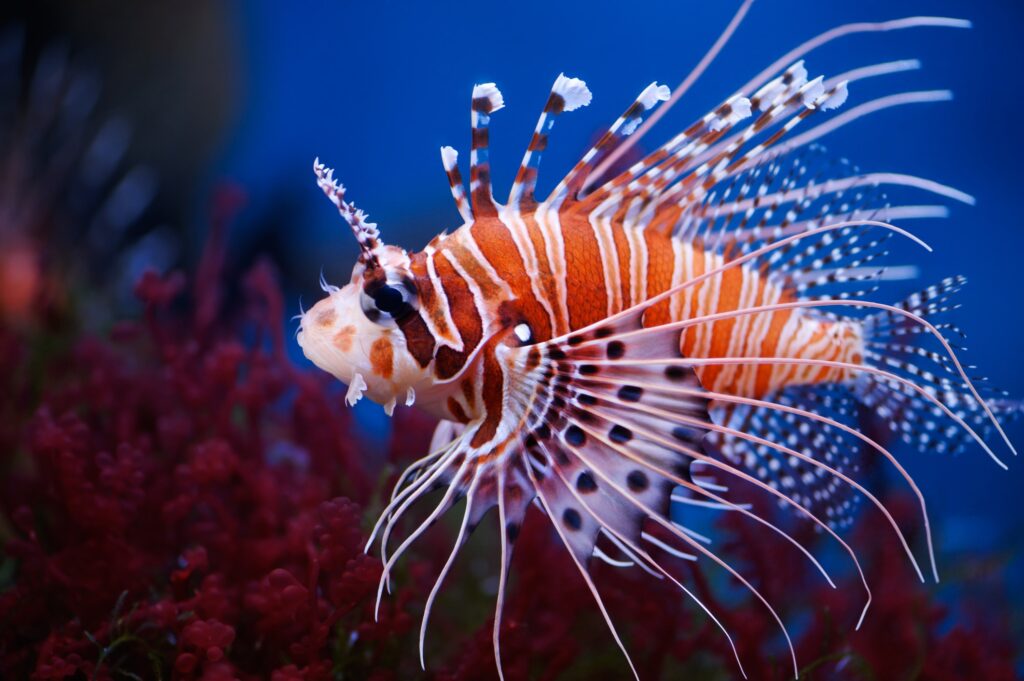
Lionfish are venomous saltwater fish known for their zebra-striped bodies, long dorsal spines, and flowing fins.
The dorsal fins on a lionfish are venomous and can cause painful stings. Although stings are rarely fatal, some people may experience allergic reactions or more severe symptoms, including swelling, numbness, or shortness of breath.
Anyone stung by a lionfish should monitor symptoms closely and seek medical attention if needed.
Lionfish are considered an invasive species in the Caribbean Sea and along the East Coast of the U.S., where their growing populations have disrupted local marine ecosystems. Because of this, lionfish are illegal to own in Florida.
Although lionfish are generally slow-moving and not highly aggressive, they may eat smaller fish and marine invertebrates that can fit into their mouths.
Lionfish Supply Checklist
Lionfish require specialized saltwater aquarium equipment to maintain water quality and habitat stability.
Here are the basic supplies needed when caring for a lionfish:
-
Appropriate-sized aquarium
-
Appropriate food, dry and frozen
-
Decor
-
Marine aquarium salt
-
Marine substrate
-
Water conditioner
-
Filter
-
Water test kit
-
Full-spectrum lighting
-
Net
-
Protein skimmer
-
Thermometer
-
Heater
-
Refractometer
-
Aquarium rocks
-
Aquarium hood/cover
Lionfish Habitat
Choosing the Right Lionfish Tank Size
Lionfish require large saltwater aquariums with enough space to accommodate their adult size and swimming behavior.
A single juvenile lionfish should be housed in a tank of at least 29 gallons. As the fish matures, larger aquariums will be needed.
Smaller species, such as dwarf lionfish, require at least a 55-gallon tank as adults. Larger species, including volitan lionfish, can grow more than 15 inches long and should be housed in aquariums of at least 120 gallons.
All lionfish aquariums should have a secure lid or canopy to help prevent escape and injury. Whenever possible, provide the largest habitat available for your lionfish.
Choosing Lionfish Tankmates
When caring for lionfish, it’s important to carefully select tankmates, as lionfish may eat smaller fish and some species can be territorial.
Lionfish are generally solitary, though some species may be housed together if the aquarium is large enough and the fish are similar in size. Lionfish are carnivorous and may eat any tankmate small enough to fit into their mouths.
Fu Manchu lionfish are highly aggressive toward each other and should only be kept one per tank.
Lionfish can live with larger saltwater fish species, including:
- Groupers
- Large marine angelfish
- Foxface (rabbitfish)
- Butterflyfish
- Tangs
Lionfish should not be housed with slow-moving or small tankmates, including:
Introduce new tankmates gradually and monitor water quality closely, as adding fish can affect ammonia, nitrate, and pH levels.
Avoid overcrowding, as it can lead to stress and disease.
Lionfish Filtration Requirements
Lionfish care requires strong filtration to maintain water quality and adequate oxygen levels in the aquarium.
Choose a filter capable of processing the aquarium’s total water volume at least four times per hour. For example, a 20-gallon tank should use a filter rated for at least 80 gallons per hour (GPH). If choosing between two filter sizes, it is generally best to select the higher-capacity option.
Lionfish prefer slow to moderate water circulation.
Power (“hang-on-back”) filters and external canister filters are commonly recommended because they provide mechanical, biological, and chemical filtration without taking up additional space inside the aquarium.
Lionfish Water Quality and Salinity
Lionfish care requires stable water quality and salinity to support long-term health.
Test aquarium water regularly to ensure pH, ammonia, nitrite, and nitrate levels remain within a safe range.
After adding new fish, invertebrates, or equipment, test water quality weekly for at least two months. If water parameters remain stable after two months, testing can usually be reduced to once per month.
Aquarium test kits can measure these parameters accurately. Replace aquarium test kits yearly, as they lose accuracy over time.
A protein skimmer can also be used to maintain the tank’s water quality as it can help remove organic waste from the tank.
Because lionfish are saltwater fish, marine salt must be added to the aquarium during setup. Gradually add marine salt until the water reaches a specific gravity of 1.020–1.025.
Specific gravity should remain stable and should not fluctuate more than +/- 0.001 within a 24-hour period. Use a hydrometer or refractometer to monitor salinity accurately.
Lionfish Water Temperature
Lionfish require stable water temperatures between 74 and 80 F to remain healthy.
Water temperature should not fluctuate more than 2 degrees within a 24-hour period. Use an aquarium heater with a thermostat to help maintain stable temperatures, and check the tank daily with an aquarium thermometer.
When choosing an aquarium heater, keep the following in mind:
- Some aquarium heaters include built-in thermostats, while others require a separate thermostat.
- Aquarium heaters should provide approximately 2.5–5 watts per gallon of water.
- A 10-gallon tank typically requires a 25- to 50-watt heater.
- Aquariums larger than 50 gallons may require two heaters placed on opposite sides of the tank to help prevent cold spots.
Lionfish Tank Decor and Accessories
Lionfish care includes providing soft substrate and secure hiding places that help reduce stress and encourage natural behaviors.
Lionfish Tank Substrate
Lionfish are not strong swimmers and may “hop” along the bottom of the aquarium.
Use 1–2 inches of soft substrate, such as aragonite sand or crushed coral, to help protect their delicate fins and undersides. Avoid rough gravel substrates that may cause injury.
Rocks and Hiding Places for Lionfish
Most lionfish species are crepuscular, meaning they are most active around dawn and dusk.
Provide rocks, caves, and crevices throughout the aquarium so lionfish have secure places to hide and rest during the day.
Lionfish Tank Cleaning and Maintenance
Lionfish care requires routine tank maintenance and partial water changes to support stable water quality.
Perform water changes of 10–25% every two to four weeks, depending on the size of the aquarium and the number of fish and invertebrates in the tank. Avoid replacing all the aquarium water at once, as this can disrupt beneficial bacteria and destabilize biological filtration.
Make sure newly added water matches the aquarium’s existing temperature and salinity. Treat all new water with a water conditioner to remove chlorine, chloramines, and heavy metals.
Uneaten food should be removed daily using a fine mesh net to help prevent excess waste buildup.
Aquariums also require regular cleaning of algae, substrate debris, and filtration equipment.
Replace filter media monthly or rinse it in old tank water during water changes, depending on tank conditions. Avoid cleaning filter media with hot water, bleach, or chemicals, as this can kill beneficial bacteria.
Monitor water levels regularly and top off the aquarium as needed. Check the filter, heater, thermometer, and other equipment daily to ensure proper operation.
Lionfish Diet and Nutrition
Lionfish are carnivorous fish that require a varied diet of meaty foods to maintain proper nutrition and long-term health.
Lionfish should be fed a mix of frozen foods such as silversides, krill, squid, and freeze-dried krill. Feeding a variety of foods helps provide balanced nutrition and prevents dietary deficiencies.
If a lionfish is reluctant to eat prepared foods, begin by offering live foods and gradually transition to frozen or freeze-dried options.
Lionfish are typically fed one to two times daily, depending on their size and species. Only offer as much food as they can consume within one to two minutes.
Frozen foods should always be thawed before feeding. Never microwave frozen fish food or feed it while still frozen.
Any unused thawed food should be discarded and not refrozen, as refreezing may encourage bacterial growth.
Lionfish Veterinary Care
Lionfish care includes monitoring health closely and consulting an aquatic veterinarian when signs of illness appear.
Annual and Preventive Care
In a properly maintained tank with regular water testing and water changes, veterinary care is usually only needed if a problem develops.
Because lionfish are large and venomous, evaluations should ideally be performed by a mobile aquatic veterinarian near the aquarium.
Handling lionfish can be dangerous and should only be done by trained professionals.
Signs of a Healthy Lionfish
- Bright coloration
- Full and symmetrical fin movement
- Intact fins and spines with no discoloration
- Regular upright swimming pattern
- Strong appetite
When To Call a Vet for Your Lionfish
Contact a veterinarian if you notice any of the following signs:
- Changes in coloration or dull appearance
- White spots or growths
- Gill color changes
- Lethargic or abnormal swimming patterns
- Receding fin edges with or without discoloration
- Decreased appetite lasting more than one day
- Itching or rubbing behavior
- Rapid breathing or flared gills
- Lumps, bumps, or masses
- Bloated appearance with raised scales
- Bulging eyes with or without discoloration
Common Lionfish Health Problems
Most lionfish illnesses are related to poor water quality.
Common conditions include:
- Fin rot
- Saltwater ich
- Parasites
- Bacterial infections
- Pop eye
- Fungal infections
- Swim bladder disorders
Lionfish Care FAQs
Can you have a lionfish as a pet?
Yes, lionfish can be kept as pets by experienced aquarists, though they are illegal to own in Florida.
Because lionfish are venomous and require specialized care, they are best suited for experienced fish keepers.
What size tank do I need for a lionfish?
Tank size depends on the lionfish species, with smaller species requiring at least 55 gallons and larger species needing over 100 gallons.
Some lionfish grow between 5 and 15 inches long, so tank requirements vary significantly by species.
Can you keep two lionfish together?
Yes, some lionfish species can be housed together if the tank is large enough.
Keeping different lionfish species together is often more successful than housing multiple fish from the same species.
Why is it illegal to own lionfish?
Lionfish are illegal to own in Florida because they are an invasive species that disrupt marine ecosystems.
Originally native to the Pacific and Indian Oceans, lionfish populations have spread rapidly in the Caribbean due to a lack of natural predators.
What is the lifespan of a lionfish?
Lionfish can live up to about 10–15 years, though this varies by species.


