How Do Dogs Make Friends?


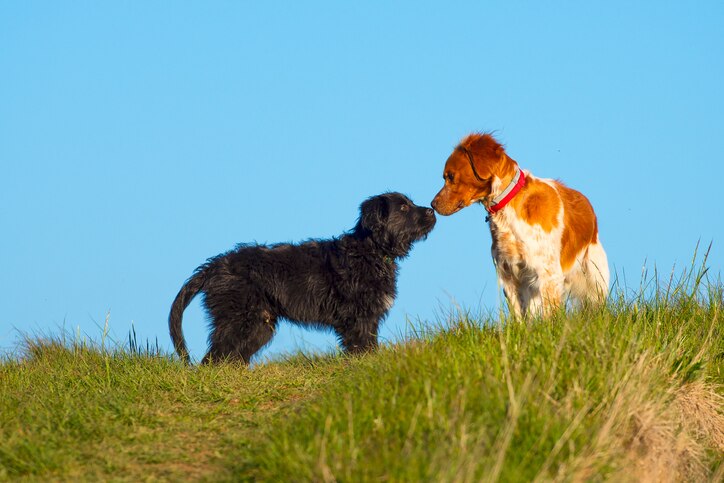
michelangeloop/iStock/Getty Images Plus via Getty Images
If you’ve ever seen your dog run to greet another dog in the park, you might have wondered: Does my dog have friends—and how do dogs make friends in the first place?
As it turns out, dogs are very social creatures, and having friends can be a big part of their life. So the next time they rush to see a familiar face, like that Golden Retriever you always pass on your morning walk, they might just be greeting their best friend.
Key Takeaways
- Dogs can form real friendships, often preferring specific dogs and showing the same friendly behaviors toward them.
- Signs of dog friendship include play, licking, nudging, and choosing to spend time together.
- Dogs bond differently than humans but still seek closeness, play, and companionship.
- Positive socialization, personality, and past experiences all influence how dogs make friends.
- Not all dogs want friends, and some can be perfectly happy with human companionship.
Do Dogs Have Friends?
Yes, dogs can genuinely form friendships with other dogs, says Meghan Herron, DVM, DACVB, the senior director of behavior, research, and education at Gigi's, a shelter in Canal Winchester, Ohio.
It’ll be clear your pup has made a pal when they prefer a “specific, familiar dog” over others—and that preference is mutual, says Dr. Herron.
A study on dog social behavior found that dogs could be considered friends when they repeatedly showed friendly behavior toward each other, such as:
-
Nose nudges
-
Coat licks
-
Nibbling
-
Play-fighting
Do Dogs Experience Friendship Like Humans Do?
No, dogs don’t experience friendship exactly like humans do, but Dr. Herron says there are similarities, such as:
-
Showing interest in our friends
-
Seeking physical closeness
-
Experiencing grief after losing a companion
And like people, dogs approach friendship in different ways, says Wailani Sung, DVM, DACVB, a board-certified veterinary behaviorist at Joybound People & Pets in Walnut Creek, California. Some dogs are naturally social and have lots of friends, while others are pickier about who they let into their clique.
Dogs who form close bonds may share favorite toys, beds, or food, and they may become protective of each other too. While humans might bond over long conversations, dogs bond by playing, chasing, wrestling, and cuddling.
How Do Dogs Recognize Their Dog Friends?
It depends on the dog. Some dogs might be able to recognize their friend just by seeing them walking down the street or across a field, while others “may need a combination of sight and scent to discern that it’s truly their friend," says Dr. Sung.
So how do you know if your dog is approaching another dog they probably consider a friend? Dr. Sung says to look for a mix of playful greetings, relaxed body language, and excitement. This includes:
-
Loose ears (not held tightly back)
-
Full body relaxation
-
Jumping or leaning on each other
-
Play bows
In some instances, your dog may recognize another dog but not like them enough to be friends. Dr. Sung says that dogs who feel neutral about another dog will often just “sniff and walk away”—the canine equivalent of a polite nod.
How Do Dogs Make Friends?
Like most meaningful relationships, dog friendships are built over time. For dogs meeting for the first time, friendship often starts with a series of polite behaviors, such as:
-
Mutual sniffing along each other's sides and rear to gather information
-
Respectful body language (no direct staring or leaning over the other dog)
-
A play bow—if the other dog bows back, play-fighting or chasing often follows
Over time, repeated positive interactions help dogs build familiarity and trust. Dogs who see each other regularly are more likely to bond and remember each other's appearance and scent.
Friendship might look a little different for every dog, depending on a few factors like:
-
Personality: More confident dogs might be more outgoing and social.
-
Previous experience: Good encounters with other pups bode well for future friendships.
-
Socialization history: Dogs who have positive interactions with lots of dogs before 12 weeks of age tend to be better at reading social cues.
Dr. Herron adds that well-socialized dogs can tell when another dog is open to friendship and when one isn't, and they're quicker to back off when a dog signals disinterest.
As friendships develop, dogs may begin to show more affiliative behaviors like licking, rubbing, snuggling, and choosing to spend time together.
How To Help Your Dog Make Friends
While some dogs naturally form friendships, you can help set your dog up for positive social experiences—if they’re comfortable with it, of course.
How's how to help your dog make friends safely and comfortably:
-
Choose the right environment. Start in calm, controlled settings—like walks or small playgroups—rather than crowded dog parks.
-
Use shared activities. Tug ropes, discs, and backyard obstacle courses give dogs a fun game to do together. Swimming, scent walks, and any other shared activities are also prime dog-bonding opportunities.
-
Be consistent. Regular exposure to the same dogs builds familiarity and trust.
-
Watch body language. Look for loose, relaxed movement; give space if either dog seems uncomfortable.
-
Let your dog set the pace. Positive, voluntary interactions—not forced introductions—lead to better friendships.
Why Dog Friendships Are Healthy
Friendships aren’t just all fun and games—they can genuinely improve your dog’s quality of life.
According to Dr. Sung, the benefits of canine companionship include:
-
Confidence boost: Dogs with a buddy may be more willing to check out new places or warm up to new people.
-
Less anxiety: A familiar face can help anxious dogs feel safer and more secure.
-
More energy: Dogs with friends tend to be more active and playful.
-
Better sleep: Dogs may sleep more soundly when a friend is nearby.
Dr. Herron adds that canine friendship can also help dogs develop stronger social skills over time. Dogs who regularly interact with a trusted pal get ongoing practice reading body language and responding to social cues, so they’re better prepared when meeting new dogs.
When Dog Friends May Not Be a Good Fit
Not every dog wants or needs friends, and pushing your dog to choose a bestie can do more harm than good.
There are several reasons dogs may not be ready for friendship, including:
-
They’re fearful or reactive. These dogs might bark, lunge, or cower when another dog approaches. Talk to your veterinarian or a behaviorist to see if it’s best to avoid other pups.
-
They have a history of being attacked or traumatized. If your dog already had a bad experience, even the friendliest approach can often make them feel threatened.
-
They freeze, shut down, or hide during introductions. These dogs are likely overwhelmed, so give them some time and space away from canine companions.
-
Your dog has experienced aggression. If a dog growls, snaps, or snarls when another dog is being friendly, it’s best to avoid interactions.
Above all, don’t force your dog to make friends. If your dog seems stressed or disinterested, remove them from the situation. Some dogs will always prefer humans to dogs, and that’s perfectly OK.
Dog Friendships FAQs
Do dogs make friends easily?
It depends on the dog. Well-socialized dogs with positive early experiences tend to make friends more easily. Dogs who miss the critical socialization period (3–12 weeks old) or have negative social experiences may find it harder to make friends or may prefer not to.
Do dogs have best friends?
Yes. Dogs may repeatedly choose to spend time with specific dogs, which is what humans might call a best friend. You might notice your dog getting especially excited to see one particular dog while showing less interest in others.
Do dogs miss their dog friends?
Can a single dog be happy?
Yes, but it depends on the dog. Shy or fearful dogs might find a canine companion stressful, while others will be happier with someone to pal around with.
Can older dogs still make friends?
Yes, it’s possible for senior dogs to make friends. Senior dogs who’ve been well-socialized their whole life are the most likely to establish friendships. Shy or fearful senior dogs might prefer human companions, or even a cat.


