How To Get Rid of Fleas and Ticks on Puppies


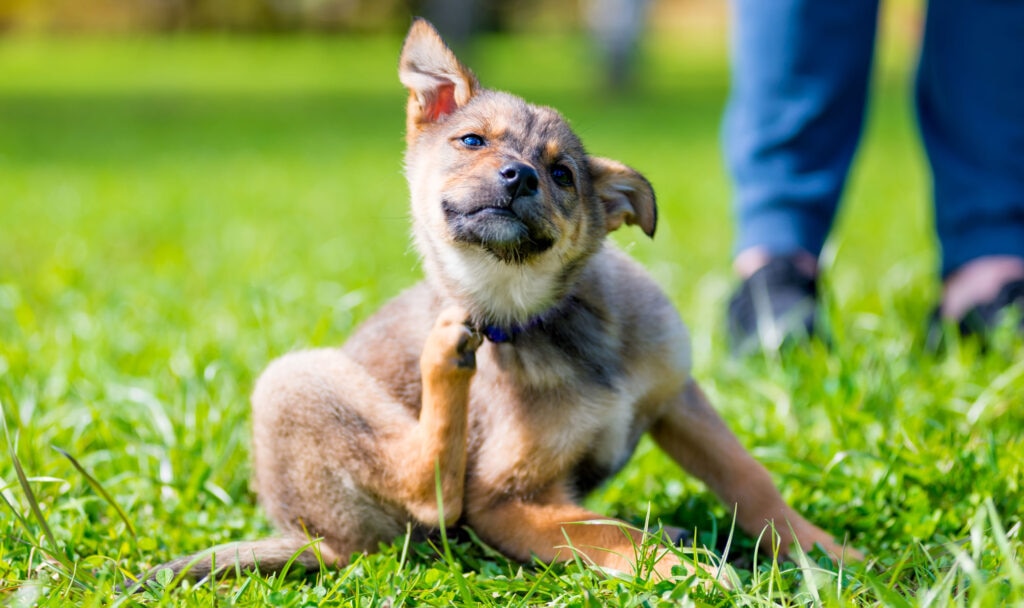
kosmos111/iStock/Getty Images Plus via Getty Images
Bringing home a new puppy is a whirlwind of endless cuddles, photo shoots, and training milestones. Fleas and ticks may not be top of mind, but protecting your puppy from these parasites is an important part of keeping them healthy. Not only can fleas and ticks cause discomfort, but they also can carry diseases.
If you’ve found fleas or ticks on your puppy, don’t panic. Getting rid of fleas and ticks on puppies involves a series of steps to eradicate the issue both on your pet and in their environment.
Key Takeaways
- Common signs your puppy has fleas are an intense, frantic, and often sudden itch along with flea dirt (flea feces) in the fur.
- A common sign your puppy has ticks is seeing a dark, firm lump on the skin that can cause irritation and mild itch.
- Getting rid of fleas and ticks on puppies is a step-by-step process that must be followed carefully to ensure eradication of the infestation.
- It’s crucial to treat all pets in the home, including your puppy, the home itself, and your yard all at the same time to prevent reinfestation.
- Flea and tick medications used as prevention routinely are an easier and cheaper way to prevent the issue before an infestation occurs.
Signs Your Puppy Has Fleas and/or Ticks
Signs your puppy has fleas:
-
Sudden, frantic biting or scratching the skin—commonly around the hindquarters, groin, and base of the tail
-
Restlessness
-
Agitation or even aggression
-
Flea “dirt” (flea feces), which appears as tiny black specks on your pup’s body or their environment
-
Red bumps, pimples, or scabs from the flea bites or secondary to the itch
-
“Grains of rice” around the anus or on bedding are segments from tapeworms since puppies can get tapeworms from ingesting fleas while grooming themselves
-
Fleas noticed in the fur (they look like tiny, reddish brown, wingless insects about 1 to 3 mm long—about the size of a sesame seed)
Signs of a secondary illness from fleas:
-
Pale gums
-
Lethargy
-
Labored or rapid breathing
-
Patches of hair loss
-
Weight loss
Signs your puppy has ticks:
-
Small, unexplained bumps — often dark and firm that are attached to the skin
-
Ticks, which are tiny, flat parasites, attached to the skin or in the fur that become enlarged over time (engorged/swollen with blood)
-
“Target” bite mark, which occurs if the tick has already bitten and fallen off, leaving behind a small, red, raised bump with a tiny scab around it
-
Persistent but more mild itching
Signs of secondary illness from ticks:
-
Fever
-
Joint pain or limping
-
Abnormal bruising
-
Weakness in back legs
-
Swollen lymph nodes
How To Get Rid of Fleas and Ticks on Puppies
Getting rid of fleas and ticks is a step-by-step process to ensure these parasites are not only gone on your puppy, but also the other animals in the home and the puppy’s environment.
Step 1: Gather your supplies.
Before you start, make sure you have everything you need to get rid of fleas and ticks on puppies. These supplies include:
-
A tick removal tool
-
Puppy-safe shampoo
-
Flea and tick prevention medication
-
Household cleansers
-
Yard treatments, such as insecticides
Make sure you not only have the supplies for your puppy but also any other pets in the house, as everyone needs to be treated at the same time.
Step 2: Physically remove fleas and ticks from your puppy.
To provide your puppy with immediate relief, you’ll start by safely removing any fleas and/or ticks from their body.
How To Remove Ticks From Puppies:
Using a special tick removal tool, like the TickCheck Remover Spoon, or flat-tip tweezers, like these from Tweezerman:
-
Grasp the tick as close to the skin as possible. (It’s important to remove all parts of the tick, including the tiny mouthparts embedded in the skin.)
-
Pull straight up with even pressure.
-
Drop the tick into a jar of alcohol to kill it. (You can also save the tick this way to show your vet for identification purposes later.)
-
You can use a fine-tooth comb or brush to look for more ticks.
Pro Tip: Don’t forget to check places like inside the ears, in the armpits, the groin, and around the genitals, as ticks prefer dark, moist environments.
How To Remove Fleas From Puppies:
If your puppy has fleas, a bath followed by a flea comb can help remove fleas and flea dirt from their coat.
-
Choose the right shampoo. Ask your veterinarian which shampoo is safest for your puppy based on their age, weight, and skin health. They may recommend a puppy-safe flea shampoo or a medicated shampoo to help soothe itching.
-
Bathe your puppy. Work the shampoo into a gentle lather, following the product directions carefully.
-
Use a flea comb. After the bath and once their fur is fully dry, comb through your puppy’s coat with a flea comb, fine-toothed comb, or, for long-haired dogs, a pin brush to remove any remaining fleas or flea dirt.
-
Dip the comb after each pass. Swish the comb in a bowl of hot, soapy water to remove and kill the fleas you collect.
It’s important to remember that bathing should take place 24 hours before or after you apply any topical medication so as to not interfere with its efficacy. (More on puppy flea and tick medications below.)
Step 3: Use a vet-recommended flea and tick medication.
The next step is not only killing any remaining fleas, flea eggs, or ticks, but also preventing them from returning. You need to treat all pets in the home at the same time with species-specific medication. While you are treating your puppy with their medication, they should be quarantined in a small room or in their crate while you clean the environment.
Flea and tick medication for puppies comes in either an oral form (chew or chewable tablet) or a topical applied to the skin. It’s important to check the product you are using to ensure it is safe for your puppy’s age and weight, as some medications for adult dogs are harmful to puppies.
Simparica Trio is an oral flea and tick medication that can be used for puppies as young as 8 weeks old and weighing at least 2.8 pounds. The monthly chewable tablet protects against not only fleas and ticks but also certain intestinal parasites and heartworm disease.
Step 4: Clean your puppy’s environment.
If your puppy has fleas or ticks, it’s safe to assume these pesky parasites are also hiding in your home and yard. Cleaning your puppy’s environment is one of the most important steps in preventing reinfestation.
This indoor and outdoor environmental cleanup should be done while your puppy and any other pets are quarantined in the bathroom or crate. If you skip this step, your pets will likely be reinfested within days.
Wash Fabrics and Bedding
Gather up all bedding from both you and your puppy, toys, blankets, rugs, or any other fabrics they have come in contact with. (Don’t forget that pile of clean clothes your puppy lays on in your closet!) Wash all of these cloth items in the washing machine with hot water and dry in high heat to kill all life stages of the fleas and ticks.
Vacuum Thoroughly
Aggressively vacuum all floors, including hard surfaces, as fleas and ticks can hide in the grout or seams. Remember to empty the vacuum bag right away and do so outside to keep parasites from getting right back into your home.
Treat Your Yard
Make sure to use a good insecticide in your yard, such as Advantage Yard & Premise Spray, that can kill both fleas and ticks.
With bad infestations, consider using a professional exterminator to assist with eradication of fleas and ticks in and around your home.
Step 5: Quarantine ends
Once all pets in the home have been successfully treated for fleas and ticks and both your home and yard have been treated, the pets can return to their normal schedule and not have to worry about reinfestation.
Why Are Fleas and Ticks Dangerous for Puppies?
Fleas can do more than cause itching. They can cause:
-
Anemia: Fleas feed on blood from their host, which in heavy infestations can result in significant blood loss in puppies.
-
Flea allergic dermatitis (FAD): This is a very itchy skin condition in puppies that have a hypersensitivity to flea saliva. It can take just one or two fleas in a puppy with FAD to scratch themselves raw and create serious wounds.
-
Tapeworms: Puppies can get these intestinal worms from ingesting fleas while grooming themselves. Tapeworms cause weight loss, poor digestion, and poor growth in puppies.
-
Bacterial infections: Fleas can transmit bacterial infections to puppies, such as Bartonella and rickettsial disease, along with the plague (Yersinia pestis).
Risks Associated With Ticks
Ticks carry very serious diseases that they can transmit to puppies through their bites.
Tick-borne diseases often cause painful joints and limping, along with other symptoms. Also, bites from certain ticks, like the American dog tick, can cause puppies to have “tick paralysis.” If the tick is not found and removed, this paralysis will affect the muscles that are responsible for breathing and cause death.
How To Prevent Fleas and Ticks on Puppies
Preventing fleas and ticks on puppies is much easier (and less expensive) than having to eradicate an infestation.
-
Start flea and tick prevention early: Puppies typically begin flea and tick protection at 8 weeks of age, though weight and overall health also play a role.
-
Stay consistent: Puppies should be kept on flea and tick prevention year-round, not just in the warm months. In the cooler months, these parasites retreat into our homes for warmth and can still infest your puppy.
-
Ensure all pets in the household are protected: Use species-specific flea and tick preventives for all household pets including dogs, cats, and small mammals like rabbits.
-
Protect your home and yard: These parasites thrive in grass and other yard waste like textiles. Keep the lawn mowed short, remove leaf and debris piles, and create a barrier around your yard to any surrounding brush with either a gravel border or by trimming back vegetation. Walking your puppy on a leash at all times helps prevent them from getting into a potentially infested area outside the home.
Fleas and Ticks on Puppies FAQ
What kills fleas and ticks on puppies instantly?
The fastest way to kill fleas and ticks on puppies is manually removing the parasites and using a flea and tick medication right away. Oral medication like Capstar kills adult fleas within 30 minutes, and Simparica Trio kills fleas in as soon as four hours and certain ticks in eight hours. A bath with a flea shampoo can also give instant relief. Talk to your vet about the best choice for your puppy.
When should I start flea and tick treatment for my puppy?
Flea and tick treatments can be started with puppies as young as 8 weeks old. It’s important to look at the specific product you are choosing not only to make sure that your puppy is old enough for the medication, but that they also meet the weight requirements. Again, talk to your vet about the best choice for your puppy.
How do you remove ticks and fleas from puppies?
Fleas and ticks can be removed from puppy fur by bathing and brushing them with a fine-tooth comb. Using a special tick tool or flat tweezers is the best way to remove ticks that are embedded in the skin.
Can you give a 12-week-old puppy flea and tick medicine?
Yes, a 12-week-old puppy can have flea and tick medicine as long as the specific product label indicates it is safe for their age and weight. All flea and tick medications are dosed by age and weight, so speaking to your vet will help you choose the best product for your puppy.


