Dog Spay Surgery


SeventyFour/iStock / Getty Images Plus via Getty Images
Spaying a dog can help keep them safe from more than just an unwanted pregnancy.
In addition to preventing overpopulation, spaying your dog can reduce their risk of breast cancer and a life-threatening condition called pyometra.
A dog spay may have more benefits than some pet parents realize.
Key Takeaways
- Spaying helps prevent pregnancy, mammary cancer, and pyometra, and can increase life expectancy.
- Surgery is common and generally safe, but complications like bleeding or infection can occur.
- Recovery takes about 14 days and requires restricted activity, medication, and incision care.
What Is Dog Spay Surgery?
Dog spay surgery is one of the most common veterinary surgeries performed.
Also known as ovariohysterectomy, spaying a dog involves the surgical removal of the female reproductive organs (ovaries, uterine tubes, and uterus).
These organs provide hormones related to the heat cycle and behavior.
Alternatively, some veterinarians only remove the ovaries (ovariectomy), but the results and goals of the surgery remain the same.
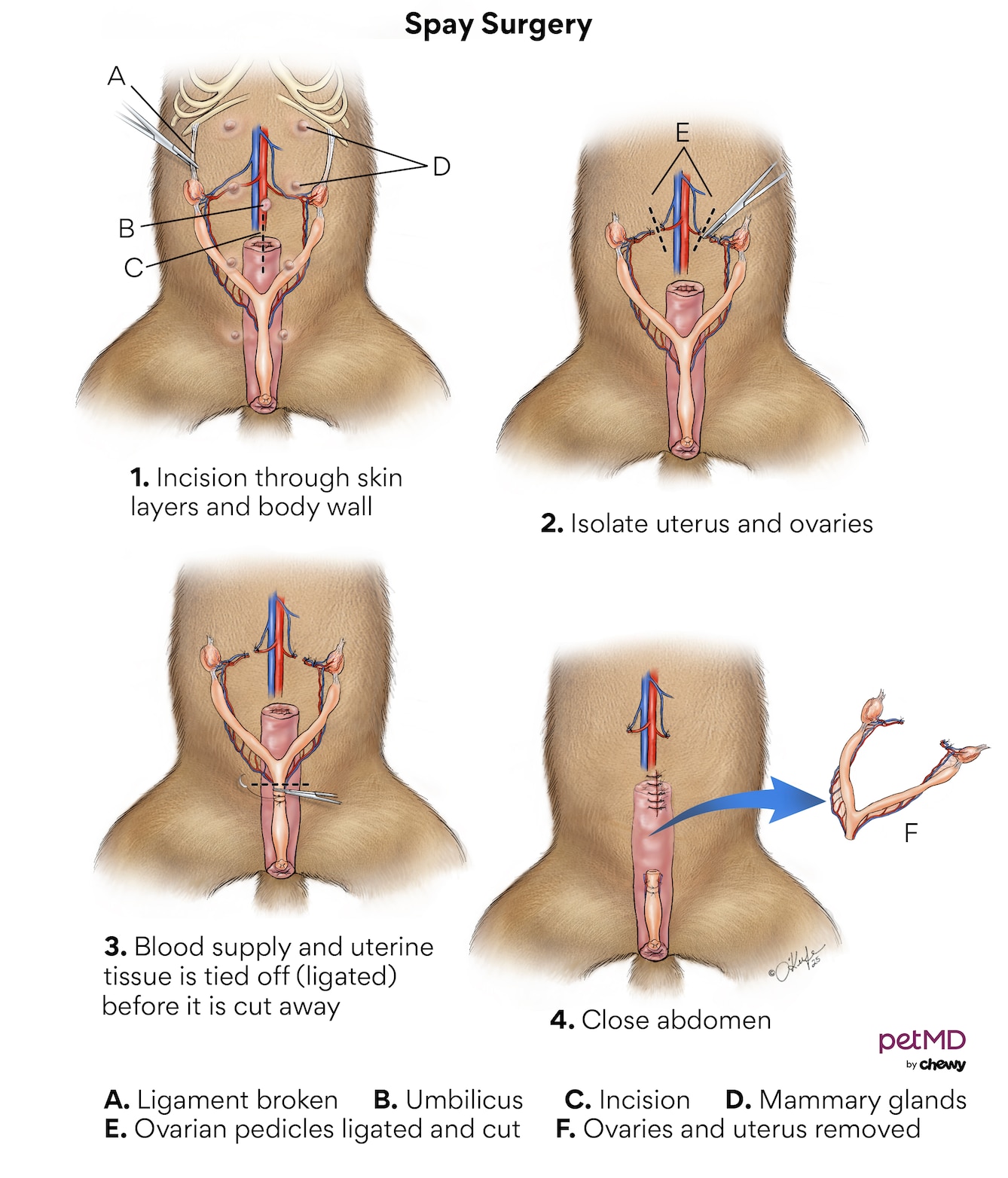
To download this medical illustration, click here.
Even though it's a common surgery, spaying has surgical and anesthetic risks, and a certain level of care is needed in the recovery period, which typically lasts 14 days.
For PetMD's complete guide to dog spay surgery and recovery, click here. For the Spanish version, click here.
When To Spay a Dog
The best time to get your dog spayed varies depending on their breed and risk factors for certain diseases.
Most healthy small breed dogs with no pertinent family medical history can be spayed when they are 6 months old. While shelters will often spay them earlier than this, it’s ideal to let their urogenital tract finish developing before removing their reproductive organs.
For most humane societies and shelters, space and overpopulation are primary concerns, so dogs are often fixed earlier than 6 months.
The goal for most non-breeding females is to get them spayed before their first heat cycle. If a dog is spayed before they have a heat cycle, we can reduce their risk of mammary cancer (breast cancer) by 95%. This drops to 92% after they’ve had one heat cycle and 74% after two heat cycles.
Dogs that are not bred and are intact (not spayed) have a much higher risk of breast cancer with 1 in 4 dogs getting a mammary tumor at some point in their life.
50% of mammary tumors are benign and 50% are malignant (cancerous), which makes spaying dogs very important. Interestingly, breeding female dogs do not experience this same high rate of mammary cancer. If you don’t plan to breed your dog, it’s strongly recommended that you get them spayed.
Large breed dogs, or dogs with an increased risk of hip dysplasia, certain cancers, or with very hooded vulvas, may benefit from waiting a little longer before moving forward with a spay.
It’s sometimes recommended that you wait until after they’ve had one heat cycle before getting them spayed.
Dog Spay Surgery Procedure
The day before surgery, you will be asked to pick up your dog’s food and water bowl after dinner. No food or water after midnight is recommended to avoid their risk of vomiting during anesthesia (aspiration pneumonia). They will ask you to arrive at the hospital early in the morning. A dog may be allowed water until the morning of surgery.
After the paperwork is filled out, your dog will be hospitalized, have her blood drawn, and have an IV catheter placed.
The veterinarian will perform a thorough exam, review your dog’s records and blood work, and create an anesthetic plan that’s a good fit for her.
The vet will then proceed with pain medication and sedatives to help with general anesthesia, which is used to keep your dog unconscious and pain-free during the surgery.
An endotracheal tube will be placed so that her breathing can be watched, and she will be shaved and sterilely prepped. Don’t be alarmed if she has a lot of hair removed!
A female dog’s reproductive system has an external opening, the vulva, which is connected to the vagina that in turn connects to the uterus via the cervix.
The ovaries are connected to the uterus via the uterine tubes (fallopian tubes).
Ovaries produce female hormones such as estrogen and progesterone, as well as release the eggs that travel through the uterine tubes to reach the uterus, where fertilized eggs grow into pups.
The mammary glands are also part of the female reproductive system. There are typically five pairs on the abdomen running from below the armpits to the groin. They make milk for the newly born pups.
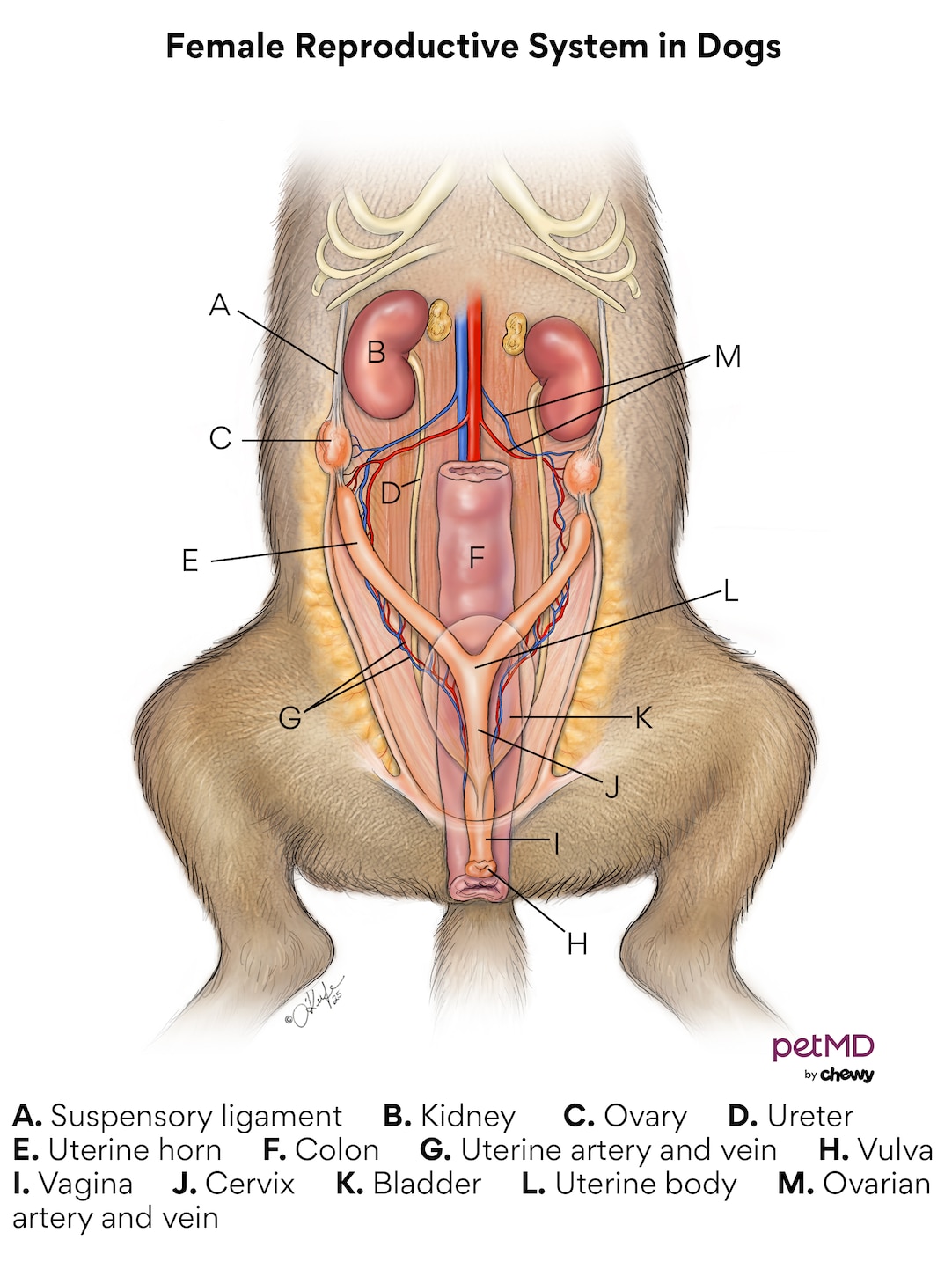
To download this medical illustration, click here.
During dog spay surgery, only the ovaries, uterine tube, and uterus are removed.
A cut (incision) is first made in the middle of the abdominal skin in between the mammary glands and then extended past the subcutaneous (fat) layer and through the abdomen.
The ovaries and uterus are found, ligated (tied off), and removed, and then the abdomen is closed in reverse order.
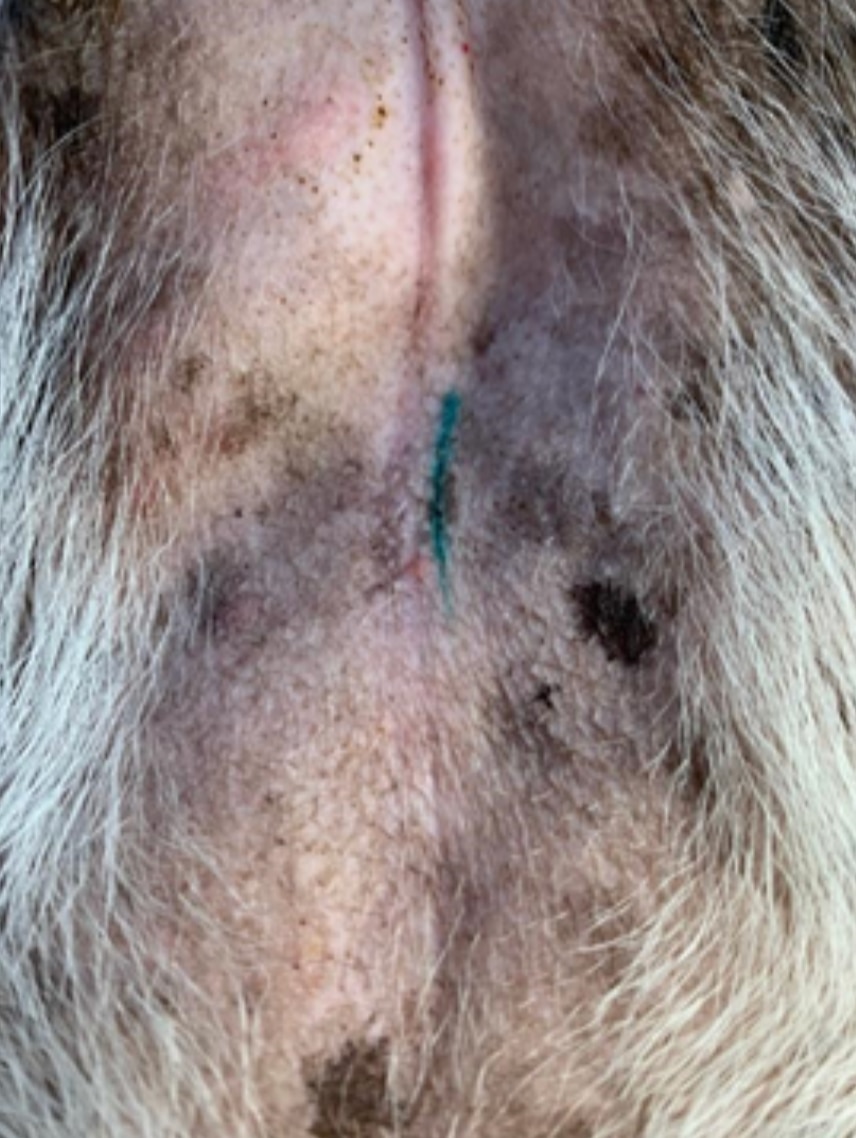
Some veterinarians tattoo all neutered or spayed pets, so your furry companion may have this done during her spay.
Benefits of Spaying a Dog
Dog spay surgery is a cost-effective procedure, as the costs of spaying a dog are far less than the cost of treatment needed for a uterine problem like pyometra (which would typically include an emergency ovariohysterectomy) or costs of having and caring for a litter.
However, there are other benefits of spaying your dog, such as:
-
No longer contributing to pet overpopulation problem
-
Alleviating the risk of unwanted or uncared-for pets by stopping the heat cycle and preventing pregnancy
-
Preventing disease, like mammary cancer
-
Decreasing roaming behavior
-
Increasing life expectancy
The benefits of having your dog spayed outweigh the risks, and the procedure itself is highly effective when done without complication.
Ovarian remnant syndrome is a rare condition that can happen when ovarian tissue that is unknowingly left behind regrows and starts producing hormones.
This often needs additional testing to confirm through ultrasound or blood work, and a secondary surgery must be done to remove it.
Risks and Complications of Dog Spay Surgery
Dog spay surgery is a major surgical procedure, but as one of the most performed veterinary procedures, it carries a low risk and death rate. It’s been estimated that about 20% of dogs can experience some form of complication, with the most common being hemorrhage (bleeding).
Fortunately, bleeding problems are usually cleared up during the procedure without any long-term complications.
While uncommon, some other complications and side effects of dog spay surgery include:
-
Infection and wound dehiscence (breaking of the stitches and opening of the cut)
-
Seroma (fluid-filled swelling at the incision site)
-
Complications from foreign objects left inside the body (gossypiboma)
-
Ovarian remnant syndrome and/or stump pyometra
-
Uterovaginal fistula and related incontinence
-
Accidental tying off/closure of ureter (tube that carries urine)
-
Anesthetic-related complications
-
Death
Cost of Dog Spay Surgery
The cost of dog spay surgery varies.
Some counties and organizations, such as the Humane Society, offer free vouchers or discounted fees for spaying a dog.
Veterinary practices may charge anywhere from $250 to $600 or more depending on the size and age of the dog. Some practices may have additional fees if your dog is overweight or in heat at the time of spay because of the increased risks and time spent performing the procedure.
If your dog is overweight, your vet may recommend they lose weight before surgery to reduce the chance of complications.
Dog Spay Recovery
Just as you would follow the pre-operative instructions from your vet, be sure to follow the post-operative, or after-care, instructions for dog spay surgery.
These instructions usually include a two-week confinement period of limited exercise, with no jumping, running, or rough play with others.
If your dog is active, these behaviors can lead to opening of the incision, bleeding, infection, and bruising, resulting in your dog needing more treatment.
A suitable resting place may include a crate she is already used to (such as the Frisco Heavy Duty Fold & Carry Single Door Collapsible Wire Dog Crate) padded with a cozy dog bed, or a small room closed off with a dog gate.
Additionally, make sure she is not bathed during this time and that her incision site doesn’t become wet.
Some hospitals will keep your dog under observation for the evening, but some will discharge them the same day.
It’s recommended that you do not leave your dog unattended for at least the first 24 hours after surgery.
Her first night home is typically spent resting, and she will probably be groggy from the anesthesia.
She may be nauseated after surgery, so offering a small amount of water at first when she gets home is best. Offer about 1/4 to 1/2 of the normal amount of dog food the first evening.
Keep your dog’s diet the same during this time of stress—don’t change it or add supplements, and avoid human food. Except for the amount the first day, her diet should remain normal.
Your vet will send home additional pain medications like gabapentin or tramadol as well as an anti-inflammatory medication such as carprofen, deracoxib, or meloxicam.
Give all medications as directed by your veterinarian. Do not give your pup any human or over-the-counter pain medications.
Dogs often rebound quickly after such a procedure, but giving pain relief helps the healing process and improves recovery.
Dogs that have been spayed are rarely sent home with antibiotics. Even though it is a bit uncomfortable for your dog, wearing a recovery collar (such as this Comfy Cone) is the best way to protect her incision and allow it to heal without complications.
Keep your dog from licking or chewing at the incision site—it only takes a few seconds for infection or self-trauma to occur.
Properly fitted, the collar should allow you to fit a couple of fingers through at the base and should extend past her nose.
A recovery suit or similar clothing is another way to protect the incision and provide comfort, but it should be kept clean and routinely laundered.
Do not remove the recovery cone or surgical suit unless your dog is supervised.
Incision care usually means checking the incision site at least once a day. The incision itself should look like a line on the abdomen that may have a little bit of crusting or dried blood.
Make sure it is clean and dry.
Cleaning the wound is usually not needed. Don’t apply any topical ointments, sprays, or salves without first asking your veterinarian.
Warning signs of infection after dog spay surgery include:
-
Redness or changes in color
-
Any type of discharge: clear, red (bloody), white (pus), or mixture
-
Odor
-
Swelling
-
Heat
-
Tenderness upon touch
-
Excessive bruising: mild bruising may be noted at first but should improve daily
-
Loose or missing stitches/staples
-
Puckering or gaping of the incision
External stitches are sometimes used, sometimes not. Most cases do not need bandaging. If stitches are present, they usually are removed in two weeks.
Dog Spay Surgery FAQs
Can a dog be spayed while in heat?
A dog can be spayed while they are in heat, however it’s safer to wait until their heat cycle is done before scheduling surgery.
Dogs that are in heat have more vessels that are larger going to their reproductive tract. This increases their risk of post-operative bleeding and oozing.
Does spaying a dog calm them down?
Spaying a dog usually doesn’t result in many behavioral changes. A hyper dog will still be hyper after she’s spayed.
Age may eventually help her to be more stoic. There are associated hormone changes, so it’s important to watch your dog’s caloric intake after they’re spayed to avoid weight gain.
How do I prepare for my dog's spay surgery?
Be prepared to rest your dog and keep their activity level restricted for two weeks after she comes home.
Make sure she does not get any food or water the morning of surgery.
Set aside time to be home with her for the first 12 hours after she gets home to ensure she’s comfortable and doesn’t experience any complications.
References
Burrow R, Batchelor D, Cripps P. Complications observed during and after ovariohysterectomy. Veterinary Record, 2005;157(26):829–833.
How Much Does It Cost to Spay a Dog? Forbes Advisor. Updated Jan. 3, 2024.
Spaying and Neutering May Lead to Longer Lifespans. Banfield Pet Hospital. May 8, 2013.
Pearson H. The complications of ovariohysterectomy. Journal of Small Animal Practice. 1973;14(5):257–266


