Dog Neutering: Everything You Need To Know


Adam Bartosik/iStock / Getty Images Plus via Getty Images
Dog neutering is a common surgical procedure that prevents male dogs from reproducing by removing their testicles. Neutering can also help reduce unwanted behaviors, such as urine marking and roaming, and eliminate the risk of testicular cancer.
Here’s what pet parents should know about dog neutering, including when to schedule the procedure, its benefits and risks, cost, and what to expect during recovery.
Key Takeaways
- Dog neutering is a surgery in which a male dog’s testicles are removed to prevent reproduction.
- The recommended age for neutering varies based on factors such as expected adult size and the individual dog.
- Neutering prevents reproduction and may reduce behaviors such as urine marking and roaming to find mates.
- A routine dog neuter may cost $300–$500 at a private practice, while cryptorchid surgery may cost more.
- The neuter incision can take 10–14 days to heal, and preventing your dog from licking the incision is an important part of recovery.
What Is Dog Neutering?
Dog neutering is a surgery done to ensure a male dog can’t reproduce. In dogs, the term “neuter” means the same thing as castration. During the neuter procedure, a male dog’s testicles are removed.
The procedure is done under general anesthesia so the dog doesn’t feel any pain during surgery.
A neuter is the most common surgery for male dogs, with most pet dogs having the procedure. The age at which a dog should be neutered is still somewhat controversial, and research is ongoing.
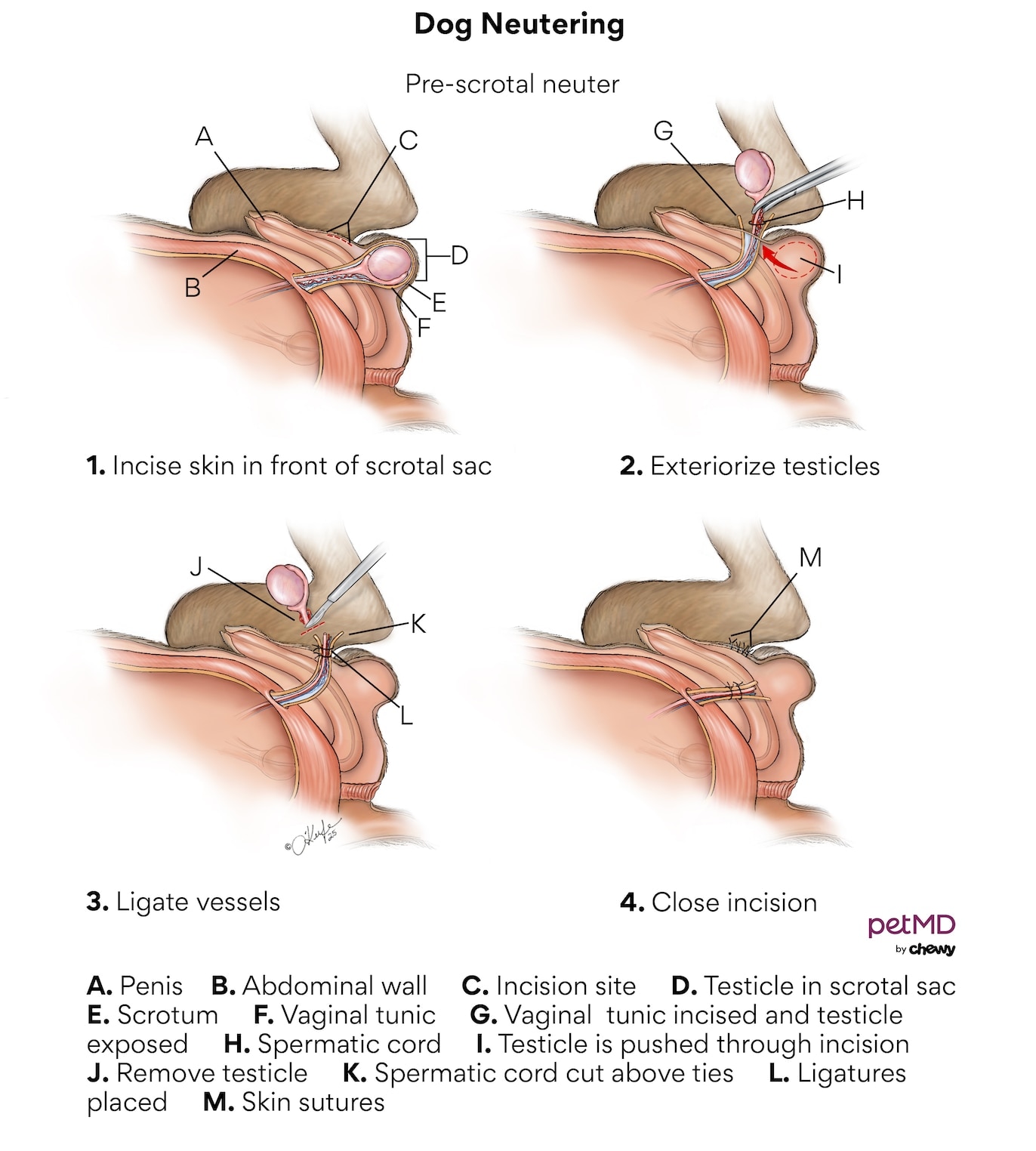
Download the medical illustration of dog neutering.
When Should a Dog Be Neutered?
When to neuter a dog depends on factors such as expected adult size and should be considered on an individual basis.
Shelters may neuter dogs as young as 2 months old because shelters play an important role in reducing pet overpopulation. Many local governments don’t allow shelters to adopt out unneutered animals.
For pets, the recommended age to neuter is usually based on expected adult size:
- Small-breed dogs: Often neutered around 6 months old
- Medium- to large-breed dogs: May be neutered between 6 months and 1 year old
- Giant-breed dogs: Some aren’t neutered until they’re closer to 18 months old
Despite these general guidelines, when to neuter a dog should be considered on an individual basis. Pet parents who plan to get their dog neutered should discuss timing with their veterinarian.
Check out PetMD's complete dog neuter surgery aftercare guide (PDF). The Spanish version of the guide is also available.
Anatomy of the Male Reproductive System in Dogs
The male reproductive system in dogs includes the testicles, epididymis, vas deferens, prostate, urethra, penis, and prepuce.
Male dogs have two testicles within the scrotum, which is found between their back legs. The testicles produce sperm and male sex hormones, such as testosterone.
Testosterone is responsible for the function of sex glands such as the prostate, the development of male characteristics, and sexual behavior in male dogs.
Each testicle has an epididymis, where sperm mature. On each side, the epididymis is connected to a tube called the vas deferens. The vas deferens carries ejaculated sperm to the urethra.
The fluid part of semen comes from other sex glands, mainly the prostate. The two vasa deferentia join the urethra in the area of the prostate gland.
The urethra carries semen out through the dog’s penis. The penis has skin covering it called the prepuce. When the dog has an erection, the penis enlarges and sticks out from the prepuce, allowing the male dog to mate.
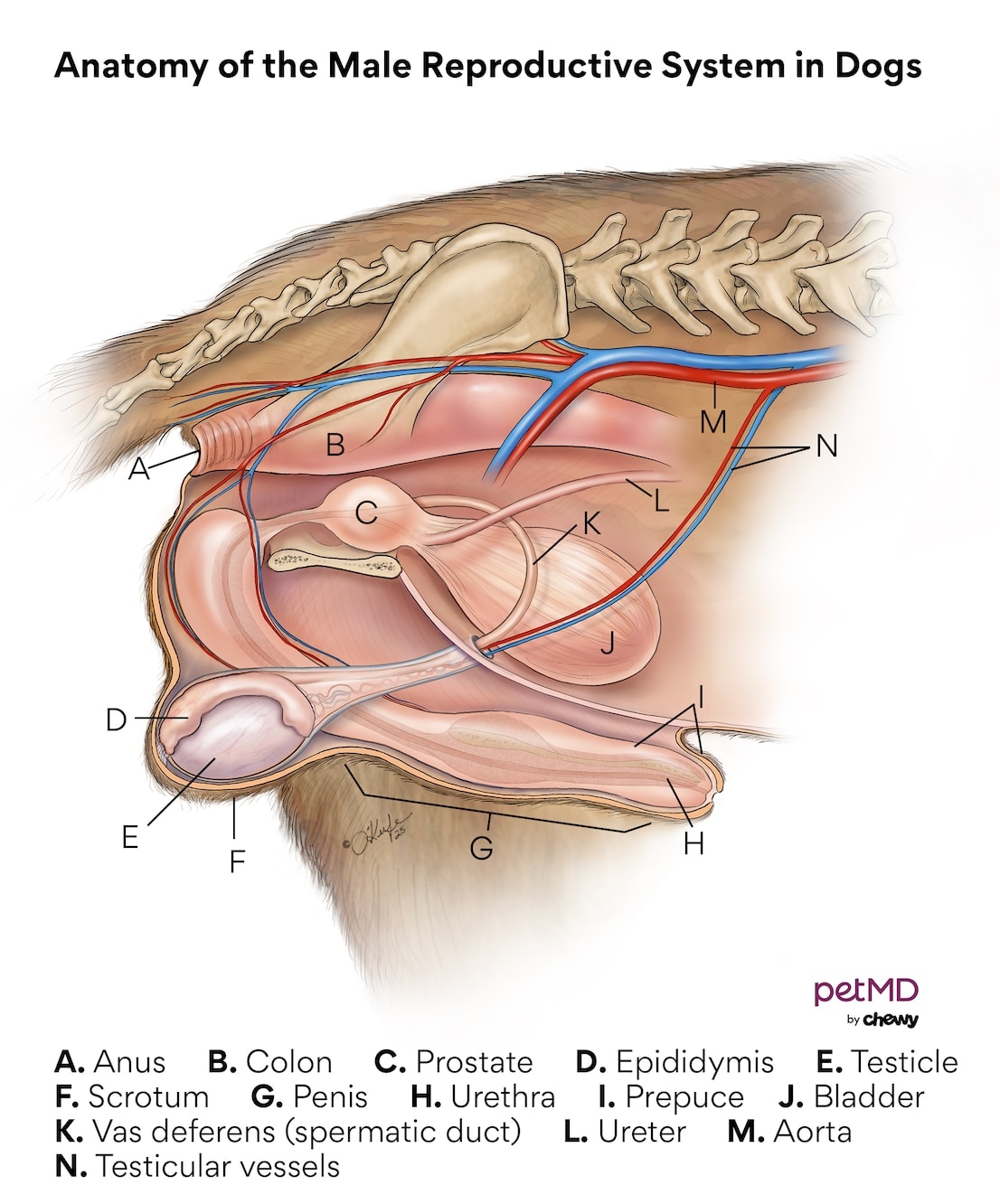
Download the medical illustration of the male reproductive system in dogs.
How Is Dog Neutering Performed?
During a dog neutering procedure, an incision (cut) is made either directly into the scrotum (scrotal technique) or into the skin between the prepuce and scrotum (prescrotal technique).
With both techniques, the testicles are removed through the incision.
Why Would a Dog Need To Be Neutered?
The two main reasons for dog neutering are to prevent reproduction and reduce unwanted male behaviors.
- Prevention of reproduction
- Prevention of unwanted male behaviors
A neutered dog cannot breed and will be unable to get a female dog pregnant.
A neutered dog is also less likely to urine mark or be aggressive. He will not try to escape to find mates.
Neutering a Dog With Cryptorchidism
Occasionally, a dog may be cryptorchid, meaning one or both testicles did not come down into the scrotum.
While a cryptorchid testicle generally doesn’t make working sperm, it will continue to make testosterone. The dog may have the unwanted traits seen with intact male dogs, such as marking and escaping to find mates.
Cryptorchid testicles are also more likely to become cancerous. Cryptorchid dogs should be neutered and should not be allowed to reproduce.
Other Medical Reasons for Dog Neutering
Dogs may also be neutered because of testicular tumors or tumors around the anus, called perianal adenomas.
Benefits of Dog Neutering
Benefits of dog neutering include:
-
Removes risk of accidental pregnancy of female dogs in home
-
Helps with pet overpopulation
-
Reduces unwanted male behaviors, such as escaping to find mates and urine marking
-
Reduces risk of traumatic injury and contracting infectious disease while roaming
-
Leads to a longer average lifespan due to fewer injuries and infections
-
Removes risk for testicular cancer
Effectiveness of Dog Neutering
Dog neutering is highly effective at preventing reproduction. While neutering can also reduce unwanted male behaviors, it is most effective for this purpose when performed before those behaviors develop.
Preventing Reproduction
When a dog has a successful neuter procedure, there is no chance of him getting a female dog pregnant.
Behavioral Changes After Neutering
Although some dogs neutered later in life will stop urine marking within the home, a dog who is neutered before the behavior starts is less likely to ever urine mark.
Dogs who have had urine marking, aggression, or other unwanted behaviors reinforced may not stop after being neutered.
Roaming Behavior and Lifespan
However, neutering will completely remove the desire to seek out mates, reducing roaming behavior. This decreases the pet’s risk of getting an infectious disease or being struck by a vehicle.
This is thought to be the reason that neutered males have longer lifespans than intact males.
Cost of Dog Neutering
A routine dog neutering procedure at a private veterinary practice typically costs $300–$500.
Low-Cost Dog Neutering Options
Some low-cost or non-profit clinics have a much lower dog neutering cost. Occasionally, these clinics may hold free neuter events.
When Does Dog Neutering Cost More?
The cost of dog neutering will be higher if the dog is cryptorchid, especially if the veterinarian must search the abdomen for one or both testicles.
How To Prepare for Dog Neutering
To prepare for dog neutering, pet parents should follow their veterinarian’s fasting and water instructions before surgery and have a plan in place for their dog’s recovery.
Before Dog Neutering Surgery
Pet parents will be asked to fast their dog for the night before dog neutering surgery to reduce their risk of vomiting while under anesthesia.
Many veterinarians will still allow your dog to drink water prior to surgery, but you should check with your pet’s veterinarian. A pet parent can also prepare for the surgery by having a plan in place for the recovery period (more below).
What Happens at the Veterinary Hospital?
At the hospital, the dog is anesthetized for the surgery.
The scrotum and the area in front of the scrotum are shaved to allow for a clean incision. In some cases, your dog will have a catheter put in place to allow fluids and medications to be given.
Your dog will have a tube in his trachea (windpipe) or a mask on his face so he can get oxygen and gas anesthetics.
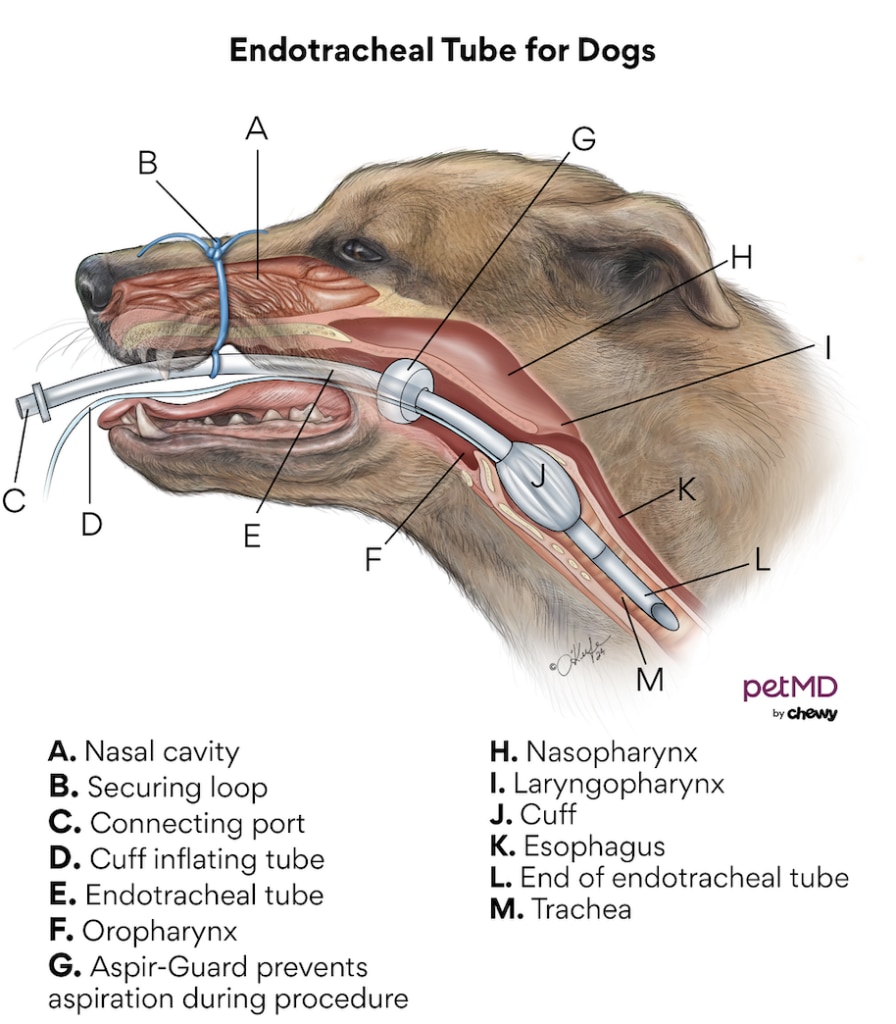
Download this medical illustration of an endotracheal tube for dogs.
Neuter Tattoos in Dogs
Some clinics have a standard rule to tattoo all neutered or spayed animals. This marks your pet as altered. A tattoo removes doubt about whether he has been neutered or is a bilateral cryptorchid.
Complications of Dog Neutering
Common complications of dog neutering include incision infection, bleeding, and scrotal swelling. There are also potential anesthesia complications, while research into possible long-term health risks is ongoing.
Surgical Complications
Common complications of a dog neuter include:
- Infection of the incision
- Bleeding
- Scrotal swelling (scrotal hematoma)
Anesthesia Risks
Dog neutering is an anesthetic procedure. As such, there are potential complications from anesthesia, including inhaling vomit, allergic reaction to anesthetics, or cardiac arrest leading to death.
The risk of death during a neuter procedure is low, with one study of more than 89,000 dogs showing a risk of 0.009%, or around 1 death per 11,000 dogs.
Potential Long-Term Health Risks
Research into how dog neutering affects the development of orthopedic conditions and cancers later in life is ongoing.
Orthopedic Conditions
Examples of orthopedic conditions being investigated include cranial cruciate ligament rupture (torn ACL) and hip dysplasia.
Cancer Associations
Examples of cancers being studied include:
Obesity
Neutered dogs are more likely to become obese, so your pet’s weight should be watched.
While some correlations have been found between neutered dogs and these risks, causation has not been proven.
Dog Neutering Recovery and Aftercare
After neutering, dogs need time to recover, pain management as directed by their veterinarian, and proper incision care to prevent infection and support healing.
What To Expect After Dog Neutering
Your dog is likely to be tired and may have a reduced appetite for a day after surgery. Your dog’s appetite and energy level should return to normal within about two days.
Mild swelling of the scrotum and a small amount of blood after dog neutering are to be expected.
Pain Medications After Dog Neutering
Your pet should go home with pain medications, such as carprofen.
It’s important to follow your veterinarian’s instructions for how to give any medications. Do not use pain medications meant for people.
When To Call Your Veterinarian
Contact your veterinarian if you notice any of the following after dog neutering:
- Blood dripping from the incision
- Bruising extending up toward the foreskin
- Large, firm swelling of the scrotum
- Pus around the incision
- The incision breaking open
How To Care for Your Dog’s Incision
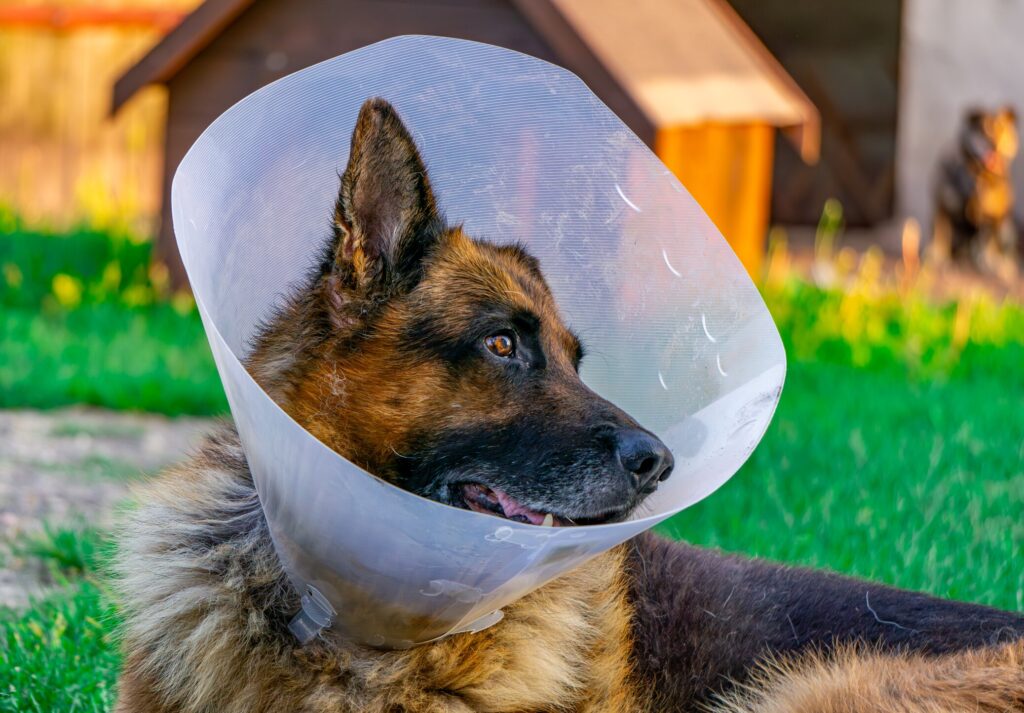
The best thing you can do while your dog is recovering from his neuter is to prevent him from licking the incision.
Licking the incision is the primary reason it can become infected. Placing a recovery cone on your dog can prevent this complication.
Some dogs can reach their neuter incision when a doughnut-type cone is placed. Make sure that your dog's cone prevents him from reaching his incision.
The incision can take 10 to 14 days to heal. Do not allow the incision to get wet during this time.
Alternatives to Dog Neutering
Alternatives to traditional dog neutering include vasectomy and chemical sterilization with calcium chloride. However, most veterinary clinics do not offer these alternatives.
Vasectomy for Dogs
A vasectomy can be done on a dog to make him infertile, but the dog will continue to show testosterone-driven behaviors. He will continue to be attracted to and mate with females but won’t be able to get them pregnant.
Chemical Sterilization for Dogs
Another option is having a sterilant (calcium chloride) injected into the testicle.
Like a vasectomy, this will make the dog infertile. If it’s done correctly, he will still make male hormones.
This chemical sterilization procedure is very rare.
Dog Neutering FAQs
What is the best age to neuter a male dog?
The best age to neuter a male dog depends on the individual pet and their expected adult size.
Small dogs are often neutered around 6 months old, while giant-breed dogs are often not neutered until they are 18 months old.
Speak with your veterinarian to figure out the best plan for your pet.
Do male dogs change after being neutered?
Male dogs will often have a decrease in unwanted male behaviors after being neutered. Neutered males are less likely to roam in search of mates, to show aggression toward their pet parents, and to urine mark.
Is neutering good for dogs?
Neutering is associated with a longer average lifespan in male dogs. One study found a 13.8% longer lifespan among neutered males compared with intact males.
It reduces the risk of certain cancers, infectious diseases, and death by traumatic injury.
However, neutering may also increase the risk of certain orthopedic conditions and cancers. Research is ongoing, but for now, neutering is considered positive due to an overall increase in lifespan.
How long does it take a dog to recover from neutering?
The neuter incision can take 10–14 days to heal. Dogs may be tired and have a reduced appetite for about a day after surgery, with appetite and energy levels typically returning to normal within about two days.
Can a dog still get a female pregnant after being neutered?
According to the supplied article, a male dog cannot get a female dog pregnant after a successful neuter procedure.
What are the risks of neutering a dog?
Possible complications include incision infection, bleeding, scrotal swelling, and anesthesia-related complications. Research into possible associations between neutering and certain orthopedic conditions and cancers is ongoing.


