Cat Dehydration Symptoms and How To Help


peterleabo/iStock/Getty Images Plus via Getty Images
Have you ever felt like your cat wasn’t drinking enough water? Or you noticed that your cat wasn’t quite acting like themselves? Have you ever wondered if they might be dehydrated?
This is a very common problem in cats, especially those that aren’t feeling well.
Both old and young cats tend to be more prone to the effects of fluid loss. Middle-aged cats that are in relatively good health are often more resilient to the effects of mild dehydration than an older cat that already has several health problems.
Let’s look at everything you need to know about dehydrated cats, including cat dehydration symptoms, causes, what to do, and treatment for a dehydrated cat.
Key Takeaways
- Dehydration in cats can result from illness, vomiting, diarrhea, or insufficient water intake and can lead to serious health issues if untreated.
- Common symptoms include dry gums, lethargy, sunken eyes, and slow skin elasticity—if noticed, seek veterinary care rather than trying to force fluids at home.
- To help prevent dehydration, feed wet food, monitor water intake, and provide appealing water sources like fountains or fresh bowls.
What Is Dehydration in Cats?
Cat dehydration happens when felines are not drinking as many fluids as they are losing.
Sometimes, this might be simply because they don’t feel well and aren’t drinking much, but other times, it can be caused by illness like vomiting or diarrhea.
As a rule, when a cat becomes dehydrated, they also experience changes (usually losses) in many electrolytes such as sodium, calcium, and potassium.
Proper hydration and having the right electrolyte balance are extremely important for keeping a cat’s organs and tissues functioning properly.
Severe dehydration can even lead to death.
Fortunately, dehydration in cats is typically easy to recognize and usually straightforward to treat once the underlying cause is identified by your veterinarian.
Health Tools
Get quick answers with our vet-created Symptom Checker
Cat Dehydration Symptoms
Cat dehydration symptoms may include:
-
Lethargy/lack of energy
-
Sunken eyes
-
Weakness
One way to check if your cat is dehydrated is to gently lift their lip and touch their gums. Just like human gums, they should be wet and slimy.
If they are dry to the touch and seem a little tacky, your cat is most likely dehydrated.
Another popular method to check hydration in pets is the skin pinch test. This test only works in young, healthy animals with elastic skin and is not as useful once cats age or develop chronic illness.
However, if you gently lift (or “pinch”) the skin over your cat’s shoulder blades and then let go, it should quickly snap back into position.
If the skin on your cat’s shoulder blades slowly settles back into position instead of snapping, this may also be a sign of dehydration.
Causes of Dehydration in Cats
There are many causes of a dehydrated cat, but at the base of all of them is that your pet is losing fluid more quickly than they are taking in fluids.
All cats lose fluids continually through the day—even the simple act of breathing evaporates crucial fluids, and a large volume is lost each time a cat urinates. All the basic body processes require fluids, which is why proper hydration is critical for restoring balance.
Anything that upsets this balance is likely to lead to dehydration.
Common causes include:
-
Not eating or drinking as much or at all. Some of the more common causes of dehydration include anything that causes your cat to not eat and drink properly. If your cat isn’t taking in fluids, but still using them, dehydration happens quickly.
-
Vomiting and diarrhea. In these cases, your cat is losing fluids quickly and may not be feeling up to drinking or eating to replace them.
-
Diabetes and renal disease. These are two very common diseases in cats that cause increased water loss, which can quickly result in dehydration.
-
Fevers or traumatic injury. These will both often cause a cat to become dehydrated.
-
Hot weather and dry air. These can both lead to dehydration with time.
The degree of dehydration usually varies depending on the cause, with mild diseases resulting in more mild dehydration.
What To Do If Your Cat Is Dehydrated
If your pet is showing cat dehydration symptoms, call and go see your veterinarian immediately.
It can be difficult to judge how severe the dehydration is, and your veterinarian will be better equipped to do that as well as to determine the underlying cause of dehydration.
DO NOT force water on your cat or to try to use a dropper to give your cat water or food. It is possible to accidentally administer the fluids into the lungs, resulting in severe pneumonia.
It’s okay to offer your cat wet food, tuna made for human consumption, water, and sodium chicken broth if you suspect that they are dehydrated.
If your cat won’t take the fluids voluntarily, wait until you can get to the veterinary hospital.
Treatment for Dehydration in Cats
Your veterinarian will perform a full examination and look for signs of overall disease and underlying conditions that may have triggered your cat’s dehydration.
As a rule, your vet may also want to run some lab tests, including blood and urine, to determine the severity of dehydration as well as the underlying cause. Additional testing may be recommended, depending on the situation.
Treatment for a dehydrated cat will also vary.
Mild dehydration and many conditions are often treated with fluids given under the skin (called subcutaneous fluids), which is generally performed on your cat as an outpatient procedure.
Sicker animals that are more fragile or more dehydrated may need to be hospitalized to have an IV catheter placed so that the fluids can be given directly within the bloodstream.
Very dehydrated animals can require several days to regain normal hydration.
How To Prevent Dehydration in Cats
As a pet parent, it’s important to take steps to prevent cat dehydration.
Checking what your cat is eating/drinking twice a day will help you understand their trends and spot trouble before it becomes serious.
Since canned food has much more fluid content than dry food, it’s often preferred, particularly for cats that are prone to dehydration.
If your cat is at least eating their wet food, you don’t have to worry quite as much about how much they are drinking, because they will be getting the fluids in their foods.
On average, cats should drink approximately 4 ounces per 5 pounds of body weight.
If your cat is eating primarily dry food, this will all need to come from the water bowl.
However, if your cat is eating mostly wet food, they will probably drink very little water since the moisture in the wet food is adequate.
With wet food, if your cat is eating normally, you can also assume that they are properly hydrated for the most part.
Many cats are picky about their water sources, so make sure there is always fresh water available, and that you clean the water bowl daily. Dump any old water in the bowl, rinse the bowl and replace it with fresh water.
Some cats prefer running water, and fountains are quite popular with many cats.
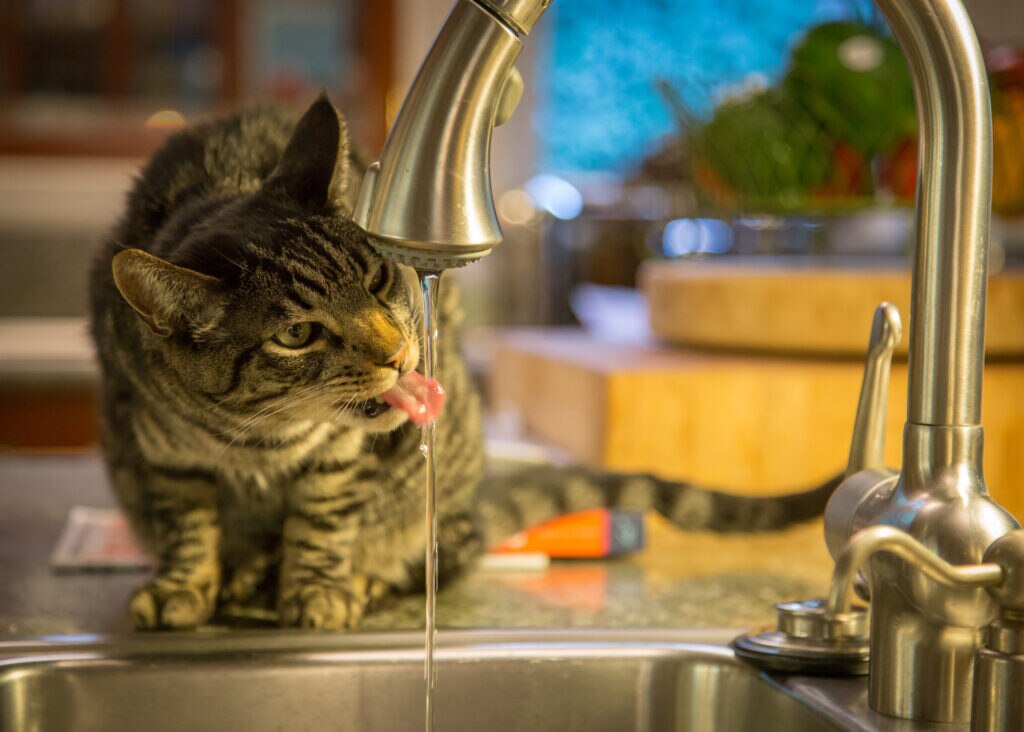
Other cats love the dripping of water from a faucet. Find out what your cat likes and make sure that it’s always available to them.
When it comes to dehydration in cats, the best rule of thumb is, “When in doubt, check it out.”
Dehydration can spiral quickly, so if you’re not sure if your cat has enough fluids and isn’t eager to drink more when you offer them, schedule an appointment to have your cat checked out.
Cat Dehydration FAQs
How much water does a cat need?
Cats should drink about 4 ounces per 5 pounds of body weight. An average 10-pound cat should get about 8 ounces of water a day. Keeping a full, fresh bowl of water out always is important for your cat’s health.
How long can a cat go without water?
A short fast prior to surgical procedure is fine (i.e. picking up food and water the night before they have a scheduled procedure). Otherwise, cats should always have access to clean, fresh water.
Are certain cats prone to dehydration?
Cats that are very young or very old are more fragile and prone to dehydration.
How do you rehydrate a cat?
Offering canned food or low sodium chicken broth can be helpful to help rehydrate cats and replace any electrolytes they’ve lost. If they’re sick or losing fluids, through vomit or diarrhea, they should be seen by a vet right away.


