Fading Kitten Syndrome: Signs and When to Get Help


Adobe_stock/vika_hova
Caring for newborn kittens can be a rewarding experience—but it also can be heartbreaking if they experience fading kitten syndrome.
Here’s what to know about the condition and how you can help kittens survive.
Key Takeaways
- Fading kitten syndrome occurs when a kitten fails to thrive and is in danger of dying before they are weaned.
- The condition can happen for many reasons, including maternal neglect, trauma, birth defects, parasites, and infections.
- Kittens may survive if the underlying cause is identified and treated quickly.
- Take young kittens to a veterinarian immediately if they show any signs of illness.
What Is Fading Kitten Syndrome?
Fading kitten syndrome refers to a kitten’s failure to thrive during the period between birth and when they start to wean from their mother or a bottle. This period lasts about four to five weeks and corresponds to the time when a kitten is most vulnerable to sickness.
Fading kitten syndrome is a medical emergency that requires immediate veterinary help. Some causes can be successfully treated but a kitten's condition can deteriorate rapidly, so quick action is needed.
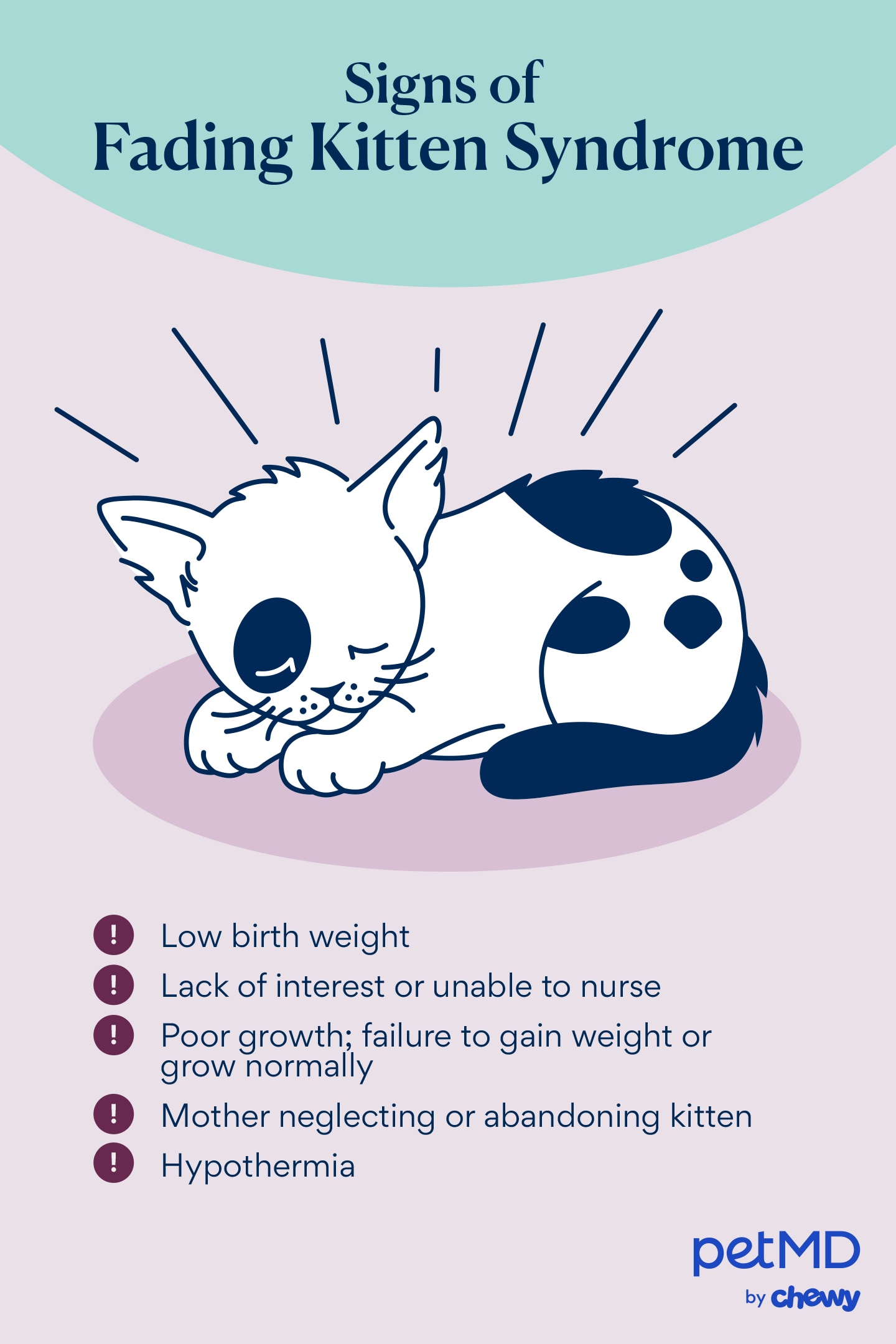
Symptoms of Fading Kitten Syndrome
Kittens who fail to meet normal development milestones may be experiencing fading kitten syndrome. Some of these milestones include:
-
The ability to turn over from their back by day three after birth
-
The ability to support themselves on their feet by two weeks of age
Other symptoms of fading kitten syndrome include:
-
Constant noises that indicate distress (such as whining or crying), even after feeding
-
Gradually worsening lethargy
-
Poor suckling reflex/not being able to nurse properly
-
Weakness
-
Inability to gain weight
-
Labored breathing
-
Nasal or eye discharge
-
Low body temperature
Causes of Fading Kitten Syndrome
Fading kitten syndrome can have many causes, including:
-
Trouble during birthing
-
Lack of maternal antibodies (immune cells received from mom that help protect kittens from disease)
-
Bacterial or viral infections
-
Malformations present at birth (such as heart defects, gastrointestinal defects, brain defects, lung defects, or cleft palate)
-
Low birth weight
-
Trauma
-
Maternal neglect
-
Malnutrition
-
Environmental factors (such as unsanitary conditions or inappropriate environmental temperature)
Genetics can also play a role in fading kitten syndrome. If a mother cat has a blood type that differs from her kitten, her maternal antibodies may attack the kitten’s red blood cells, causing anemia that can lead to fading kitten syndrome. This condition is called neonatal isoerythrolysis.
How Veterinarians Diagnose Fading Kitten Syndrome
A veterinarian should examine the new mother and all of her kittens about two days after birth to start monitoring for fading kitten syndrome. The doctor will give all the cats a physical examination and check for any abnormalities that could lead to fading kitten syndrome.
A healthy kitten's next veterinary exam usually won't be scheduled until they are 6 to 8 weeks old, which is why keeping track of your kittens' progress at home is so important.
Daily weight checks are vital. Kittens should gain 10-15 grams per day after their first day of life and double their birthweight by the time they are 1–2 weeks of age.
If you notice that any of your kittens are not gaining weight appropriately or have concerning clinical signs, get them to a veterinarian immediately.
Your vet will start by asking about your kittens' environment at home and what symptoms you have noticed. They will perform a thorough physical examination, and unless the cause is obvious, recommend diagnostic testing to identify any underlying problems.
Diagnostic testing can involve blood work, fecal and urine testing, and imaging (X-rays and/or an ultrasound).
Unfortunately, sometimes a diagnosis can’t be made before a kitten dies or is humanely euthanized due to poor prognosis or poor quality of life.
If you have other cats or kittens at home, your veterinarian might recommend a necropsy (autopsy) to identify any health problems that could affect them too.
Treating Fading Kitten Syndrome
Fading kitten syndrome may be treatable if an underlying cause can be identified in time.
For example, some bacterial infections can be successfully treated with antibiotics if caught early. On the other hand, some congenital (present at birth) defects can’t be easily treated or managed.
Fading kitten syndrome treatment often also involves supportive care, which can include:
-
Fluids can be given to keep the kitten hydrated and help regulate other body functions, like correcting low blood pressure.
-
Dextrose is a sugar solution given to support blood sugar levels. Because young kittens still have developing body systems, they often can’t regulate their own blood sugar or have low blood sugar from not eating. Adding this sugar solution to your kittens' fluids or giving it to them by mouth may help them survive.
-
Antimicrobials such as antibiotics, parasite treatments, or antiviral medications are given to combat specific organisms. These medications can be given by mouth. If your kitten is not eating well, some can be given by injection.
-
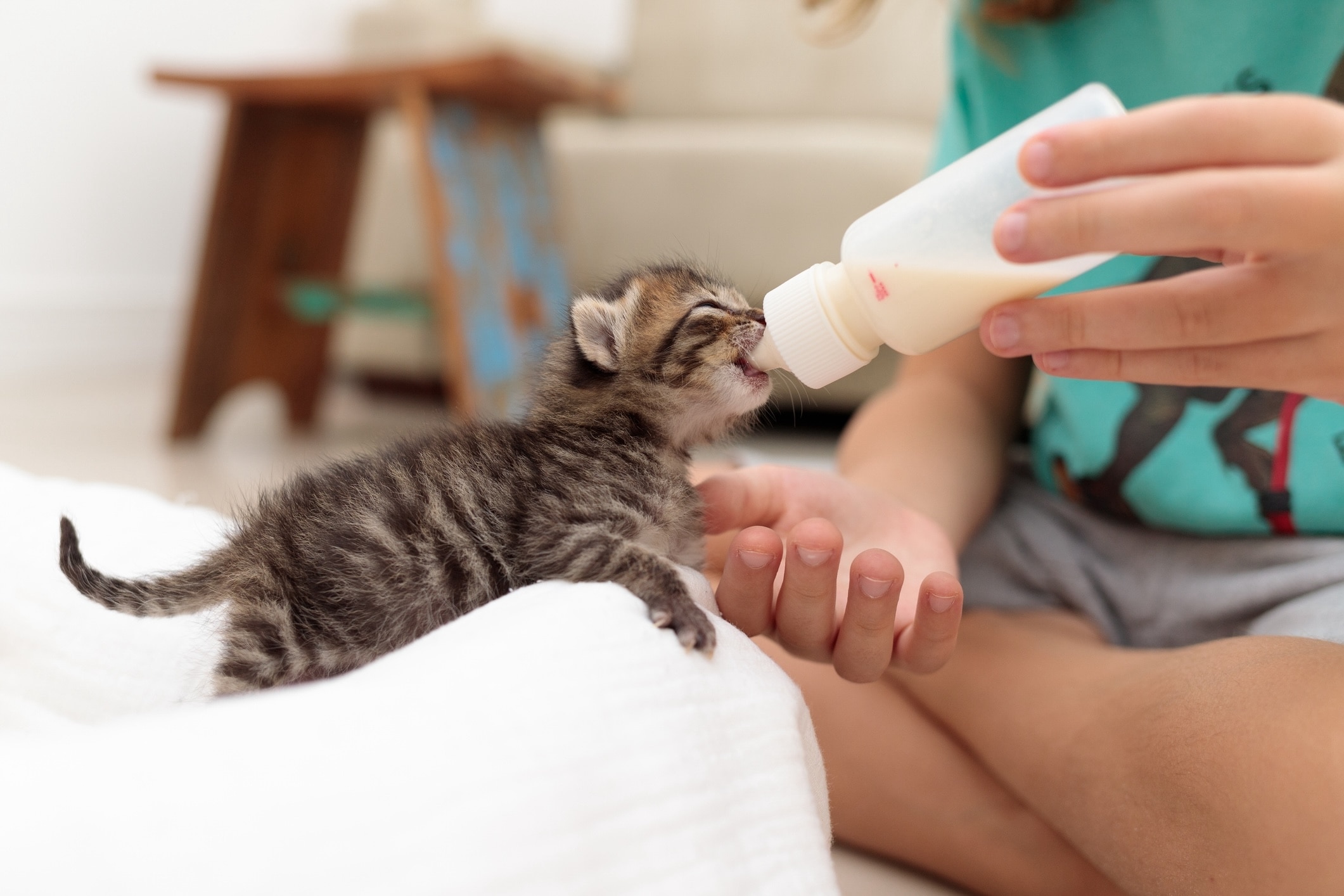
Nutritional support is provided to your kitten when they are not eating well on their own. Typically, a feeding tube is placed either through your kitten's nose or directly into the stomach to provide them with the calories, vitamins, and minerals they need to recover.
-
Oxygen support is provided to kittens either by using a nasal device or by putting them in a special oxygen cage. Oxygen helps kittens that are having trouble breathing or have low red blood cell counts.
-
Body temperature support ensures your tiny kitten can stay warm. Young kittens can’t regulate their body temperature effectively, which can result in a low body temperature (hypothermia). Heat support can be provided with an incubator or warmed bottles placed around the kitten.
A delay in evaluation and treatment could result in:
-
Low body temperature
-
Lethargy
-
Seizures
Unfortunately, even with treatment, some kittens do not survive.
Recovery and Management of Fading Kitten Syndrome
Recovery from fading kitten syndrome is possible if an underlying cause can be identified and treated in time. Unfortunately, fading kitten syndrome can be fatal, with the highest rate of mortality in the first week of a cat’s life.
If a kitten does survive this crucial period and grows stronger, long-term management involves proper nutrition, providing sanitary conditions and preventative health care, and close monitoring to ensure they gain weight.
The long-term outlook for kittens who recover is good, unless there is an underlying health problem that affects the kitten’s life expectancy.
Preventing Fading Kitten Syndrome
Some cases of fading kitten syndrome can be prevented.
-
Breeders should know their cats' blood types and avoid incompatible breeding matches.
-
Mother cats should be healthy and fully vaccinated, be given flea and tick prevention medication, and undergo routine deworming.
-
Make sure newborn kittens' home environment meets all their needs regarding temperature, cleanliness, nutrition (feeding kitten milk replacer may be necessary), and elimination.
-
Take newborn kittens to the vet when they are about two days old to determine if they are healthy.
-
If kittens are displaying any signs of illness, take them to the vet immediately.
Fading Kitten Syndrome FAQs
How long do kittens live with fading kitten syndrome?
Kittens with fading kitten syndrome can die suddenly or within a few days. Kittens may also survive if the underlying cause is identified and treated quickly.
It’s important to take newborn kittens to a veterinarian immediately if they show any signs of excessive crying, weakness, lethargy, or reluctance to nurse.
The highest rate of mortality is in the first week of a kitten's life.
What do you feed a kitten with fading kitten syndrome?
A kitten should ideally nurse from their mom, but those with fading kitten syndrome may be too sick. In this case, kittens should be hospitalized and are often tube fed using a commercial milk replacer.
Is fading kitten syndrome contagious to other kittens?
Depending on the underlying cause of fading kitten syndrome, it may be contagious.
Viruses, bacterial infections, and parasites are often highly contagious. If this is the cause of a kitten’s inability to thrive, it can be spread to other cats and kittens.
How can I tell if a newborn kitten is healthy?
The best way to tell if your newborn kitten is healthy is to have them examined by your veterinarian. It’s recommended that all new pets are examined by their veterinarian within two to three days of birth or adoption.
Your vet will perform a physical exam and may test your kitten for infectious diseases and other problems with blood and fecal testing. If you notice your new kitten is showing symptoms of illness or behaving in a way that is abnormal, take them to the vet immediately.
Can a kitten survive fading kitten syndrome?
Yes, if the cause is identified and treatment quickly started, some kittens can survive fading kitten syndrome.


