Profender Topical Solution for Cats


Chewy
PetMD’s medications content was written and reviewed by veterinary professionals to answer your most common questions about how medications function, their side effects, and what species they are prescribed for. This content shouldn’t take the place of advice by your vet.
Key Takeaways
- Profender is a spot-on treatment containing two dewormers, emodepside and praziquantel, to treat intestinal parasites in cats.
- Cats should not lick the application site after treatment.
- Side effects are usually mild and temporary but may include drooling, vomiting, or irritation at the application site.
- Contact your veterinarian if symptoms worsen or signs of overdose occur.
What Is Profender Used for in Cats?
Profender is a prescription liquid parasiticide (dewormer) applied topically to the skin of a cat to treat tapeworm, hookworm, and roundworm infections.
Profender Considerations in Cats
Profender should be used with caution in sick or debilitated cats and in heartworm-positive cats.
Profender has not been tested for safe use in kittens younger than 8 weeks of age or weighing less than 2.2 pounds, nor in breeding, pregnant, or nursing cats.
Is Profender FDA-Approved for Cats?
Yes. Profender Topical Solution is FDA-approved to treat certain intestinal parasites in cats and kittens 8 weeks and older weighing at least 2.2 pounds.
How Does Profender Work in Cats?
Profender is a topical product that contains two active ingredients: emodepside and praziquantel. They’re absorbed through a cat’s skin to reach the intestinal tract to kill worms.
-
Emodepside kills roundworms and hookworms. It affects the worms’ nervous system, causing paralysis and death.
-
Praziquantel kills tapeworms. It’s believed to damage the worms’ outer covering and muscles, which leads to paralysis. The worms are then either passed in the cat’s stool or digested within the digestive tract.
How Do You Give Profender to Cats?
Follow the directions on the drug label or as provided by your veterinarian.
-
Your veterinarian will determine the appropriate topical dosage based on your cat’s weight.
-
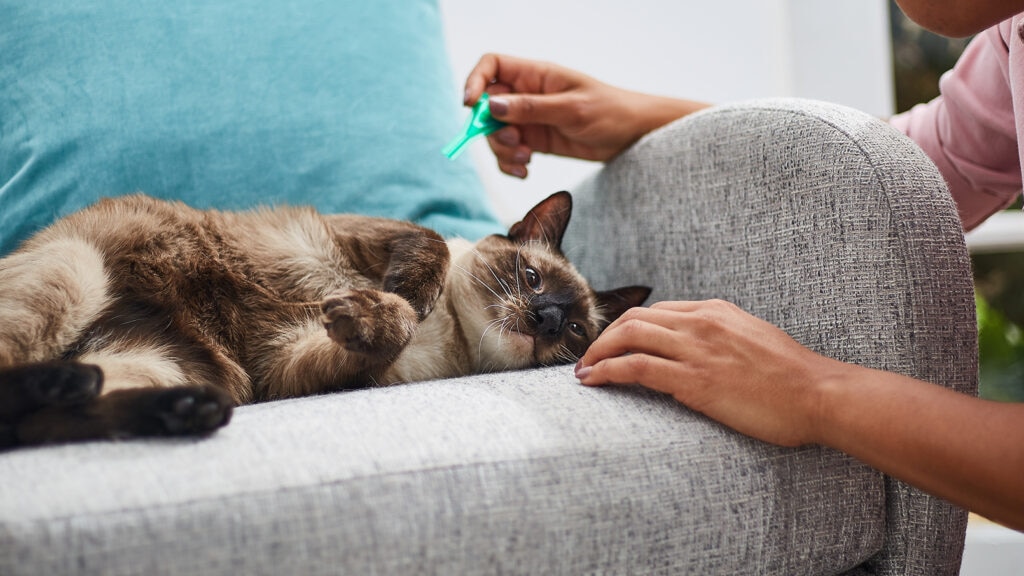
Part your cat’s fur at the back of the neck near the base of the head until the skin is visible. Place the tip of the tube on the skin and squeeze the entire contents of the tube directly onto the skin.
-
Do not apply directly if the fur is wet or to any irritated or broken skin.
-
Do not allow any pets to lick the area for at least one hour after application. Avoid oral ingestion or exposure.
-
To prevent accidental ingestion of this product, children should not come into contact with the application site for 24 hours while the product is being absorbed.
What Happens If You Miss a Dose of Profender?
Profender is typically given as a one-time treatment. It may be repeated after 30 days as needed to treat reinfection.
What Are the Side Effects of Profender in Cats?
If your cat licks the product or site of application, they may experience temporary vomiting and drooling.
Side effects after normal application are mild and self-resolving and can include:
-
Excessive licking/grooming
-
Irritation/scratching of the application site
-
Drooling
-
Lethargy
-
Hair loss at the application site
-
Agitation
-
Vomiting
Human Side Effects
This medication is not approved for use in humans.
Children should not touch the application site on the cat for 24 hours.
If you accidentally ingest a pet medication, immediately seek medical attention or call the national Poison Control Center hotline at 800-222-1222.
Topical exposure may cause skin reactions in some people. Wash hands with soap and water after applying the medication. Pregnant people should wear gloves.
Monitoring Your Pet
Typically, no specific monitoring is required for this medication. However, your veterinarian may recommend routine testing, including fecal testing for worms, based on your cat’s needs, other medications, or the condition being treated.
When Should You Call Your Veterinarian?
Call your veterinarian if you see any of the following, or if you have additional questions or concerns about the use of Profender:
-
Severe side effects are seen (see above)
-
Your cat’s condition worsens or does not improve with treatment
-
You see or suspect an overdose
What Happens If a Pet Overdoses on Profender?
While an overdose of Profender is unlikely to cause significant harm, drooling, tremors, and lethargy are possible signs of an overdose.
Accidentally giving this medication to your cat orally may cause them to experience drooling, vomiting, muscle tremors, or difficulty walking.
If you suspect an oral or topical overdose, immediately contact your veterinarian or an animal poison control center. Consultation fees often apply.
-
Pet Poison Helpline: (855) 764-7661
-
ASPCA Animal Poison Control: (888) 426-4435
How Should Profender Be Stored for Cats?
-
Profender should be stored at or below 77 F (25 C). Do not freeze.
-
Keep the container tightly closed in order to protect from moisture and light.
-
Always confirm storage requirements by reviewing the drug label.
-
Keep out of reach of children and pets.
Profender for Cats FAQs
How long does Profender for cats take to work?
Profender begins treating hookworms, roundworms, and tapeworms within about 24–48 hours. You may or may not see worms being passed in your cat’s stool after treatment. If reinfection occurs, Profender can be applied again after 30 days.
How often do cats need Profender?
One topical dose of Profender is effective for treating hookworms, roundworms, and tapeworms and can be applied every 30 days as needed. Your veterinarian may recommend retreatment, depending on your cat’s fecal test results and risk of reinfection associated with their behavior and environment (going outside, hunting, exposure to fleas, and more).
No vet writer or qualified reviewer has received any compensation from the manufacturer of the medication as part of creating this article. All content contained in this article is sourced from public sources or the manufacturer.


